



Havana, Mexico City, New York, Miami. All are cities that have held the title that Madrid holds today: being the stage for Latin music abroad. José Arteaga, curator and editor of the Gladys Palmera Foundation, says so, an institution that was born in the late nineties to support Latin American music from Spain and today has the largest discographic and documentary archive specialized in Afro-Latin American and Caribbean music. It is precisely in Madrid, a capital where one in seven inhabitants was born across the ocean. It is no coincidence that it is the city where Bad Bunny performs the most dates on the DeBí TiRAR MáS FOToS tour: up to 10 concerts. Mexico City follows with eight, while in other European cities like Milan, Portugal, or London, the average is one or two. Madrid, a place where every day, at the same time and in different neighborhoods, this music — not just reggaeton, but the whole amalgam of tropical and danceable rhythms — is enjoyed in different ways and by different people.
Read more The Madrid Book Fair faces a challenging edition with concern due to the Pope’s visit
11.00: La Parcería, a meeting point
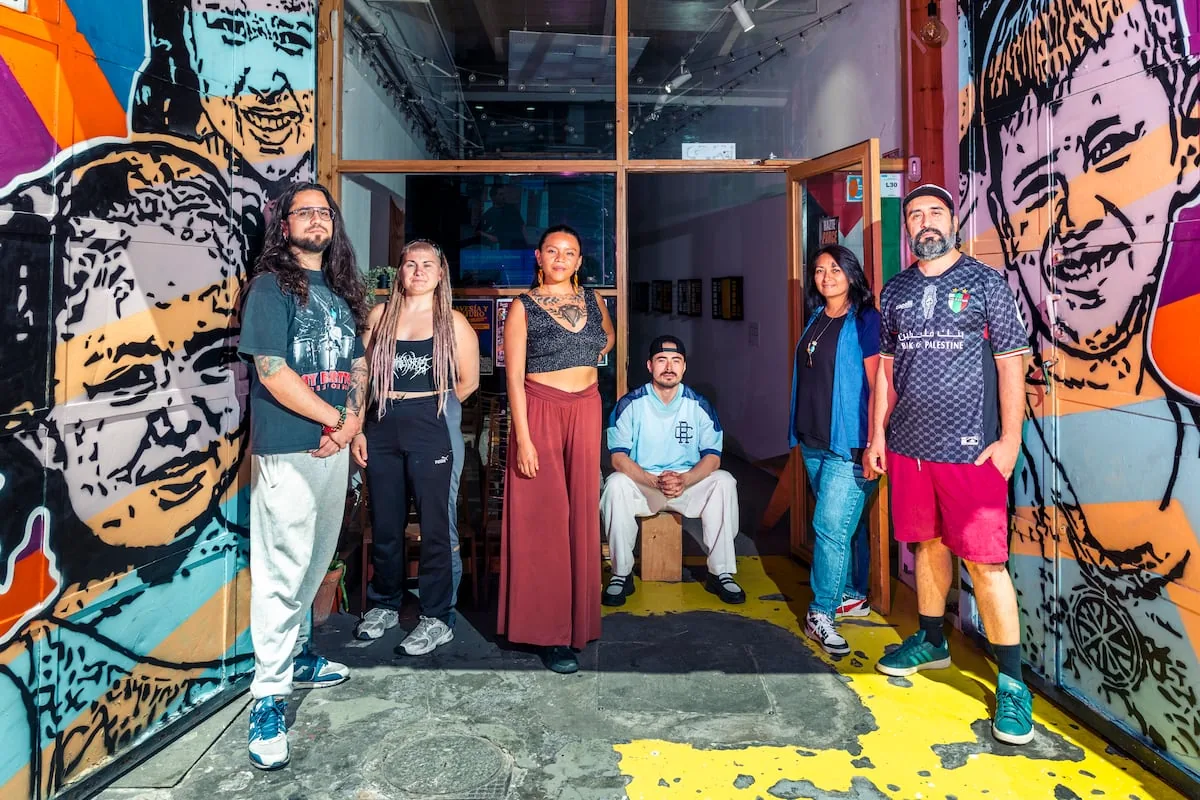
Saturday morning at La Parcería is always intense with contemporary Afro dance classes and the rehearsal of the musical ensemble, a traditional music workshop that also acts as a band. The previous night was just as lively with an event for Palestine. Throughout the week they have permanent and itinerant cultural activities, workshops, concerts, parties, and exhibitions. Days before, the team took a break to talk with this newspaper. Most are migrants of Latin origin who have been neighbors of Madrid for a long time and have more than 15 years of cultural and social work.
One of their first activities was the Salsódromo in Campo de la Cebada, back in 2012. Johan Posada (Colombia, 40 years old), one of the founders of La Parcería, recounts the surprise they had when instead of the 30 attendees they had expected, 300 showed up. “We were not aware that an event in the city center could gather so many people around salsa,” he explains. The magic happened, they say, because their bodies and realities were in the daylight and on the street, not in a nightclub.
There, different generations met who shared identity and political conversations, but also crossed by the common interest in that music that emanates nostalgia for one’s own land. For Jadira Aluisa (Ecuador, 32 years old), La Parcería has been like coming home: “Returning to the body, occupying spaces, connecting with people who speak your same language at the musical body level.” For Cristian Gutiérrez (Colombia, 35 years old), it has to do with tradition: “My mom taught me to dance. It’s memory; from the body, I am sharing what I have lived since I was little.”
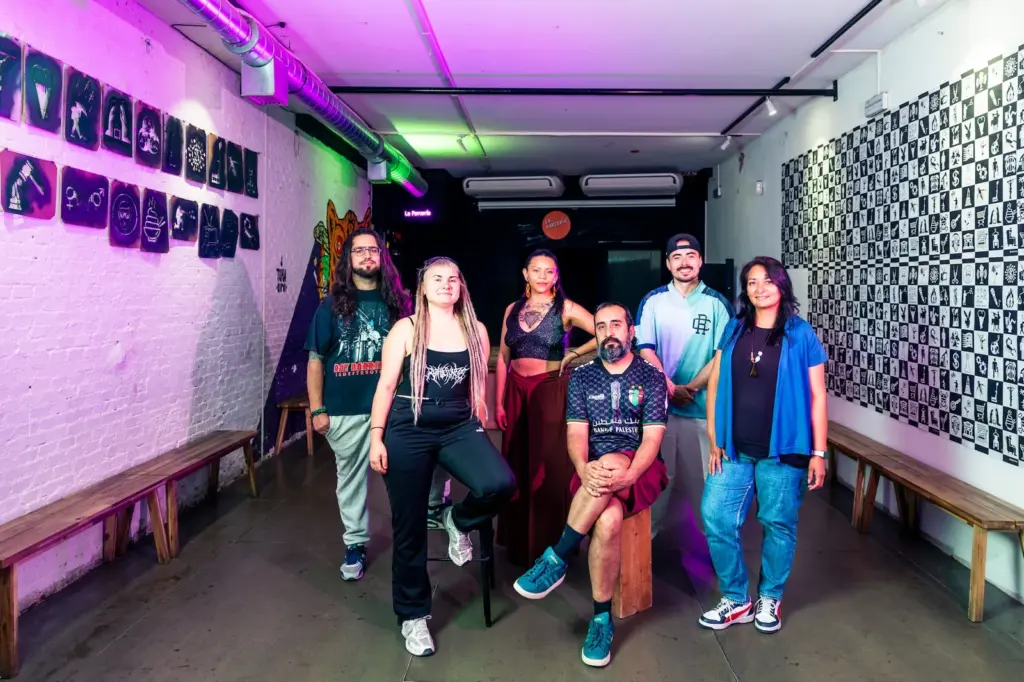
While they talk, they make it clear that for them culture and music are inseparable from politics and also that they identify beyond the Latin American continent, as “a migrant force collective.” “Music is an exercise in cultural defense. We are not a space for integration, we are a space for representation,” Posada insists. Memory, resistance, are concepts repeated in the different interventions. The importance of listening to the lyrics and understanding what story they tell. A reflection arises about Bad Bunny’s latest album, which vindicates the roots and independence of Puerto Rico from the United States, and how DeBí TiRAR MáS FOToS has been successful in a city that celebrates Hispanicity and often discriminates against migrants. Óscar Munar (Colombia, 32 years old) quotes a song by Alcolirykoz that says: “You want to sing like a Latino, but not be treated like one.” And he adds: “They say ‘how beautiful Latin culture is, look how they dance, how they express themselves,’ but when it comes to creating a community and understanding each other as human beings who want to prosper, that point is lost… Latinos and migrants are a product of entertainment.”
19.00: the night begins at the tardeo
It is seven in the evening and in the Madrid neighborhood of Chamberí people circulate like any Saturday afternoon. It is 31 degrees. In the venue Uñas Chung Lee, at 38 Hilarión Eslava Street, the light is off and the music is on. Sweaty bodies dance close to the Latin rhythms, all Latin, because no song that is not of the genre plays at La Vaina’s tardeo. Salsa, reggaeton, merengue, cumbia… Martín Valero is the executive director of the party. “Musically, La Vaina exalts the rhythms of the Caribbean,” he explains to this newspaper.
Upon entering the place, they offer to decorate your body with fluorescent paint before going down to the dance floor, where there are guayaberas, flower necklaces, and a couple of brides at their bachelorette party. Irina Rodríguez is one of them. Venezuelan, she has lived in Madrid for eight years. At 36, she is getting married and decided to celebrate it there. She stops dancing with her bridal headdress to explain that places like this “help Spaniards get a little closer and change the stereotype they have of Latinos.”
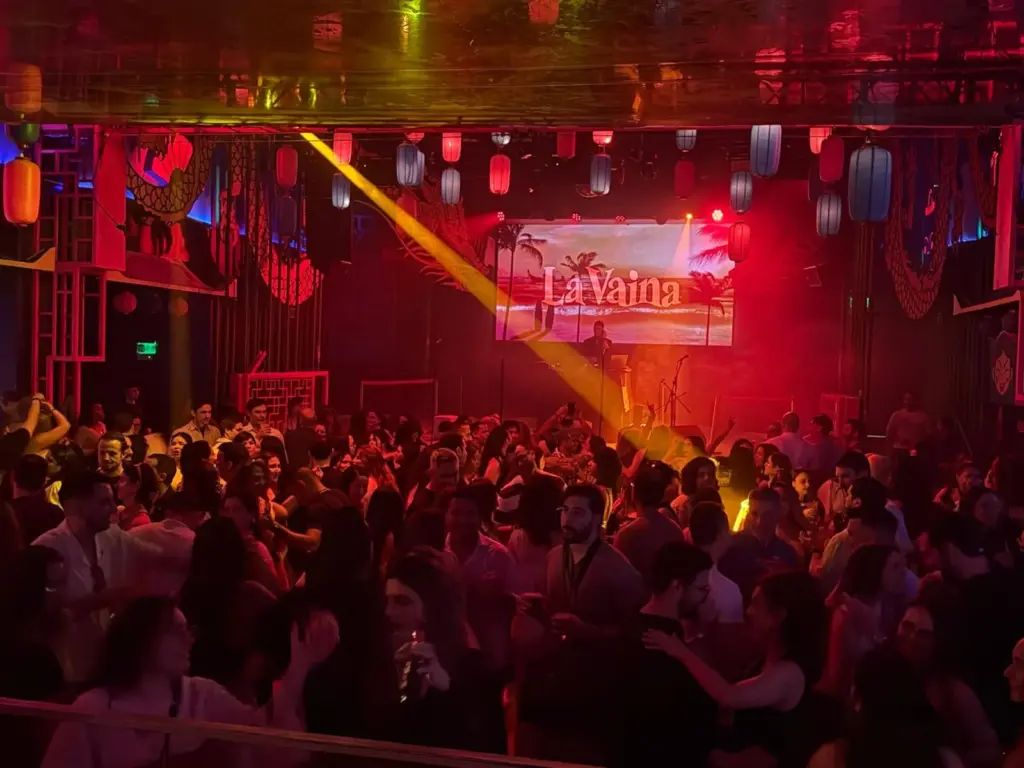
At the same time, at Medias Puri (Tirso de Molina) and Fitz (Plaza España) two other tardeos organized by Valero are happening. La Tropi Fiesta targets a mixed audience of Latinos and Spaniards, while The Perreo offers hours of old reggaeton. The three brands have something in common: “the Latin, and especially Caribbean, DNA.” Together, they move between 2,000 and 3,000 people every Saturday, an audience in their thirties that gathers between six in the evening and eleven at night. “It’s good for your health to dance every Saturday,” Valero assures.
Read more La Oreja de Van Gogh in Madrid: the triumph of Amaia Montero’s fragility
1.00: let’s celebrate it at Perro Negro
In the Salamanca district, the most luxurious in Madrid, Saturday night is quiet. At 28 Don Ramón de la Cruz Street, a sign reads: “No one is the same after spending a night at Perro Negro.” To hear the dembow you have to cross four doors that separate, through a hallway, the perreo from the comfortable life of the neighbors. Upon entering, a baseboard with bodies close together and infrared lights. In the VIP, Samuel Granados, the brand’s executive director, is sitting with his phone while other guests sway with a drink in hand. The conversation with this newspaper takes place a few days later by phone because it is impossible to talk with the music playing.
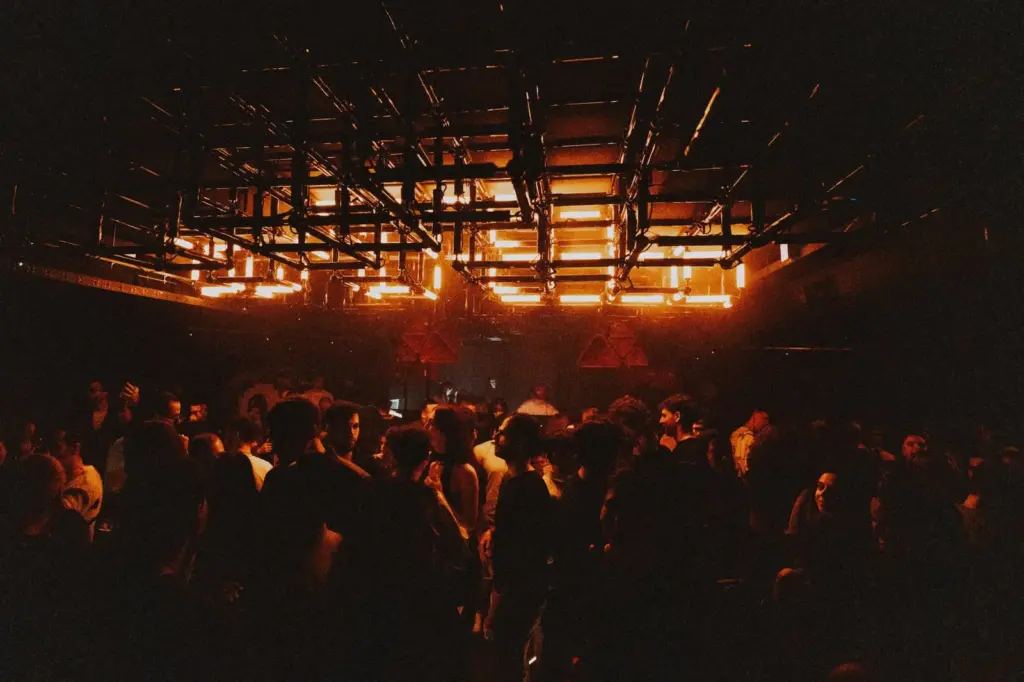
They were born in Medellín, then Miami — in Granados’ words, the genre’s industry — and last year they landed in Madrid, “the epicenter, the meeting point in Europe, a hub for reggaeton and culture,” he explains. With a capacity for 300 people and a rotation of about 600 per night, they open Thursdays, Fridays, and Saturdays, and soon on Tuesdays. It is a party that only allows perreo, something Europeans are not used to, he assures, because nightclubs here offer a crossover repertoire, a mix of commercial music, pop, electronic, and also Latin. More variety, not the six hours of pure and hard reggaeton that there is in this underground.
With Bad Bunny’s residency in Madrid, they have a special relationship. In 2023 the singer released a song with Feid called after the club that says: “I saw you left your boyfriend, baby I’m glad, let’s celebrate it at Perro Negro.” For the team, it was a surprise; they had no idea they would be mentioned. “It allowed us to make known what Perro Negro was in the genre,” Granados recalls. They value the Puerto Rican musician’s relevance to Latin culture, which helps others want to experience it firsthand. They make that mission their own with the Medellín seal: all their DJs are trained by them in the Colombian city. “It’s different when you carry the message rooted, when you have lived there. It’s the most sacred thing, that the expression of Latinidad is real and not an interpretation.”
11.00: in the morning, coffee and dance in the park
The next morning, the Sunday sun hits hard in Retiro Park, although the dancers of Pura Vida seem not to mind. Almost all women, with sunglasses and fluorescent t-shirts, move guided by Beto. It is a funny scene. They use headphones to listen to the music and instructions because park rules prohibit the use of speakers. Tourists record them while they do the choreography and half-sing Bad Bunny’s NUEVAYoL .
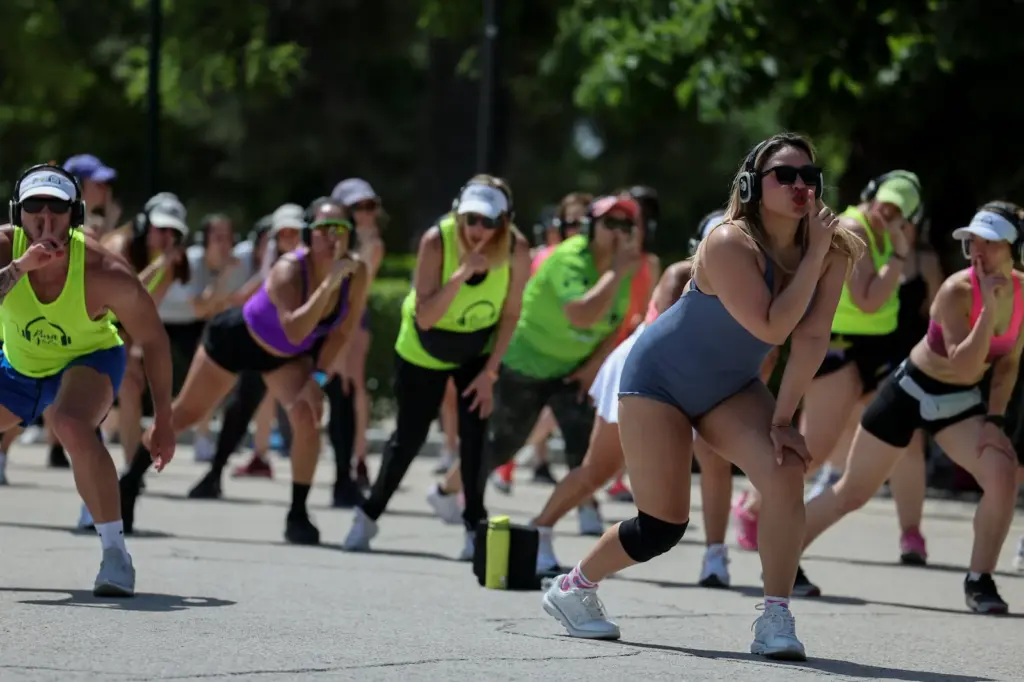
Humberto Sánchez Mendoza, Beto, is 36 years old. In Venezuela, he was not dedicated to dance, but in Madrid, he made it his job. Five years ago, he wanted to “bring a little of that Caribbean flavor” to the public spaces of the Spanish capital. “It helped me a lot in a stage of my life. When you emigrate, you start from zero, many times you feel lost, and dance has that magic that instantly lifts your spirits,” he says after the class. Some of his students, older migrants, have experienced the same: “When they come to these spaces, they integrate little by little, meet people like them but also very receptive locals.” Among his class are Spaniards, migrants, and tourists. For example, Luminita María from Romania or Purificación Ocaña and Yolanda Pavón, both Spaniards. The three, regular students of Beto, agree on their liking for these rhythms and the view that dancing is therapy. In the hour and a half of dancing, there is reggaeton, salsa, bachata, merengue, rumba, and folk rhythms like Venezuelan drums, Brazilian samba, or Argentine cumbia. “So people know there are other things too,” explains the teacher.
Sunday afternoon falls and the tum tum of reggaeton or the one, two, three of salsa continue sounding in the parks of Usera, Tetuán, or Casa de Campo, in gatherings among friends or family. It will also continue sounding in clubs like La Cucaracha, which will move to Florida Park during Bad Bunny’s residency or in Fitz, the official after party of the concerts. Also in La Parcería’s venue with its dance classes and live sessions. And, of course, in the ten concerts that the Bad Bunny will give in the European embassy of rumba and dembow.
Read more Two injured as a Russian drone hits a residential building in Romania