





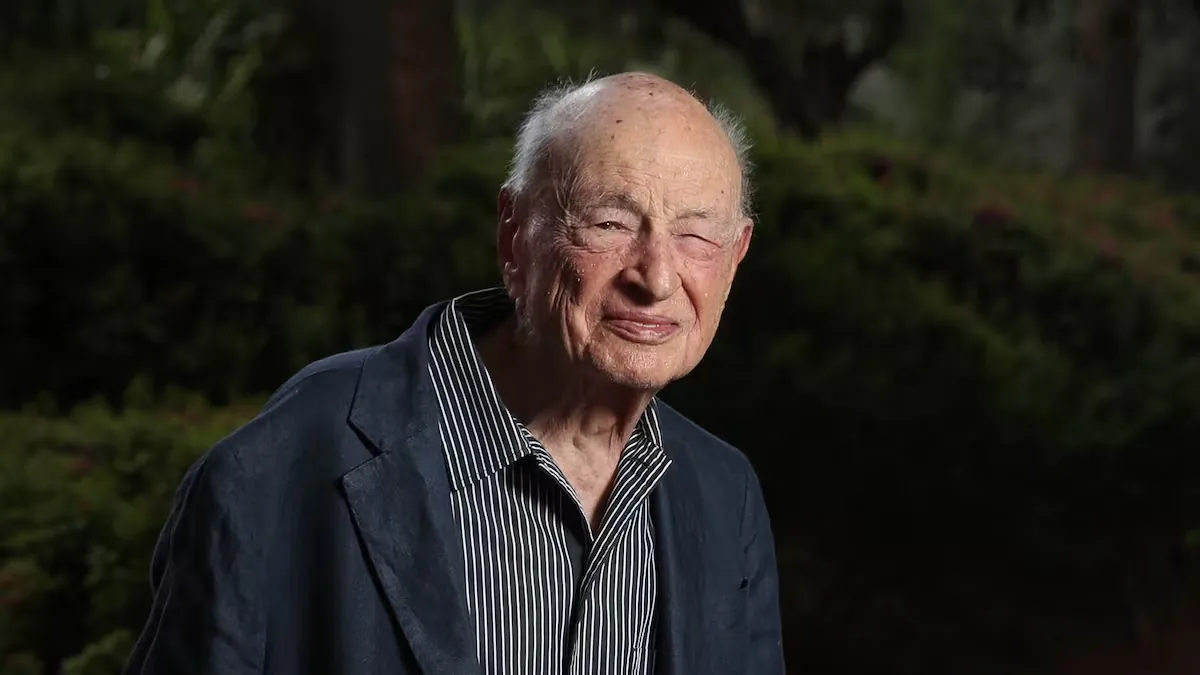
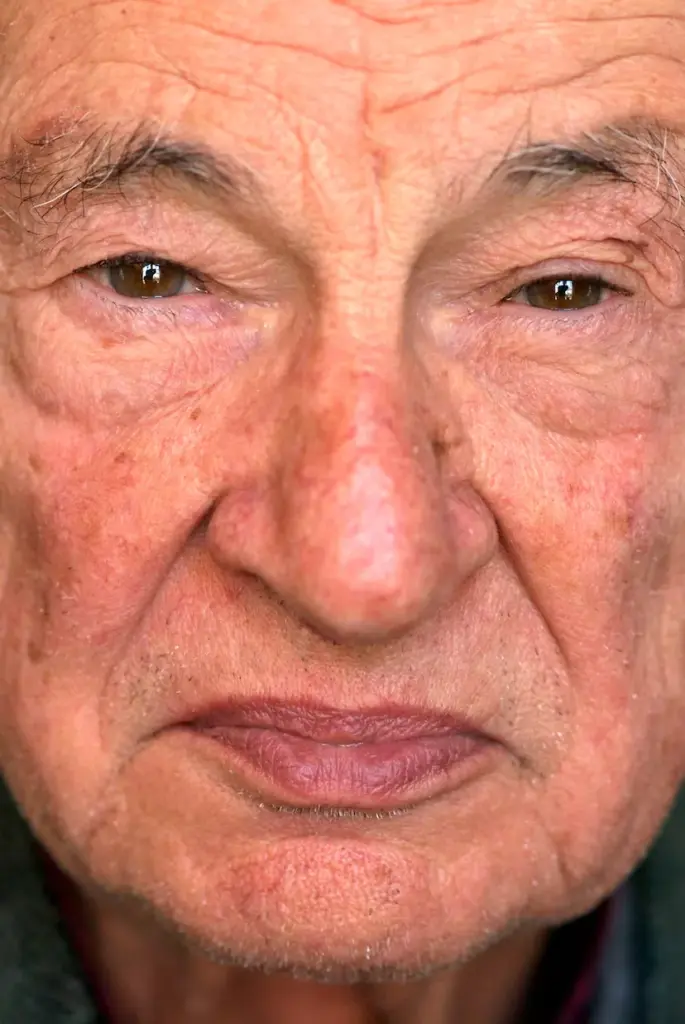
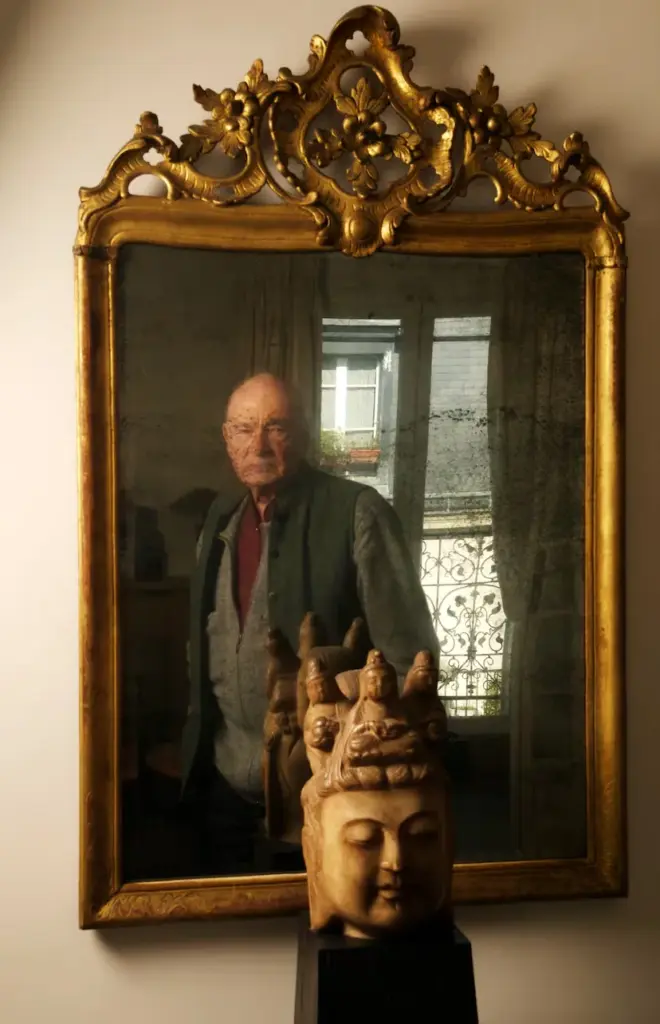
French philosopher and sociologist Edgar Morin passed away this Friday in Paris, according to his widow who confirmed it to Le Monde. The thinker was the last representative of a practically extinct world, that of the great intellectuals forged in the flames of the first half of the 20th century. Morin spent his last years between Paris, Montpellier – southern France – and Marrakech, and continued tirelessly writing works that illuminated thought without constraints or that way of seeing the world, as he said, pre-cooked in the major Western media. Morin was also the creator of the theory of complex thought, something that many today would consider a pleonasm and which, in reality, referred to the idea of the impossibility of compartmentalizing knowledge because everything is connected, just as was the case with his own biography.
Read more Odegaard challenges King Vitinha in the Champions final
Morin was born in Paris as Edgar Nahoum, son of Sephardic Jews from Thessaloniki (Greece), the author proclaimed his multiple identity as Spanish, Italian (on his mother’s side), French, and European. He studied History, Geography, and Law. “Until his last days, he remained attentive to the world, to others, and to the great human questions that nourished his thought,” his wife, Sabah Abouessalam Morin, stated. “Today, the void he leaves is immense. But his courage, his loyalty to people and ideas, his moral demand, and his hope continue to accompany us,” she added.
Since the 1950s, he developed his research activity in various French academic institutions, especially at the National Center for Scientific Research (CNRS). Throughout his career, he published more than twenty books on sociology, culture, politics, knowledge, and complexity. Some remain as relevant as Rumor of Orléans, an essay about a false story that spread in 1969 according to which young women disappeared in fitting rooms of certain clothing stores, were drugged, and then sent to international prostitution networks. It was all unfounded. A hoax, a post-truth before that prefix made sense in our world. But the case acquired a special dimension because the stores involved shared a characteristic: they were run by Jewish merchants. For this reason, the phenomenon is today considered a classic example of an anti-Semitic hoax and conspiracy theory.
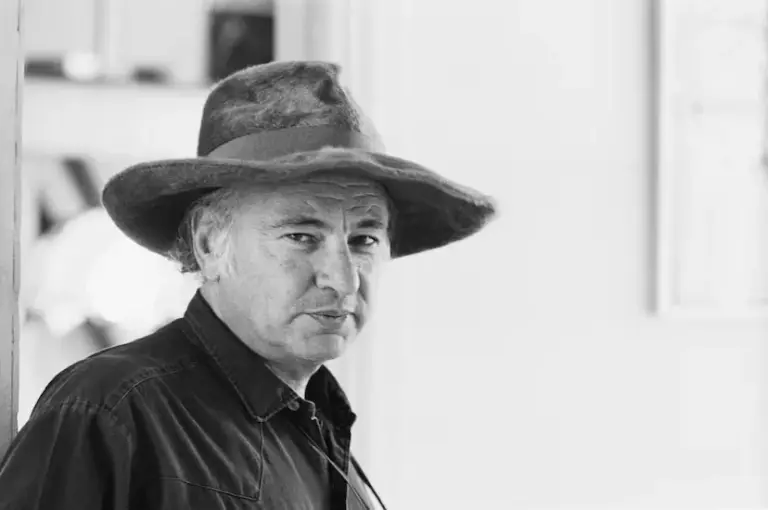
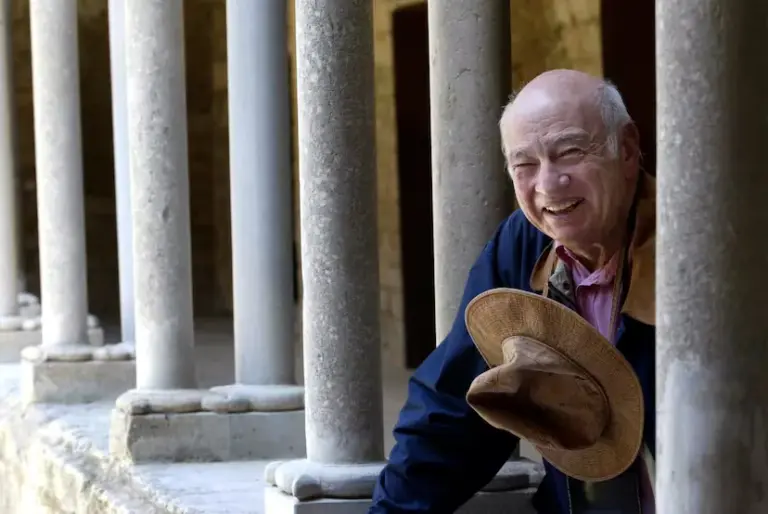
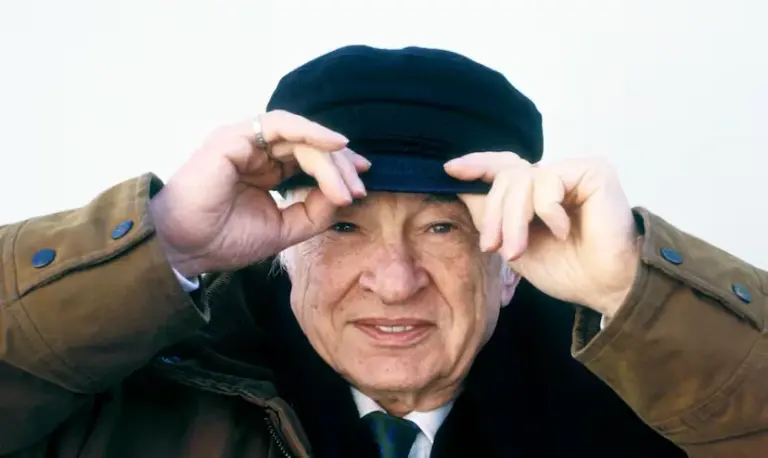
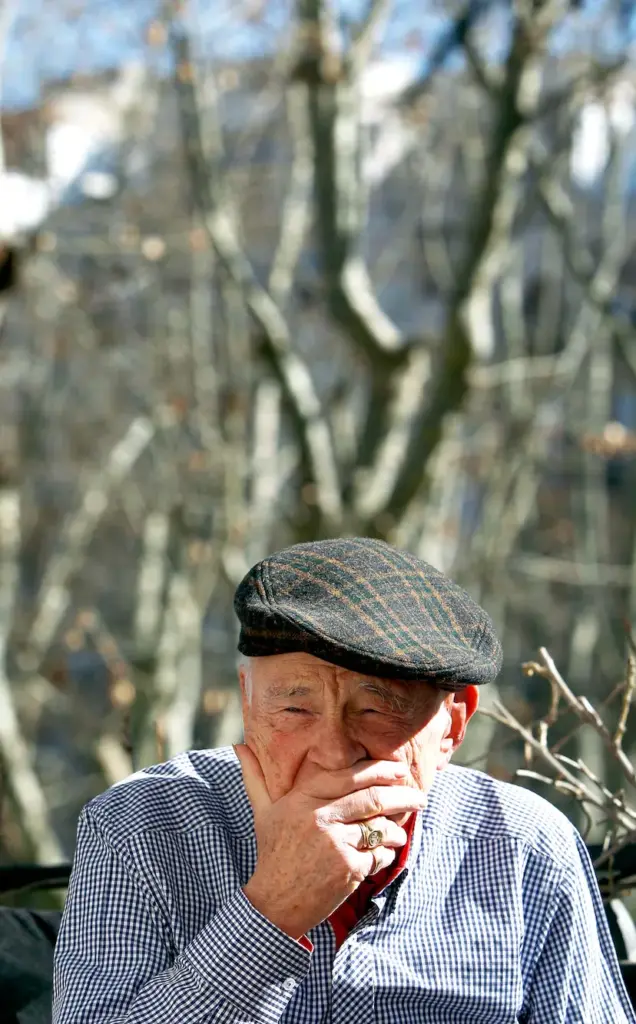
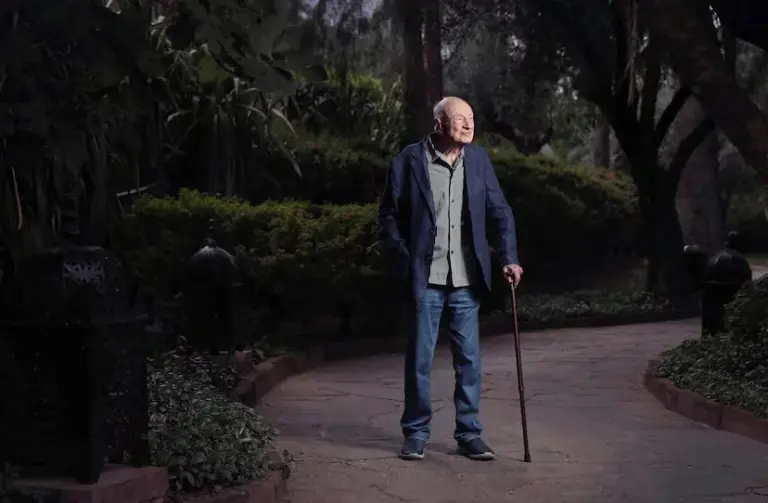
Besides being a philosopher and sociologist, Morin was an intellectual committed to the great debates of his time: antifascism, criticism of Stalinism, decolonization, ecology, globalization, and the defense of a renewed humanism. He was even the inventor of the term Yé-Yé in two articles published in Le Monde in July 1963, in which the sociologist analyzed the Salut les copains phenomenon, embodied by Johny Halliday himself and a generation of musicians like Claude François, Dick Rivers with les Chats Sauvages, and François Hardy. After the publication of these texts, he had the opportunity to meet the singer, who since then called him “the best friend of the youth.” A label that would be confirmed in the following years with many of his ideological positions.
Although for decades he was a marginal figure in part of the French university, his influence spread internationally, especially in Latin America, where his ideas inspired educational reforms and research centers. Until his last years, he continued publishing, participating in public debates, and defending the need for an “insurrection of consciences” based on fraternity, cooperation, and hope.
A reference intellectual for the French left, an inspirer (alongside Stéphane Hessel) for those young people who took to the squares of the world in the year of 15-M, Morin was a humanist who always liked to intervene in public debate. Although in the realm of thought, he will forever be recognized for the publication between 1977 and 2004 of the six volumes of The Method, where he developed the keys to complex thought, a multidisciplinary and panoramic reflection methodology, free from rigid compartments.
Read more Ten nights, one stadium, and a single law: that of Bad Bunny and the business of residencies
Morin did almost everything and almost always, lucidly and brilliantly, although a certain pessimism ran through all his work. In his book Lessons from a Century of Life, for example, he confessed that he was a bad father and a bad son. And perhaps the death of his mother was one of the episodes that most shaped his initial thought, just when Morin was about to turn ten and she died after a heart attack. Later he described it as an “inner Hiroshima.” Since then, he would have to, according to a phrase by Heraclitus that he made his own, “live from death, die from life.”
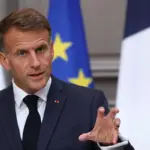
The President of France, Emmanuel Macron, also remembered him on his social networks. “Soldier of the Resistance, militant and freed, writer and thinker of the century, defender of nature and peoples, Edgar Morin was humanism personified. With his kindness, his curiosity, he never stopped enlightening us. Complex thought, fruitful life, universal spirit. I send the condolences of the Nation to his loved ones.”
His political journey also speaks of the storms of France. His work Self-Criticism, published in 1959, had a great impact. In it, he recounts his expulsion from the French Communist Party (PCF), of which he had been a prominent figure, and his blindness to Stalinism, of which he later became very critical. He also later became one of the founders of the committee of intellectuals against the Algerian war, a phenomenon that would determine most of the major political and cultural phenomena that France would experience.
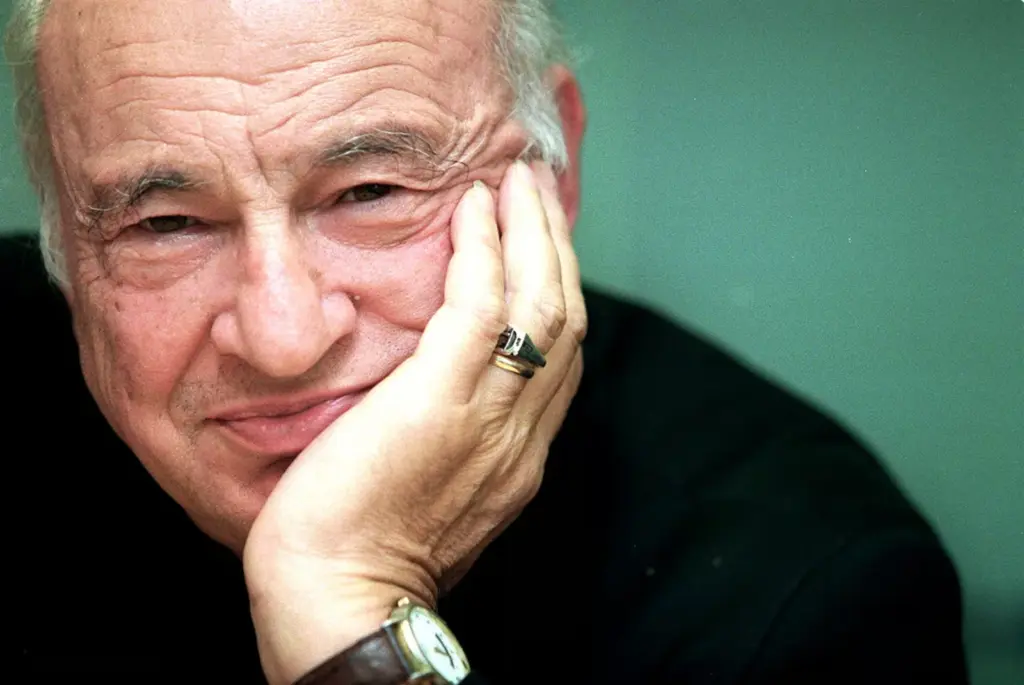
Morin’s life, precisely, is explained through the great upheavals of the 20th century, from World War II, when he joined the Resistance (there the pseudonym Morin was born, which he later also used as an author and thinker), to the revolutionary wave that swept the world in 2011 and which in Spain crystallized with the 15-M camp. Morin believed that the greater the risks of crises, the greater the possibilities of finding solutions. To the question often asked of him about whether he was optimistic or pessimistic, he answered in 2005: “I am an ‘optimistic-pessimist’ (…), I have hope amid despair.”
That somewhat gloomy worldview was also reflected in one of his last essays, De guerre en guerre: de 1940 à l’Ukraine (From War to War: From 1940 to Ukraine). “We are facing the escalation of inhumanity and the collapse of humanity, the escalation of simplism and the collapse of complexity. And, above all, the escalation towards a world war that means the collapse of humanity into the abyss,” he wrote in an op-ed published in this newspaper about the war in Ukraine. But not even his 104 years of life and the privilege of riding the most fascinating epochal changes were enough for him to see the end of that conflict and disprove his grim premonition. Les souvenirs viennent à ma rencontre, his memoir published in 2019, also anticipated this end. “I too will depart to the land where the orange blossom grows.”
Read more PNV and Junts pressure with elections without room to support the censorship of Sánchez