
In the Iran war, the urgency has shifted sides. If in February the United States and Israel considered it so urgent to start the conflict that they launched a massive bombing and killed the supreme leader, Ali Khamenei, even in the middle of a negotiation process, three months later it is Donald Trump who is striving to keep the dialogue alive to definitively end the conflict, while Tehran remains firm. The U.S. president showed this again on Monday by ordering Israeli Prime Minister Benjamin Netanyahu to stop the bombings he had announced over Beirut. Objective? To avoid the feared derailment of the negotiation with the ayatollahs.
Read more Russia intensifies attacks against Ukraine and its threats to Europe: “Their peaceful dream is over”
A large part of this urgency originates in Hormuz. No one, probably not even Iran, believed it possible that the Revolutionary Guard could almost completely close the strait. And yet, it has: aside from fluctuations, it is approaching 90 days of lockdown. The closure of the maritime passage through which typically one-fifth of the world’s consumed oil and liquefied gas ―and an even greater proportion of some key derivatives, such as jet fuel― passed has been the trump card played by the Islamic Republic to pressure the United States. It is also what has caused the urgency to shift sides three months later.
Although the greatest energy damage is suffered in Asia and Europe, Trump cannot afford to reach the November elections ―in which the entire House of Representatives and more than a third of the Senate will be renewed, and control of his legislative agenda will be at stake― with gasoline prices above four dollars per gallon. The precedents are there, in plain sight: none of his predecessors has won presidential or midterm elections with the price of the king fuel above that threshold.
Besides the purely electoral reason, perhaps the main cause of the urgency, there are other reasons. Trump launched this war convinced it would be resolved in a matter of days, as had happened in the operation that captured Nicolás Maduro in Venezuela or in the Midnight Hammer against Iranian nuclear facilities exactly a year ago. Now the Republican has mentioned the word “boring” more than once in relation to this war. That polls indicate that more than two-thirds of American voters are against the conflict adds fuel to this desire to end it once and for all.
There is another reason, of a military nature: the rapid depletion of ammunition used in hostilities, especially the very expensive interceptors of air defense systems like THAAD or guided missiles. A study by the CSIS think tank estimates that replenishing these arsenals will take years, an opportunity that other adversaries may want to exploit.
It also weighs that strategic reserves of crude oil, gasoline, diesel, and kerosene are depleting much faster than expected, increasing the urgency to reopen Hormuz. Reaching summer with the strait closed would be lethal. Conversely, Iran’s capacity for resistance, which has martyrdom at the base of its culture, has been notably greater than many analysts anticipated. And more than the White House itself predicted.
The umpteenth plot twist last Thursday, when Iran denied that the draft agreement was only awaiting Trump’s signature, is further evidence that the urgency has shifted sides in recent weeks. So are the outbursts uttered this Monday by the Republican in a call with Israeli Prime Minister Benjamin Netanyahu, according to the digital media Axios.
If in early April, when the U.S. announced a second blockade on Hormuz, Tehran seemed much more eager to reach an understanding ―given the strangulation its economy would face―, now it is Washington that appears much more anxious to reach a deal that allows the strait to be unblocked. Although Iran’s exports have been reduced since then, most analysts agree on the mistake of underestimating the resilience of a country that has lived with sanctions for decades.

For Israel, the offensive in Lebanon is a kind of two-for-one: if it did not affect the dialogue between Iran and the U.S., fine, because it would mean “freedom of action” (in Israeli military jargon) and that Hezbollah has been abandoned to its fate by Tehran, its great armament and economic supporter. If, on the contrary, it impacted the negotiations, even better, since Netanyahu desires the resumption of the war against Iran and to go after the regime and civilian facilities until its fall.
For all these reasons, in Monday’s episode, Iran achieved an important victory: reconnecting the fate of the two truces (the Lebanese and the global) and having Trump act in the same direction, showing the world an unbridled urgency to bring the Islamic Republic back to the negotiating table.
Israel had done everything possible to disconnect both truces. In April it launched a brutal offensive in Lebanon to make clear, through more than 300 deaths, that the agreement between Iran and the U.S. was outside its scope. A quite successful strategy: Trump also treated it that way then.
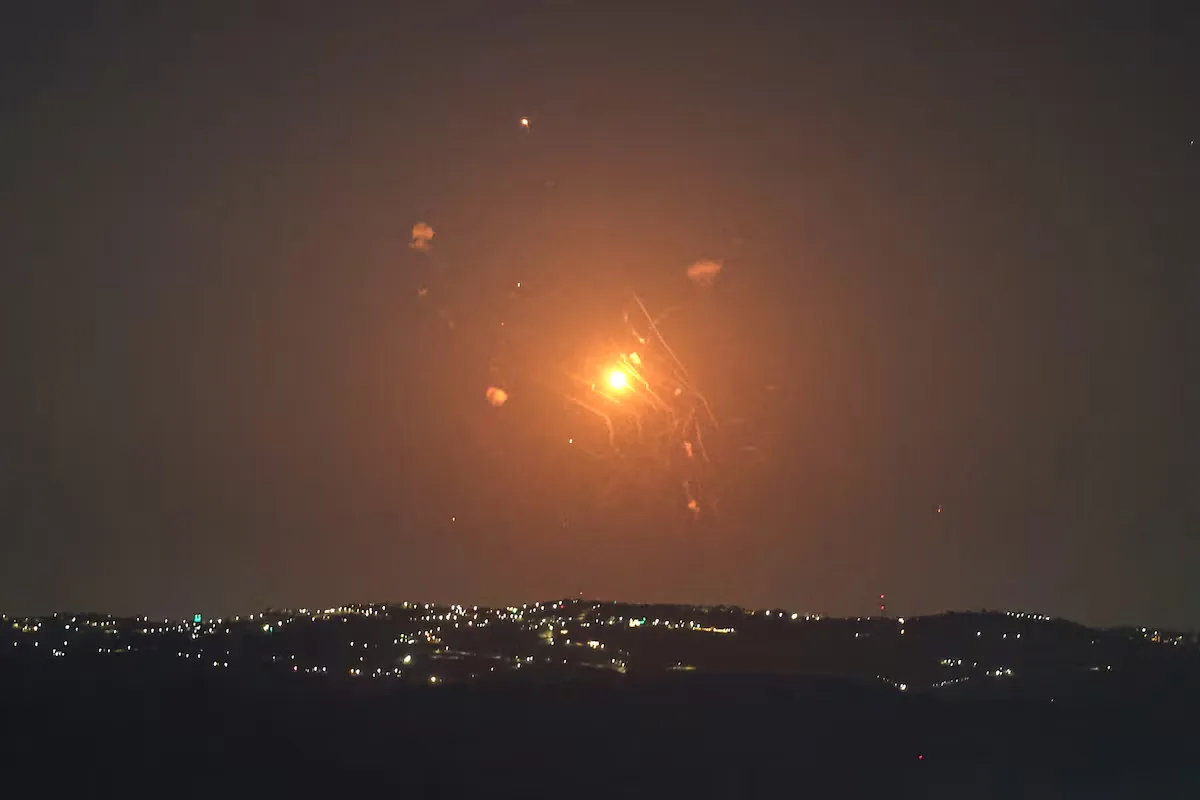
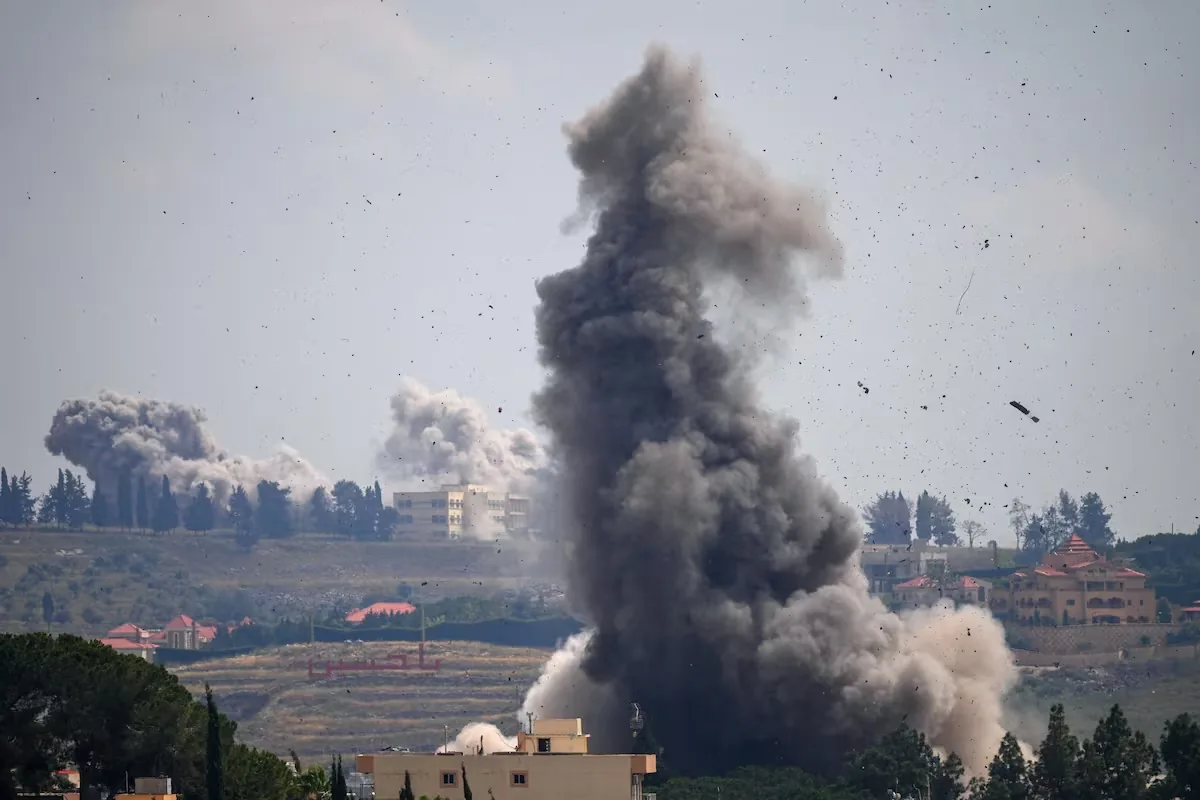
Tehran insisted, so as not to completely abandon its ally Hezbollah, and Trump ended up forcing a ceasefire in Lebanon. But Netanyahu agreed with Washington on a formula to empty it of content, just like in Gaza: he continued bombing in the south and in the Bekaa Valley and demolishing entire villages (even with private contractors he pays per house demolished). Hezbollah, meanwhile, has continued launching projectiles daily, especially drones against soldiers occupying Lebanon, killing about ten. The U.S. only asked it to leave Beirut out, except for selective assassinations of Hezbollah leaders.
Netanyahu then ordered troops last week to advance north, escalating the conflict with Washington’s acquiescence. But the announcement to bomb Beirut was the last straw for Iran, leading it to abandon the stance it had been taking (defending Hezbollah is not worth risking the truce with the U.S.) and to link the fate of both: it announced it was abandoning negotiations with the U.S. because of the offensive in Lebanon.
Trump then called Netanyahu. A conversation, according to the news portal Axios, full of insults: “What the hell are you doing?” he asked. “You’re fucking crazy. If it weren’t for me, you’d be in prison. I’m saving your ass. Everyone hates you, even in Israel.”
After that conversation, the Republican rushed to social media to proclaim that talks with Iran are “moving full steam ahead.” Trump, although he boasts of having no rush to reach an agreement with Tehran, wants to be able to proclaim as soon as possible an agreement around the memorandum of understanding that the two adversaries are handling, give himself the sixty days that document foresees to address the thornier issues —such as the Iranian nuclear program— and finally close the crisis. Even if a definitive agreement is never reached and those issues could trigger a new conflict in the future.
“Sixty days is an extremely ambitious timeframe to bring positions closer on some of those issues,” considered International Crisis Group analyst Ali Vaez in a recent videoconference. “This could become one of those provisional agreements that never turn into a definitive one, like in Gaza. But if we compare it with the alternative, which is returning to a conflict that could escalate and get out of control easily, or leaving things as they are —which could cost more lives worldwide—, it is a good step forward.”
The other lesson this war leaves is that the global economy’s resilience to a closure of Hormuz, for which there is no precedent, is much greater than presumed. The fuel shortage is taking its toll, especially in Asia ―with several countries having been forced to ration them physically―, but the worst forecasts are far from being fulfilled. Reserves are dropping sharply, yes, but the world’s adaptability is greater than predicted.
The International Energy Agency (IEA) warned in mid-April that Europe only had kerosene for six weeks, but seven weeks have already passed, planes keep flying, and its cost has even dropped. Largely because refineries on both sides of the Atlantic have been able to redirect their efforts to that specific fuel, reducing the production of less urgent ones (such as gasoline and even diesel). Reserves are consumed at record speed, but the Apocalypse disappoints its prophets again. As long as Hormuz does not remain closed until summer. That remains the limit.