








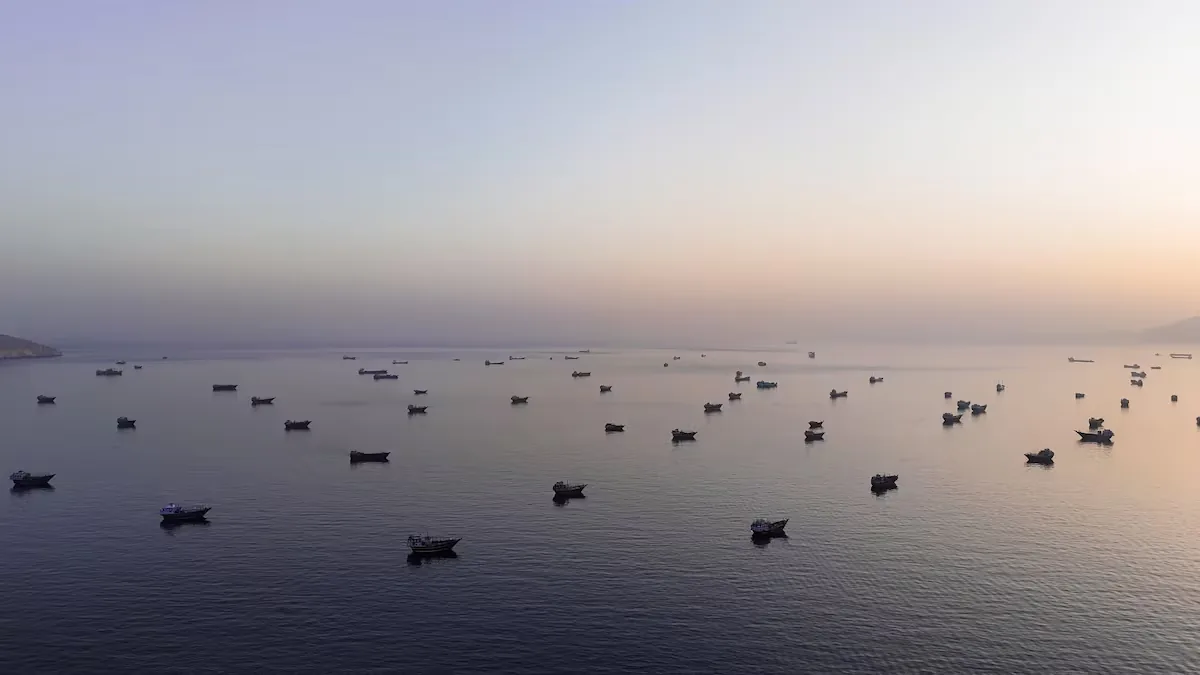
Despite the many setbacks, something is moving in Hormuz. Even before the United States and Iran agreed to reopen the strait, the world’s most important maritime energy route shows signs of a slight reopening. Despite the double blockade ―first by Tehran and then by Washington― the number of ships that have managed to pass through it has increased in recent days. Some, the majority, in agreement with the Iranian Revolutionary Guard. Others, guided by the U.S. Navy. The fewest, on their own risk.
Unaware of the umpteenth stalemate in negotiations, the constant skirmishes and crossfire in those same waters ―in the early hours Washington hit an Iranian tanker and Tehran responded by attacking a Liberian-flagged container ship― both the data from the Norwegian consultancy Rystad Energy and the British maritime data and intelligence firm Lloyd’s List point to a rebound in crossings. Especially outbound, heading to the Arabian Sea and the Indian Ocean.
Iranian authorities have also been announcing increased ship traffic for several days, exceeding twenty daily both last Friday and this Tuesday. The data published this Tuesday by Lloyd’s List Intelligence estimate about 300 ships of flags other than Iranian that have crossed after reaching an agreement with the Revolutionary Guard. Many of them, according to Bloomberg, belong to shipping companies that had not passed through the strait in either direction since the start of the conflict.
These figures only include movements authorized by the Islamic Republic authorities, but not those ships crossing with their transponders off to avoid detection. The latest data from Vortexa, another sector firm based in London, estimate that more than 65% of transits in May were shadow transits. That is, ships that crossed Hormuz without leaving a trace. That figure jumped from the 54% recorded in April.
“What started as behavior largely associated with Iran-linked fleets has expanded substantially, with many non-Iranian operators,” write Vortexa analysts in a recent client report. “These movements are no longer just a sign of sanctions evasion [against Iran], but have become a broad commercial response to maintain flows. Exports from the Persian Gulf have not stopped, but an increasing proportion of the physical flow is becoming harder to observe in real time.”
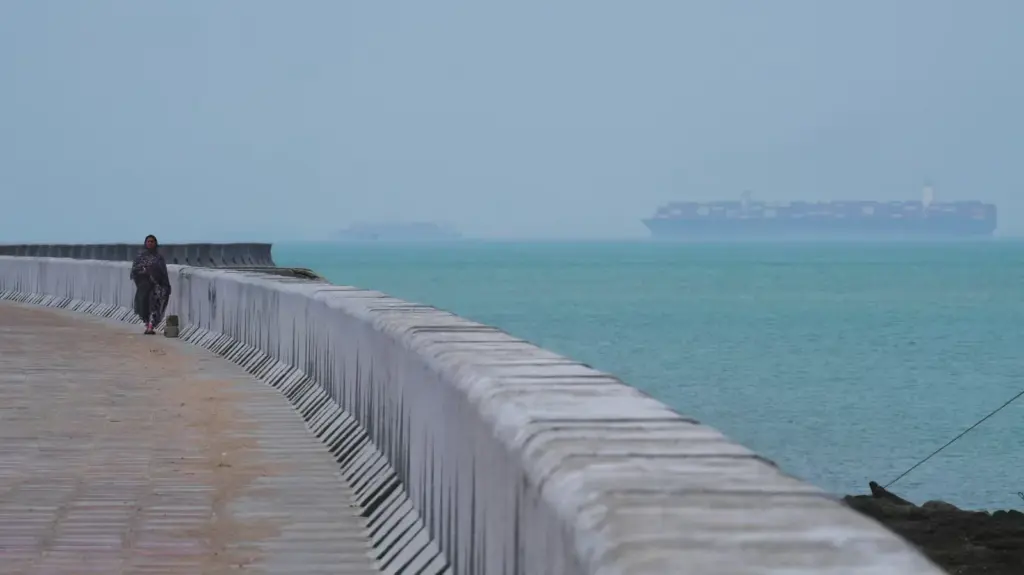
“Crossings are gaining momentum,” Jana Sutenko of the specialized firm Kpler stated a few days ago, after a large gas carrier from the Emirati energy company Adnoc reached Omani waters heading to India. Shortly before, three QatarEnergy methanol tankers had done the same with China and Pakistan as final destinations.
Despite the recent rebound ―both in verifiable movements, visible to all, and opaque ones― the current volume of crossings remains at levels far below those recorded before the war, when many days saw over 100 ships passing through Hormuz. However, it marks a turning point compared to the almost total drought in April and the first half of May.
Turning a blind eye
“Ship traffic in Hormuz has been quite higher in the last two weeks, it is evident and verifiable. It’s as if the US and Iran have reached a tacit agreement to open the tap a little and ease the bottleneck,” says Jorge León, vice president and head of geopolitical analysis at Rystad Energy, by phone. “In a way, it’s surprising, because Iran has an interest in oil prices rising to put more pressure on negotiations, and the US wants Iran to export less to reduce its income. But both seem to be turning a blind eye.”
This increased flow of ships in the area, León emphasizes, is “clearly” helping to ease oil prices, which in recent days have fallen below $100 per barrel, and gas, which is also clearly trending down. Although the expectation of an agreement between Washington and Tehran is the main element in any fluctuation, the negotiating mood is not the only factor at play.
“Without this increase in crossings in the last two weeks, the market would be much higher,” explains León, a former analyst at the Organization of the Petroleum Exporting Countries (OPEC). “Ship traffic remains very volatile and varies day by day, but it is clear that, implicitly, both parties are letting more pass.”
Donald Trump’s initial announcement back in March that US forces would escort Western ships so they could cross Hormuz has come to nothing. However, in recent weeks the US Navy has been guiding dozens of ships trying to pass through the strait. The New York Times estimates that since mid-May about 70 have followed their recommendations to leave the area ―successfully. Most, stealthily: with transponders off and therefore not adding to official crossing lists.
Read more Tenerife player convicted for assaulting and stealing a referee’s mobile phone