






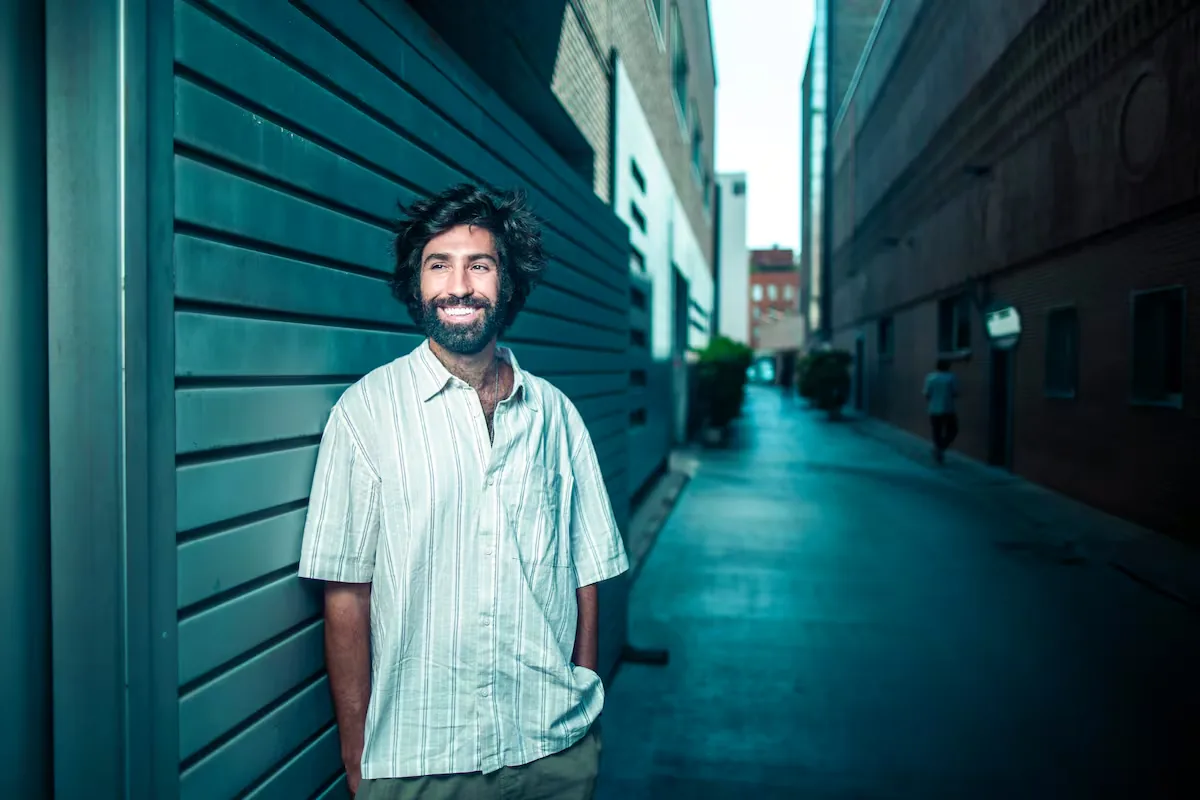
“My father was a professor of Political Science at the Complutense University, he was a disciple of Tierno Galván and was imprisoned by the Franco regime for his political ideas,” he says with a smile to make it clear that he does not come from an environment where one would expect to find someone like him. Carlos Bobillo (Madrid, 1987) arrives at the EL PAÍS headquarters directly from Burundi, after a whole day of traveling: “The first time, upon returning, I wondered: why do I deserve all this?” he explains in a soft voice, almost a whisper, which forces the listener to pay close attention. It is necessary to understand the leap of faith that led this lawyer and economist, trained in international business schools and with a successful career in the mergers and acquisitions department of a prestigious law firm, to leave everything behind to go to Burundi and join Hakuna.
Question. The first time you went on missions you were an atheist. What happened?
Answer. My family is secular and I studied at the French Lyceum, which has always been a center of free thought, with an intellectual-progressive profile. I started going on missions to Burundi during the summers of university, and there I began to see another world. In my case, it was philanthropy, that is, helping, so to speak, and also adventure. When you are 18, going to Africa, or anywhere, discovering the world, is very attractive. That’s how a very slow conversion process began and I finally made my first communion almost a decade later, at 30 years old.
Q. Can you pinpoint the exact moment when you said, okay, now I believe in God?
A. My father, who was in perfect health, died on a family trip, on January 6th, Epiphany morning, of a heart attack. When we went to wake him up in the morning to give us the gifts, we found him dead in bed. In that moment of great heartbreak, I felt enormous peace, a sensation of: “It’s okay, don’t worry, he’s already in heaven, he’s very well.” I wouldn’t say that at that exact moment I started believing in God, but I did think: “Hey, this peace I have, where does it come from?”
Q. So you joined Hakuna in 2015.
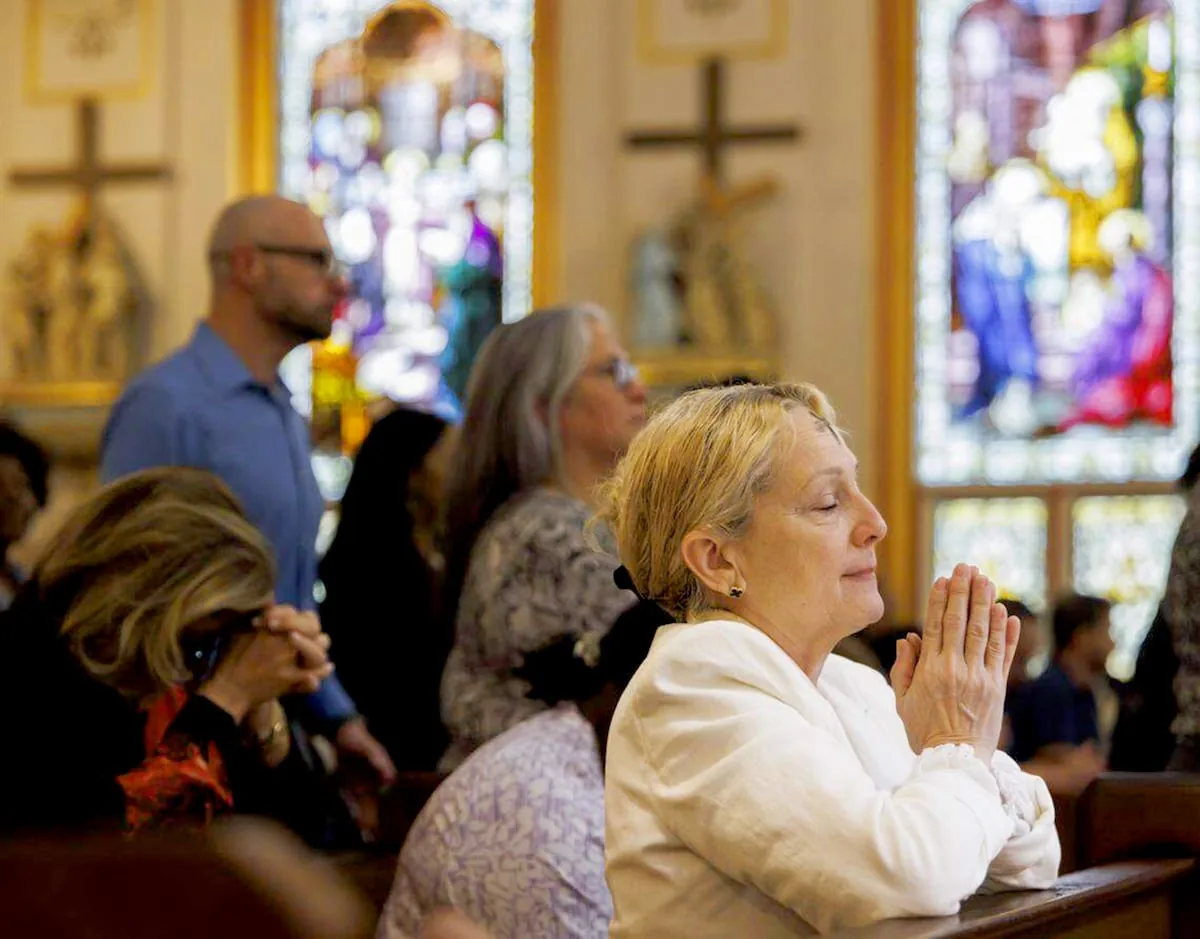
A. More than joining, I started going occasionally to the adorations that Hakuna holds, called holy hours, in Aravaca, without believing in God or anything. The parish was a makeshift building. And there were about 200 or 300 young people, all in silence, with the Host, which was supposed to be Jesus, there in the middle. And guitars, and silence, songs, and silence…
Q. Is there a lot of flirting?
A. I wouldn’t say it’s a Catholic Tinder. In Hakuna, and I think in the Church in general, people flirt quite normally. If in summer 300 young people go on a pilgrimage to Greece, it’s normal that some flirt, especially when you’re with people who have concerns and values similar to yours.
Q. What is happening for so many young people to join, something that didn’t happen in the nineties?
A. There is an increasing break with the world and young people want to live a different life. I know it sounds very strange, but I think the world is increasingly materialistic, increasingly superficial, increasingly focused on pleasure and the immediate. And many young people feel inside a very big gap with the consumer society, social networks, and that anesthetized life.
Q. Have you ever gotten angry with a friend because they didn’t understand you?
A. I don’t think so. Friendships seem very important to me and I try to take care of them, but it’s also true that I had friends from other worlds with whom I no longer have much in common and it’s hard to maintain the friendship. Because there is also a break between the plans I used to make, which now don’t interest me at all.
Q. Tell me one that you no longer feel like doing
A. Well, a bachelor party or going out at night to a club, with drinks, bottles, a reserved table, I don’t know.
Q. That ritual you talk about is more of an upper-class person. Do you notice that everyone in Hakuna is from a privileged social class or is there a mix?
A. Hakuna was born in a specific place. Just as Jesus started in Galilee, year zero. I’m not comparing, but things always have to start somewhere. And in the case of Hakuna, it’s Aravaca, year 2013, Madrid. It starts in the parish of San Josemaría with a group of young people, many of them former students of Opus Dei schools and universities or ICADE. That’s the origin. Now at Hakuna activities you can find a banker with a cook, someone from Cieza with someone from the Salamanca neighborhood.
Q. I have read the criticisms made from within the Church about the communication style of the founder, Josepe, who came from Opus, and about many Hakuna lyrics for being irreverent.
A. Josepe says a phrase that has marked me a lot: “Don’t waste a second of your life, not a drop of your saliva defending yourselves from criticism.” There will always be criticism.
Q. What is said is that in the theology you have created, it is God who serves man and not man who serves God. That is, it is a bit utilitarian.
A. I think the root problem comes when a phrase from a book or a holy hour poster is taken out of context. For example, there is a book by Josepe called Shitty Saints, which is a headline that many people, without having read it, just by the headline, find irreverent.
Q. Well, it’s not so strange that people get offended because someone says “shitty saints,” right?
A. I think those criticisms generally come from someone who hasn’t really lived Hakuna, and they stick with a photo, a headline, or a phrase taken out of context.
Q. What is true is that you use very marketing-like terminology, from business school: “soul college,” “god stops,” “grow up.” Do you feel that way?
A. It’s not like there’s a marketing plan behind it, it’s all quite natural, they give it a name that helps connect. The music group, when it was created, could have been called Pastoral Choir of the San Josemaría Parish, which would have been typical and is fine. But Hakuna came out very spontaneously and without much thought and that’s how it stayed.
Q. One of your expressions, which has also been controversial, is “getting your hands dirty.” What does it mean to be a “pringado” in Hakuna?
A. Being a “pringado” is a vocation, that is, when I feel that the Lord perhaps calls me to follow Him through Hakuna. Then a process begins in which you see if it is really your path: you start to know more about spirituality, you have a sponsor with whom you meet and who accompanies you in the process, and after a while, if you are sure, you say yes to that call from God.
Q. And what did you have to give up when you became a “pringado”?
A. I don’t see it as a renunciation, but rather as a very big affirmation. It’s true that it’s hard to understand leaving the job of a super lawyer to go plant coffee in Burundi, or leaving a beautiful house in Pozuelo to go live in the Estudio [a building that is a kind of modern monastery] in a 3×3 cell.
Q. And what does your mother say?
A. At first she didn’t understand, of course: why leave a life where you apparently have everything. It’s true that it’s hard to understand why you leave a super job to dedicate yourself to others, why you leave a super house just for yourself to live in a convent in Las Rozas with 50 strangers…
Q. What is the poorest neighborhood in Madrid you have been to?
A. La Cañada Real. We have been going there with Hakuna from the beginning.
Q. And is Burundi or La Cañada easier?
A. A country like Burundi is easier because it is a life with fewer spiritual wounds, much simpler, much happier.
Q. Could you hear Bad Bunny at a Hakuna party?
A. Yes, if it’s not an adoration, of course. Obviously, if the song is too explicit, maybe not, but the playlists are normal like anywhere else. At Hakuna, all kinds of music are listened to.
Q. And how is the LGTBIQ+ thing lived?
A. Well, here Hakuna’s stance is that of the Church, we are not divergent either way. Pope Francis insisted a lot on a phrase that personally helps me a lot: “In the Church, there is room for everyone, everyone, everyone…”. Of course, there is openness and welcome; it can only be that way.
Q. What do you think your father would think of your way of life?
A. Wow, that’s a topic, because of course, he didn’t live any of this. He would be very surprised, for sure, and maybe it would be hard for him, but I think he would only want to see me happy and doing good. So in the end, surely, like Saint Augustine, he would say something like: “Love and do what you want.”