




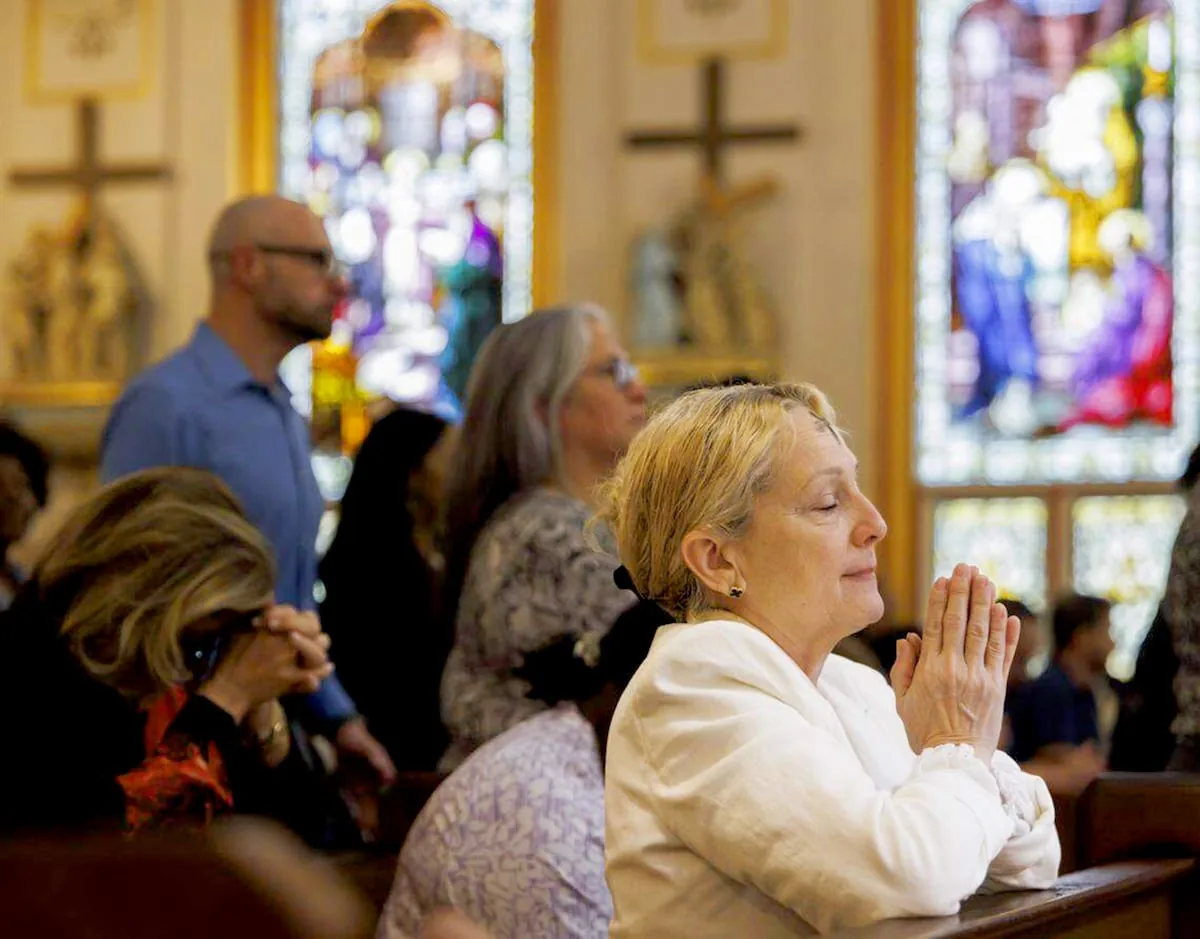
The relations between the Catholic Church and the United States Government are going through one of their worst moments. The immigration policies of Donald Trump’s Government, the war in Iran, the Republican’s tendency to make controversial statements, and the unfortunate idea of the president presenting himself as Jesus of Nazareth have caused outrage among Catholics. The White House occupant, who usually publicly degrades anyone critical of him, has made false accusations against Pope Leo XIV, who, in turn, has spoken out in favor of peace in Iran and against the persecution of migrants by his Administration. From the confrontation between the two leaders, Trump has come out losing and the Pope and the Catholic Church, strengthened.
Read more A Spanish clothing brand uses the symbols of the Zapatista Army on a soccer jersey
“Leo XIV has turned out to be surprisingly popular in the United States; therefore, his statements are heard and taken seriously by Americans and are harmful to Trump’s political stature. He is aware of this and resents it,” analyzes Christine Emba, senior researcher at the think tank American Enterprise Institute and at the Initiative on Catholic Social Thought and Public Life at Georgetown University. Trump “feels challenged by anyone who seems to enjoy greater popularity or authority than himself, and the Catholic Church and the Pope fit that description at this moment.”
A recent The Washington Post survey showed that, among Catholics, Trump’s approval rating has dropped 10 points since February 2025, down to 38%. Meanwhile, Leo XIV, the first pope of American origin, enjoys a positive image among 41% of respondents who know him, compared to 16% who have an unfavorable opinion. Almost six out of ten reacted negatively to Trump’s false claim that the Pope supported Iran having nuclear weapons.
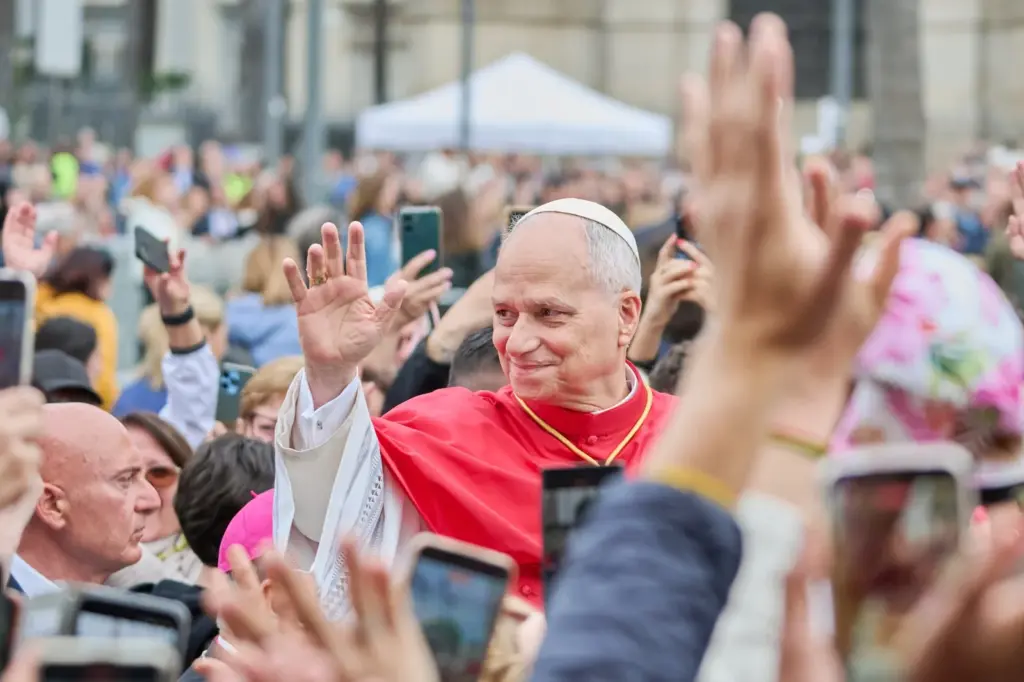
“The Pope would prefer to talk about the fact that it is okay for Iran to possess a nuclear weapon,” Trump said in an interview this Monday. “And I don’t think that’s very good. I think he is endangering many Catholics and many people.” However, the Pontiff did not make those statements but called for more peace talks. The Republican said the Pope is “terrible for foreign policy,” and Leo XIV responded that he was not “afraid of the Trump Administration.” “I will continue to speak out loudly against war,” he assured, adding that he had “no intention of entering into a debate,” but that “the Gospel is clear” and “the Church has the moral obligation to oppose war.”
The Republican’s attacks on Leo XIV break a tradition of cordial relations between the United States and the Vatican. Presidents used to visit the Pontiff, but this Thursday, instead of Trump, the official visitor to the Pope was Secretary of State Marco Rubio. “Trump’s clear animosity represents a real change. It’s as if he doesn’t even try, in the slightest, to maintain a good relationship and sends other members of the Administration in his place,” emphasizes Emba.
Before the war began, immigration policy, a priority of Trump’s second term, had already stirred the Catholic Church, which has defended refugees and asylum seekers. One of the first measures the Republican took upon returning to the White House was to allow Immigration and Customs Enforcement (ICE) agents access to places of worship to detain migrants, which until then were considered “sensitive places” and off-limits for arrests, like schools and hospitals. Many parishes located in areas with high concentrations of migrants saw their masses emptied of worshippers for fear of being detained.
The migrant community constitutes a good part of Catholics in the United States. According to data from the Pew Research Center, published in March 2025, more than 4 out of 10 Catholics are migrants. The Catholic population is composed of 54% white, 36% Hispanic, 4% Asian, and 2% black. An additional 2% identify with another race. Since 2007, the percentage of whites has decreased by 10 percentage points, while that of Hispanics has increased by seven points.
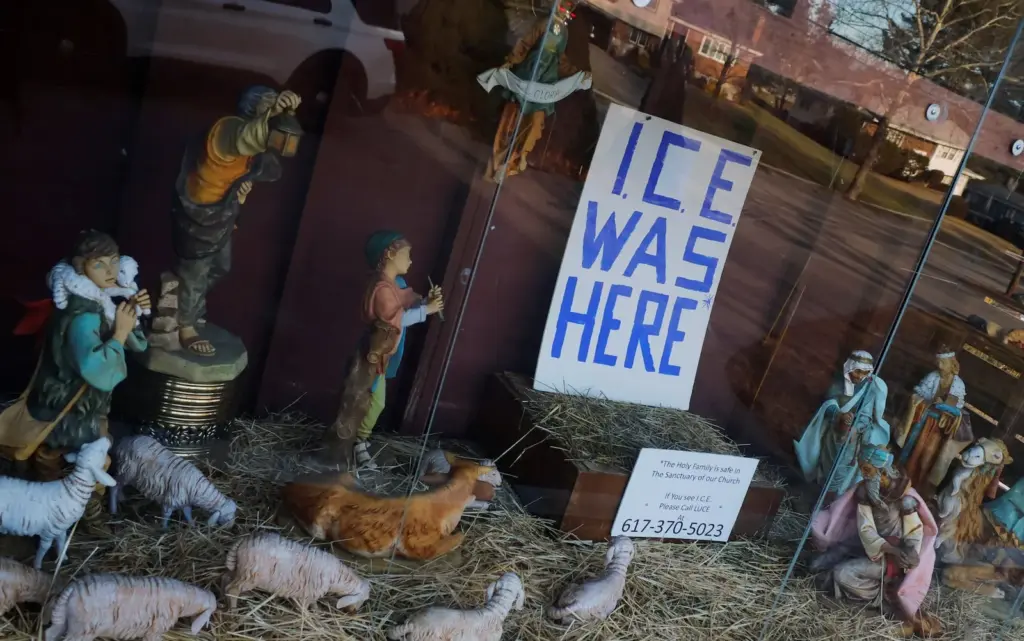
The group where the Catholic Church has the greatest potential for growth is precisely the one most affected by the Trump Administration’s deportation campaign. It has become routine for the faithful to go to their parishes seeking help for fear of being detained. They need financial support because they have lost their jobs, look for a solution for where to leave their children if detained, and even turn to priests to accompany them to immigration court appointments, which have become traps where they are arrested by ICE agents.
The American Catholic Church has defended migrants’ rights, and many of its priests were born abroad, necessary to compensate for the lower interest in the priesthood among those born in the United States. The Pope’s support for foreigners has been evident since his appointment. Just two weeks after assuming leadership of the Church, the first bishop he appointed was Michael Pham, a former refugee born in Vietnam, who took over the diocese of San Diego, California.
In November, the Pontiff openly criticized the Trump Government’s anti-immigration operations. “When people have led dignified lives—many of them for 10, 15, or 20 years—treating them in a way that is, to say the least, extremely disrespectful, and with episodes of violence, is disturbing,” he declared. Trump, for his part, lashed out at Leo XIV, claiming the Pope was too lenient with crime and terrorism.
A few days earlier, the United States Conference of Catholic Bishops issued a message lamenting the Trump Administration’s immigration policies. “We oppose the mass and indiscriminate deportation of people,” the statement said. “We pray for an end to dehumanizing rhetoric and violence, whether directed against immigrants or law enforcement.”
One of the Government’s retaliations against the Church has been the cancellation of an $11 million contract with Catholic Charities of the Archdiocese of Miami, Florida, which sheltered unaccompanied migrant minors. Catholic Charities USA is the official disaster response agency of the Catholic Church in the country and the third largest in the nation, only surpassed by the Red Cross and the Salvation Army. The network has seen an increase in private donations in response to the Administration’s policies, such as when the Supplemental Nutrition Assistance Program—known as SNAP—was interrupted, allowing it to distribute 2.4 million pounds of food, according to the organization.
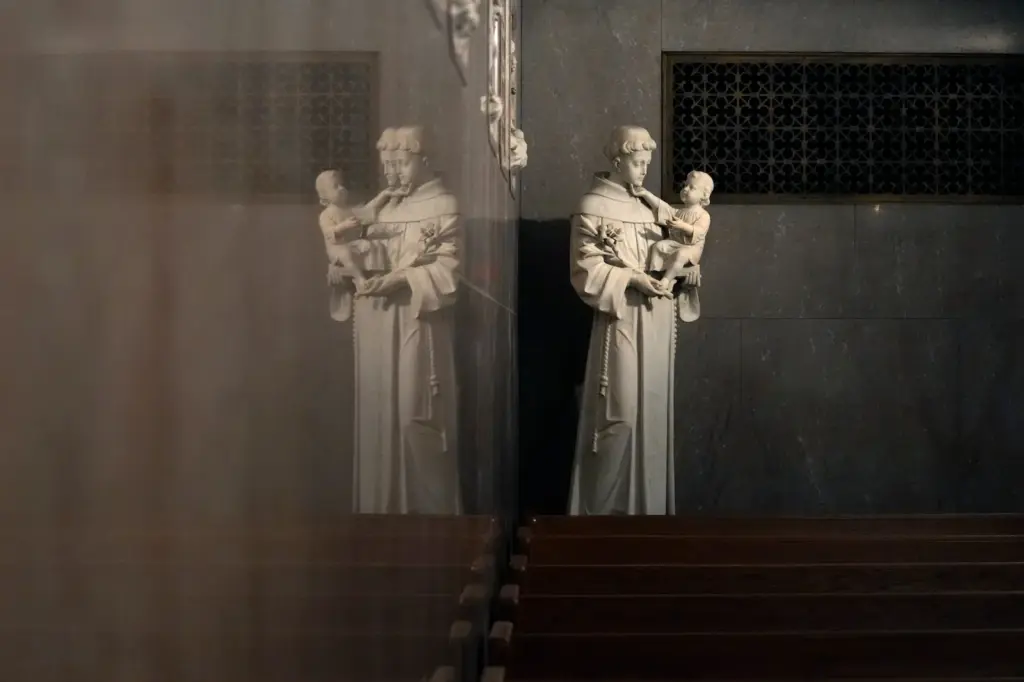
On May 4, the Pope met with Kerry Alys Robinson, president and CEO of Catholic Charities USA, and acknowledged how their work has been made difficult. “I am fully aware that Catholic Charities USA agencies are by no means immune to these challenges,” said the Pontiff. “I have never seen such unity in the Catholic Church. And I have worked for the Catholic Church since I was 14 years old,” Robinson stated, according to The National Catholic Reporter.
Also last year, in another setback to the Church’s humanitarian work, the Administration ended a decades-long collaboration with the Conference of Catholic Bishops for refugee resettlement.
Latino Bishops
The latest clear sign of the Holy See’s opposition to Trump’s immigration policy has been the appointment of a priest of Salvadoran origin as the new bishop of the Wheeling-Charleston diocese in West Virginia. Evelio Menjívar Ayala, 55, has been very critical of the offensive against migrants, with whom he easily sympathizes. He himself crossed the U.S. border hidden in a car before turning 20. It was 1990, and he was fleeing the civil war that ravaged El Salvador. Two decades ago, he obtained U.S. citizenship and in 2023 became the first auxiliary bishop of the Archdiocese of Washington, from where he advocated for migrants’ rights, including undocumented ones.
“The mere fact of crossing the border undocumented should not define your entire immigrant story. Because there is strength, there is the dream, there is resilience, there is the drive you put into life. The immigrant cannot be defined by just one part of that path and experience,” he said this week in an interview with CNN. A discourse that clashes head-on with the current Administration’s narrative, for which being undocumented is synonymous with being a criminal and subject to deportation. “I will continue to raise my voice for humane treatment of immigrants because that is part of my own story,” he assured.
This month the Pope has also appointed another Latin American-born priest as bishop in the United States. Reverend John Gómez, originally from Colombia, will manage the diocese of Laredo (Texas). Gómez came to the United States on a student visa in 2002 and became a U.S. citizen in 2021.
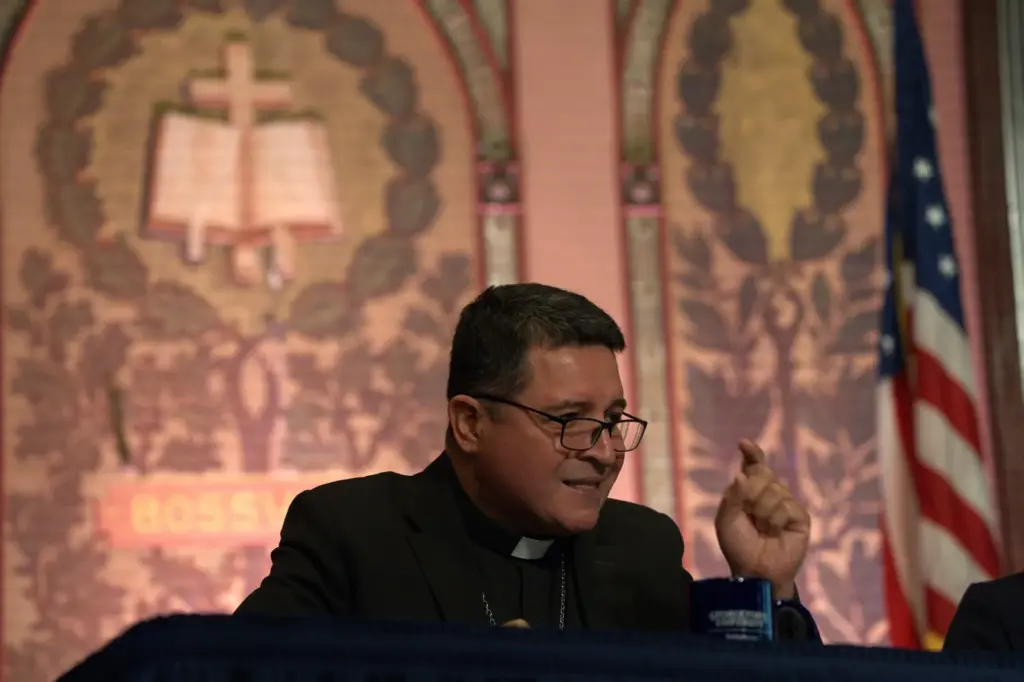
The territory to which Menjívar Ayala arrives is majority white and Republican. Trump won the white Catholic vote in 2024 by a margin of more than 20 points, but even in this segment of the population, dissatisfaction with the president is obvious. His approval rating among this group has dropped in the The Washington Post survey, from 63% to 49% in just over a year.
The last straw was the image Trump posted of himself as Jesus on social media, which he had to remove due to the criticism it sparked. 80% of his voters reacted negatively to what many considered blasphemy. The president tried to rectify by saying he was presenting himself as a doctor, but no one bought the explanation; he had crossed a red line. It also did not sit well among Catholic Republicans that Secretary of Defense Pete Hegseth invoked God while talking about the war and said he was on the side of the U.S. military.
With the midterm elections on the horizon, in which the Republican risks losing control of Congress, losing the Catholic vote, which defines about 20% of the U.S. population, could contribute to his defeat. And while Trump loses the support of Catholics, the Church gains followers: “People have been drawn to Pope Leo XIV at this moment because he is willing to speak about good versus evil, to take a moral stance that is not complicated by politics nor seems influenced by money,” Emba maintains.