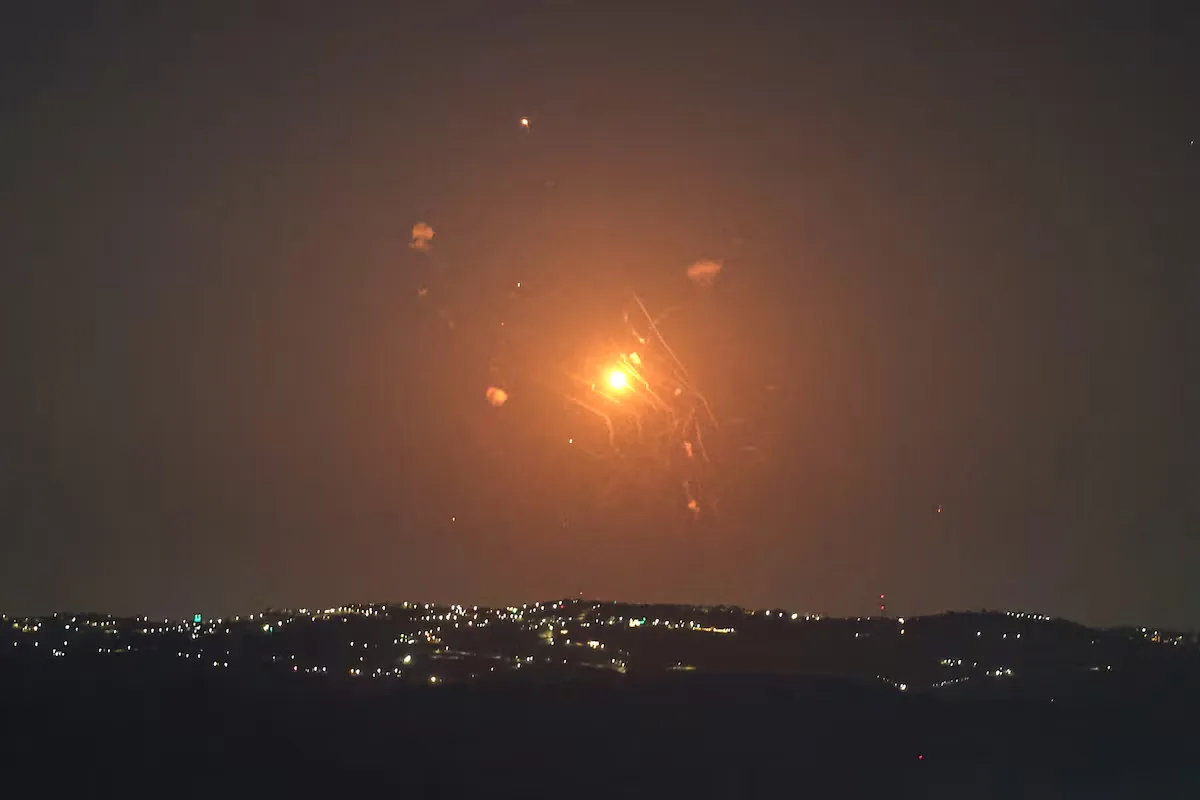









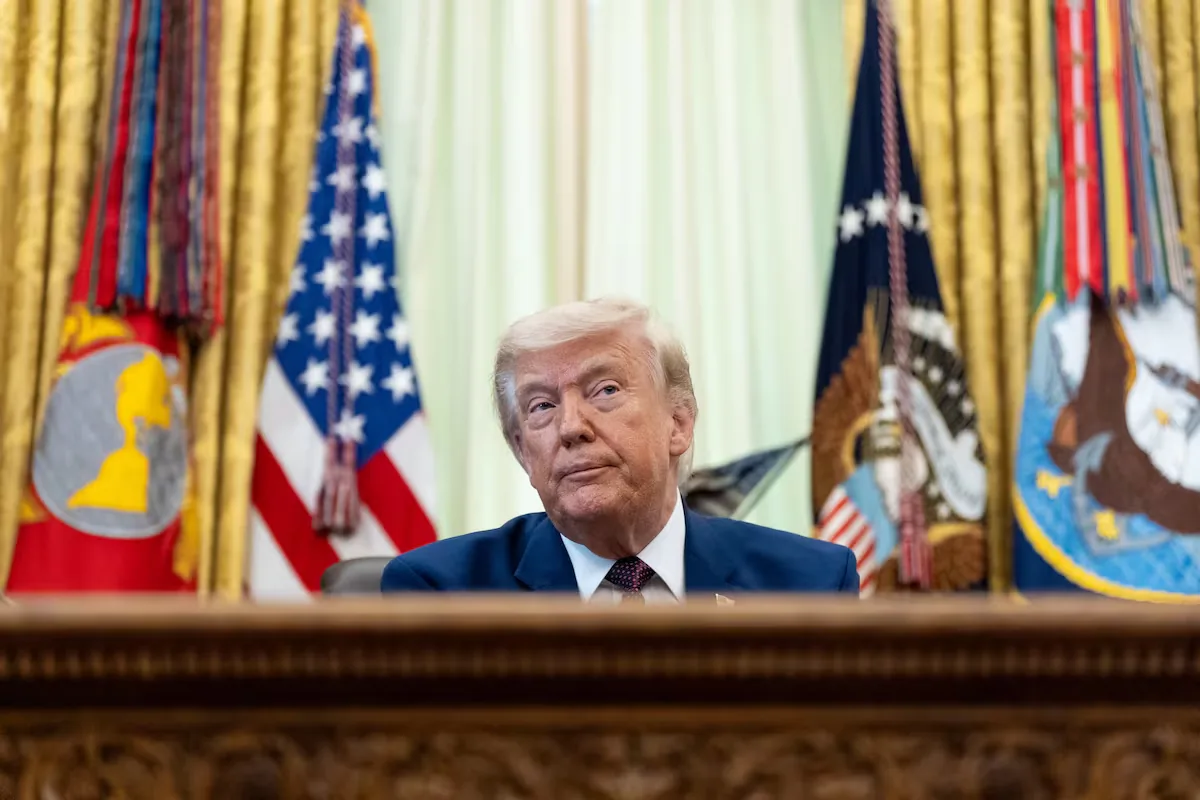
The United States House of Representatives approved this Wednesday a resolution, driven by the Democrats and symbolic in nature, that seeks to stop the war that President Donald Trump launched against Iran last February 28 without Congressional authorization, despite the country’s Constitution requiring it.
Four Republicans joined the Democratic Party to obtain a favorable vote of 215-208, a resolution that now must pass the Senate filter and that, to come into effect, would have to be ratified by Trump himself, a possibility that seems more than unlikely.
The Republicans who joined the Democratic initiative for the first time were Brian Fitzpatrick, from Pennsylvania; Thomas Massie, from Kentucky; Tom Barrett, from Michigan; and Warren Davidson, from Ohio.
This is the first time a vote related to the Iran war has been approved by the representatives and it joins another similar resolution that the Senate had advanced at the end of May.
The change in stance by the Republicans, which deals a setback to Trump’s intentions, arises amid criticism against the president for the approval of a $1.8 billion fund for his allies investigated during Joe Biden’s Administration.
However, the resolution must pass through the Senate and obtain a majority to be sent to the White House, where Trump must decide whether to approve or veto the initiative.
The resolution is based on the War Powers Act of 1973, which requires Congressional authorization to maintain prolonged military hostilities. Its promoters argue that Trump ordered the offensive against Iran without the Legislative branch’s approval, while the White House defends that he acted within his constitutional powers as commander in chief that allow him in principle to bypass Congress and use his authority unilaterally only if there has been a declaration of war, a specific authorization, or a national emergency created by an attack against the United States.
Last March 6, House Republicans voted against a law that would have limited President Trump’s power to continue the war. The day before, the Senate had rejected a similar law.
The resolution on the Iran war was not the only setback dealt by the U.S. lower house to the country’s president this Wednesday. Congress also gave the green light to a law to grant military funding to Ukraine and impose sanctions against Russia, thanks to the Democratic caucus, but also to six Republican congressmen who broke ranks with Trump’s party.