





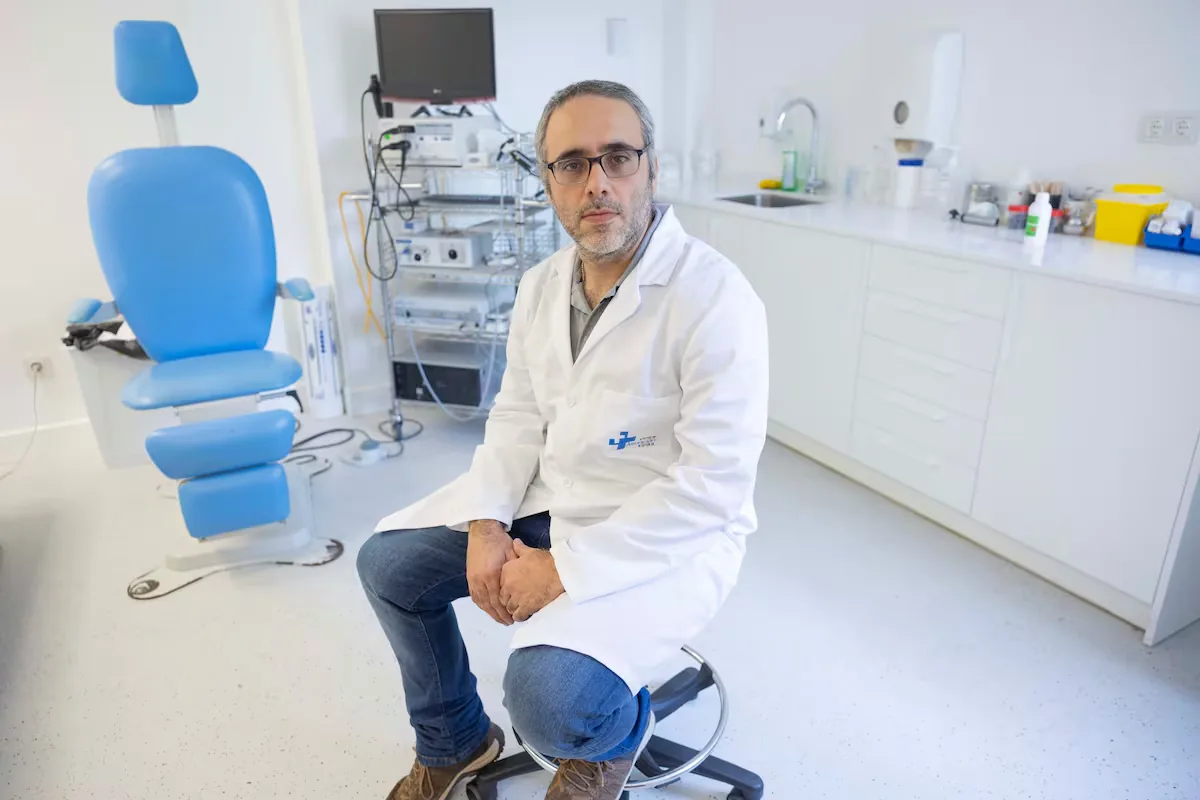
Ofreuddys Daniel Estrada Leal had been a doctor in Venezuela before arriving in Spain. Here, for almost two years, that profession was suspended in an administrative limbo. While waiting for the recognition of his degree, he worked as a fuel dispenser at service stations, as an administrative assistant at CaixaBank, and as a waiter at night. “Those were years of effort, adaptation, and perseverance,” he recalls. The day he received the email confirming the recognition, he was at the bank in Navarra. “That message meant the possibility of practicing my profession again,” he explains.
Like him, many migrant doctors go through a long process to be able to practice in Spain and have become an increasingly important part of the healthcare system’s machinery. According to figures from the Medical Association (OMC) provided to EL PAÍS, there are already more than 30,000 registered doctors (out of the current 331,864) who were born outside Spain, a number that falls short because not all provinces have disaggregated data. This represents practically one in every 10 doctors, a proportion that doubles in Madrid and Catalonia, the communities with the most foreign doctors. The vast majority of them come from outside the European Union. Mainly from Latin America, with Venezuela, Colombia, and Cuba leading.
There are no official figures that rigorously measure the evolution over the years. But all sources consulted —unions, OMC, and doctors from both public and private sectors— agree on a growing increase since the pandemic. There are also several figures that support this thesis: just three years ago, the National Health System had just over 15,000 doctors born outside Spain. And, according to statistics from the Ministry of Science, Innovation and Universities, favorable recognitions of Medicine degrees rose from 3,152 in 2017 to 8,845 in 2023; they were 8,865 in 2024 and reached their historic record last year, with 30,303 (one can get recognition without practicing in the country, but it is often a first step). Many of these professionals seek recognition but do not necessarily end up working or living in Spain.
The same Health report also reflected a shortage of doctors in Spain that will reach 9,000 next year. Especially family doctors. And this is one of the specialties where foreigners are most frequently hired. But there is a problem: many start working in the public system without their specialty recognized.
Because the recognition of the Medicine degree does not solve everything. It allows one to practice as a doctor, but it does not automatically equate to the recognition of a specialty, theoretically essential to work in the public system. But in practice, this is happening. Since the pandemic, hiring professionals without a specialty for extraordinary needs was authorized, and since then, this has not stopped growing, according to complaints from both unions and medical organizations.
Dr. Rami Ahmadi, an American of Iranian origin, knows this labyrinth well. She trained as a pediatrician in the United States, from where she decided to leave with her family in 2020, concerned about violence in schools in that country. She now works in a public health center in the Valencian Community where she practices pediatrics without having her specialty recognized, despite having practiced for 20 years.
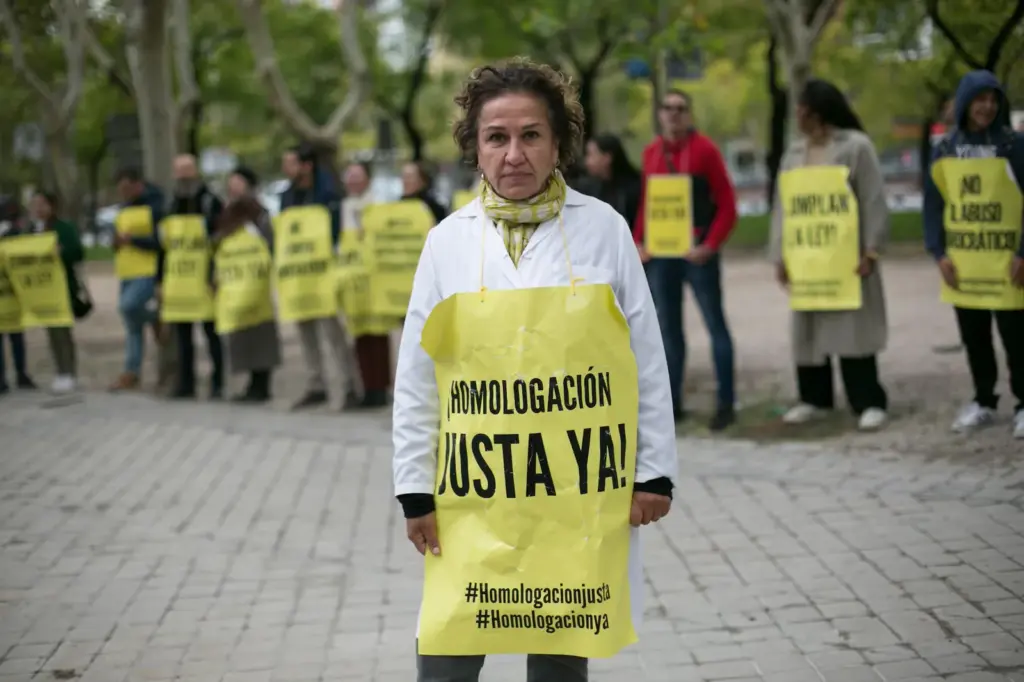
The problem is that residency in much of America for a pediatrician is three years, and in Spain it is four. “Being able to recognize my specialty would be almost impossible. It is a quite complicated and long process. And that makes it difficult to work in certain places,” explains Ahmadi, who is also spokesperson for the platform Homologación Justa Ya (Fair Recognition Now).
Asked by this newspaper, most communities have not specified the number of doctors without a specialty they have hired. The Basque Country and Cantabria claim they have none. Castilla-La Mancha estimates it at 4.73% of the approximately 10,000 in its public system. “It is a highly dynamic percentage as these professionals fill many substitute contracts, since, in line with the Supreme Court mandate consolidated in jurisprudence, it is a priority to maintain care,” justifies a spokesperson. This refers to a 1990s ruling that determines that “extraordinary circumstances may justify hiring a non-specialist doctor for a position that requires a specialty.”
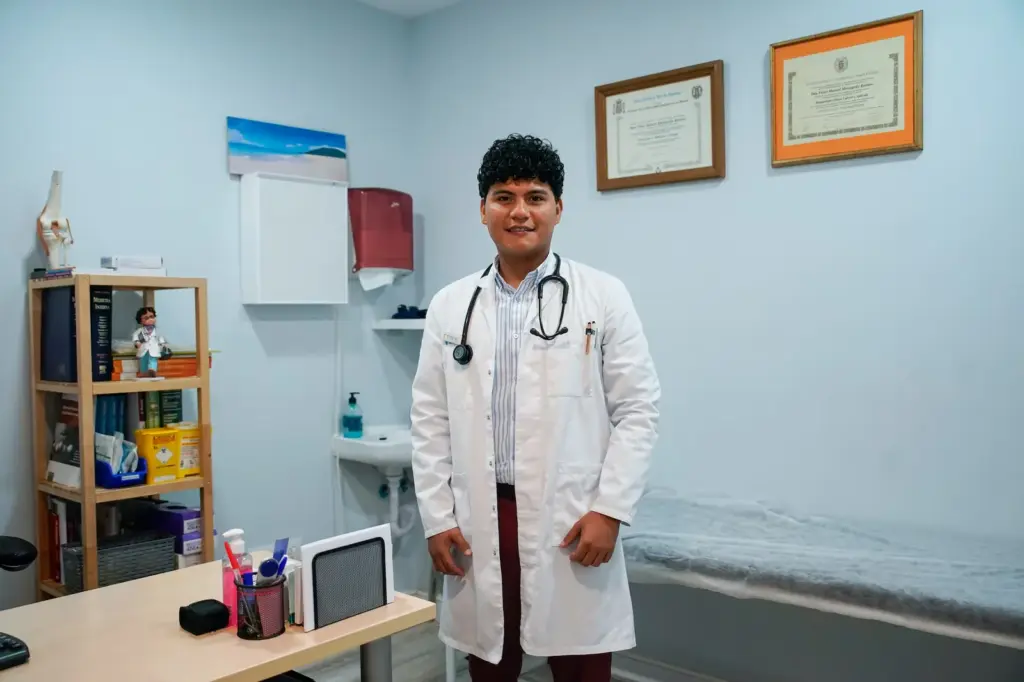
The case of Víctor Rodrigues, a Venezuelan traumatologist in Euskadi, shows another side of the same coin. He trained at the Central University of Venezuela, did rural medicine, five years of residency in Traumatology at the University Hospital of Caracas, and an additional year of fellowship in arthroscopic surgery and joint replacements. He arrived in Spain in 2019 to work at Clínica Santa María de la Asunción in Tolosa, a contracted center whose activity, he explains, is almost entirely public, serving patients from Osakidetza, the Basque Country’s public health system. Since 2021, he has been head of the Traumatology and Orthopedics department.
For years, however, he practically worked as a traumatologist without having officially recognized the specialty in Spain. Recognition came in 2024, after a long process and a nine-month rotation at Donostia Hospital, in an eight-hour daily unpaid internship, which he combined with his full-time job in Tolosa. By then, he says, he had performed about 1,200 surgeries in Spain. “We come to work hard to sustain and improve the health system. By solving these complex cases locally, we help to relieve the main network and guarantee close and high-quality public care,” he assures.
Read more Oil operators point to Petroprix as the recipient of diesel suspected due to its Russian origin
His case serves to illustrate the gray area in which part of the system is moving. For migrant professionals, recognition comes late, while for medical unions, the problem is that administrations are using these situations to cover structural needs with formulas that should be exceptional and that do not guarantee the competence of the professionals joining the system.
“We have Spanish and European regulations that require doctors to have, in addition to undergraduate training, a specialization via MIR or recognized as equivalent to work as specialists in public healthcare. It is mandatory to monitor and respect this,” says Víctor Pedrera, representative of the State Confederation of Medical Unions (CESM). According to his organization, the phenomenon of doctors without recognized specialty in Spain who are practicing in public health services “is growing year by year” and is concentrated mainly in family and community medicine, hospital emergencies, and primary care pediatrics.
Pedrera points especially to Catalonia, although he assures that the phenomenon is also observed in highly pressured communities and areas, such as Murcia, the Balearic Islands, Andalusia, or coastal areas. “Only a couple of communities can guarantee that they do not have doctors hired without MIR training,” he states.
The “service needs” that administrations use as an excuse “should be an exception, but they become the norm,” criticizes Pedrera. In his view, hiring doctors without recognized specialty is due, first, to poor planning of MIR positions over the years. Then, to the retirement of the baby boom generation. And now, he adds, a third increasingly decisive factor: the inability of the public health system to retain its own young specialists, who, faced with care pressure and salaries, prefer to go abroad or to the private sector rather than cover certain positions, especially family medicine in depopulated Spain.
Whatever the reason, the reality is a strained health system — both public and private — that is relying on foreign doctors to function. Without them, waiting lists and delays for appointments would multiply.
Rodrigues experienced this paradoxically: while the system had not yet recognized him as a traumatologist, it benefited from his work as a traumatologist. “We kept doing that work because doctors from here were not coming,” he says. In his regional hospital in Tolosa, he says, hip and knee prostheses, complex revisions, and cases that otherwise would have ended up in referral hospitals were operated on. “In more remote areas, Spanish doctors do not come. They want big cities,” he concludes.
The other frequent option for doctors without a specialty is the private sector, where the specialty is not an essential requirement, not even in theory, let alone in practice. This is where Ofreuddys Estrada ended up, who, after working at the gas station, the bank, and the bar, finished as a general practitioner at a private clinic in Madrid, after having passed through Andalusia.
Whether seeing private patients, like Estrada; operating knees, like Rodrigues; or attending children, in Ahmadi’s case, the presence of foreign doctors in Spain is a growing reality. The question is how to integrate them without improvisation and with all guarantees, both for them and for patients.
Read more The Colombian shot dead by ICE in Maine was not the agents’ target