









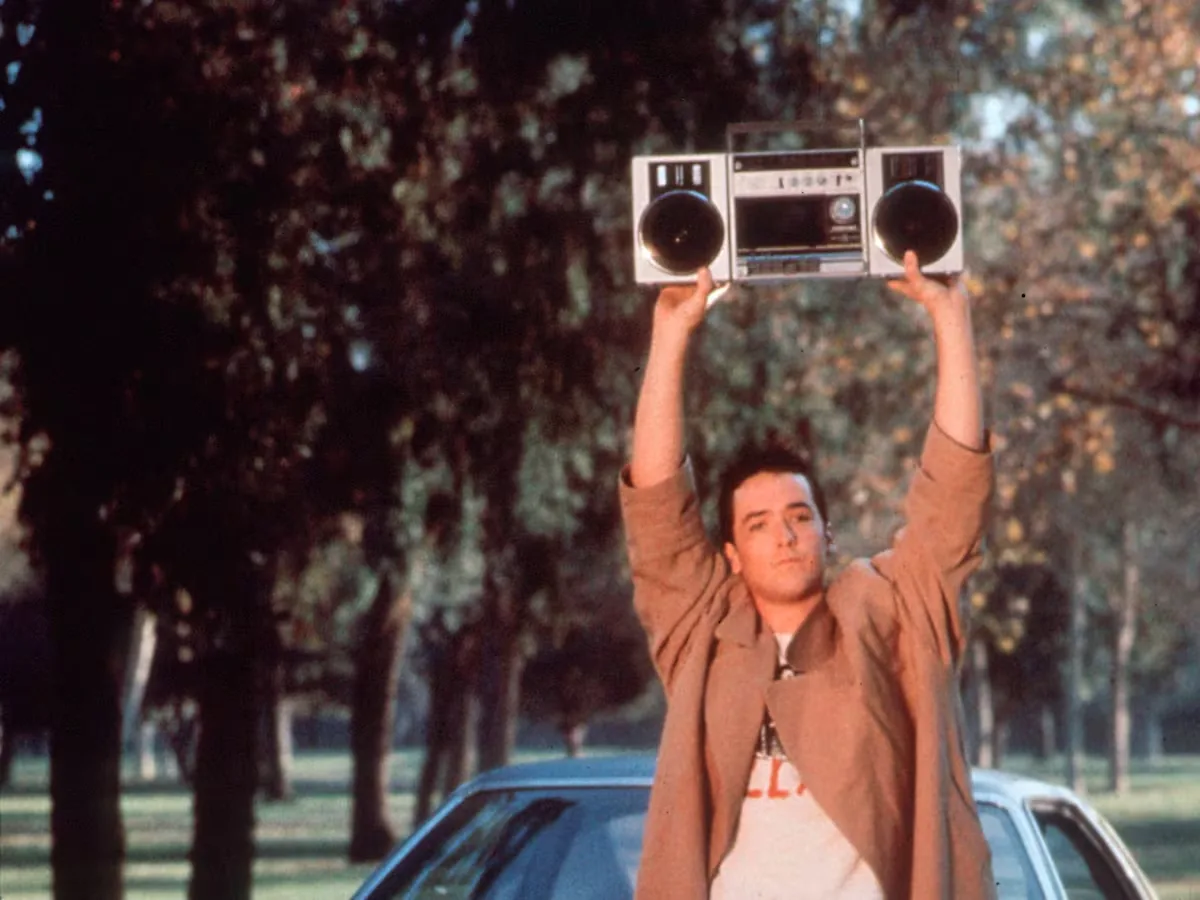
Saying “I’m sorry” is not enough. At least not for everyone. Maintaining an emotional bond becomes complicated when there are misunderstandings. Sometimes connections don’t break due to lack of love or empathy, but because of a lack of tools to resolve conflicts. And we all have different needs; for some, receiving a “sorry” is enough, while others prefer actions over words. A gesture like John Cusack’s in the movie Say Anything (original title), when he holds a boombox outside his beloved’s window to play a song and, without saying anything, restore the connection between them. To identify them, American pastor and marriage counselor Gary Chapman proposed the five languages of forgiveness: expressing remorse (“I’m sorry”), accepting responsibility, making restitution, changing behavior, and asking for forgiveness (“Will you forgive me?”). A model that “people take like horoscopes. Like: ‘that’s my personality, that’s who I am and that’s that,’ when they are a tool to know what works for me and what doesn’t,” advises psychotherapist and specialist in ethical relationships and creator of the support network Gotitas de Poliamor Jaime Gama.
Read more The enigma Victoria Abril: Spain did not know what to do with the best actress of her generation
The specialist consulted by EL PAÍS revisits this guide published in 2006 and gives it his own approach: he talks about repair before forgiveness. The difference is that the former seeks to reconnect and the latter “puts me in a morally superior place,” he explains. “Morally and socially I have the right to punish, to make them suffer and even to seek to intentionally harm them,” he adds. This search for revenge is actually “a desperate cry for empathy” that “rarely works because sometimes the other person doesn’t even feel the pain that I feel,” he says.
The languages of repair then seek to recover the connection after a conflict. And for that, the psychotherapist considers two essential things are needed: empathy, compassion, and good faith; and asking oneself: “Do I believe the other person did this with the aim and intention of hurting me?” If the answer is yes, it’s better to set a boundary, he considers. And if the answer is no, “the harm remains, the responsibility remains and yes, there can be repair.”
From that reflection, one can begin the process to identify which language or languages can help in the process. And the expert illustrates it through a story. He was dating someone and they gave him a box of chocolates. Gama decided he would eat one a day until he saw them again. One day he came home and the chocolates were gone; they had been eaten by his partner’s partner. “[The responsible person] calls me and says: ‘Sorry, I’ve already ordered you two boxes of chocolates of the same brand.’ And I said: ‘I don’t want them because it’s not the chocolates that were lost, it’s the chocolates my partner gave me.’ And he answered: ‘What can I do to make up for what I ate?’ I understood that he didn’t do it with the intention of hurting me and that is the first step for repair.”

The third language (making restitution) was initially out of the equation to resolve the conflict, because for Gama it was impossible to return the same chocolates his partner had given him. And the first language (expressing remorse: saying “I’m sorry”) was not needed either. Instead, the second (accepting responsibility) was. “He told me: ‘Yes, I ate chocolates that weren’t mine, that were given to you, and I understand that you feel sad and uncomfortable.’ That repairs me a lot, because feeling that the other person understands the value of what was broken helps me trust that they will take care of it next time,” he says. “Anything that invalidates how I feel will not lead me to connect with another person and repair doesn’t work.”
According to Gary Chapman’s fourth language (changing behavior), in this case it would be that the person who ate the chocolates tells Gama what actions they will take so it doesn’t happen again. And the fifth (asking for forgiveness) would be equivalent to offering an apology: “Will you forgive me?”
@amemoseticamente #gotitasdepoliamor #amemoseticamente #responsabilidadafectiva #perdon #disculpas #conflicto #limitespersonales #novios #relaciones #comunicacion #enamoramiento #dolor #duelo #confianza #honestidad
♬ original sound – Jaime Gama
One of the most common mistakes in this process, the specialist says, is wanting to win. “If one wins, the relationship loses,” he assures. “It’s difficult to hold both points of view and listen to the other person from their pain,” he explains. “What then happens is that both people try to connect from their reality and, the more they try to connect from their reality, the more they deny how the other person feels and, therefore, this person tries to convince them more and more and more and explodes.” And to avoid this, the first thing is not to confuse understanding with justification, he assures. “If I say: ‘I understand why you did it’ it seems to come with ‘so it shouldn’t hurt me and you don’t have to do anything.’ When in reality the message is: ‘I understand you didn’t want to hurt me because you’re not a villain. But the harm is done and I want repair.’” And on the other hand, the person who causes the harm needs to understand: “I understand your pain and I know I’m not an evil villain.”
Even with these tools, one doesn’t always feel good instantly after an apology. In that situation, the next step would be to convey the message: “Thank you for giving me this that I asked for, but I need something else.” Another important aspect is understanding the difference between a situation that hurts and one that bothers. “If it’s hurting me, we need to set a boundary. If it bothers me, we can explore,” assures the expert in ethical monogamous and polyamorous relationships. And he emphasizes the sharing of responsibilities: “The fact that your pain is your responsibility doesn’t mean I have no responsibility. It’s not a zero-sum game. You are responsible for your pain and I am responsible for how I contribute to your pain.” It’s like when you’re walking with someone and that person steps on your foot, he exemplifies. The person whose foot hurts can do several things: take a painkiller, go to the doctor, or set a boundary, not walk with that person again. And the one who caused the harm has the following options: apologize, take them to the doctor, walk at a farther distance, or decide not to walk next to the person anymore.
In conflicts, one must not forget that human error and clumsiness exist, and for that Gama illustrates with an anecdote of an American comedian, who told in a show that one day it was his turn to load the dishwasher. When his wife asked him why he didn’t do it, he answered that he simply forgot: “My wife says to me: ‘How do you forget?’ And I think: well, ‘I forgot’ is the best available option. Any other alternative makes me a psychopath. What am I supposed to say? ‘Yes, I saw it full, but I decided not to do it because I wanted us to have an argument at eight at night and ruin our marriage.’ No. I simply forgot!” “Sometimes we’re just stupid or distracted,” says the psychotherapist.