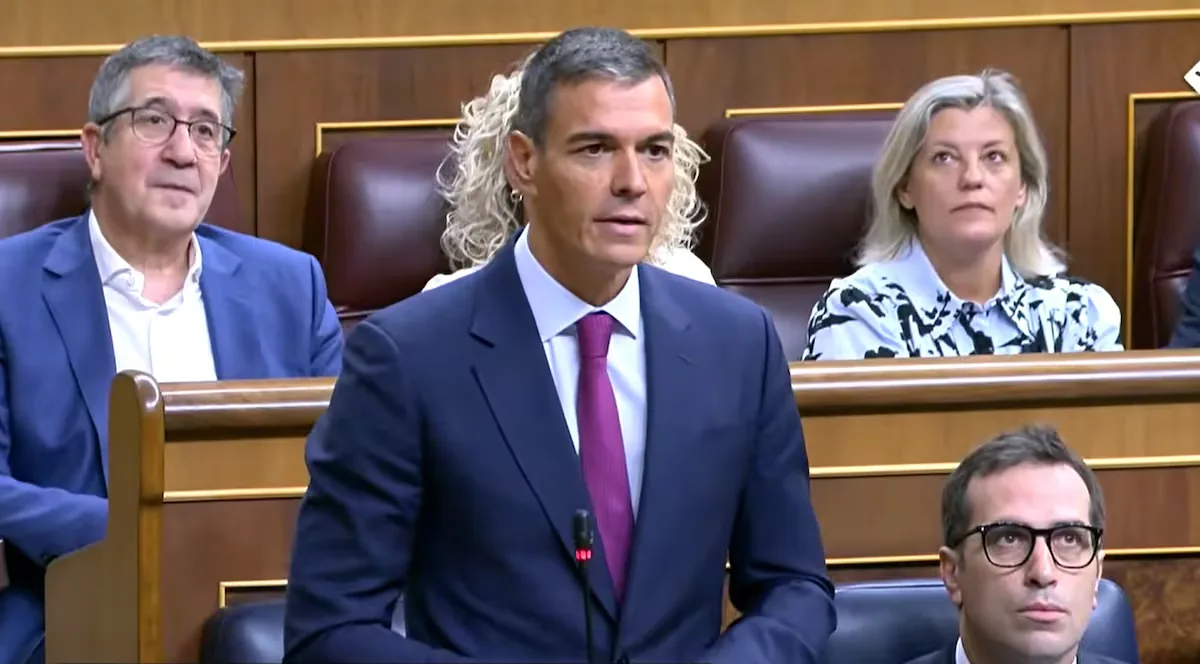










The Court of Justice of the European Union (CJEU) will rule this Thursday on the Amnesty Law, to resolve the cases of politicians, activists, and police officers who have not been able to benefit from the law until now. Among them is the former president Carles Puigdemont, who awaits the reading of the judgment, expected from 10:00. Although a favorable ruling from the CJEU does not allow his automatic return, it could be the beginning for Puigdemont to return to Spain, opening the opportunity for PSOE and Junts to resume their parliamentary relationship. The Supreme Court rejected the amnesty without consulting European justice, but a CJEU endorsement of the measure would unblock the application of the law in the courts that did apply it (the National Court and the Court of Auditors) and, presumably, would be the first move in a domino effect that the independence leaders hope will end up forcing the Supreme Court to grant amnesty to Puigdemont and the other leaders it prosecuted or convicted for embezzlement.
Read more Search engine for the best roadside bars and restaurants to stop at
EL PAÍS offers the latest news on the Amnesty Law ruling free of charge. If you want to support our journalism, subscribe.

The CJEU will read the ruling from 10:00
The Court of Justice of the European Union issues its ruling this Thursday on the Spanish amnesty law, to determine whether the pardon of embezzlement and terrorism crimes complies with European regulations.
The Court, based in Luxembourg, will read its ruling from 10:00, in which it plans to resolve the preliminary questions raised by the Court of Auditors regarding the accounting responsibility for the expenses of the procés, in a case affecting former Catalan presidents Carles Puigdemont and Artur Mas; and the National Court, regarding the terrorism crime for which it is judging the Committees for the Defense of the Republic (CDR).
But the ruling will also set the path for the Constitutional Court, which must resolve the amparo appeal filed by Puigdemont against the Supreme Court’s decision not to grant amnesty for the embezzlement crime, in a ruling that could be key for his possible return to Spain.
The European judges will rule after the EU Advocate General Dean Spielmann endorsed the main points of the amnesty law in the opinion published last November 13. Specifically, he dismissed that Catalonia’s independence had affected European finances, because Spain’s contribution to the community budget would have remained proportional to its Gross National Income and also pointed out that the Court of Auditors did not indicate that community money was used to finance the procés.
He also saw no incompatibility between the European directive against terrorism and the amnesty law because the law “complies” with the standards of the European Court of Human Rights and does not include among the pardoned crimes those related to the rights to life and physical integrity. However, he questioned the two-month deadline the law gives Spanish judges to decide whether to apply the amnesty in the cases they are judging. These considerations are not binding, but in most cases resolved by European justice they usually coincide with the final ruling. (Efe)
The CJEU sets the path for amnesty this Thursday: keys to a decisive ruling
Read more The Xocas and the Army of the Sad Men
Many eyes will be fixed this Thursday, at ten in the morning, on the Hearing Room of the Court of Justice of the EU in Luxembourg, where two rulings will be publicly read that will very likely mark the next steps of Spanish justice regarding the amnesty law. The judges of the high European court must rule on whether the regulation, in force for two years, conflicts with the financial interests of the EU and whether it is contrary to community law on terrorism.
In a non-binding opinion, but one that usually indicates the trend of the Luxembourg judges, the Advocate General widely endorsed the regulation last November. This Thursday it will be known if that is also the final opinion of the high European court.
You can read the full information here

AMNESTY LAW
Government and independence supporters trust in the European Justice endorsement of amnesty after two years of blockage
The great bet of Pedro Sánchez’s Government on amnesty for the Catalan independence supporters faces an important test today. The Court of Justice of the European Union (CJEU) will rule on the preliminary questions raised by several Spanish courts and both Esquerra Republicana and Junts per Catalunya are confident that the opinion of their Advocate General from last November will be followed, and therefore there will be a boost to the legitimacy of the law. For an Executive caught between a tangle of judicial cases and the distancing in Congress of an indispensable Junts, a favorable ruling would have effects on several fronts. The European endorsement would be a difficult argument to ignore by the most conservative sectors of the Judiciary who have blocked its application. Only when that happens, Sánchez will be able to consider his institutional normalization operation in Catalonia after the procés complete. And although without immediate effects on Carles Puigdemont’s situation, the Luxembourg decision would pave the way for his return to Spain, still without a date, and opens an opportunity to channel the bitter parliamentary relationship.
You can read the full information here
Good morning. We start the live narration of the latest news on the Amnesty Law ruling by the Court of Justice of the European Union (CJEU) and the judicial horizon of former Catalan president Carles Puigdemont, this Thursday, July 16. The Court of Justice of the European Union (CJEU) decides today whether the amnesty for embezzlement and terrorism crimes complies with community regulations.
The European justice ruling on embezzlement in the procés will set the playing field for the Constitutional Court (TC), which next autumn will decide whether to overturn the Supreme Court and greenlight the amnesty for former Catalan president Carles Puigdemont, two years after the law was approved.
Read more This town will become a city: going from 11,000 to 63,000 inhabitants in the era of Madrid DF