







The United States’ war against Iran appears to have reached a dead end as both contenders vie for control of the Strait of Hormuz. The U.S. military intensified attacks on Iranian targets in the early hours of this Thursday during the sixth day of bombings following the breakdown of the ceasefire and the escalation of hostilities amid a diplomatic stalemate after Donald Trump’s words last week declaring the truce broken.
Read more Marco Rubio calls 66 countries to a meeting to combat “left-wing extremists” worldwide
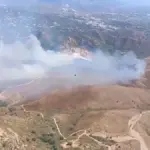
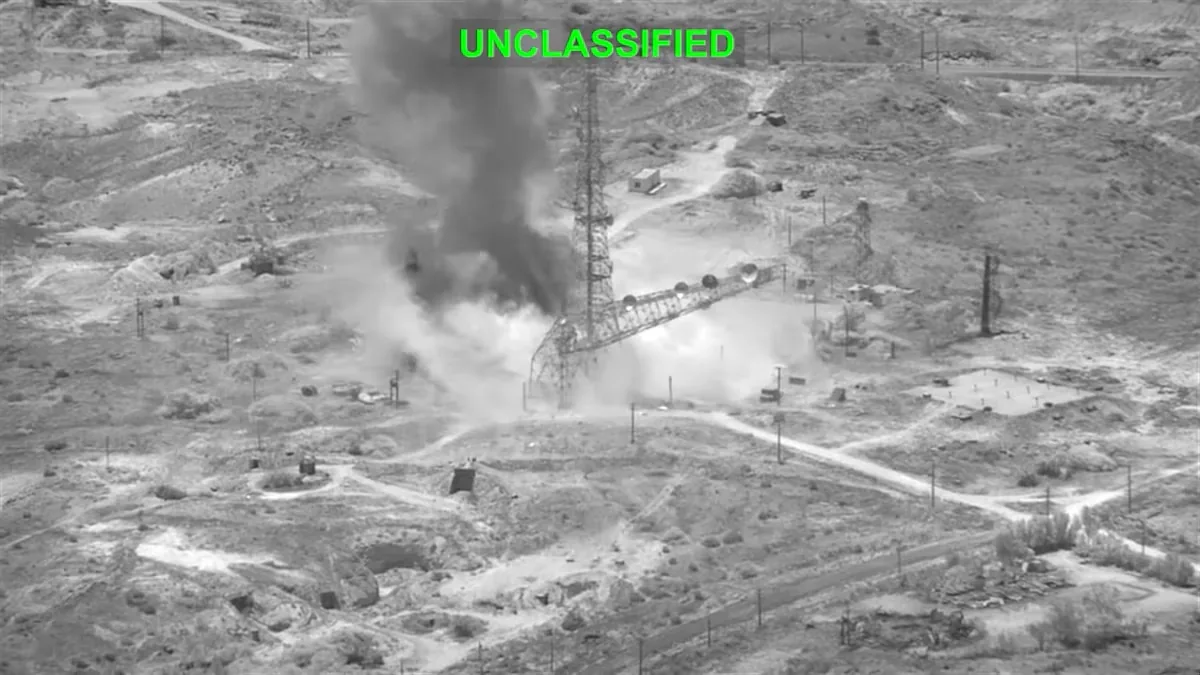
The United States Central Command (CENTCOM), which directs military operations against Iran, stated that the latest attacks launched in the early hours targeted command centers, air defense sites, missile and drone launch locations, and Iranian coastal surveillance facilities. The military offensive extended to the north of the country, in Semnan province, about 232 kilometers east of Tehran. These attacks so far north show that Washington is expanding its targets in Iran.
“This very morning, U.S. forces attacked coastal defense and cruise missile sites on Greater Tunb Island during a 90-minute wave. The U.S. armed forces are holding Iran accountable,” CENTCOM wrote via its X social media account.
The U.S. Navy also attacked an oil tanker attempting to pass through the Strait of Hormuz near Jarg Island, Iran’s main oil export hub. U.S. authorities stated this week that they have reinstated the naval blockade on Iranian ports to try to isolate the theocratic regime and prevent the transit of ships and oil tankers through the waterway controlled by Tehran.
Iranian forces responded with missile and drone attacks against U.S. bases in Bahrain and Kuwait, although the armed forces of these Washington allies claimed their air defense systems successfully intercepted the attacks.
Diplomatic stalemate
Frustration is growing in the White House due to the lack of progress in a conflict that has lasted five months. Diplomatic efforts seem stalled despite faint movements. Iran released this week a dual U.S.-Iranian citizen who had been held in the country for two years accused of espionage. Trump called the news a gesture of “goodwill.”
White House press secretary Karoline Leavitt spoke on Thursday about the state of negotiations. “Iran continues to dialogue with the United States and expresses that they want to reach an agreement with us because they are suffering devastating blows in the name of our U.S. military,” said the spokesperson, returning from maternity leave. “The president is always open and willing to diplomacy. After all, he is the president of peace through strength,” Leavitt added, justifying the military escalation because Iran tried to impose its conditions in the Strait of Hormuz. “The reason for the recent attacks in the last few days is that Iran violated the memorandum of understanding we reached with them. Specifically, they were not supposed to fire on commercial vessels passing through the Strait of Hormuz and, unfortunately, they have made the tragic decision to do so.”
Meanwhile, U.S. Vice President J.D. Vance left the door open to finding a diplomatic solution. The White House number two said in an interview that Washington’s strategy is “a delicate diplomatic dance” combining economic pressure, military operations, and negotiations. Vance defended the usefulness of talks while the United States deploys troops on the ground.
On the other hand, Iran’s chief negotiator, Mohammad Ghalibaf, reminded that Tehran “must be prepared for fighting,” but also to “resort to diplomacy.”
The rapprochement remains insufficient, while the diplomatic delegations of the two countries seek common ground to try to return to the negotiating table. Trump threatened on Tuesday to “destroy all power plants” and “all their bridges” in Iran if they do not start negotiations before the end of next week. His words found an echo in the Iranian military. “All the region’s infrastructure will be crushed under the steel blows of the powerful armed forces of the Islamic Republic of Iran” if Trump’s threat is fulfilled.
Control of Hormuz
Both countries claim to have blocked the Strait of Hormuz, a strategic passage in the Persian Gulf through which a critical fraction of oil, minerals, and essential raw materials for the global economy transit. The breakdown of the ceasefire and the memorandum of conditions that brought a fragile peace agreement has again restricted maritime traffic through the strait.
The price of crude oil and other petroleum derivatives had celebrated price drops with advances in negotiations during last June, but after the resumption of bombings this week, prices have risen again and global energy markets are affected. The situation adds pressure on the White House. Gasoline and diesel prices have risen again and trade on average 30% higher than before the war began in late February. Unlike previous months, oil reserves are already at minimum levels after five months of war. The International Energy Agency (IEA) warns that the global economy “is not out of danger.” Fatih Birol, IEA president, said yesterday in a CNN interview that “this cannot last long because global crude reserves are decreasing,” warning in reference to the new military escalation.
Iran maintains control of the Strait of Hormuz, an essential bargaining chip for peace negotiations, but the United States is not willing to leave the strategic passage capable of destabilizing the global economy in the hands of the Islamist regime. An Iranian military high command said this Wednesday that Iran “under no circumstances will allow the United States” to control the strategic enclave. “It is an unbreachable red line for Iran,” said Colonel Ebrahim Zolfaghari, spokesperson for the Iranian army’s central headquarters, according to AP.
The energy price spiral is bad news for U.S. President Donald Trump, four months before the midterm elections, which will be a test of his aggressive and arbitrary policies as polls show approval ratings falling to the lowest of his term.
Hostilities between the two countries are intensifying as voices of analysts warning of the hardening of a conflict that does not seem to have an easy solution grow. “Iran will not give up its determination to maintain control of the strait, and I think Trump is increasingly frustrated,” said Dina Esfandiary, Middle East expert at Bloomberg Economics, to The Wall Street Journal. “I don’t see a way out of this situation.”
The fact is that the exchange of blows between Washington and Tehran has rendered the 14-point agreement to end the conflict initiated after the bombings by Israel and the United States on Tehran last February 28 meaningless. The war that, in Trump’s words, was going to last “four or five weeks” is about to reach five months without signs of a definitive end, despite partial truces in recent months and diplomatic efforts.
Read more Three women expelled from the public pools of Burgos for swimming with burkini