







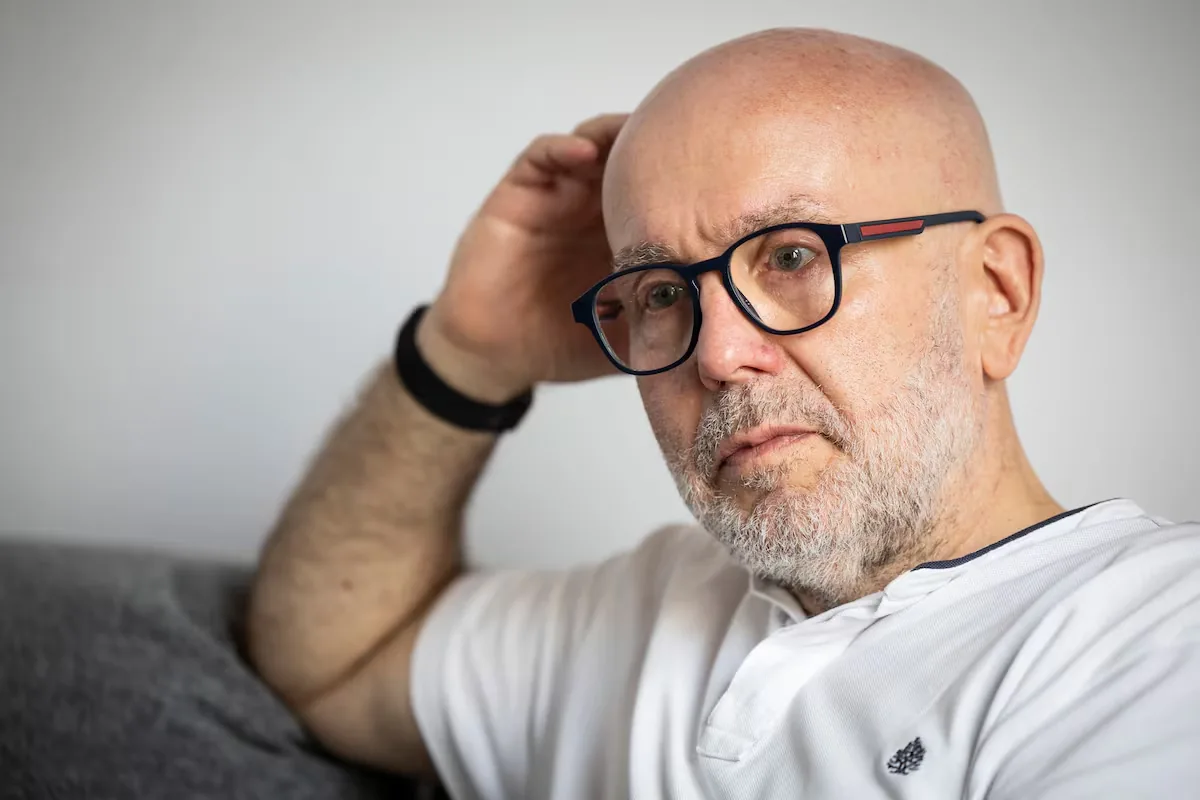
The leader of Junts Carles Puigdemont is enjoying a few days of vacation. After the ruling of the Court of Justice of the European Union (CJEU) on the amnesty was announced last Thursday, his lawyer Gonzalo Boye (Viña del Mar, Chile, 61 years old) recommended that he not interrupt it. Leaving behind the rush of other political moments, caution prevails regarding his return to Spain even though the lawyer believes the ruling settles the debate. The date will be chosen, he admits, with a mindset beyond the strictly legal and once there is a response either from the Supreme Court (SC) or the Constitutional Court (CC).
Read more Kimi K3, the Chinese AI that has put Silicon Valley on alert
Question. Why do you say the ruling goes beyond what the Advocate General said at the time?
Answer: The CJEU settles the issue in an attempt to never have to discuss the amnesty again. It has clearly established what must be done.
Q. The PP criticizes that neither the constitutionality nor the political opportunity was examined. What do you think?
A. That is a legal absurdity. The CJEU does not have the competence to review the constitutionality of a national norm. That examination was already done here by the CC.
Q. What have you recommended to your client?
A. To continue on vacation.
Q. You have been critical of the praxis of part of the judiciary in the past. Why do you now trust that they will act ex officio?
A. That is what I would do if I were a judge in any of those courts. It is legal common sense to comply with and apply what the ruling says.

Q. Why do you rule out appeals to speed up the application?
A. It is not up to us. Now it is time for all of us to read the ruling carefully and make the necessary decisions. I do not believe there is interpretative margin in a ruling that interprets the applicable norms.
Q. Will you be guided by the self-imposed calendar by the CC that talks about autumn to start resolving the amparo appeals?
A. The CC is already a year and a half late and in the Supreme Court, from now on, time has started running with a new interpretative criterion. We do not have to rush. Time works against the image of justice, not against us.
Q. Would you make a move if after autumn there is no amnesty?
A. It is neither good nor sensible to presume that any of the courts will act. That only damages trust in the institutions.
Q. You are the one who on other occasions has sown doubts about judicial action…
A. Now there is a ruling so clear that it is hard for me to think a judge will drag their feet to avoid applying it.
Q. Minister Óscar Puente said that Puigdemont “has it easy” to return…
Read more The court that will try Ayuso’s partner for alleged tax fraud admits it is “overloaded”
A. The Minister always has witty words, I wish he had the same management. If Puigdemont returned by AVE, the Supreme Court would resolve it first.
Q. At what procedural moment do you see the possible return of the former president?
A. Once either the Supreme Court or the Constitutional Court has resolved it. But they should hurry, because the Strasbourg Human Rights Court might rule first and put them in a very bad position. Their decision could come any day and that would be two European decisions on the amnesty.
Q. Why so much caution now if in August 2024 Puigdemont was in Barcelona taking a very high risk?
A. The president came because there was a political urgency to resolve. He had the right to be at the investiture session and probably if he had been allowed to run, today Salvador Illa would not be president. And who knows if Pedro Sánchez would even be head of government.
Q. Therefore, will the timing of the return, besides the legal aspect, be decided by personal or political issues?
A. Yes, of course. I cannot tell you when politically he has to do something, or personally. I can outline the legal scenarios. Now the only change is that European justice tells Spanish justice how to act in applying an amnesty, which they see within EU law.
Q. What was your advice in August 2024?
A. That is part of a lawyer-client conversation.
Q. Recently you accused the Government and the president of the CC Cándido Conde-Pumpido of delaying the application of the amnesty. Do you have proof?
A. We have been in a process that is becoming eternal and when I am given excuses in law, I can only conclude one thing: simply that they do not want to do it at that moment. The excuses are over.
Q. Criticizing Sánchez like that is it not also undermining his commitment to the amnesty as a reconciliation mechanism?
A. When someone metaphorically asks who the Prosecutor’s Office depends on… We still have the Prosecutor’s Office against us! If Sánchez had not said that, we could not blame him for anything. One thing is what we intended with the law, which is there, and another are his intimate convictions, which we already know.
Q. Which ones?
A. I do not know his inner conscience, but I see the external signs.
Q. Do you see any coded message to the conservative faction of the judiciary in Feijóo’s invitation to move on?
A. If he has to send a message to someone, he does it directly. It is a political stance consistent with the times we live in, moreover.
Read more A 7.4 earthquake is recorded in southern Mexico without the seismic alert being activated
Q. Aznar’s “Whoever can do it, do it” was public
A. But he is no longer in politics.