










The Madrid City Council presented in March 2024 the results of its campaign to reduce the population of Argentine and Kramer parakeets in the capital. The data announced then by the delegate of Urban Planning, Environment, and Mobility, Borja Carabante, estimated the reduction of these invasive species from 13,000 to 10,000 specimens between May 2021 and April 2023. Two years later, and after a public information access request made by this media outlet, the City Council has raised the figures to 17,143 captures, although without specifying how many specimens there were at the beginning of the campaign and how many at the end. The City Council has also acknowledged having shot 1,191. The data has surprised both the Spanish Ornithological Society (SEO Birdlife) ―in charge of conducting the censuses― and Ecologists in Action, who have questioned their veracity and some elimination practices.
Read more The war in Ukraine punishes minorities and the poor in Russia
According to municipal sources, the new figures respond to “a data update using a more reliable methodology than the one initially used,” and place Carabanchel as the district where the highest number of captures occurred (2,563) followed by Latina (2,204) and Usera (2,192). At the opposite end, Chamberí records none, accompanied by the districts of Retiro and Centro, with 52 and 70 captures respectively. Additionally, a total of 2,062 eggs were sterilized during the two years the work lasted.
The new figures are difficult to understand for SEO BirdLife. “It is not credible that they have removed 17,000 specimens,” says Juan Carlos del Moral, coordinator of the organization’s Monitoring Area. “We know of very few places where they have been capturing, and it is such a smart animal that you catch it the first day and they already learn the traps, so they do not enter again in the following days,” he explains. For this reason, he considers the data provided by the City Council “irrational,” and concludes: “We do not believe that action has been taken on that population.”
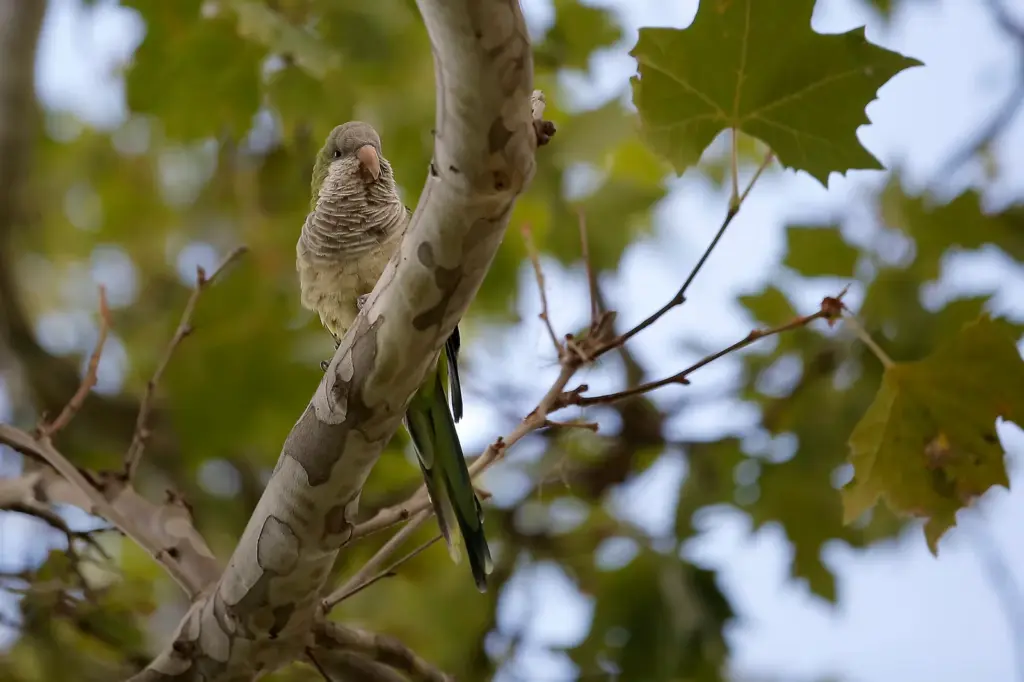
An assessment shared by Ecologists in Action. Their spokesperson, Yago Martínez, recalls that the latest available census ―from 2019― placed the population of these birds at around 13,000 in the capital, which accounted for almost 50% of the national total. “It is quite incredible that over an estimated population of 13,000 parakeets more than 17,000 specimens have been captured, unless the census was greatly underestimated,” he details before assuring that “anyone living in Madrid can see that there has not been such a huge reduction.” In his opinion, the municipal policy regarding this species “has been very erratic” and proof of this is that there are still “numerous complaints and neighborhood requests” for control and removal tasks of parakeets to be carried out again, “because the problem has not been solved.”
However, the responsible area has told this media outlet that they do not plan to launch new campaigns of this nature in the short term. They do acknowledge that the main incidents related to parakeets are grouped into two major blocks: the disturbances caused by noise and the size of the nests.
An exponential increase
The growth of the parakeet population in Madrid originates from the boom experienced in their sale as pets during the 1980s and 1990s. Many escaped from their cages —or were released by their owners— and found in the capital a favorable environment to reproduce quickly. Although the European Union banned the import of wild birds in 2005 after cases of avian flu were detected and Spain prohibited the possession and commercialization of Argentine and Kramer parakeets in 2013, the expansion of both species was already difficult to reverse. According to the 2019 census, nearly 13,000 lived in Madrid compared to the 7,000 counted in 2015, which represented an 85% increase. Compared to 2005, when their population was estimated at 1,700, the increase was 665%.
This growth led the City Council to design a specific plan to control these species. The project, however, multiplied its budget as its processing advanced. The first municipal proposal estimated a cost close to 100,000 euros, but the planned investment increased until culminating in a contract of 2.36 million euros, awarded in 2021 to carry out the actions over the following two years.
Despite their doubts about the campaign results, SEO BirdLife defends that controlling these birds is necessary. Juan Carlos del Moral recalls that parakeets compete with native species ―such as sparrows― for food and nesting sites and also cites the risk of transmitting infectious diseases to humans such as psittacosis, a kind of pneumonia. Additionally, he maintains that the Royal Decree regulating invasive exotic species obliges administrations to act against these birds. “It is not only advisable; the law requires eliminating those populations,” he states.
Shot down
One of the most controversial aspects of the control campaign carried out by the municipal government was the use of air rifles to shoot specimens. In response to questions from EL PAÍS, the Urban Planning Area states that 1,191 parakeets were shot down using this system, and they assure that security measures were maximized “always in spaces and times closed to the public and in very limited places.” They also defend the use of this method as “essential” in some points where other techniques are not effective, as well as “faster and less stressful” for the birds.
Ecologists in Action criticize this policy and, through their spokesperson, demand the use of “more ethical” techniques such as nets or trap cages. “The use of air rifles, besides killing the birds by shooting, involves closing parks to the public and neighbors finding the shot corpses. Both ethically and socially, we believe it is a method that should be avoided when carrying out necessary population control,” they conclude.
Read more Spain, country in arms: how the Civil War was told in United States newsreels