









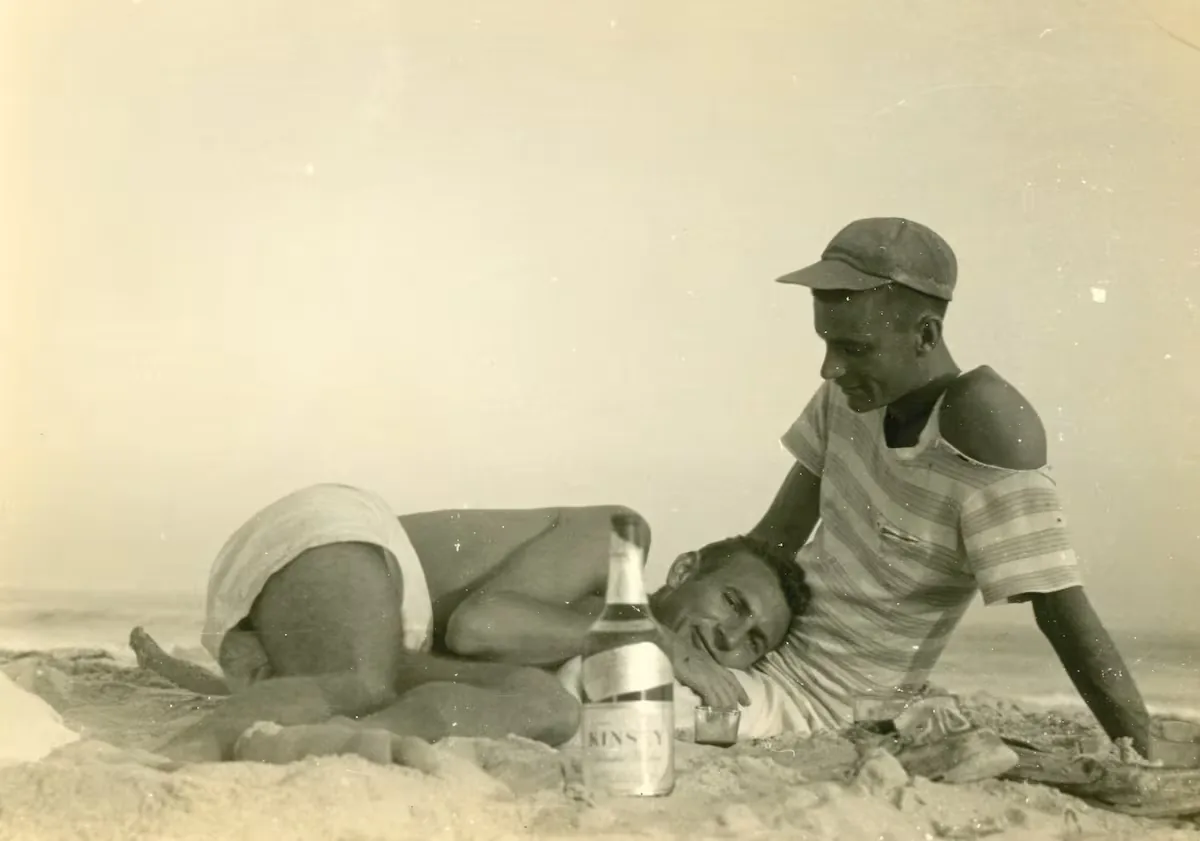
About 12,000 years ago, nature conceived Fire Island as a barrier to protect the coast of Long Island from hurricanes and cyclones that hit the area after summer. A century ago, a group of artists turned this small island in the United States into a refuge for the LGTBIQ+ community. Fire, a thin strip of sand an hour and a half from New York —“as thin as a parenthesis,” described Andrew Holleran in his novel The Dancer and the Dance—, has been a wild land since time immemorial. It was home to the Unquachog and Secatogue peoples, a hideout for pirates and smugglers, and since the 1920s, Mount Olympus of queer culture and identity.
Read more Check-in at 3 PM, check-out before 12 PM: why people are arriving later and leaving hotels earlier
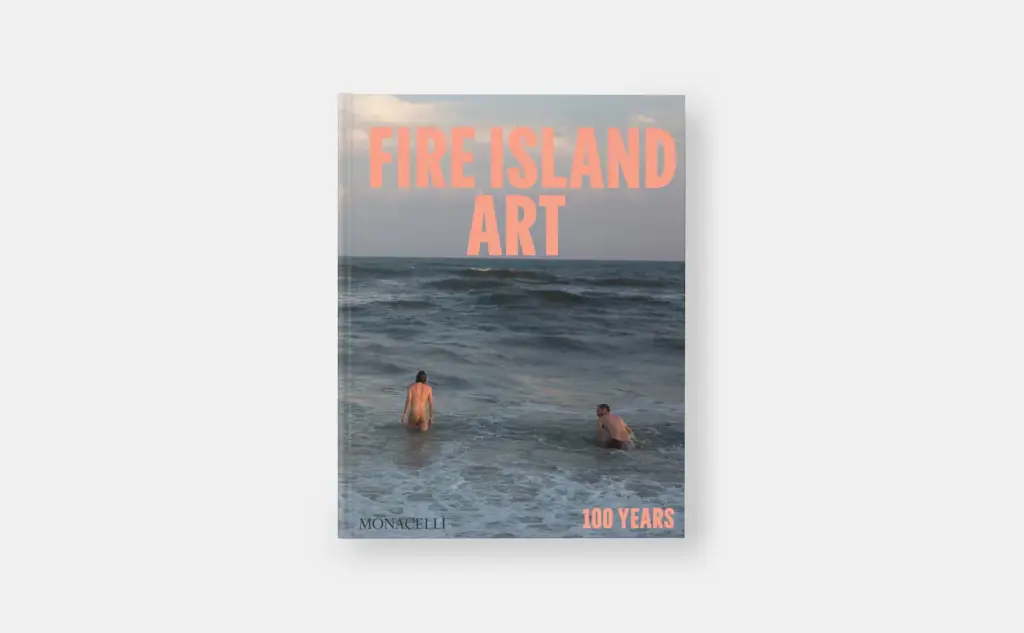
To celebrate its centenary, The Monacelli Press has just published Fire Island Art: 100 Years, the first book exploring the rich artistic and aesthetic history of the island and its influence on artists such as Andy Warhol, David Hockney, Richard Avedon, Robert Mapplethorpe, Tom Bianchi, and Wolfgang Tillmans. Its author, John Dempsey, a tech executive, historian, and president of the Fire Island Pines Historical Society, traces a century of art, drugs, and unrestrained sex on the world’s “hottest” beach: from its origins as a nudist colony in the jazz era to the present day, through its heyday in the 50s, 60s, and 70s and its decline in the 80s, with the outbreak of the HIV/AIDS pandemic.
In the mid-1920s, on the edge of the Wall Street crash, New York was already emerging as the capital of skyscrapers. The Empire State and Chrysler Buildings were beginning to appear on the skyline. But Fire Island, less than 100 kilometers from the city, still had no electricity, running water, roads, or cars. The lack of amenities deterred family tourism but attracted gays. As Dempsey explains in his book, the LGTBIQ+ community has always liked isolated and hard-to-reach spaces because “they allow the public practice of intimate behaviors that heteronormative society rejects.” The vast dunes and dark pine forests of Fire were perfect for practicing those forbidden behaviors.
In 1938, nature made the island even more inhospitable and therefore more attractive to the gay community. That year’s Great New England Hurricane destroyed the few infrastructures that existed. The natural disaster served as a catalyst for the queer boom. Many owners sold their ruined houses cheaply to homosexual artists from New York: actors, fashion designers, musicians, dancers, architects, interior designers, and writers.
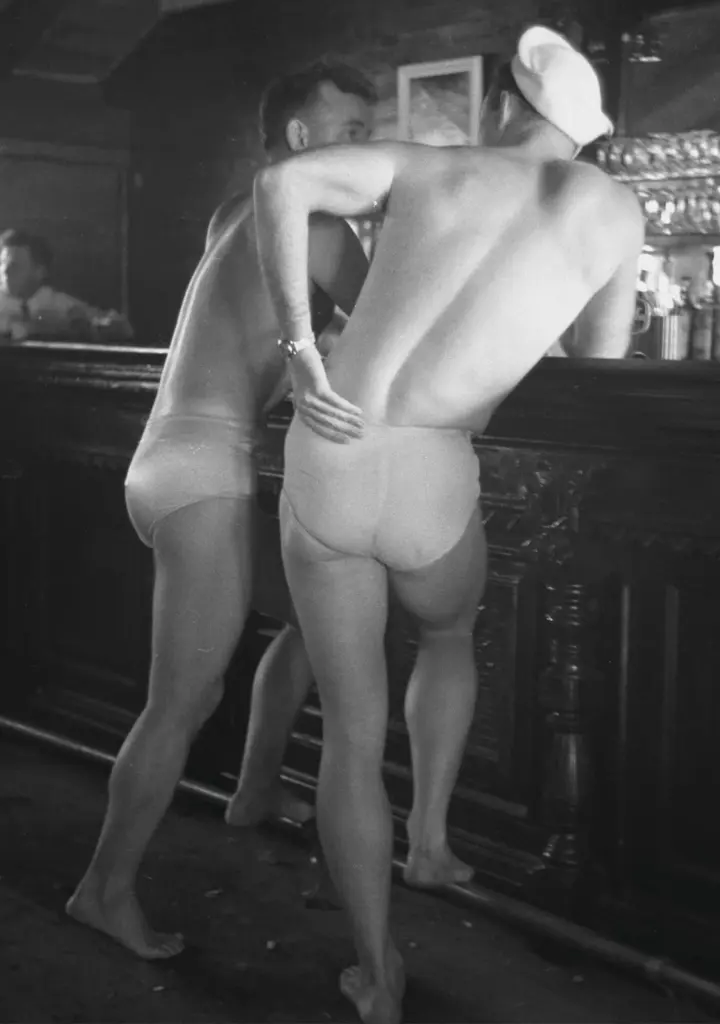
The island’s only hotel, Duffy’s, in the town of Cherry Grove, became one of the first public gay spaces in the United States. At Duffy’s, same-sex couples could drink, dance, and kiss without fear. Lesbians were also invited to the party. Writer Patricia Highsmith often took her lovers to Cherry Grove, where she met other powerful women of the community, such as socialite Kay Guinness and Ruth Peter Worth. Once, Worth was asked what was wonderful about Fire Island and replied: “Homosexuality. There I was the majority. That was my world and the other world was not real.”
In the fifties, “the other world,” the real one, succumbed to the institutionalized homophobia of McCarthyism. Spurred on by Senator Joseph McCarthy, U.S. authorities launched a gay hunt. New York’s intelligentsia took refuge in Fire. W. H. Auden, Stephen Spender, Christopher Isherwood, and James Baldwin came to its beaches and helped build a creative community away from the prejudices and conventions of the time.
Truman Capote wrote Breakfast at Tiffany’s (1958) in the summer house owned by theater director and patron Frank Carrington between the towns of Fire Island Pines and Cherry Grove. Capote was inspired by his friend, actress Joan McCracken, another regular island vacationer, to create the character Holly Golightly. The writer also began dating McCracken’s husband, former dancer and novelist Jack Dunphy, who would be his life partner and friend until his death in 1984.
Fire also inspired Edward Albee, who wrote Who’s Afraid of Virginia Woolf? in the summer house of businessman and philanthropist Morris Golde. The play, which explores the stormy relationship of a middle-aged couple, premiered in 1962 and was a Broadway success. Four years later, Mike Nichols adapted it into a film starring Hollywood’s most famous couple: Elizabeth Taylor and Richard Burton. Taylor won an Oscar for her stunning portrayal of Martha, the desperate wife, although it was known that her marriage to Burton was more tempestuous off-screen than on.
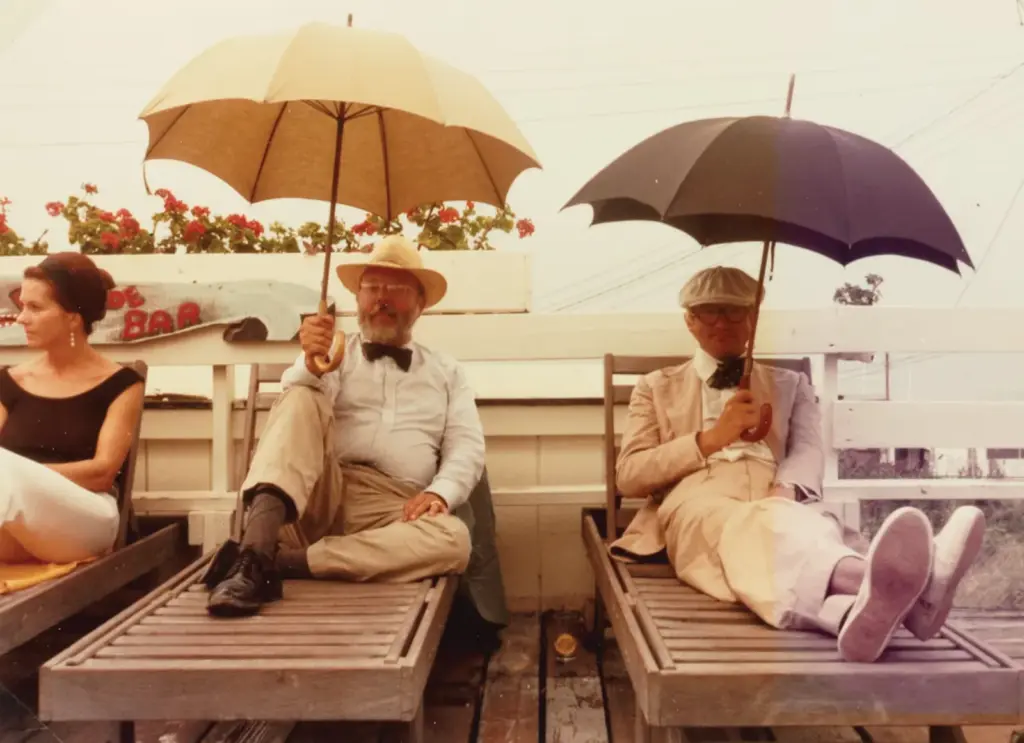
Paul Cadmus, Jared French, and Margaret French lived their own cinematic love story on the island. Jared and Margaret were husband and wife, and Paul and Jared were lovers. Together, they formed the artistic trio PaJaMa. Cadmus and the Frenches spent summers on Fire exploring their sexual tension and portraying illustrious friends such as photographer George Platt Lynes, dancer José “Pete” Martínez, and Lincoln Kirstein, co-founder of the New York City Ballet.
At the same time, Richard Avedon and his wife, Doe, arrived with Lillian Bassman, fashion photographer and art director at Harper’s Bazaar, and her husband, Paul Himmel. Avedon’s early work for Harper’s was strongly influenced by Fire’s aesthetic. The photographer often met there with Leonard Gershe, famous for writing the lyrics to Born in a Trunk, a song performed by Judy Garland and James Mason in the musical A Star is Born (1954). Gershe was inspired by Avedon to write the script for Funny Face.
Peter Hujar and Paul Thek also became fond of summers on Fire Island. The artist couple settled in a fisherman’s house in Oakleyville, the small town where Greta Garbo also vacationed. While Hujar focused on photographing his friends (almost always dressed) and his lovers (almost always naked), Thek immersed himself in painting his watercolors, landscapes evoking the fragility and resilience of the environment.
The Fire community survived the raids and persecutions of McCarthyism and witnessed the birth of a new era. In the 60s, architects like Richard Meier, Charles Gwathmey, and Horace Gifford replaced old beach houses with modern temples of hedonism, minimalist settings designed for maximum pleasure.
Read more Sick leave, a right that young people are more aware of: «We are not going to go to work sick»
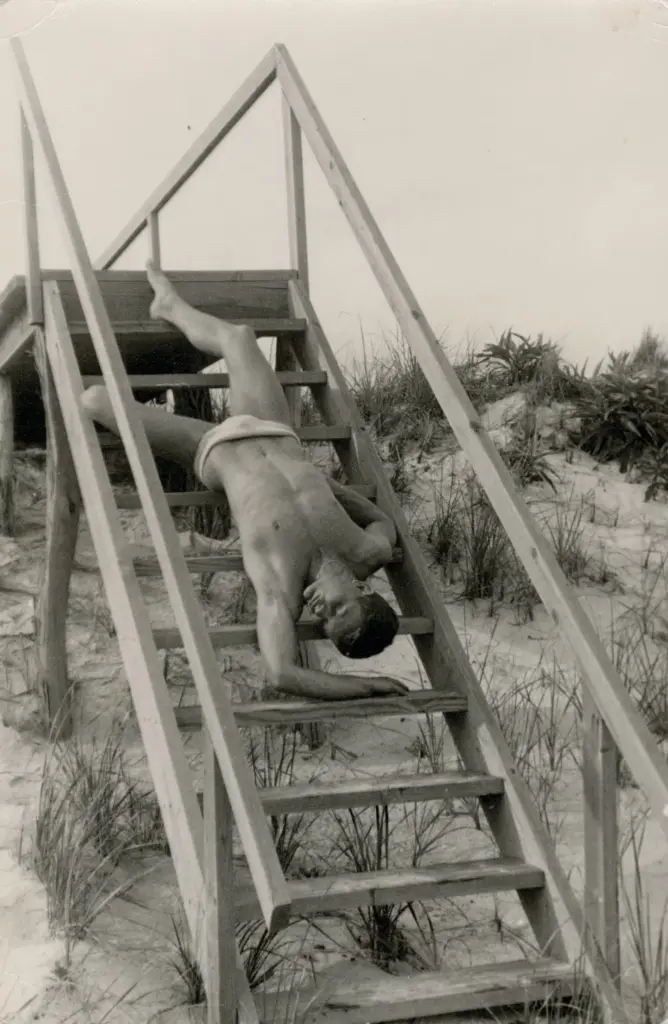
Gifford’s arrest in 1965 for “illegal behavior” ruined his career in New York but catapulted his rise on Fire. The architect designed more than 60 houses on the island, giving the area its distinctive style: wooden houses with simple lines and large windows, perfectly integrated into nature. Gifford became an icon himself. He was very popular for welcoming clients on the beach wearing only a speedo and for drawing his project plans with a stick on the sand. According to Christopher Rawlins, author of the book Fire Island Modernist: Horace Gifford and the Architecture of Seduction, the architect once told a wealthy gay client, for whom he had designed a house: “Now you’ll have 20 closets you can come out of.”
But most Fire residents had already come out of the closet, as much as was possible in the 70s, after the Stonewall riots. Designer Calvin Klein bought a Horace Gifford house in 1977 and hired him to expand it. The architect lined the pool in black and placed a mirror at one end to make the pool look bigger. The mirror also allowed the designer’s guests —Andy Warhol, Bianca Jagger, Perry Ellis, David Geffen, Barry Diller, Prince Egon von Fürstenberg, and countless men in turbo swimsuits— to see themselves reflected while swimming.
As John Dempsey notes in his book, the simple lines of Fire’s architecture and the pastel colors of the beach, sand, and sky inspired Calvin Klein to design his minimalist clothing collections. In 1982, Klein launched his underwear line with a huge billboard in Times Square featuring model Tom Hintnaus showing off his attributes in white briefs. The world had never seen a man so publicly naked. Visitors to Fire, however, had been seeing “adonises” like Hintnaus walking the streets of Cherry Grove for decades.
In the disco music era, clubs like The Ice Palace and Pines Pavilion became great temples of fun. Former model John Whyte opened the Blue Whale bar in Fire Island Pines, where every night the Tea Dance was held, one of the first openly gay parties. There were no teapots or scones, but cocaine, poppers, and LSD were served on silver trays.
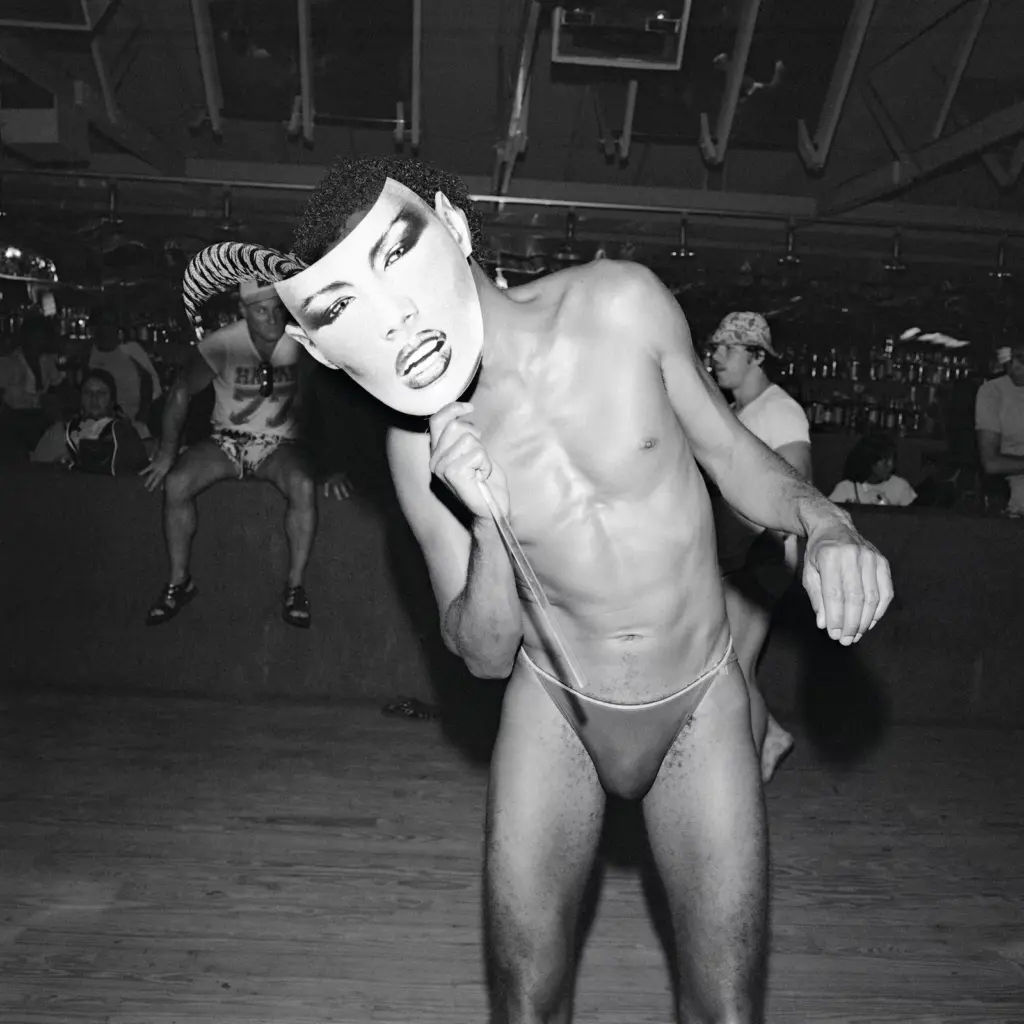
There, the first afters were also born. The boldest then got lost among the dunes and pine forests of Meat Rack, an area between Pines and Cherry Grove where cruising took place. “Fire was a really incredible place… It was crazy fun, a very, very vividly sexy place,” David Hockney would recall.
Artists like Robert Mapplethorpe, Larry Stanton, and illustrator Antonio Lopez were regular faces at these endless parties. The vitalistic photos Mapplethorpe took on the island and in New York helped introduce eroticized male nudity into the photographic canon, but no one saw that those snapshots foretold the arrival of a hurricane.
In June 1981, the first news about HIV/AIDS appeared in the media. “Rare cancer seen in 41 homosexuals,” The New York Times headlined on July 3 of that year. John Dempsey rescues the testimony of acclaimed photographer Nan Goldin, who first heard about the so-called “gay cancer” that same summer while on vacation on Fire Island: “We all laughed. We didn’t know the magnitude of the matter.”
The disease devastated the island’s homosexual population. Dempsey recalls in his book how many local heterosexuals and lesbians took care of and tended to the sick abandoned by their families until the end.
HIV/AIDS took the lives of many prominent members of the New York artistic community who vacationed on Fire: Robert Mapplethorpe, Peter Hujar, Horace Gifford… But the storm did not extinguish the island’s fire. Today, everything remains as it was at the beginning: cars are banned and wearing clothes is optional. Many artists still arrive every summer aboard the ferries to rest, create, have fun, and love without limits.
“Nothing is lost as long as it is remembered,” said banker Arthur Lambert, a habitué of Fire. Social media constantly recalls the mystique and aesthetics of the island. Its imagery is more alive than ever on Instagram, where hundreds of thousands of men post millions of photos every summer posing in speedos, showing off well-defined muscles, handsome friends, and endless parties. Before, the “demigods” only inhabited that thin strip of sand stretching off the coast of Long Island. Now they are everywhere, in any impossibly blue pool, on any beach of unattainable beauty.
Read more Between crowded Spain and emptied Spain