








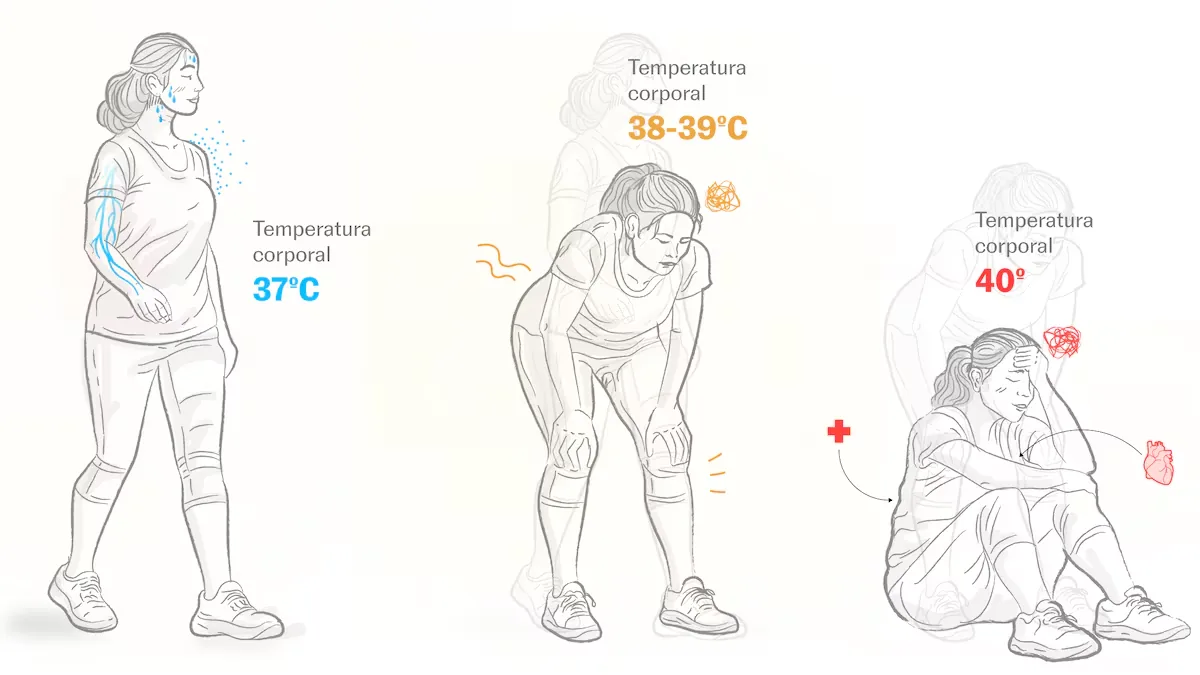
Extreme heat makes you sick and kills. In many ways. The most striking —although rare— are heat strokes, a medical emergency characterized by a body temperature above 40ºC that causes an alteration of mental state with a high risk of multi-organ failure and death. But there are many more potentially serious physiological imbalances linked to high temperatures. Heat stress, which occurs when the need to dissipate heat exceeds the body’s ability to do so, can also cause more cardiovascular imbalances, worsen sleep quality, make us more irritable, or destabilize mental disorders.
Read more Fire Island, the hottest beach in the world: 100 years of art, parties, and unrestrained sex
Experts warn that extreme heat events will become more frequent and predict that changes will have to be made sooner rather than later to avoid greater harm. “There will have to be a change in mindset. We have to learn to live with extreme heat on a regular basis,” warns Elisabeth Diago, a researcher at ISGlobal. A simple example: “Always carry water and drink, even if you are not thirsty.” Another: “You can’t go running at four in the afternoon… You could faint from heat!” exclaims Diago. Self-care, community support networks for the vulnerable, better-prepared housing, and a change in urban health (avoiding the heat island effect) will be key.
When humans face episodes of intense heat, the body responds by deploying physiological strategies to maintain the internal body temperature at about 37 degrees, the optimal level for life. The body uses, for example, sweating, which is the main thermoregulation mechanism to dissipate heat by evaporating sweat on the skin surface. It also resorts to peripheral vasodilation, which increases blood flow to the skin to facilitate heat loss.
All this usually helps maintain the proper temperature, but these mechanisms have limits. And when they are exceeded, what experts call heat stress appears, which manifests with a range of discomfort from fatigue, cramps, or irritability to more severe conditions such as syncope or heat stroke.
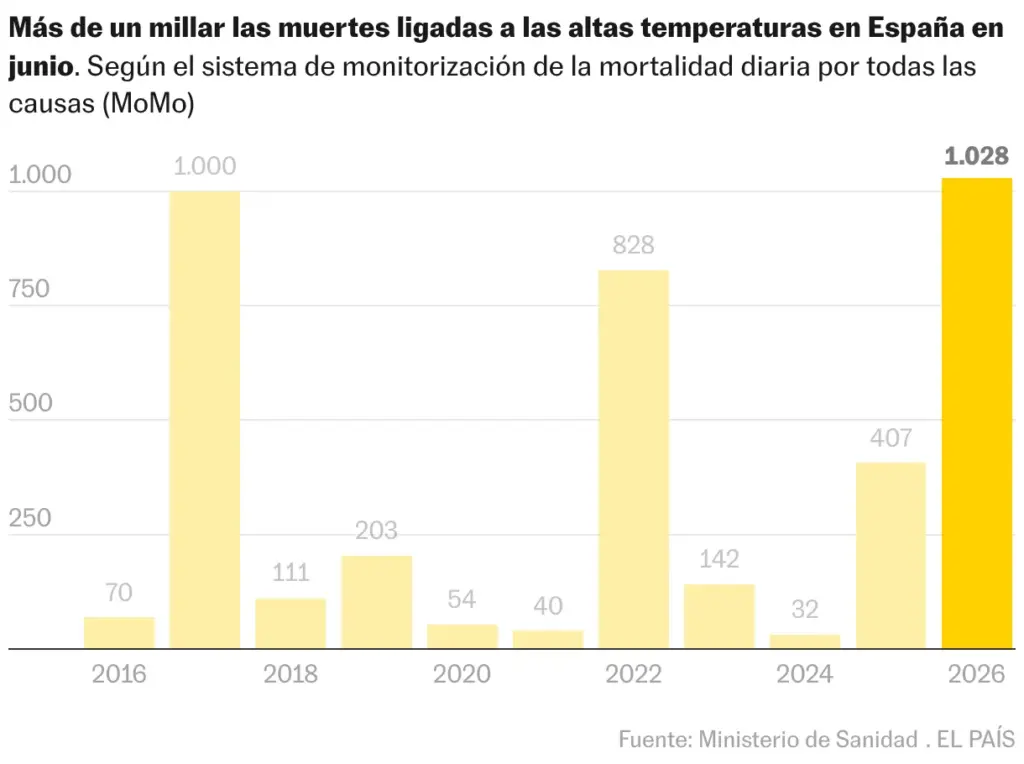
The impact of high temperatures on health can be brutal. In the summer of 2022, one of the warmest recorded in Europe, there were more than 61,000 deaths associated with high temperatures, according to a study. This year, just in June, more than a thousand were recorded in Spain. Deaths from heat strokes are rare; most deaths linked to extreme heat occur due to the worsening of preexisting conditions.
A recent ISGlobal report for the DKV Health and Environment Observatory recalls that, according to scientific literature, for every one-degree Celsius increase in ambient temperature, heat mortality increases by 35% and deaths linked to cardiovascular conditions by 2.1%; the number of people who get sick also rises by 18% (25% in those over 65 years old). “The effects are not the same for everyone because vulnerability is different. It depends on exposure; intrinsic factors of the person, such as their underlying diseases; and also structural vulnerability, such as the neighborhood you live in or socioeconomic capacity to access certain resources,” explains Diago, who coordinated the report.
The elderly and children bear the worst part. Among other things, because neither of these two groups has the body’s thermostat in optimal condition: the elderly’s is worn out by age and children’s is still underdeveloped. Older people also tend to have underlying diseases that can more easily destabilize with heat, says Alfons Aguirre, head of the Emergency Department at Hospital del Mar in Barcelona. “They usually have more compromised heat adaptation mechanisms. Also, if they have a neurological disorder, they lose the thirst reflex and are at higher risk of dehydration,” he exemplifies. Unwanted loneliness is also a vulnerability factor.
Another risk group is outdoor workers, due to direct exposure to high temperatures. And also pregnant women: being under extreme heat, especially in the first trimester, is associated with a higher risk of premature birth, low birth weight, and fetal death.
Women also die more during heat waves. According to ISGlobal, in the summer of 2022, mortality was 56% higher than in men. Experts attribute this gap to physiological differences in thermoregulation, especially during menopause, but also to greater isolation and less access to cooled areas.
The cost of poor rest
The human body uses nighttime hours to release the heat accumulated during the day. But when nights are very hot, this whole physiological recovery process is compromised. It is harder to sleep, we wake up more often, and sleep tends to be less deep and restorative, says Marta Garaulet, professor of Physiology and Physiological Bases of Nutrition at the University of Murcia: “The body has to put more effort into regulating temperature, physiological activation increases, and the normal architecture of sleep is altered. In general, heat is associated with more nighttime wakefulness and a reduction in deep sleep and REM sleep, which are important phases for physical, cognitive, and emotional recovery.”
Garaulet clarifies that heat does not alter our biological clock as, for example, nighttime light does, but it can “disorganize the expression” of circadian rhythms. “We sleep worse, go to bed later, get up more tired, and the next day we tend to be less active. All this can end up affecting the sleep-wake rhythm, metabolism, and overall well-being.”
In her research, the scientist also discovered the power of napping in extreme heat contexts: “We saw that in 11% of people, the nap does not appear as a constant habit throughout the year, but as a seasonal behavior, occurring mainly in summer.” She discovered this in studies done in Murcia, where it is common for summer afternoons to reach 40°C. “Under those conditions, the body naturally tends to reduce activity and favor rest. The nap would not only be a cultural habit but also a biological response to the environment. When the heat is extreme, resting during the central hours of the day helps avoid heat stress, conserve energy, and reorganize activity toward cooler moments,” she explains.
According to Garaulet, “in warm regions, a brief and well-timed nap can be an adaptive physiological response.” And she gives more advice: “It is advisable that the room tends to be cool rather than hot to sleep well. And, although sometimes the opposite is thought, very hot showers just before going to bed can make sleep difficult if they raise body temperature too much or prevent the natural heat loss we need to sleep.”
Read more Check-in at 3 PM, check-out before 12 PM: why people are arriving later and leaving hotels earlier
More irritation and stress
Like a domino effect, lack of adequate rest is one of the factors that also drives worsening mental health. In primary care, persistent heat has been associated with an increase in consultations for anxiety (43%) and depression (23%), according to the ISGlobal report. For every degree the temperature rises, the risk of suicide increases by up to 1.7% and psychiatric hospitalizations grow by almost 10% during heat waves.
Experts attribute this impact to a confluence of factors. From psychological mechanisms, related to the perception of heat through feelings of stress and anxiety; to behavioral elements, with changes in behavior due to heat; or social mechanisms, linked to changes in interactions due to heat (more isolation, for example).
The heart’s overexertion
In a heat stress situation, the risk of cardiovascular function imbalances also increases. In that attempt to dissipate heat, the heart overexerts itself. “And that can contribute to destabilizing cardiovascular diseases,” summarizes Aguirre.
Additionally, there are drugs that can worsen the situation, emphasizes Christian Garriga, pediatrician and corporate medical director of DKV: “Antihypertensives [to control high blood pressure], beta-blockers [reduce heart rate and blood pressure], and diuretics [help eliminate excess water and salt through urine] affect the vascular system and also fluids.” With heat, due to that peripheral vasodilation mechanism, blood pressure can drop and sweating eliminates more electrolytes. These drugs further accentuate these symptoms and can cause dehydration, dizziness, fatigue, or even fainting.
The lungs work harder
Respiratory diseases can also become unbalanced. With heat, the body increases cardiac output and hyperventilation, which can worsen conditions like asthma or chronic obstructive pulmonary disease (COPD). “By increasing vasodilation, the body compensates with a higher heart rate and more respiratory effort to oxygenate the blood,” says Bernardino Alcázar-Navarrete, president-elect of the Spanish Society of Pneumology.
That situation, in people with chronic diseases, can complicate their clinical picture. He gives an example: “It has been described that with summer heat, the risk of hospitalization for COPD increases by 8%. There are exacerbations because when the temperature changes, the air density also changes and patients notice it more; it also usually coincides with episodes of haze, a time when there is more environmental dust and suspended particles; and also, with heat there is a higher risk of dehydration and this affects secretions [mucus is thicker and harder to eliminate by coughing, which favors airway obstruction].”
Altered metabolism
Heat stress can also cause metabolic dysfunctions. With heat, for example, the way the body processes glucose is altered. It also happens, says Rosa Corcoy, director of the Diabetes Unit at Hospital Sant Pau in Barcelona, that “in people with diabetes treated with insulin, absorption can increase with heat and insulin requirements decrease, showing a tendency to hypoglycemia. At the other extreme, people with diabetes and very high glucose levels can more easily have hyperglycemic decompensation because both hyperglycemia and heat favor dehydration.”
The endocrinologist also recalls that nutrient metabolism generates heat. And that partly explains why in times of extreme heat we prefer fresh and light foods instead of very caloric ones: “To begin with, if the food we eat is fresh, it already helps lower body temperature, which is what is advisable. But also, if a heavy meal is ingested, the effort of the body to metabolize that food will generate more heat and that will increase body temperature. And the body seeks to balance body temperature, not increase it.”
People with obesity are another vulnerable group. “They have more difficulty eliminating heat because they have less body surface area relative to mass. And adipose tissue also acts as thermal insulation,” emphasizes Corcoy.
The suffering of the kidneys with dehydration
People with kidney diseases are another group that can suffer imbalances. The explanation is that during heat waves there is a higher risk of dehydration and that leads to an electrolyte imbalance that forces the kidneys to work harder and, as a result of that extra stress, preexisting kidney diseases can worsen.
Experts warn that we must prepare for a world with increasingly frequent extreme heat. “We have to change our way of living,” assures Diago. Starting by reinforcing self-care. Hydrating (with water, not soft drinks or alcohol) is fundamental. And protecting yourself from the sun. And cooling down, by any means.
Read more Sick leave, a right that young people are more aware of: «We are not going to go to work sick»