








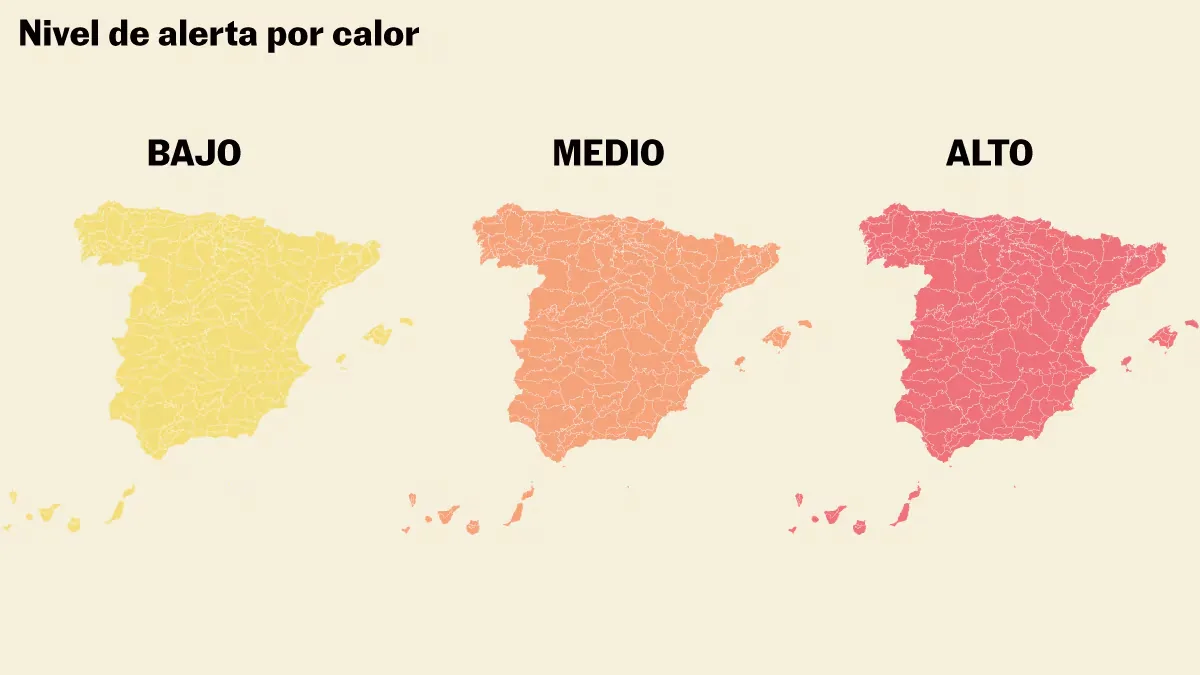
[[dia]] [[verbo_dia]] [[alto_riesgo_muni]] municipalities in areas with high heat health risk ([[perc_riesgo_alto_muni]]%), [[riesgo_medio_muni]] in medium risk ([[perc_riesgo_medio_muni]]%) and [[bajo_riesgo_muni]] in low risk ([[perc_bajo_riesgo_muni]]%). You can consult the data for today, tomorrow and the day after tomorrow in the following map automatically generated from the data published by the Ministry of Health and Aemet this Wednesday.
Loading
What is an alert level
The health alert system divides Spain into 182 meteo-health zones (the “regions” seen on the map) where maximum temperature thresholds are set for each of them, based on the increase in mortality in each area when an extreme heat level is exceeded.
To determine which of the three alert levels each zone is in, it is taken into account how heat will affect it during a 72-hour window, given the impact of persistent heat on health. [[dia]], for example, [[verbo_dia]] [[alto_riesgo_zonas]] meteo-health zones at level 3 (the highest) and [[riesgo_medio_zonas]] at level 2 in Spain.
In the following table you can consult the temperatures forecast by Aemet (State Meteorological Agency) for the coming days in municipalities with more than 50,000 inhabitants and whether the risk threshold of the meteo-health area where they are located is expected to be exceeded.
The other system: Meteoalerta
In addition to health alerts, Aemet has the Meteoalerta plan with which the agency activates its warnings linked to high temperatures. The following map shows the areas with active warnings for maximum temperatures.
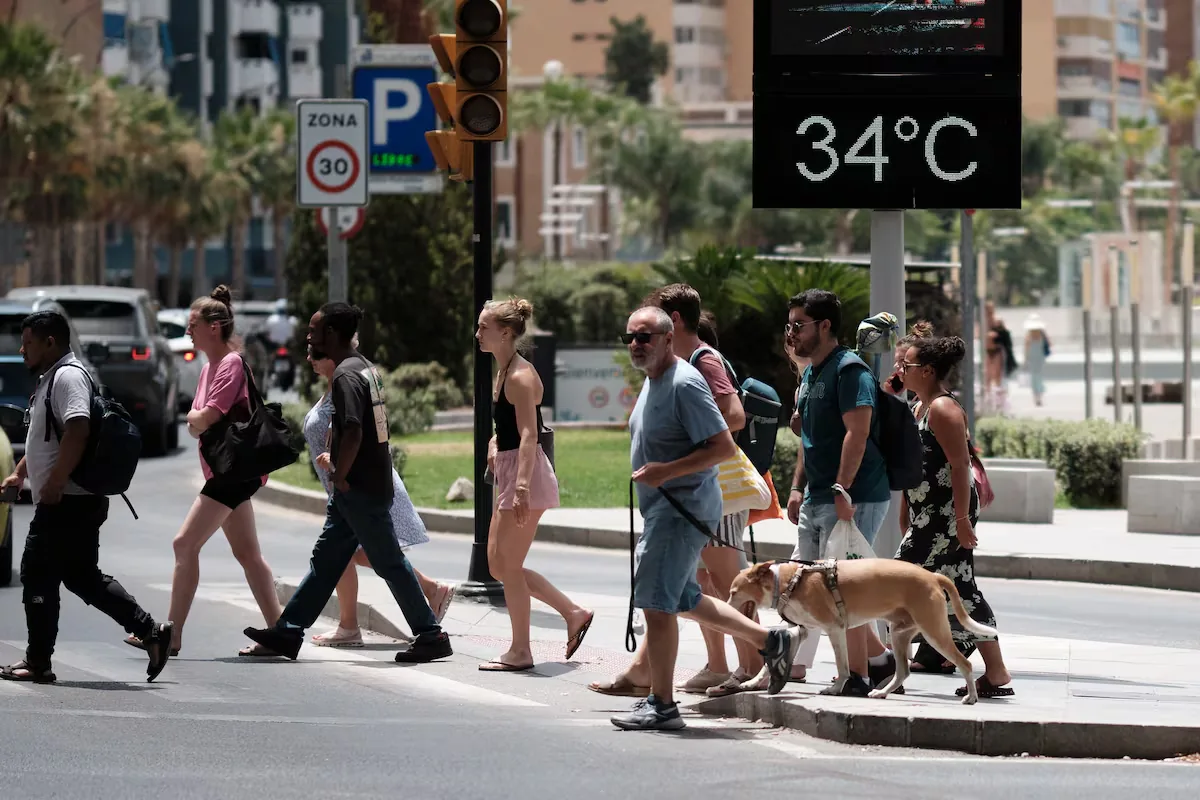
These warnings are established according to specific criteria for each zone on a specific day, without the three-day time frame used by the Ministry of Health map and without taking mortality into account. For example, in the metropolitan area of Madrid and Henares, the yellow alert is activated from 34 degrees and the red, when 42 degrees are exceeded, while in the Canary Islands or Asturias they enter yellow level at the same temperature, but move to maximum alert at 40. To calculate these thresholds, Aemet relies on historical temperature data for each zone.
What is a heatwave?
There is no single definition of what a heatwave is. For Aemet, it is an episode of at least three consecutive days in which at least 10% of the reference meteorological stations in Spain record maximums above the 95th percentile of their historical series of daily maximums for the months of July and August between 1971 and 2000.
Between 1975 and 2025, Aemet has recorded 78 heatwaves in Peninsular Spain and 59 in the Canary Islands. Climate change caused by greenhouse gas emissions from humans has made these episodes more frequent and intense in Spain. In addition, it is also observed that they start earlier and earlier: between 2025 and 2000, ten heatwaves starting in June have been recorded in peninsular Spain. Between 2000 and 1975, Aemet has only recorded two.
The first heatwave of this 2026 began on June 21 and lasted four days.

Temperatures and health risks
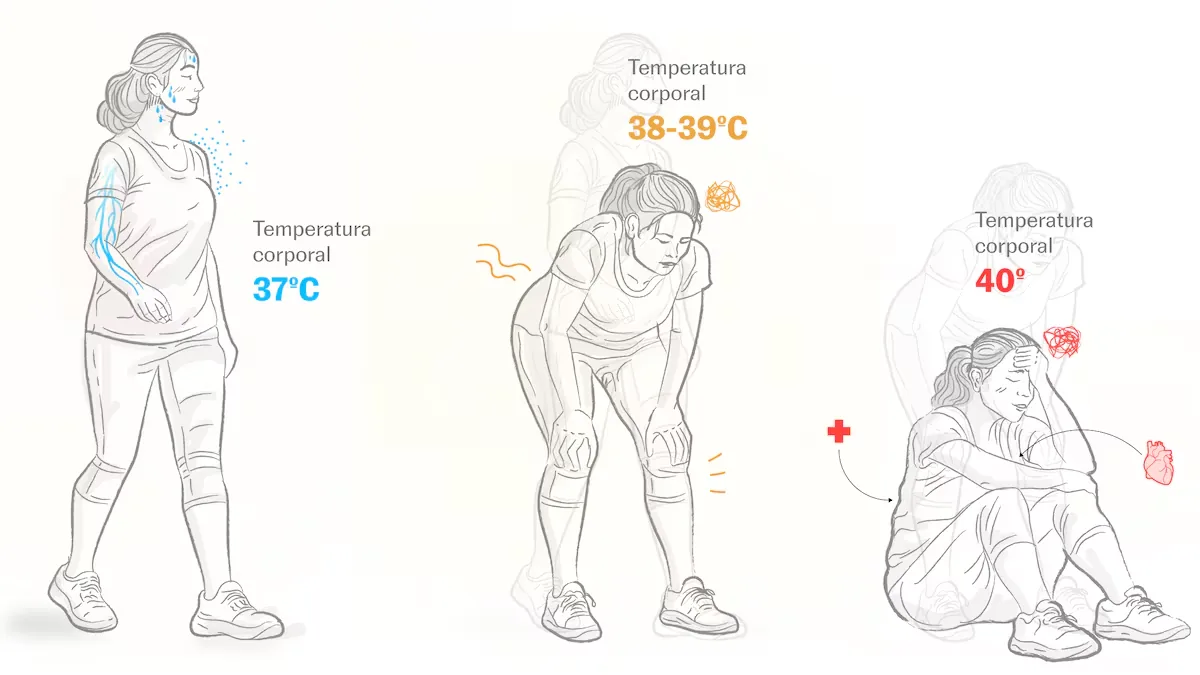
Heat has direct impacts on the health of the population, especially among children and the elderly or those with chronic diseases. In a context of increasingly longer and more frequent heatwaves, it is essential to understand the effects of excess temperature.
Read more At least eight injured by a gas explosion in Sants square in Barcelona
Hydrate

Drink liquids even if you’re not thirsty. Avoid alcohol, caffeine, and very sugary drinks

Eat light meals that help replenish salts without overloading the body
Protect

Caution in risk groups and people with diseases that can worsen with heat

Limit exposure, use protection, wear light and loose clothing, preferably light colors

Do not leave anyone in closed vehicles, not even for short periods
Cool down

Stay in cool places, with adequate ventilation or air conditioning whenever possible

Reduce physical activity during the hottest hours of the day to avoid heatstroke
Furthermore, mortality increases with heat. A team from the Carlos III Health Institute has calculated the maximum temperatures at which deaths statistically significantly increase for meteo-health zones. This study is used as the basis for issuing health alerts.