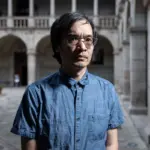


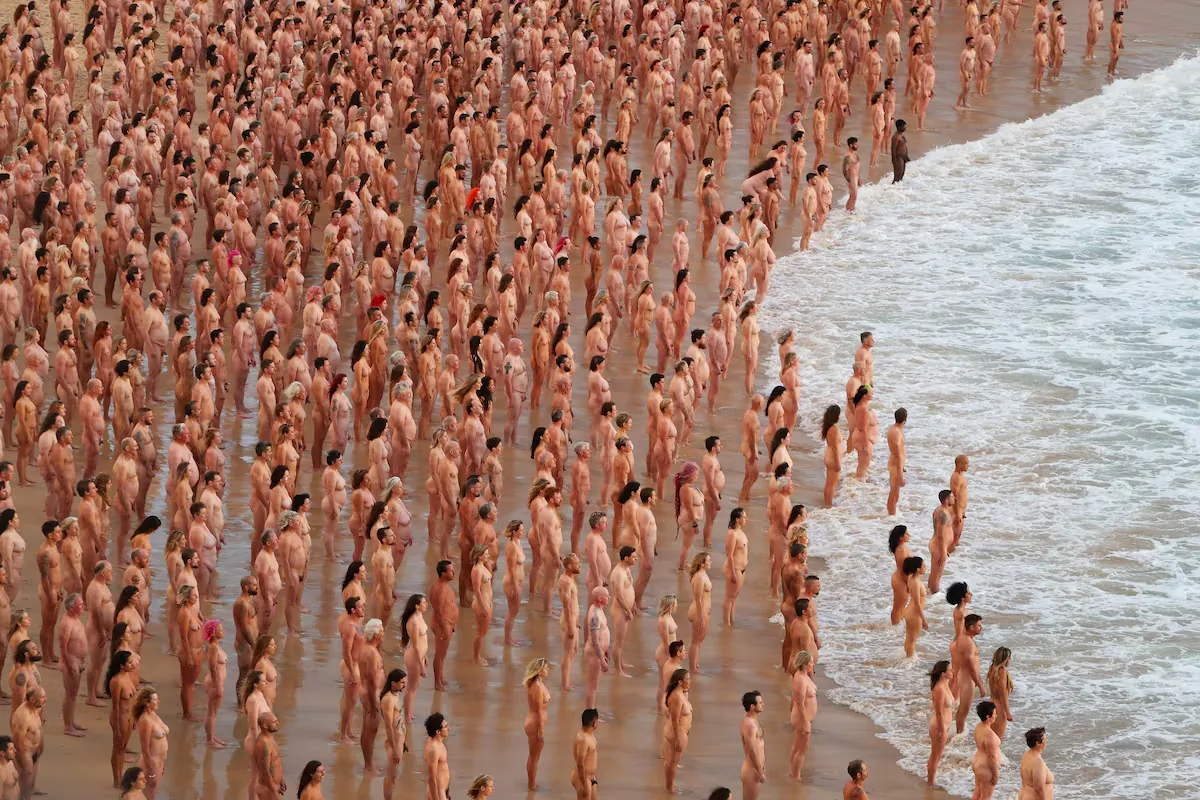
When, in the nineties, Spencer Tunick began his career in New York, unlike other places in the United States, photographing nudes in the streets was allowed, as long as it was for artistic purposes. In this way, he took advantage of the early hours of the day, when the city was waking up and the streets were still empty, to take his portraits of naked people, initially individually. Photo by photo, he gathered contacts of “waiters or video store workers,” until one day he had more than 70 phone numbers in his agenda. “Then I thought: it’s going to take me a lifetime to photograph all these people, so I decided to invite them all to pose at once,” explains the photographer in a video call from that same city, where he lives with his family.
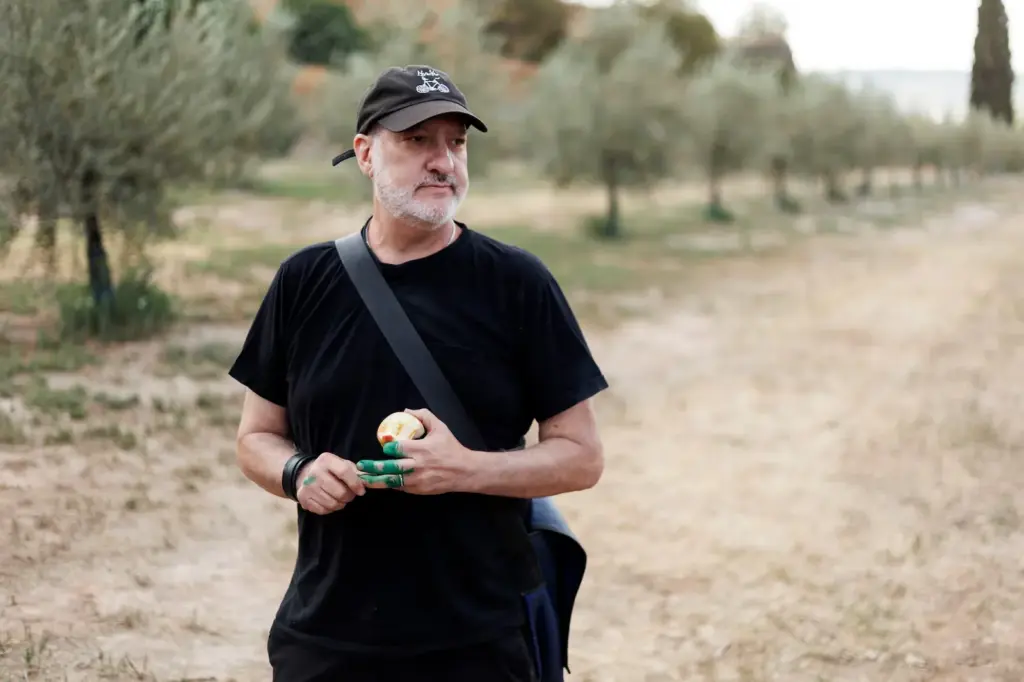
Twenty-eight people attended that meeting in front of the United Nations headquarters, who would become the protagonists of the first group portrait of the now renowned artist. “The final image worked: I thought it wasn’t tacky or cheesy, but had a strong and serious quality,” he recalls. “At that moment I thought: wow, something is happening here.” What followed could be summarized as a relentless journey around the world photographing masses of naked bodies, with milestones such as his 2003 Barcelona call, which drew between 4,500 and 7,000 people, depending on the source, and his record of between 18,000 and 20,000 in Mexico City in 2007, as well as some truncated work: “I tried to do a piece in South Korea that didn’t happen because the government denied me permission, and another in Taiwan where everything was already organized when it was canceled,” he recalls. “There are many places with narrow-minded and restrictive governments.”
His next project will take him on July 26 to Gran Canaria, a place where he has “no problem, because there is respect for art.” Ten years after a failed attempt in Tenerife — he says he doesn’t remember exactly what happened — he will carry out the action Gran Spectrum, an intervention inspired by the colors of the LGTBIQA+ flag to claim the rights of the community within the framework of the Culture & Business Pride 2026 festival, organized by the Gran Canaria Council and the Government of the Canary Islands. Although he keeps the number of participants secret until the day it is carried out, what is certain is that it will again mobilize hundreds of people.
“Working with the colors of pride allows me to play with abstraction and with the ideas of art and freedom as equalizers, while at the same time allowing each person to have their own color,” says Tunick, who clarifies that not all his projects are dedicated to a cause, although in this case there are reasons to do so: “In the United States there is a lot of misinformation about the LGTBIQA+ community, much hatred and lies. So I think any opportunity to be positive and create community is a good thing.”
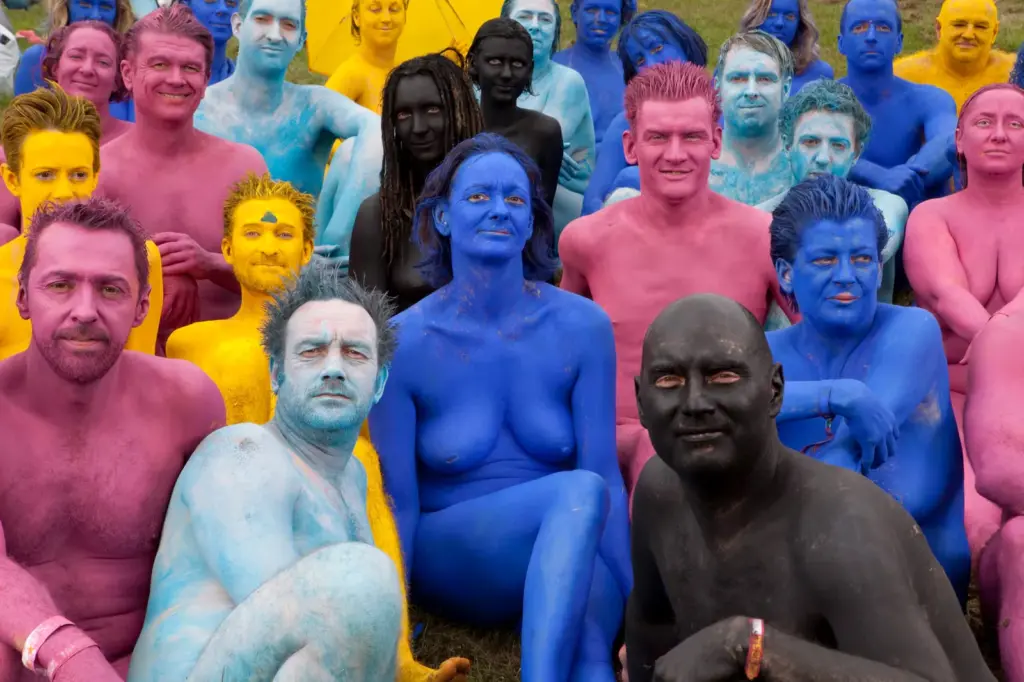
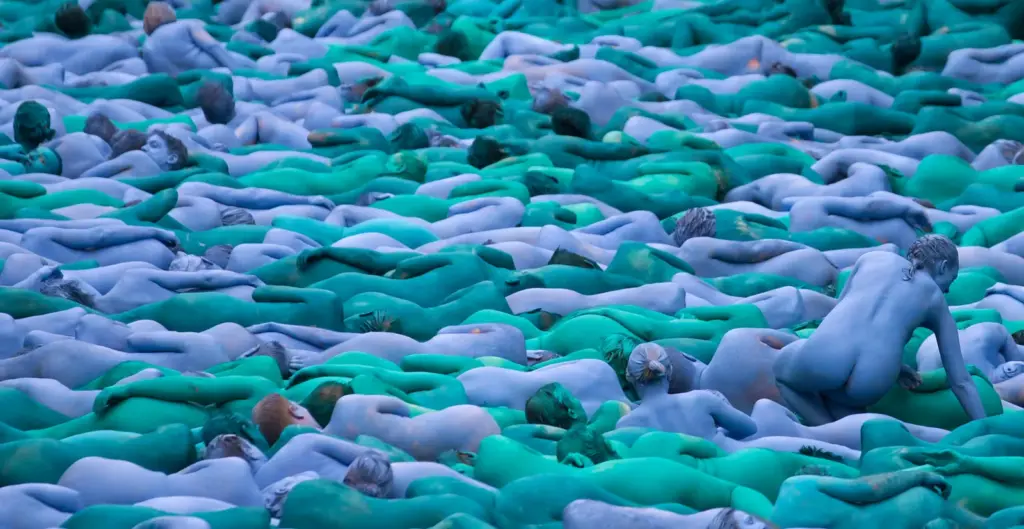
The mention of abstraction relates to his own definition of what he does, a work halfway between image, sculpture, and performance, where the accumulation of bodies dilutes individual nudity and its erotic charge in favor of an aesthetic experience closer to the communal, like a congregation singing with one voice. “I would say what I do are abstract paintings with bodies in public space,” he states, citing artists such as Yayoi Kusama, Ellsworth Kelly, or Carolee Schneemann among his influences. “I don’t always do my work as protest, sometimes I use the body as a substance or sculpture within the street. What happens is that this work is always political whether you want it or not because nudity is political, and in the mass that effect multiplies.”
Read more Emptied Hispania: Roman remains of small towns become engines of rural development
The role of the models, who participate voluntarily and for free (in Gran Canaria they will receive a copy of the work), constitutes for the artist the core meaning of his projects, which usually, given their logistical complexities, take place once or twice a year. “It’s rare for the public to become part of a work,” he points out. “So what I have created is something in a way unique, something that brings ordinary people closer to the world of art.” With their naked presence, these people of all kinds and conditions contribute to raising a message about freedom, identity, and social conventions. “Before I started working, I was aware that collective nudity was a tool of protest in different countries, especially in Mexico, but also in other places like South Africa,” he explains. “But after my intervention in Barcelona, I knew that protests against power arose that imitated my work and became very popular not only there but worldwide.”
Although his works have become globally recognizable images, Tunick says he leads a modest life in New York, where he works alone in his studio, without employees. “My wife and partner, Kristin, who is a painter and graphic designer, helps me make decisions, she is like the MoMA curator, you know what I mean? She is the one who makes everything possible,” he laughs. “Our operation is small, but we make very big art,” adds the photographer, who says he does not regret that his name has not become as well-known as his photographs. “I always tell my children that I am a known artist, not a famous artist,” he relates. “I think the idea of fame has more to do with musicians and actors than with artists. But I also don’t want people to know my name, I just want to make my art.”
In the three decades he has developed his profession, Tunick has witnessed how the urban representation of nudity has gone from being almost an anecdote “in a postcard of the Eiffel Tower in Paris” to a wave on social networks, the only space where, he says, he has had to self-impose limits. “On Instagram they treat the body in a draconian way, so artists are forced to self-censor to exist,” concludes the New Yorker, who co-founded the platform Don’tDelete.Art to fight for artists’ accounts “not to be deleted as if they were criminals.” “There is too much hatred towards open-minded people: the government and corporations want to control you,” he concludes. “So the more people push boundaries through respectful use of the body, the better off we will be.”