



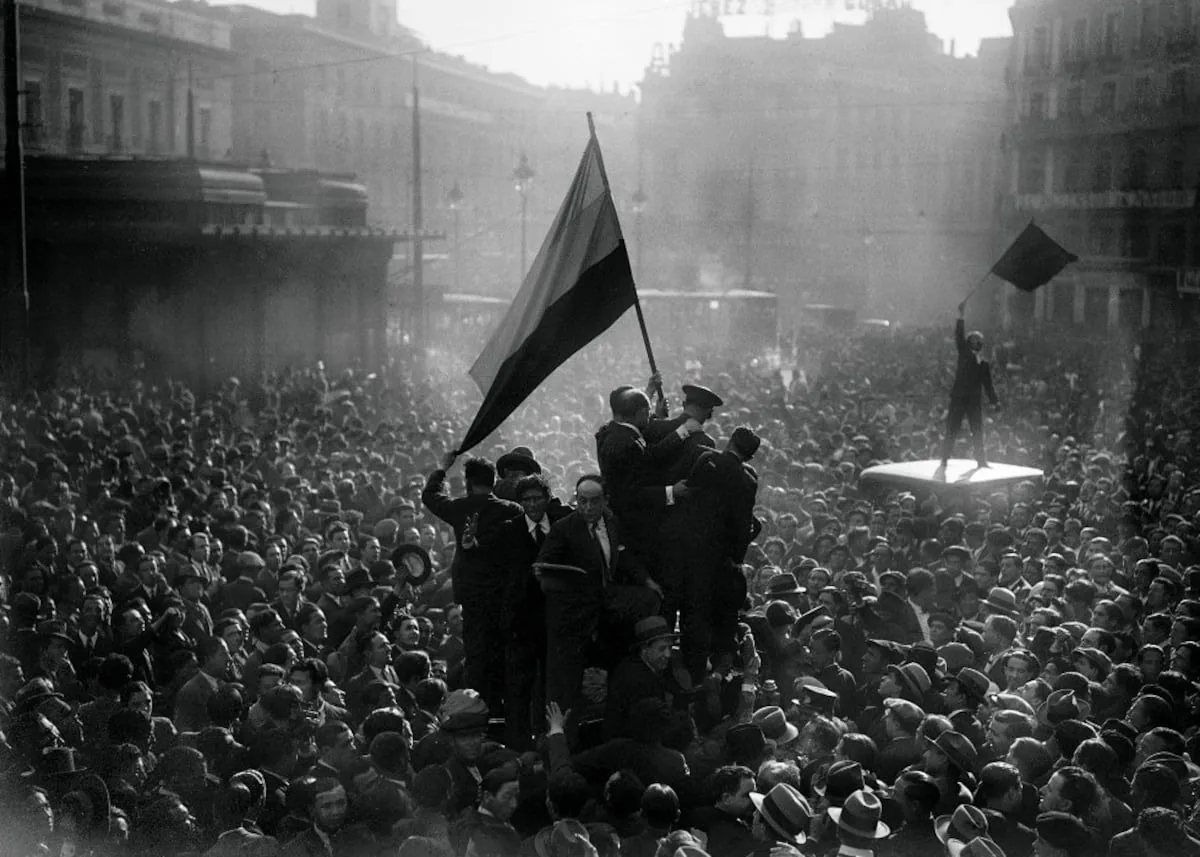
A few days ago, on April 14, it was the 95th anniversary of the arrival of the Second Republic in Spain. The history is usually told by placing that period that began then as the prelude to the Civil War when perhaps it is more important to understand it as the culmination of what was being brewed in the previous decade and that the military coup and the subsequent dictatorship came to interrupt. The twenties were a time of deep crisis. In the two directions that any crisis usually activates. As a moment of discouragement and confusion and chaos, but also as a time in which dazzling bursts of cultural and scientific creation occurred and where a huge flow of ideas, projects, and discoveries was unleashed. Everything could fall apart, and everything was possible. At the same time.
There were tensions, and great intensity in private and public life. New ways of relating, new myths, the emergence of disturbing leaderships, a restless and permanent turmoil in the streets. In Spain and, despite the Primo de Rivera dictatorship since 1923, three generations of writers and thinkers coexisted, those of 98, 14, and 27, and they found a way to unleash their obsessions and proposals. As for society, the atmosphere that permeated day-to-day life was infected with a fever to change things. An electric thread ran through it with indomitable energy and its discharges illuminated a future where it would be possible to reduce injustices, have a plot of land to cultivate or find decent work, escape illiteracy, access decent education, be able to see a doctor who would cure ailments, conquer greater freedoms and for women to emancipate and vote, greater decentralization, free themselves from military tutelage, speak their own language, and so on. The Republic thus became a promise and, when it arrived, its politicians set about launching a flood of reforms. Many resistances arose.
In his autobiography, Vida en claro—included in Memoria (El Colegio de México / Residencia de Estudiantes)—, the poet and artist José Moreno Villa does not hide his fascination when talking about those years, those two decades whose advances and achievements were crushed after Franco’s victory, and he writes when talking about his friends: “There is a Renaissance rumor that keeps them on edge.” He comments that, in Madrid, “everything had an air of play,” and states: “What interests me most is to establish that the new generation burst in fearlessly, in frank jubilation, and that the tension of the literary life then was very strong.” And he points out that in those days “the term putrefacto also arose for any character who began to smell stale”; it was what prevailed after April 1, 1939, the putrefaction.
Read more ERC of Barcelona seeks to break the deadlock one year before the municipal elections
Today’s times are also times of crisis, like in the twenties. Something is changing, there is a radical fracture with everything that was familiar until recently. But no clear horizon is glimpsed after these stormy moments, there is no promise to hold on to. And there is no tension either, societies seem wilted, nothing shakes them. A lot of noise, yes, bombastic statements that awaken more suspicion than certainties; a void floats in the air. However, it is advisable not to be pessimistic. You just need to take out the spyglass to discover those new generations who will once again step strongly against so much neglect and authoritarianism.