








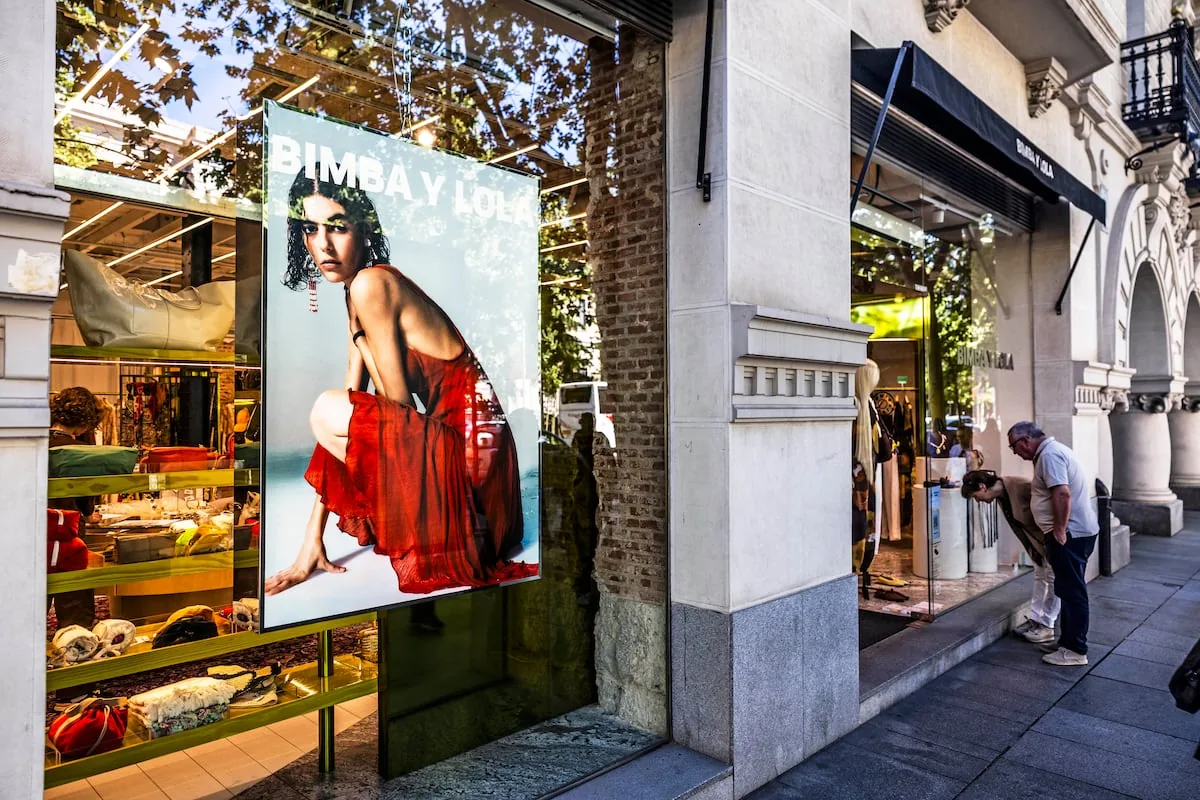
When it opened its first store 20 years ago, the Galician company Bimba y Lola not only borrowed the name of its founders’ greyhounds, but also their swift nature. They inaugurated more than 40 stores in just one year and it didn’t take much longer to expand abroad. These two early decisions marked the course of a brand that, says José Manuel Martínez, its CEO, is not a small company growing, but a large one under construction. After years of double-digit sales growth and on the brink of adolescence, they decided not to complete a capital opening process, which allowed them to face the future and the covid-19 crisis with their own resources. With each stride, Bimba y Lola gained ground, not without obstacles, in the textile industry. As a result of this growth, in 2025 it reached its record turnover.
Read more Delcy or María Corina? Who do Venezuelans prefer to lead the transition?
“It has been a somewhat stabilizing year,” says Martínez via video call about a fiscal year, which ended last February, in which the brand earned more than 250 million euros, 7% more. The company had just closed in 2024 a period of investment that increased its debt more than desired, so in 2025 they hit the brakes and focused on reducing it to levels where they feel comfortable again. “If we had expanded, we probably would have grown in double digits,” assures the CEO referring to growth on a like-for-like basis across all markets and channels. Currently, the brand has 321 stores including own and franchises, 11 more than the previous year.
Uxía and María Domínguez, whose surname already gives an idea of the breed the greyhound comes from, wanted to forge their own path in 2005 after going through the family business. Granddaughters of tailor Adolfo Domínguez, nieces of the designer of the same name and daughters of Jesús Domínguez, co-founder of Textil Lonia, licensee of Carolina Herrera and owner of Purificación García, they sought a young, fun proposal with which they could identify, framed in accessible luxury. That bet required determination and a strong opening plan: “That type of product, with that level of quality and design, and at those prices, demanded volume,” Martínez recounts. In 2008, two years after the first opening and with a store network heading towards a hundred, they ventured into the foreign market, where competition made them raise their level of demand. With “From Vigo to the World” as their banner, the international business, which concentrates half of the stores, already contributes 44% of revenues. After Spain, Mexico is their main market: “Latin America as a whole is a huge market for Bimba y Lola,” says its general manager.
The company grew at a spectacular pace for years, with sales increases above 10% that even exceeded 30%. With internationalization underway, but aware of the limitations of their experience, in 2017 they began a process to open their capital to a partner to advance the brand’s globalization. “It was not for financial reasons, because the company generated more than enough cash [to finance expansion]. It was a strategic decision,” says the CEO. However, in summer 2018, they closed that door. At the time, disagreements over price were mentioned, but according to Martínez, it was related to the withdrawal for reasons unrelated to the company of the chosen fund — which in fact proposed a slightly lower valuation than the other contender — and the understanding that they could do it alone. In Martínez’s view, that decision was pivotal for the company, which maintained its long-term vision and when the pandemic arrived made decisions, also defining for its future, without being conditioned by the usual leverage levels and financial urgency typical of venture capital.
On that journey they undertook alone, Bimba y Lola bought back franchises — 95% of the brand’s business is own — worked on making their logistics scalable and efficient, and redefined the store concept to conquer new markets, among other investments. And they did so despite covid-19 and the subsequent sales stagnation. “Before you had the feeling of some global stability and a known environment. Since 2020 there is no known environment,” Martínez recounts about the problems that followed the pandemic, such as the Suez Canal blockage, the war in Ukraine, or the more recent war in Iran. Their turnover continued to grow, but at a slower pace.
The rise in costs and the slowdown in sales, added to the euro devaluation, debt amortization and interest payments were felt in profitability. Both operating profit (ebitda) and net profit decreased in recent years and stood at 19.3 million and 1.5 million, respectively, in 2024, compared to 24.4 and 6.1 million the previous year. “Ebitda has not suffered as much as net profit, but we are sure that this year it will have a significant, very significant improvement,” assures Martínez about a figure he believes will exceed their forecasts and that they have not yet made public pending the presentation of consolidated results.
Two steps ahead
Bimba y Lola made a place for itself 20 years ago and, the hardest part, has maintained it. The first, the CEO says, because it started with a very clear idea of on which occasions and what type of woman to reach: “It has been very clear from the beginning and everything Bimba does is built around it.” And the second, because it does not let its proposal expire. “That ability to always think a little ahead, risking letting go of what you were doing to do new things, is what keeps you fresh,” he says. Although its catalog includes clothing and other accessories, the handbag remains the crown jewel and leads sales. Just over one in five comes from the digital channel, after growing 12% last year.
They know that big bets require much more muscle than they have, and they approach their expansion with sensibility. “We are making market in Asia and Europe, but little by little,” Martínez points out. The United States is also in the plan, but the tariff drift of Donald Trump, especially in China, where much of their production is, has made them slow down in this market. “We will go with a philosophy of building little by little in the three,” concludes the CEO.