







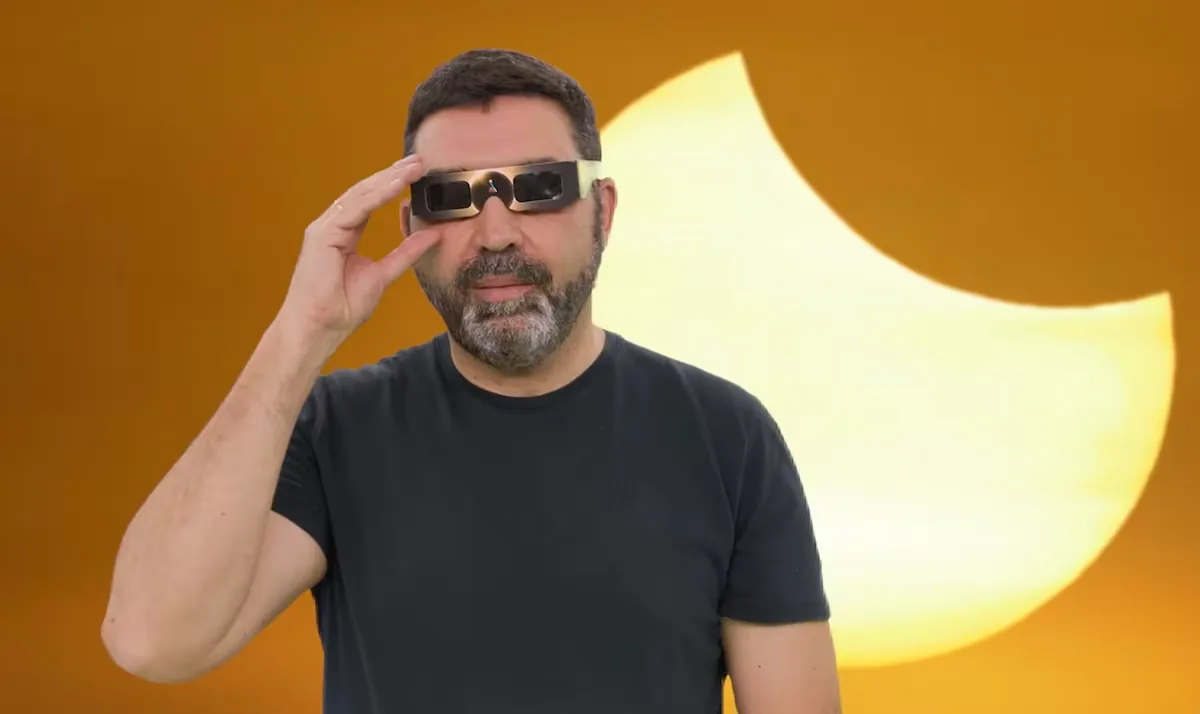
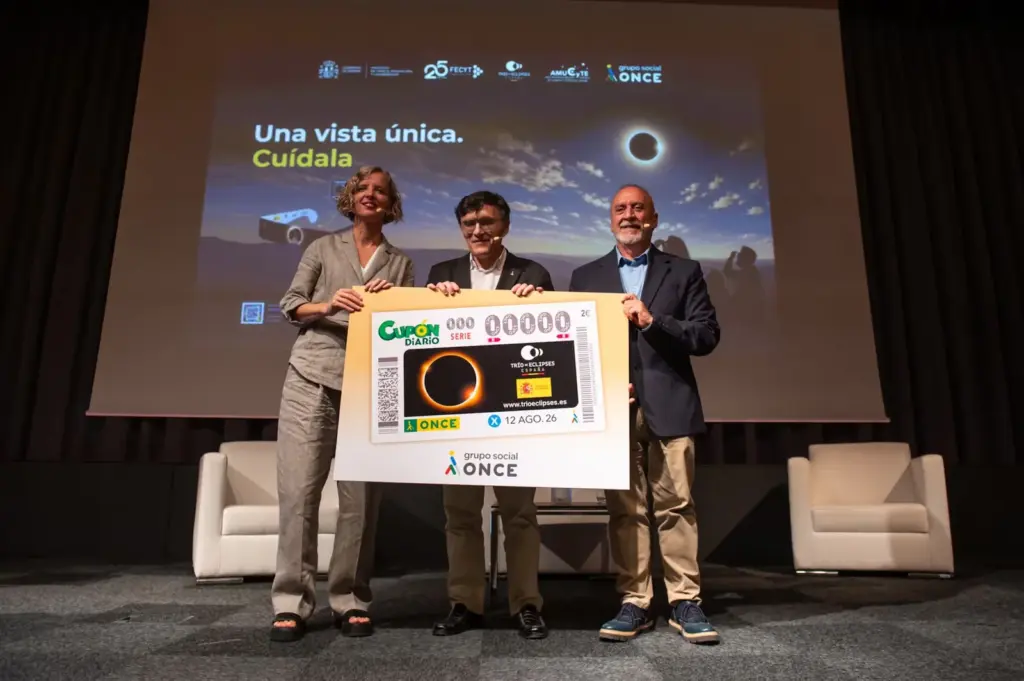
Two weeks before the eclipse of the century in Spain, the Government has launched an initiative to promote safe viewing. Two million certified protective glasses will be distributed free of charge, starting this Tuesday, both in science museums and at ONCE coupon sales points, thanks to an agreement signed this Monday by the organization for the blind and the Ministry of Science, Innovation and Universities. The campaign A unique view. Take care of it also includes the dissemination of educational materials to explain how to use the glasses, and was presented this Monday in A Coruña at the National Museum of Science and Technology headquarters.
ONCE will distribute 1.7 million glasses at its more than 21,300 kiosks, mainly next week, while the Government already has everything ready to start the free distribution of another 300,000 units in 30 public scientific centers detailed on its website. Officials from the ministry and the organization have emphasized the risk of injuries and permanent eye damage caused by looking at the Sun during the partial phase of the eclipse. To avoid eye problems, there is a very simple solution: the use of certified glasses. They are the only protection that works, against the still widespread beliefs that there are homemade methods as well. “It terrifies me that the possibility of using X-rays or photographic negatives is even mentioned,” warned Juan Cruz Cigudosa, Secretary of State for Science, Innovation and Universities, who explained that although those objects might reduce somewhat the amount of visible light that bothers our eyes, they do not filter ultraviolet or infrared radiation, which are responsible for the most severe and irreversible damage.
The danger of invisible solar rays
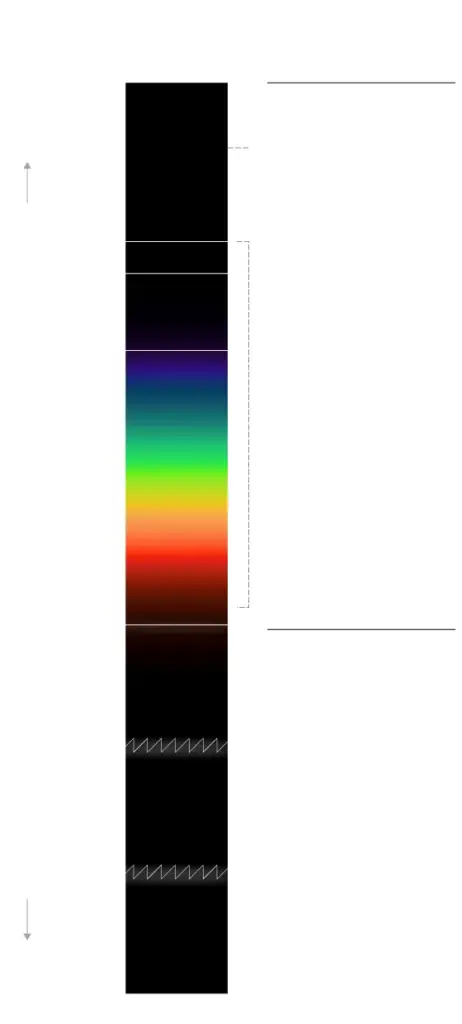
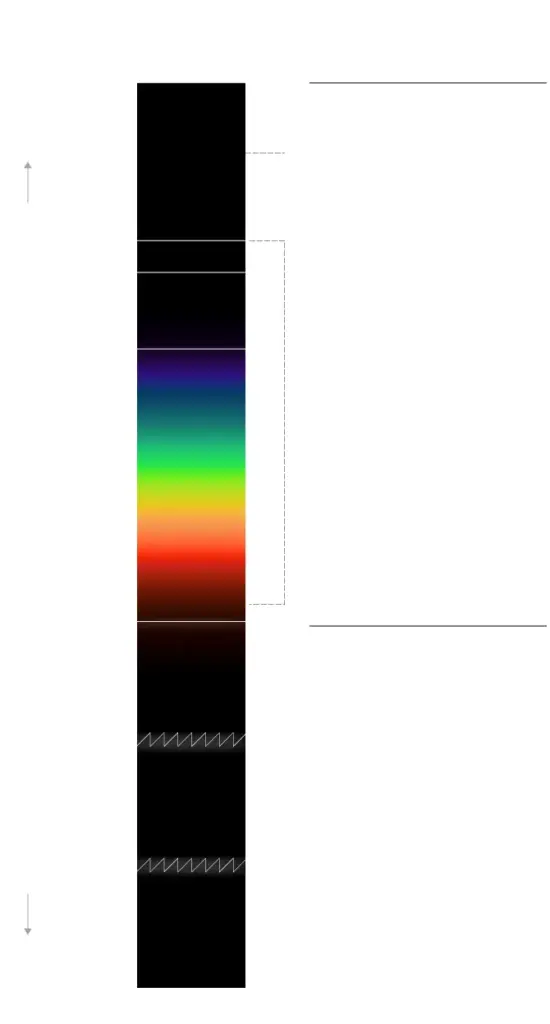
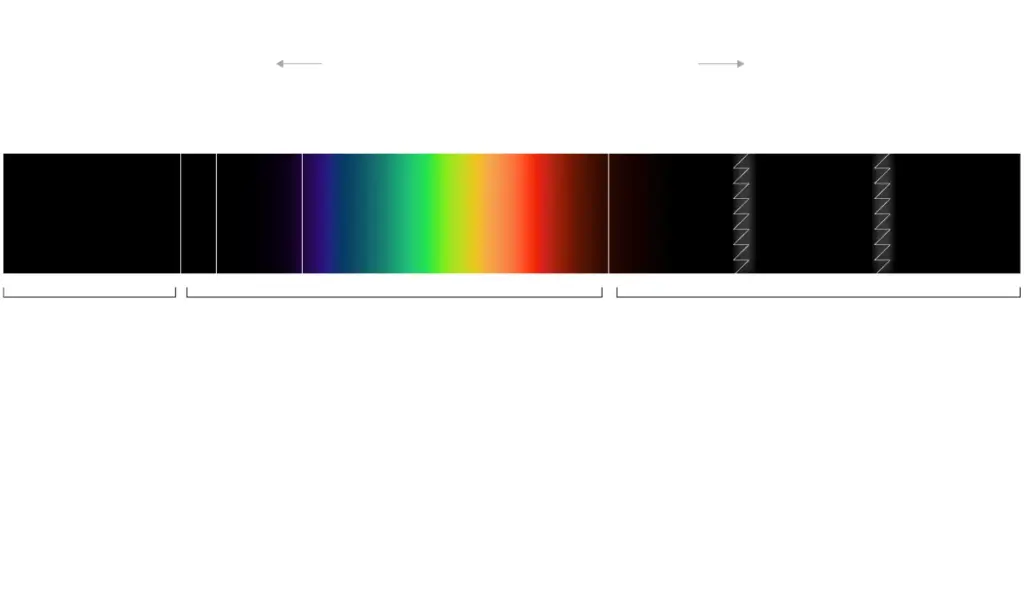
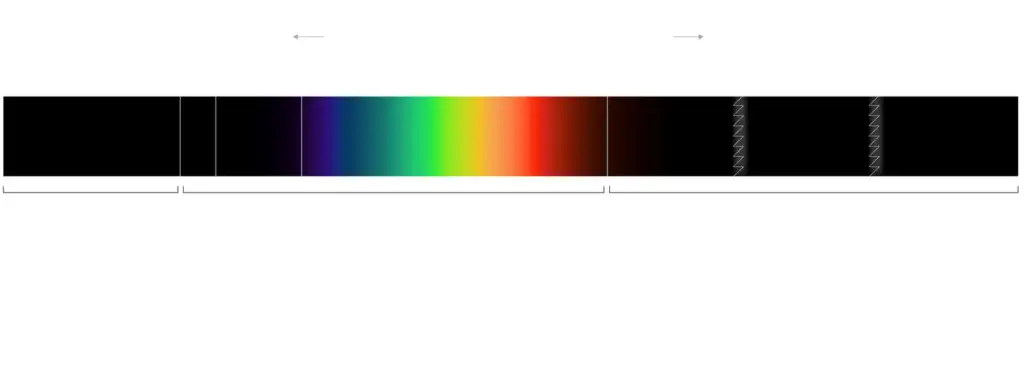
The surface of the Sun is almost 6,000 ºC: that is why it emits much more radiation, besides light
Wavelength
of wave
100 nm
Ultraviolet
UV-C
UV-C
Blocked
by the ozone
layer.
More energy
280
UV-B
315
UV-B, UV-A and the most intense visible rays cause photochemical damage to the retina that can lead to blindness in central vision.
UV-A
400
Visible
700
IR-A
Infrared (IR)
IR rays produce heat, which worsens the effects on the retina and damages the lens and cornea. They cause burns and promote cataracts.
1,400
Less energy
IR-B
3,000
IR-C
10,000
Wavelength
of wave
100 nm
UV-C
Ultraviolet (UV)
UV-C
Blocked by the
ozone layer.
More energy
280
UV-B
315
UV-B, UV-A and the most intense visible rays cause photochemical damage to the retina that can lead to blindness in central vision.
UV-A
400
Visible
700
IR-A
Infrared (IR)
IR rays produce heat, which worsens the effects on the retina and damages the lens and cornea. They cause burns and promote cataracts.
1,400
Less energy
IR-B
3,000
IR-C
10,000
Wavelength
(in nanometers)
More energy
Less energy
100 nm
280
315
400
700
1,400
3,000
10,000
UV-C
UV-A
Visible
IR-A
IR-B
IR-C
UV-B
Infrared (IR)
Ultraviolet (UV)
UV-C Blocked
by the ozone layer.
UV-B, UV-A and the most intense visible rays cause photochemical damage to the retina that can lead to blindness in central vision.
IR rays produce heat, which worsens the effects on the retina and damages the lens and cornea. They cause burns and promote cataracts.
Wavelength
(in nanometers)
More energy
Less energy
100 nm
280
315
400
700
1,400
3,000
10,000
UV-C
UV-A
Visible
IR-A
IR-B
IR-C
UV-B
Infrared (IR)
Ultraviolet (UV)
IR rays produce heat, which worsens the effects on the retina and damages the lens and cornea. They cause burns and promote cataracts.
UV-C Blocked
by the ozone layer.
UV-B, UV-A and the most intense visible rays cause photochemical damage to the retina that can lead to blindness in central vision.
The Vice President of the ONCE General Council, Alberto Durán, has thanked the Government for the opportunity to participate in this prevention initiative, “especially because our organization usually can only intervene when visual disability has already occurred. And caring for people also includes anticipating when you know that, on an occasion like this astronomical phenomenon, those accidents will happen.” The Spanish organization for the blind is very aware of the multiple cases of eye damage recorded in the United States during the previous total eclipse on April 8, 2024. That day it was especially striking to note how, as the path of totality crossed that country, there was a sharp increase in Google searches such as “my eyes hurt,” indicating discomfort like the sensation of having sand in the eyes, which is the prelude to the so-called eclipse retinopathy.
How to observe safely
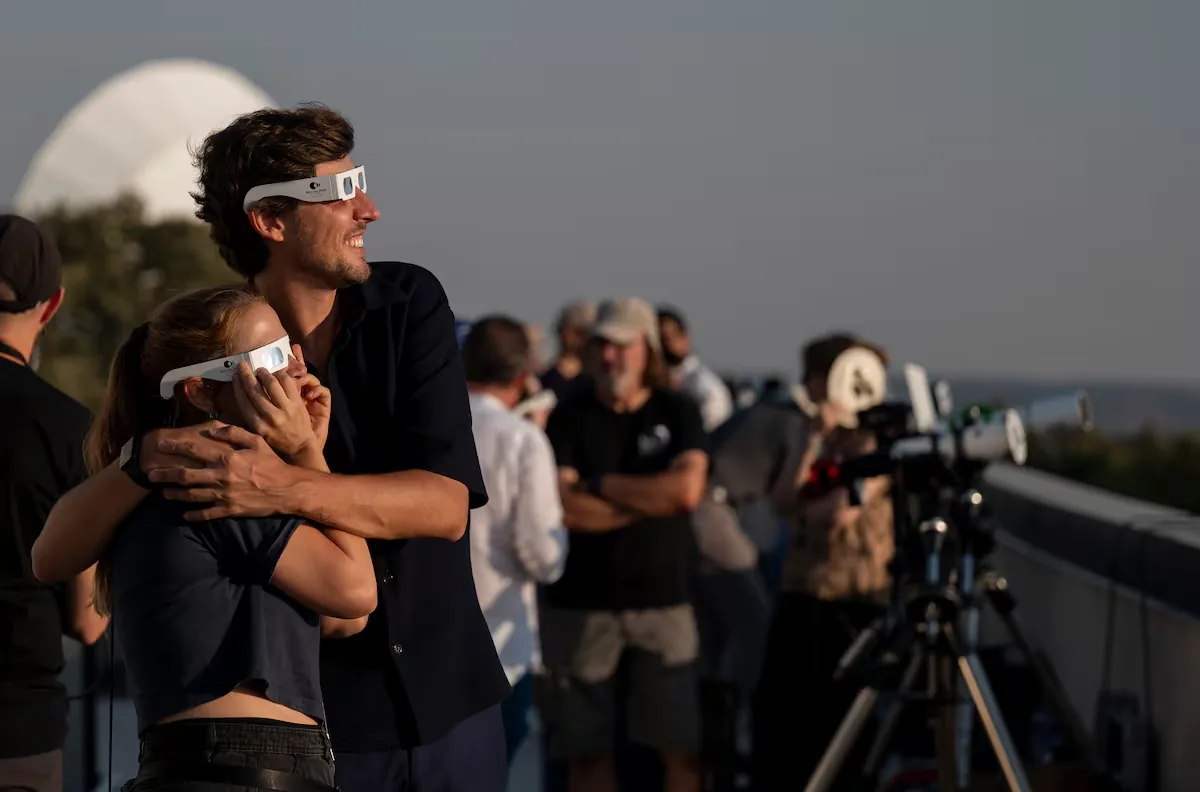
All consulted experts, and the official Government website, agree on the same recommendation: the only safe way to look at the Sun at any time during an eclipse is to use certified glasses with the ISO 12312-2 standard, properly marked with this certification and the European Union CE mark. They must also obligatorily include the manufacturer’s address, usage instructions in the language of the country where they are sold, and the expiration period.
Why eclipse glasses are safe
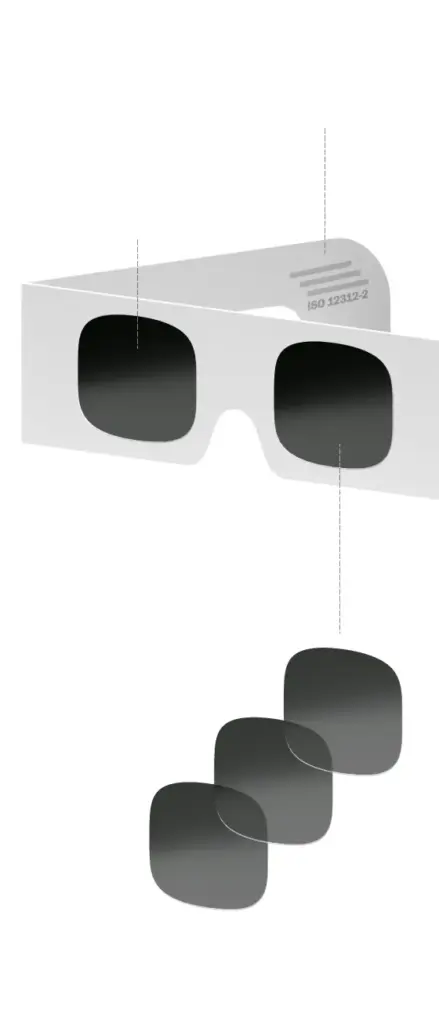
They must comply with
the ISO 12312-2
standard of 2015.
Opaque sheet that
reflects or absorbs
dangerous radiation
Each sheet has a
triple filter that blocks:
At least 99.9968% of visible light and ultraviolet rays UV-A and UV-B
Visible
UV-A
UV-B
IR
97% of infrared radiation
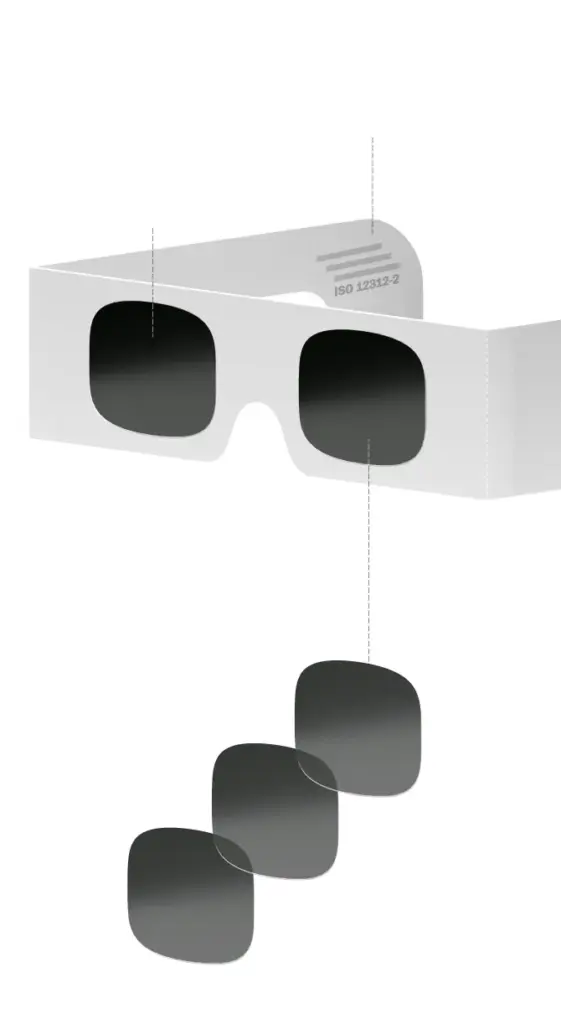
They must comply with
the ISO 12312-2
standard of 2015.
Opaque sheet that
reflects or absorbs
dangerous radiation
Each sheet has a
triple filter that blocks:
At least 99.9968% of visible light and ultraviolet rays UV-A and UV-B
Visible
UV-A
UV-B
IR
97% of infrared radiation
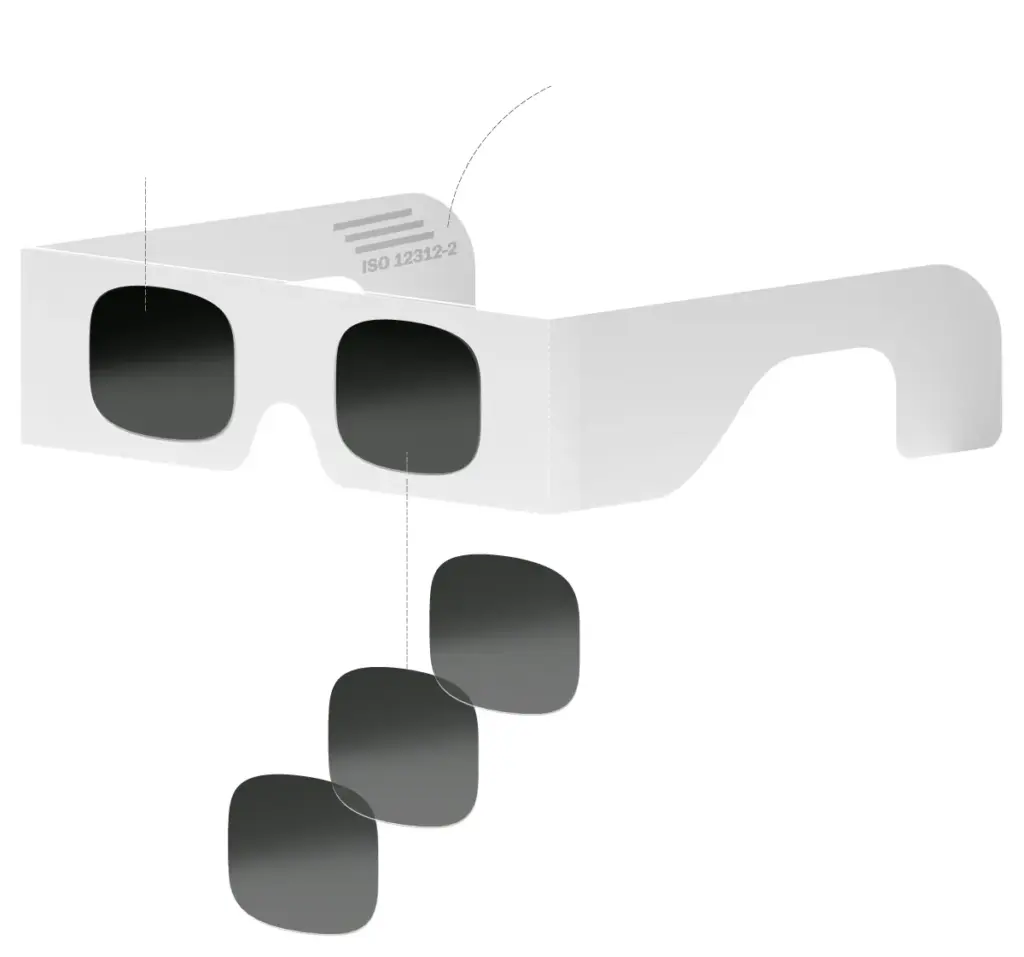
They must comply with the
ISO 12312-2
standard of 2015.
Opaque sheet that
reflects or absorbs
dangerous radiation
Visible
Each sheet has
a triple filter
that blocks:
At least 99.9968% of visible light
UV-A
UV-B
The same amount of UV-A and UV-B radiation
IR
97% of infrared radiation
Even if only a small part of the solar disk is visible, it still emits an intense light that — together with powerful ultraviolet and infrared rays — can cause serious and irreversible eye damage without the sufferer realizing it.
Not even with proper protection, warn the Ministry of Science and ONCE, should you ever look at the Sun for a prolonged time. “You must look down to put on the glasses before looking at the Sun, look briefly for a few seconds, and only remove them after looking away again,” the Government and the organization for the blind warned in a joint statement, also emphasizing that if you want to repeat the operation, you must always take breaks between each observation.
Precautions: never use with telescopes or binoculars
Besides providing recommendations for proper use, the campaign A unique view. Take care of it issues a series of warnings about risks from improper use of the glasses. Above all, never use the glasses to look through binoculars, telescopes, cameras, or mobile phones, since the optics of these instruments concentrate the light and multiply the power of the solar rays. Especially in the case of telescopes, there is a risk — greater the higher the magnification — that they burn the glasses’ filter and cause injuries even more severe than by naked-eye observation.
Before using protective glasses, you must check that they are in good condition: looking against the light you can see if they are scratched or perforated. Under no circumstances should you use glasses that appear damaged, warn the Government and ONCE.
Only certified glasses allow you to see the Sun perfectly defined and with a pleasant color and brightness. This is not the case with welding filters: although they can protect well — from protection factor 13 or 14, depending on the experts consulted — they are not designed for precise viewing. And since welding filters do not meet all the requirements of the ISO 12312-2 standard, it is difficult for the user to know if a particular one is safe and how to use it. They are not a clear and simple recommendation.
How to know if glasses are valid? Where to get them?
Many local and regional administrations will also distribute certified glasses free of charge at official observation points being set up for August 12. If you need to buy some, David Galadí, coordinator of the Scientific and Advisory Commission of the Eclipse Trio, recommends purchasing them in stores specialized in astronomy. This astrophysicist explains that if glasses bought now are carefully preserved, they should also be valid for the other two major eclipses in 2027 and 2028.
Telescopiomania is one of the most popular online stores in Spain among professional and amateur astronomers. Its co-founder, Xavi Nieto, says they have been selling eclipse glasses and solar filters to be placed on the other side — on the objectives — of telescopes, binoculars, and cameras for 14 years. They only sell top brand products with decades of experience: “We have already sold nearly 400,000 in the last two years and, in these last weeks, demand has skyrocketed. In response, we have a guaranteed stock of at least 70,000 more, and our commitment not to raise prices despite strong demand, unlike what is happening with hotel room prices for the night of the eclipse.”
Regarding whether glasses bought for previous eclipses can be used for August 12, Nieto is cautious: “The general answer is yes and, in some cases, no. Properly labeled glasses include an expiration date. The lifespan limit for this material, to be safe, is set at seven years. But if the glasses are not well cared for or are used for very long periods, the filters may end up degrading,” warns this specialist, who applauds the Government and ONCE initiative and stresses the official recommendation to use them for very short periods when observing the Sun.
Alejandro Sánchez de Miguel, an astronomer at the Institute of Astrophysics of Andalusia, who has analyzed dozens of different glasses models in his laboratory, sends a reassuring message: “None of the glasses we have analyzed have a protection level below that required by the ISO 12312-2 standard. Only a few show a higher visible light transmission level than the rest; and these are the ones not properly labeled. We call them ‘pirate glasses’ because they do not strictly comply with the law, although they are not dangerous: they can simply dazzle or annoy,” says this expert, who also agrees with the recommendation to go to specialized stores.
When can you look at an eclipse without protection?
You cannot look at the Sun without protection during a partial eclipse, just as on a normal day. Only during the phase when a total eclipse reaches 100% coverage — a maximum of 1 minute and 50 seconds within the path of totality in this eclipse — is it safe to remove the glasses. “In fact, if you don’t take them off then, you will miss the most spectacular image of the phenomenon,” explains Marcos Pérez Maldonado, director of the Coruñese Scientific Museums, which participate in the government campaign for free glasses distribution.
Anyway, this science communicator points out that the image of that brief total coverage is only a small part of the experience, which also involves many other sensations. He also warns that “as soon as the Sun starts to reappear, you must immediately look away and put the glasses back on before looking up again and continuing to watch.” And during the partial phases before and after totality, he recommends complementing the glasses with indirect observation methods, such as projection boxes that their museums teach how to make at home, which use the principle of the camera obscura. “This especially helps children to be entertained and to be a more active part of understanding the phenomenon. Because it is neither necessary nor advisable to be looking continuously and, besides, it is boring: the eclipse progresses so slowly that you don’t see anything happening,” concludes Pérez Maldonado.