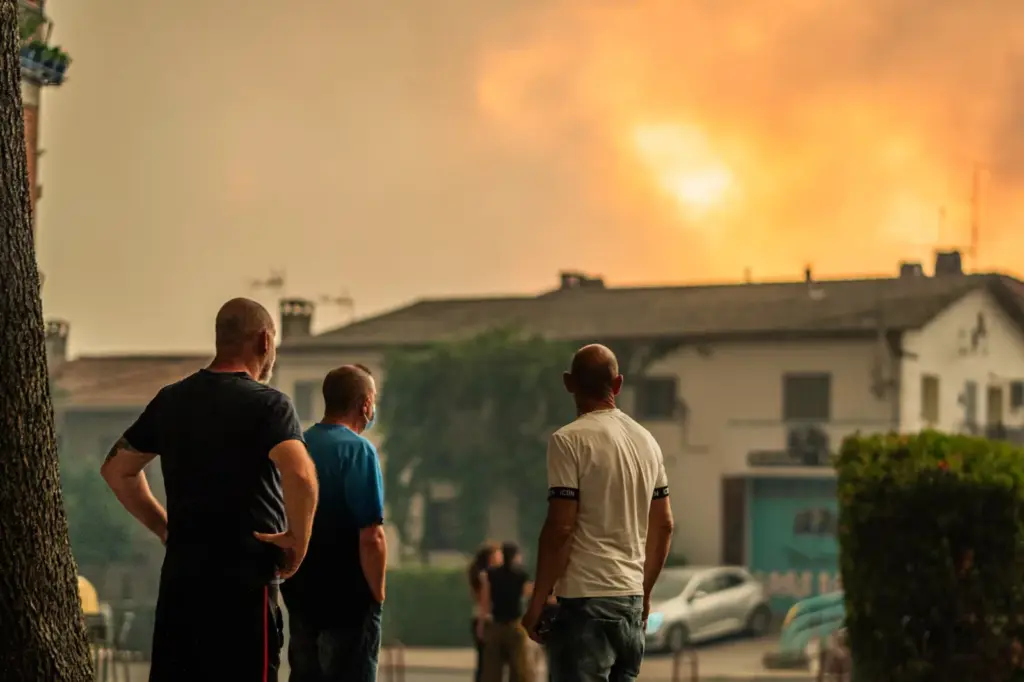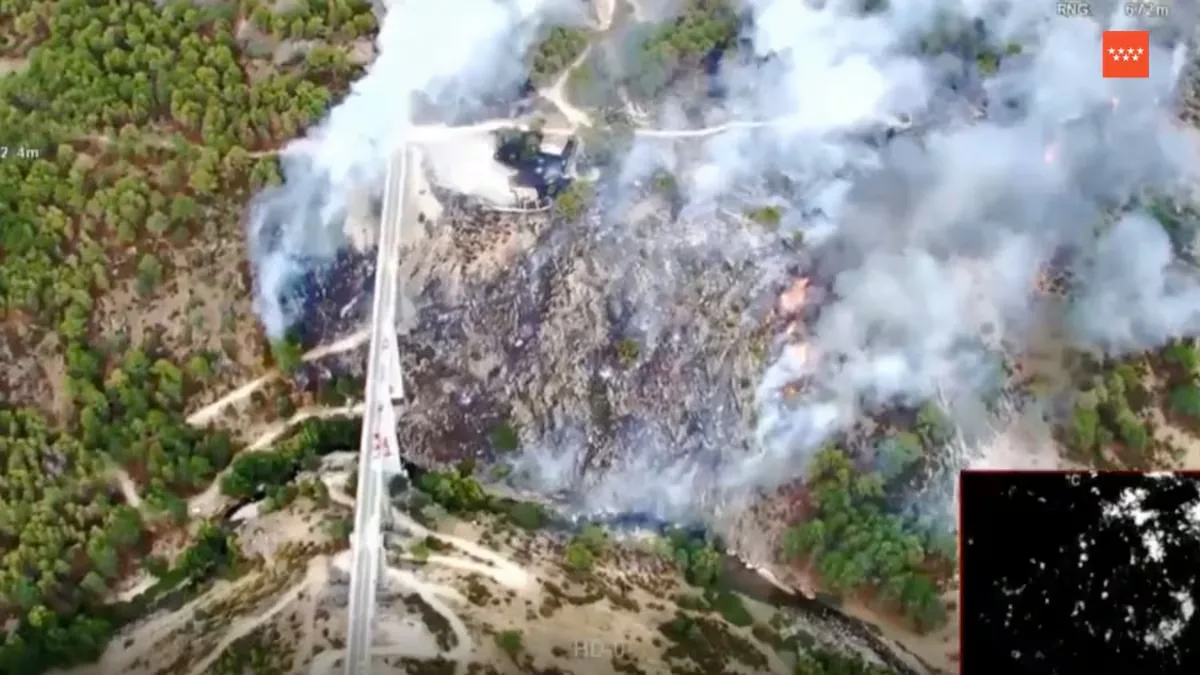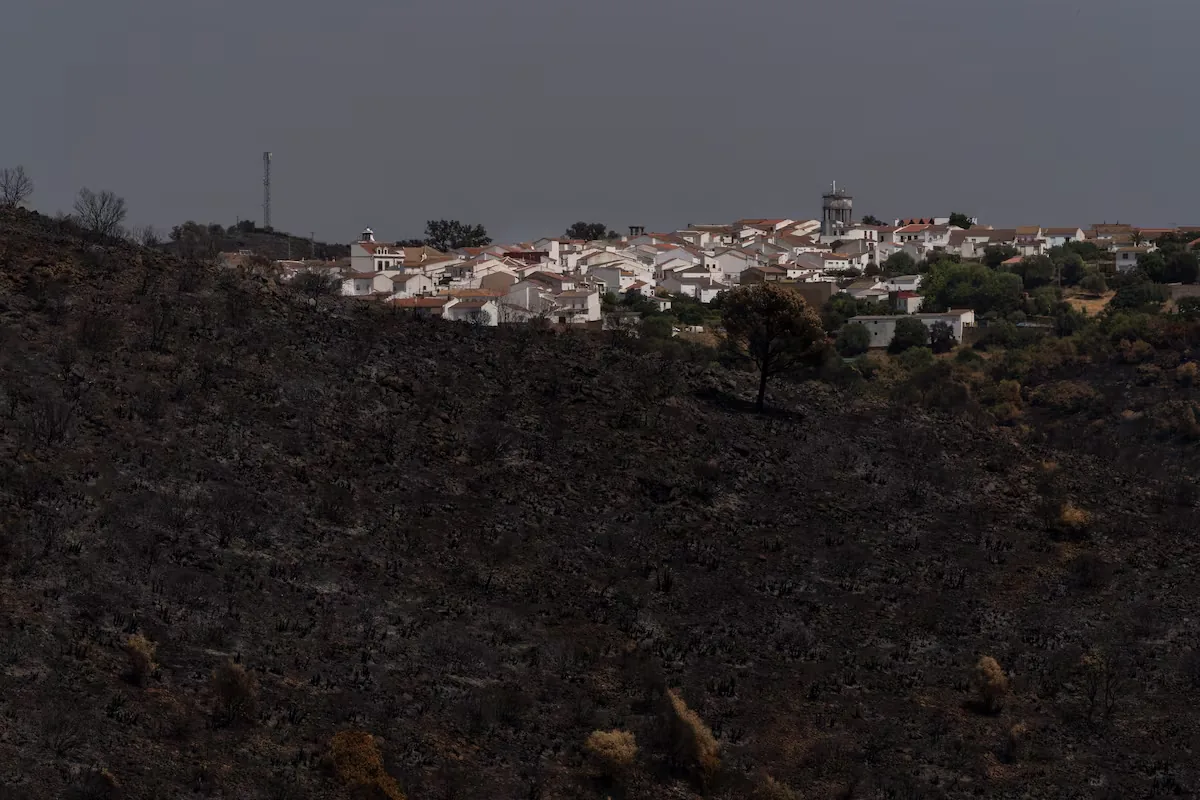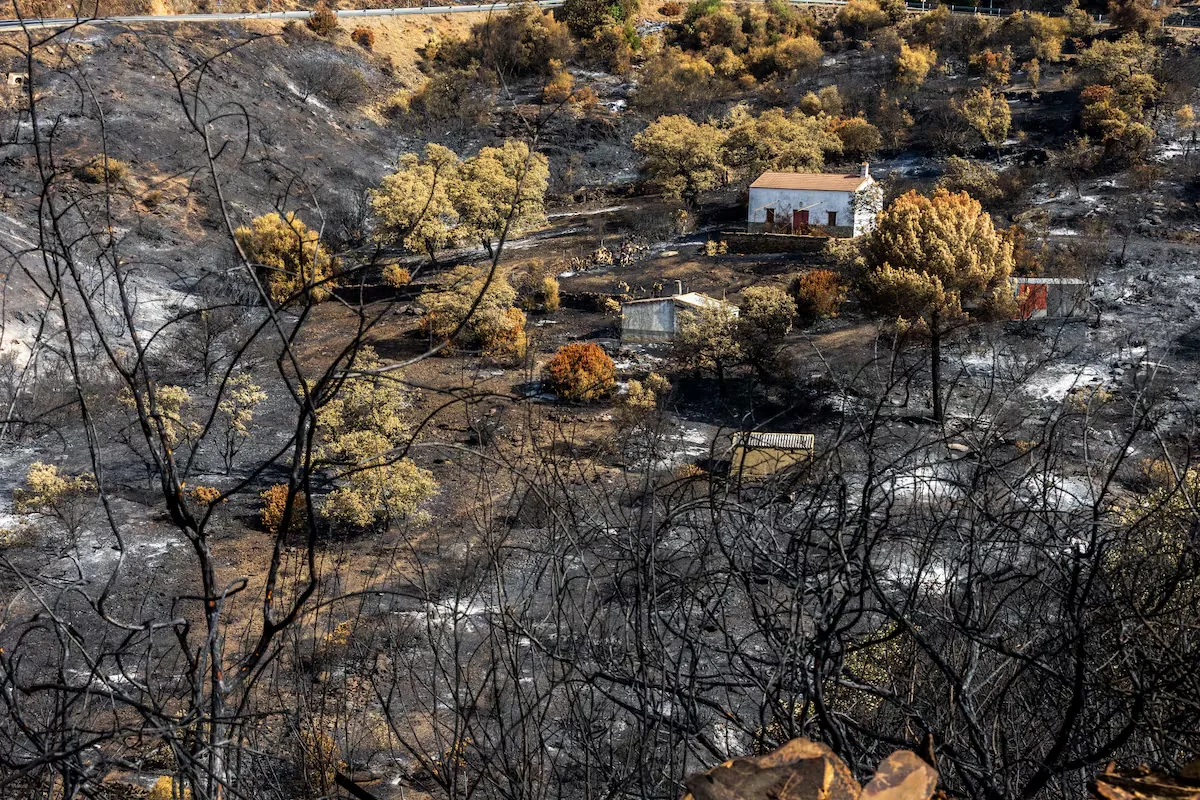






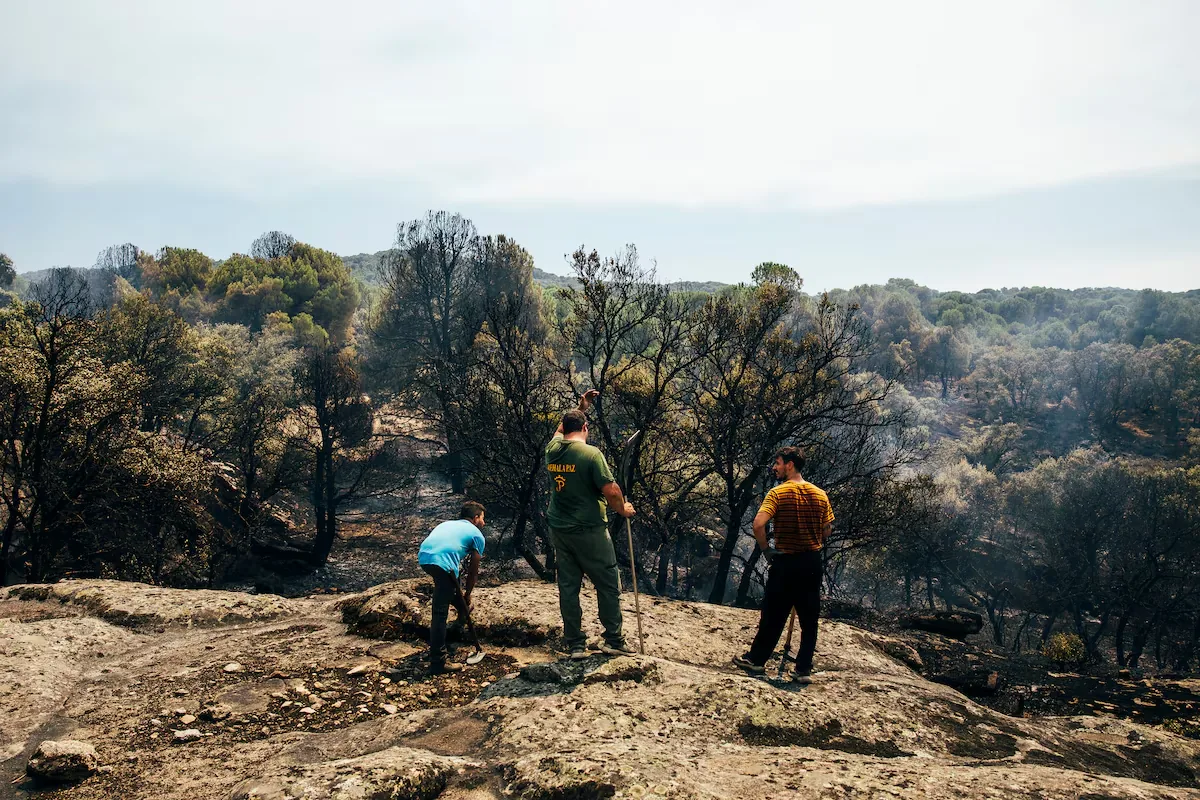
The next few hours will be crucial in trying to stabilize the large wildfires that are raging uncontrollably across the provinces of Ávila and Toledo and the Community of Madrid. The fires, which have been fought for days as one, are advancing, but much more slowly thanks to especially complex firefighting efforts due to weather conditions, which have never been favorable, the terrain, and the influence that some fire spots exert on others. Several fronts have already been stabilized, and the authorities’ optimism is cautious. Several heads ― the front parts of the fires ― continue burning in some specific points, and firefighters’ efforts are focused on them. The situation at the San Juan reservoir in Madrid is particularly concerning, where the two fires are close to merging. The window to tackle the fronts will shorten as the day progresses and temperatures rise ― up to 35 to 37 degrees ― and from Wednesday Spain will enter a new heat wave that will make everything more difficult.
Read more The unemployment rate falls below 10% again in the second quarter, the lowest since 2008
The evolution, firefighters and authorities agree, is good, although very slow, and the risk of reactivations is high. “These are absolutely crucial days, because from Wednesday the weather forecasts are really negative. We are going slowly because the weather conditions are not helping us at all,” Interior Minister Fernando Grande-Marlaska warned from the Navalcarnero command post in Madrid. The night from Monday to Tuesday has been “reasonably positive,” he detailed in an interview on La hora de la 1 on RTVE. “We can be a little more calm,” the minister stated.
The fires ― which forced the Government to declare a national emergency ― keep 90,000 people out of their homes or confined in their towns. The positive note to this figure is that it will decrease throughout the day because the relocation of nine of the 11 evacuated municipalities in Toledo has been authorized, where a new fire in Almorox raised alarms but its advance has already been contained.
“All the efforts during the night have been concentrated on the Cofio river [which flows into the Alberche river, exactly at the San Juan reservoir, whose tourist infrastructures have been devastated by the flames]. Four hundred personnel have been working to prevent the road to Valdemaqueda from catching fire, and it has not. We have been saying this for several days, but today, literally, is the most important day of all to prevent that fire from spreading,” summarizes the situation for EL PAÍS Israel Naveso, who was at the fire on Monday and is preparing to return this Tuesday, reports Victoria Torres.
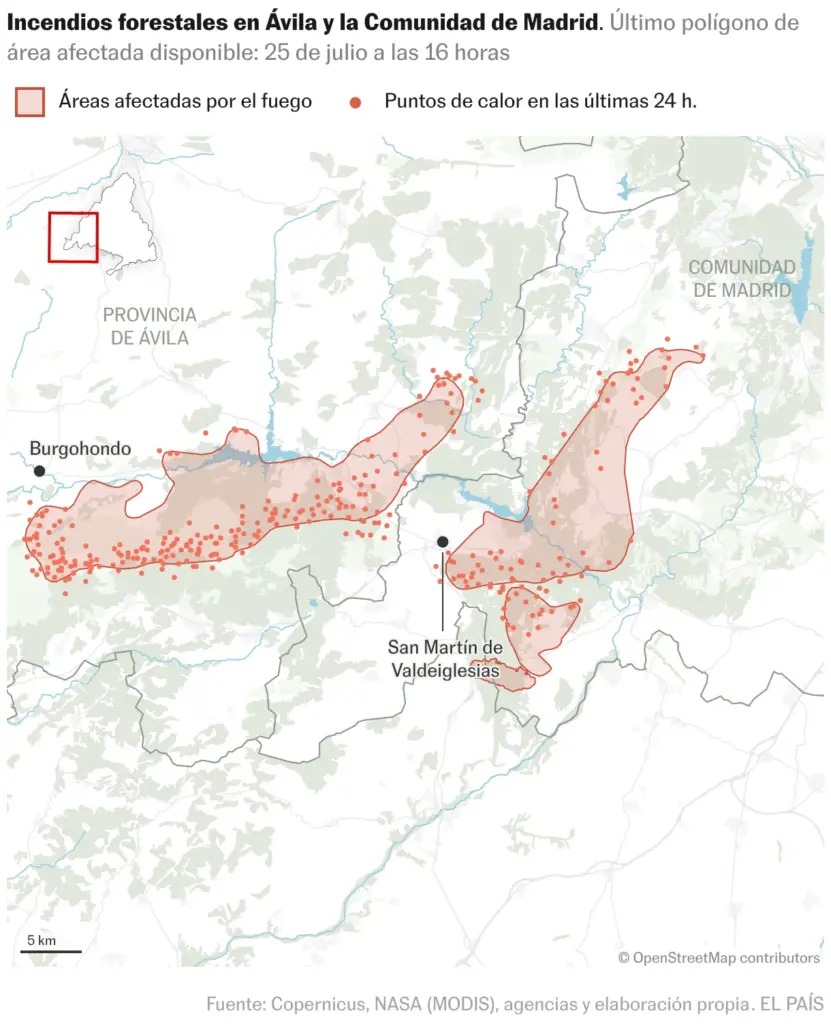
Among the three regions that have been burning for six days, 77,000 hectares have already been affected with a perimeter of 280 kilometers. In Ávila alone, it is 50,000 hectares, making it the largest and “most aggressive” fire in Spain’s history. In total, a perimeter of 280 kilometers, according to Civil Protection data. This Tuesday, the Government will declare the affected areas as severely damaged and will approve a decree law to extend protection for workers and companies. The Ministry of Labor will assume from day one the cost of salary and contributions and will extend bereavement leave by five days.
A new heat wave, the fourth of the year, arrives in Spain on Wednesday, and temperatures will rise progressively this Monday. “There are already warnings issued today, yellow level, the minimum, in Ávila and Madrid. Maximums between 35 and 38 degrees are expected. Tomorrow temperatures will be similar or slightly higher,” Javier Armenteros, Aemet delegate in Madrid, informs this newspaper. Additionally, during the central hours, humidity will drop below 20%. Armenteros specifies that a sustained wind of between 10 and 15 kilometers per hour and maximum gusts of 25 are also expected. On Wednesday, from midday, it will turn southwest and intensify, with gusts of 30 to 40, which further complicates extinction efforts.
Read more Why eclipse glasses are the only safe protection for looking at the Sun
In sum, fatal ingredients to try to contain two fires that are about to merge into a mega-fire. There has not yet been “an absolute and total explosive convergence,” adds Minister Marlaska, and the connections between both spots “have been intermittent.”
“Positive” night in the two regions
At dawn, firefighters took advantage of the temperature drop and increased humidity to try to stabilize the fires and gradually tackle the most worrying spots, such as the San Juan Reservoir in Madrid, or those of Mijares and Casillas in Ávila, where the nighttime evolution has been favorable. Work in the western Madrid mountain range focuses on the area around the Cofio river, one of the most critical points. The efforts “have been positive,” reported 112 Comunidad de Madrid in the 7:00 a.m. report. “An increase in temperatures is expected this Tuesday, which will again mark the firefighting efforts,” they detail. The Government delegate in Madrid, Francisco Martín, already pointed out that “intense work is being done, with an extraordinary deployment, to stop that front and prevent it from reaching the population of Valdemaqueda.” In fact, this municipality of 870 inhabitants has been the last to join the list of evacuated towns.
The intense work during the night has contained the advance on these active fronts and reduced the threat to the locality. “Even so, the fire remains active and uncontrolled, so today the work will focus on monitoring and cooling the affected areas in anticipation of the expected worsening of weather conditions,” details the Government Delegation. In the region, 13 municipalities have already been evacuated and three confined: in total, 31,865 people are sleeping outside their homes, spread across dozens of sports centers, and 19,262 are isolated in their towns.
And in Ávila, eyes are on the eastern fronts, close to Madrid, and the western ones. There, the fire intensifies in specific areas and is more or less controlled in others. It is surgical work, like that carried out at the top of Mijares, in the Tiétar Valley, which was completely evacuated. Firefighters who worked overnight at the top of the peaks, where there were two problematic spots since Sunday.
They celebrate that the nighttime conditions have been favorable and they have been able to tackle and stabilize various flanks with complex spots. “No flame left the perimeter. It is cooling down, there was no wind,” says one of the workers who spent the night there. Now it remains to wait for the day’s progress and the effect of the expected temperature and wind increases, reports Juan Navarro. This fire ― for which one person has already been arrested and another is under investigation for using machinery where it was not allowed and causing the spark that started it all ― already has an approximate perimeter of 160 kilometers and has forced 25,087 people to leave their homes.