







This is not the first time that Ceuta, governed for 25 years by the Popular Party’s Juan Jesús Vivas, has asked the central government for help in the face of the sudden arrival of large groups of adult or minor immigrants. Much of these crises have coincided with a cooling of relations with Rabat, if not with open confrontations with Morocco over Spanish foreign policy. The second round of autonomous agreements between the PP and Vox, which has made opposition to the reception of migrant minors one of its banners, imposes a new framework for managing the problem in light of the progressive hardening of the Popular Party’s discourse on immigration. What follows is a review of the migratory crises in Ceuta over the last five years.
May 2021: Morocco’s revenge
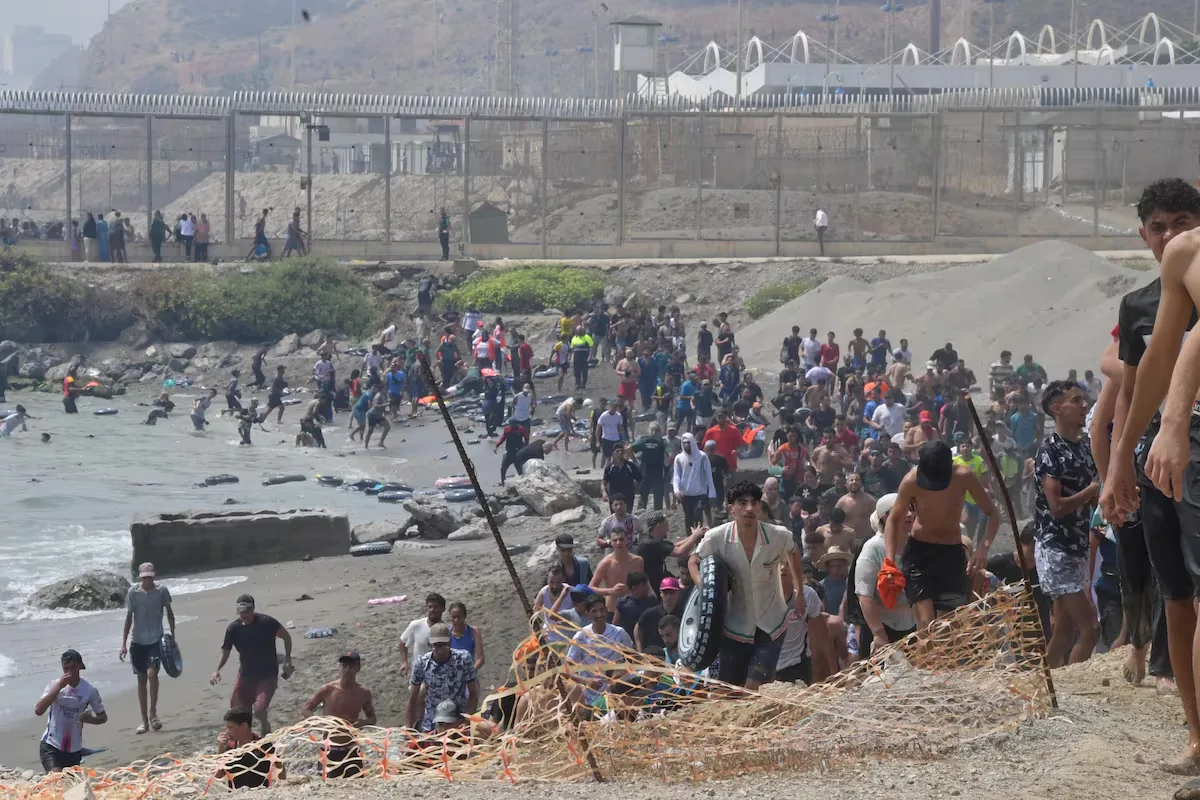
Nearly 8,000 immigrants entered Ceuta in just two days in May 2021, an unprecedented figure. The origin was rumors unleashed in Morocco about the laxity of the country’s gendarmerie on the coast. Spanish security forces confirmed the “unusual passivity” of their Moroccan counterparts on the other side of the border. Mustafá Ramid, then Minister of State in charge of Human Rights and Relations with the Moroccan Parliament, admitted that his country had responded in this way to Spain’s decision to host the leader of the Polisario Front, Brahim Gali, hospitalized in Logroño sick with covid: “What did Spain expect from Morocco, when it saw its neighbor harboring a leader who took up arms against the kingdom?” he declared.
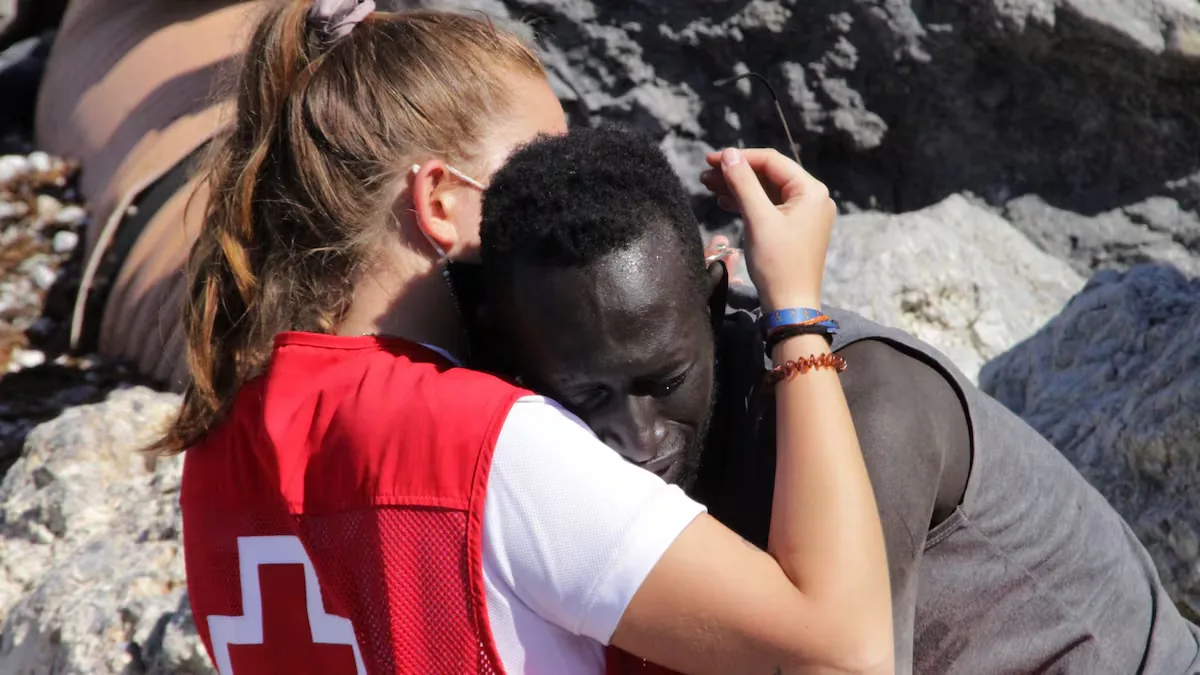
The 2021 crisis left an iconic image, that of the embrace of Luna Reyes, a Red Cross volunteer, to Abdou, one of the young immigrants who arrived in Ceuta. A Reuters agency camera recorded the entire sequence, in which she is seen attending to him alongside a soldier, helping him to get up to expel the water he had swallowed. At that moment, he broke down crying, and Luna tried to comfort him. Later, Morocco officially acknowledged, in a statement, that “the root of the crisis” was due to “hostile second intentions of Spain regarding the Sahara” and compared it to Catalan independence: “We cannot fight separatism at home and foster it at the neighbor’s home.”
The authorities in Rabat blocked the return of their nationals from the autonomous city. Ceuta faced the challenge of hosting nearly a thousand minors who arrived during the tensest days of the border crisis. The President of the Government, Pedro Sánchez, condemned the attitude of the neighboring country: “It is unacceptable that Spain’s borders are attacked due to disagreements in foreign policy,” he declared then. The European Parliament also rejected Rabat’s use of unaccompanied minors as a method of pressure on Spain. In a resolution approved by 397 votes in favor, 85 against, and 196 abstentions, the Eurochamber censured “Morocco’s use of border controls and migration, particularly unaccompanied minors, as a means to exert political pressure,” putting “hundreds of lives in evident danger.”
Faced with the complex situation, the president of the autonomous city, Juan Jesús Vivas (PP), wrote a letter asking Pedro Sánchez for “help.” The situation, he said, was “absolutely unsustainable.” “To return to normality,” he later declared, “we need 2,700 people who entered to leave.” In August of that year, Spain and Morocco agreed on the return of more than 700 minors. But those lists of returned adolescents barely contained basic data about the minors.
Read more Barcelona observes a minute of silence in repudiation of the latest gender-based murder in San Martí
In an interview with EL PAÍS, while leaders of his party demanded the management of the Minister of the Interior, Fernando Grande-Marlaska, for handling the crisis, Vivas declared: “I am very much of the PP, but I represent all Ceutans. We asked the Ministry of the Interior for the assisted return of minors because we were overwhelmed and I cannot blame the minister for doing what I asked him to do.” In September 2025, the Sixth Section of the Provincial Court of Cádiz, based in Ceuta, sentenced the former Government delegate in Ceuta, Salvadora Mateos, and the former first vice president of the Autonomous City Government, Mabel Deu, to nine years of special disqualification from public office for a crime of administrative prevarication for the express repatriation of 55 minors to Morocco in 2021. Previously, the Supreme Court had already confirmed that the returns of these minors were illegal because they did not follow the Immigration procedure.
In March 2022, the Government of Spain sided with Morocco in the Sahara conflict by considering Rabat’s autonomy proposal as “the most serious, realistic, and credible.” Sánchez refused to consider this change of stance as a turn, but after visiting Ceuta, he linked the new relationship with Morocco to a strengthening of security and migratory control.
August 2024: “We cannot do it alone”
In August 2024, the Government of Ceuta again asked the central government and autonomous communities to establish mechanisms that would allow transferring the adolescents who arrived in the city to other points on the Peninsula. “We cannot sustain this situation alone,” the authorities of the autonomous city declared then.
A month earlier, Vox had fulfilled its threat to break its autonomous government pacts with the PP because the Popular Party had accepted the voluntary reception of a minimum number of unaccompanied migrant minors who arrived in the Canary Islands. The second round of agreements with the far-right party that allowed Feijóo’s party to retain its territorial power includes clauses to curb that reception.
Read more Six iconic roles of Manolo Solo: from Gutiérrez Mellado to Santi Triana from ‘Tarde para la ira’