






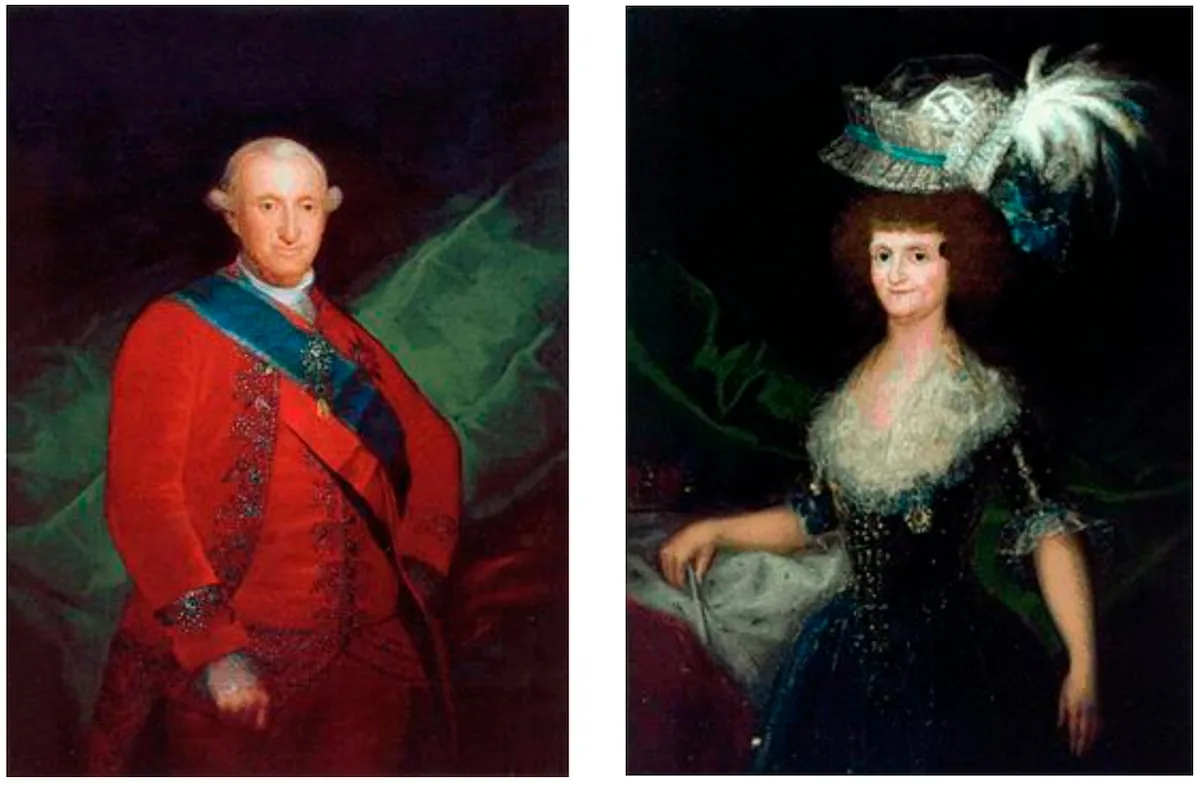
The two portraits by Goya commissioned by the Tobacco Factory in 1789 to commemorate the coronation of Charles IV and Maria Luisa of Parma will remain permanently in Seville. The paintings will become part of the permanent collection of the Museum of Fine Arts, after having changed locations on different occasions throughout history and undergoing a long legal dispute that ended in March, ruling in favor of the State. This was announced by the Ministry of Culture this Friday, a long-awaited decision following the Supreme Court ruling that recognized that the ownership of the portraits by the Zaragoza painter has always belonged to the State, against the claim initiated by the tobacco company Altadis in 2017. The news comes exactly one month before the Andalusian elections, scheduled for May 17.
Read more Alcaraz announces that he will not compete in the Mutua Madrid Open
The Museum of Fine Arts, the second largest art gallery in the country, thus adds two important paintings to its collection, where until now there was only another Goya, the portrait of Canon Don José Duaso y Latre (1824), corresponding to the last stage of the Aragonese master, who died four years later. Currently, both are kept in the General Archive of the Indies in Seville. It will be from June 15, when the temporary exhibition The Art of Preserving Memory, where the portrait of the monarch is displayed, ends, that both will be moved to their new “home”.
This historic restitution for Andalusia will help contextualize a prominent episode in the history of the capital, joining the Carriages by Domingo Martínez, a series of eight canvases painted for the celebration of the coronation of Ferdinand VI and Barbara of Braganza, used in the festivities of Charles IV’s accession to the throne.
Regarding the Government’s decision, the Minister of Culture and Sports of the Andalusian Government, Patricia del Pozo, stated: “We are very happy in Andalusia and very grateful to the minister and the Ministry of Culture for having kindly accepted our request that these two paintings be deposited in the Fine Arts Museum of Seville, once state ownership was declared.” She highlights that the canvases “dialogue with the history of Seville and where they can be best is in their home, in the Fine Arts Museum.”
Read more Stage and yellow ‘maillot’ for Adam Yates, who, responsibly, fulfills his duty in O Gran Camiño
The minister had sent a letter to the minister, Ernest Urtasun, at the end of March expressing that “the most coherent proposal for two works is that they enter a state museum to ensure the highest level of protection they deserve as cultural heritage. And since their geographical and temporal context is Seville and the royal celebrations in the city, they should enter the Museum of Fine Arts,” which is state-owned and autonomously managed.
The portraits were painted by Goya the same year as the French Revolution, an event that marked the reign of Charles IV. The painting representing him is an oil on canvas measuring 128 x 95.5 centimeters, in a three-quarter view, dressed in red, with the Order of the Golden Fleece and the insignia of the Order of San Gennaro. The Portrait of Maria Luisa of Parma is a similarly sized oil (126 x 94 centimeters) in which the queen is portrayed at the age of 37 wearing a blue silk dress. The receipt signed by Francisco de Goya on May 11, 1789, states that the painter was paid 4,000 reales de vellón and that he was to complete them without the participation of his assistants.
Read more Hungary denounces the destruction of confidential documents of Orbán’s Government