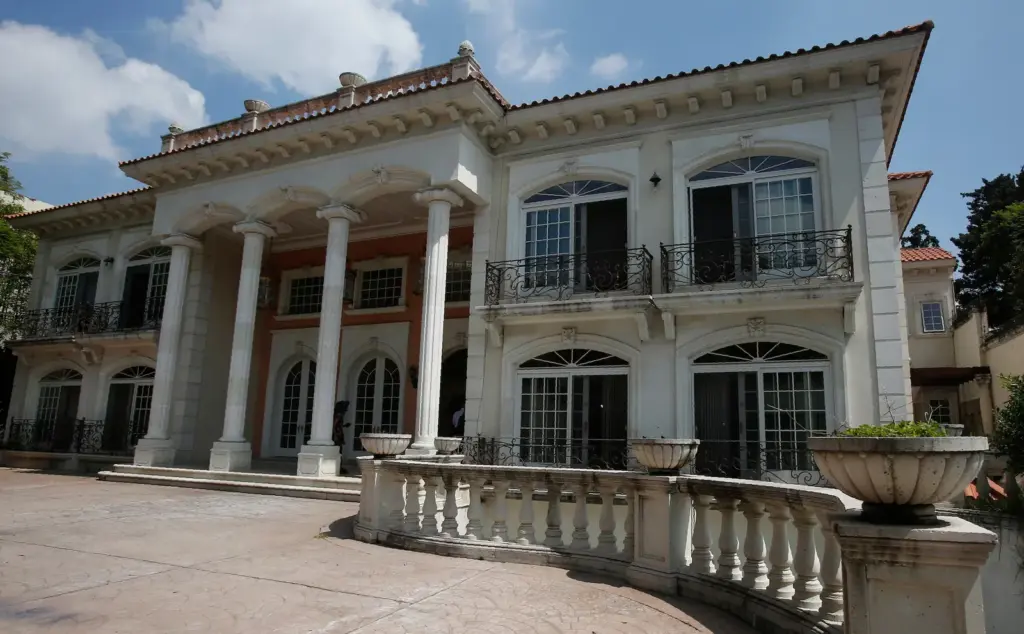










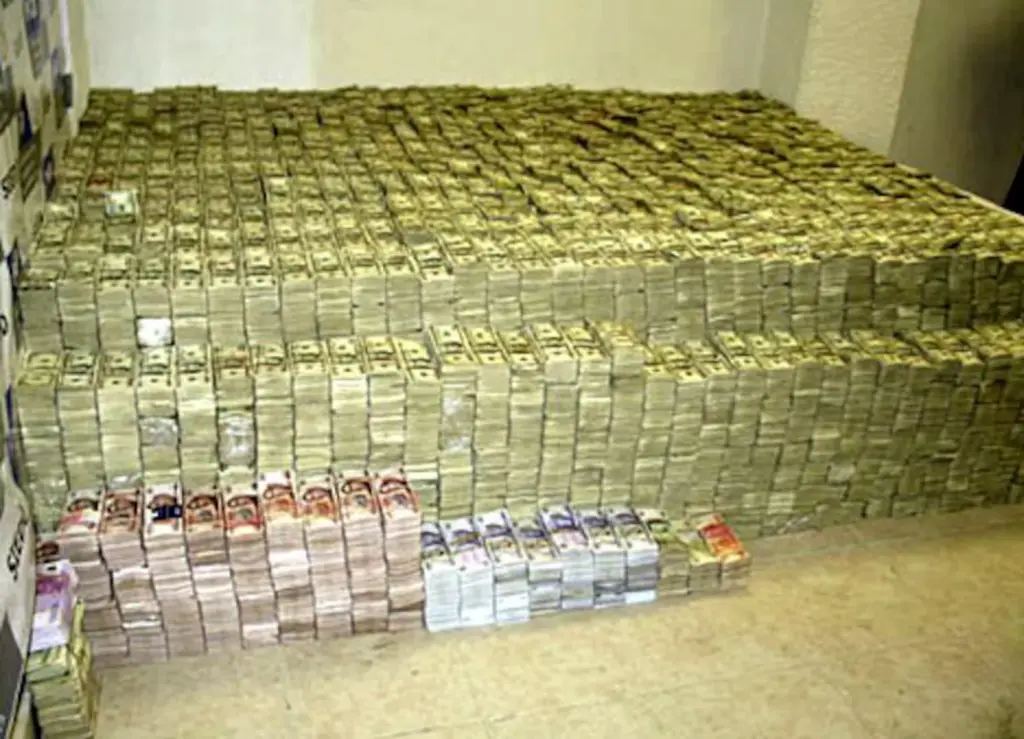
It is one of the most striking images in the criminal history of Mexico: thousands of bills in dollars, euros, and Mexican pesos stacked and filling a room in a mansion in the luxurious neighborhood of Lomas de Chapultepec, in Mexico City. It was March 2007 and the police had obtained a warrant to search the residence of Chinese businessman Zhenli Ye Gon, on suspicion that he was collaborating through his pharmaceutical companies with drug trafficking. They found 205 million dollars in cash, which remains the largest cash seizure in the history of Mexico. Nineteen years have passed since the discovery and this week Ye Gon has received the first sentence for the case. A judge has sentenced the businessman to 15 years in prison for the crime of money laundering, as well as a fine of 8,000 dollars.
Read more We discovered the all-in-one anti-aging serum: it contains pure retinol and vitamin B3
The case of Zhenli Ye Gon attracted public attention not only because of the extraordinary discovery of the cash, but because it revealed a new strategy of criminal organizations to traffic drugs. The businessman, who became a naturalized Mexican, used his pharmaceutical company Unimed Pharm Chem México as a front to import chemical substances that served Mexican cartels to manufacture synthetic drugs. Ye Gon’s company mainly imported ephedrine, pseudoephedrine, and pseudoephedrine hydrochloride from Asia, which served as precursors in the manufacture of methamphetamines. Through a legal company that reported the import of other components at Mexican customs, the businessman grew his fortune. This same scheme was used years later by the sons of Joaquín El Chapo Guzmán, known as Los Chapitos, for the production of fentanyl.
When authorities searched the mansion in Mexico City, the businessman fled to the United States and gave an interview to the Associated Press in which he claimed that members of the Mexican Government — under then-president Felipe Calderón (2006-2012) — had asked him to keep the money to use it in political campaigns. “Coopelas o cuello,” Ye Gon said in the interview to illustrate the threat he was supposedly subjected to. The phrase became popular due to the businessman’s pronunciation of a very common message in criminal circles in Mexico. The United States Drug Enforcement Administration (DEA) began its own investigation in which, for example, it discovered that Ye Gon had spent about 125 million dollars in one night of gambling in Las Vegas, something considered part of an operation to launder drug trafficking money.
Read more 41,000 ‘reviews’ can’t be wrong: Biodance’s best-selling face mask on Amazon
The United States arrested him in Maryland just a few weeks later and accused him of working with the Sinaloa Cartel. Nine years passed until Mexico obtained his extradition in 2016 and transferred him to the Altiplano prison, the highest security prison in the country, where he remains imprisoned to this day. Since then, the Prosecutor’s Office has maintained a fight against the businessman, who has even claimed that the seized money be returned to him from the historic operation. The Mexican Government distributed the funds in 2019 among the Prosecutor’s Office, the Ministry of Health, and the Judiciary. The investigation into the businessman’s financial operations has allowed authorities to find bank accounts related to him. Although the judge requested proof of the lawful origin of the money, Ye Gon has not demonstrated it.
The mansion in Lomas de Chapultepec was sold in 2019 by the Institute to Return What Was Stolen to the People in a highly publicized auction by then-president Andrés Manuel López Obrador (2018-2024). The Government obtained 102 million pesos (about five million dollars), the highest amount recorded in a government auction, for the sale of the house which was finally acquired by businessman Carlos Bremer. The funds were given as scholarships to the 544 athletes who represented Mexico at the Pan American Games that year. Ye Gon still has pending legal matters, including proceedings for organized crime and health-related offenses. The hopes of the 63-year-old businessman to recover the thousands of bills from the historic 2007 seizure are fading.