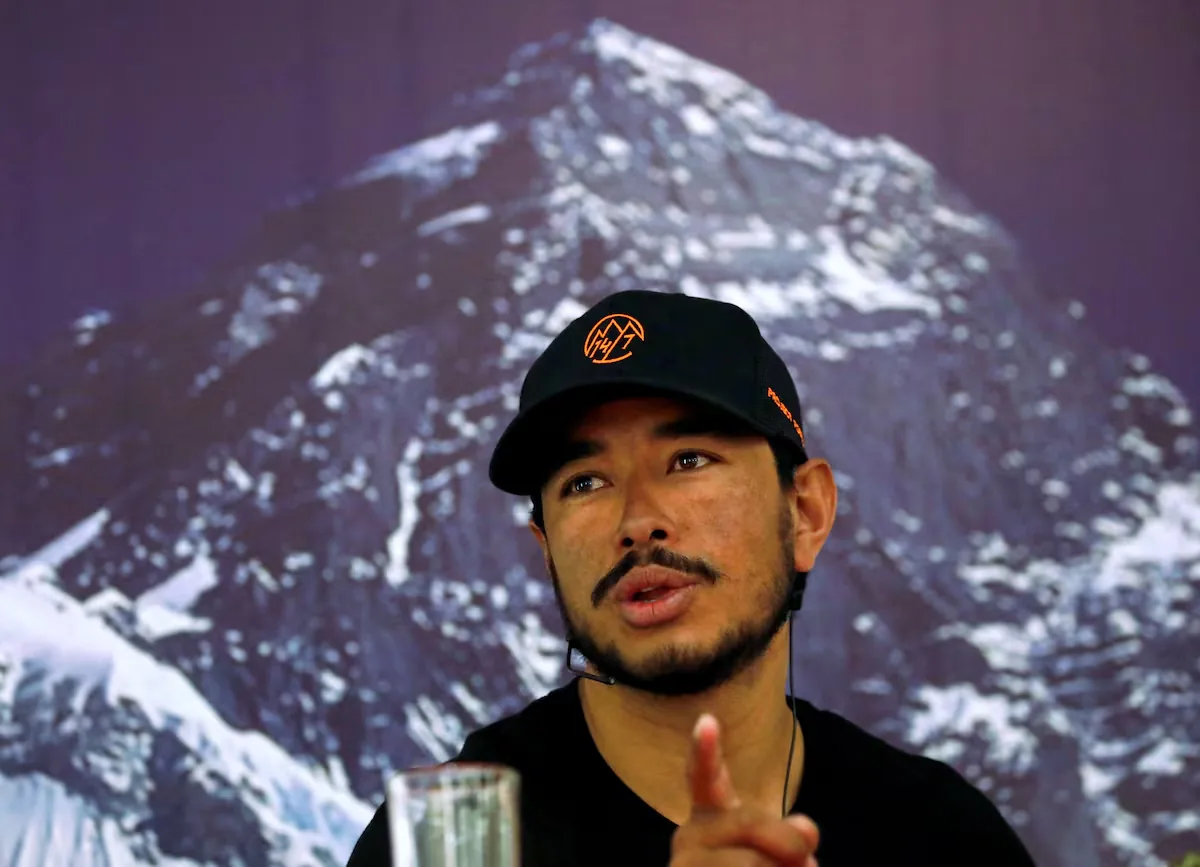









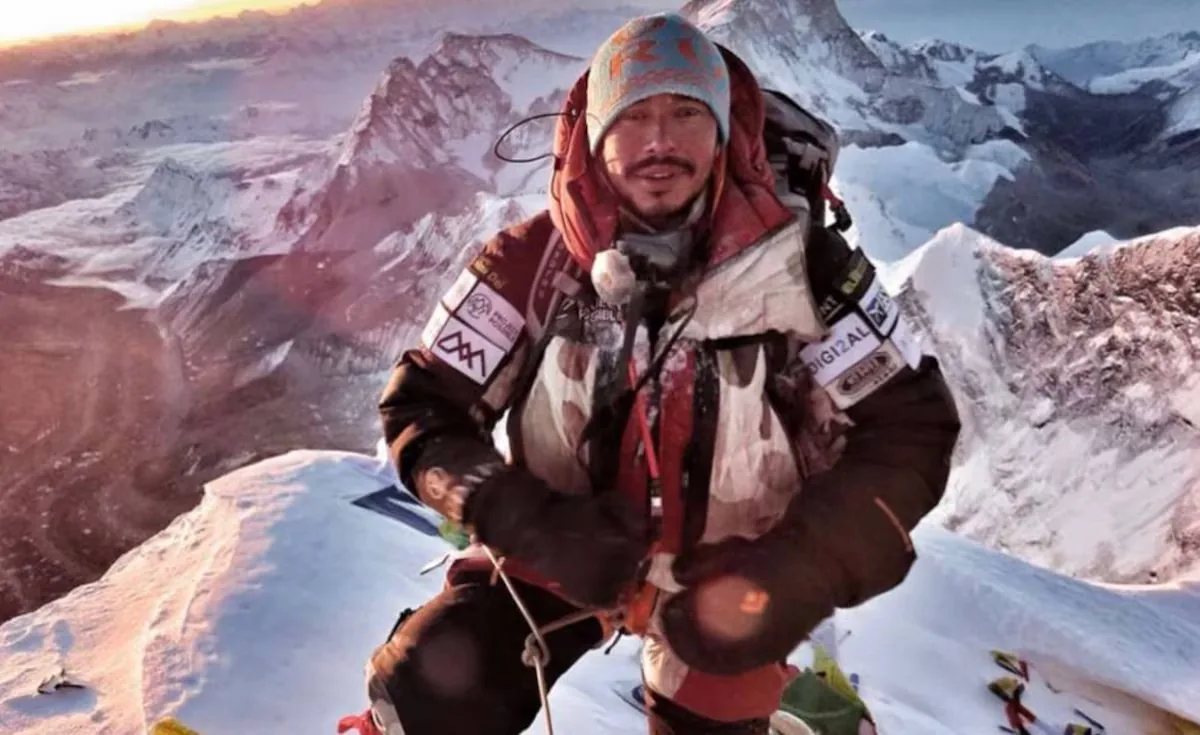
There was hardly any room for hope, and the passing of hours has come to confirm one of the most shocking recent tragedies in the history of ascents to the five eight-thousanders located in the Karakoram of Pakistan: K2, Nanga Parbat, Gasherbrum I and II, and Broad Peak, where on Thursday an avalanche swept away ten climbers. Elite Exped, the guiding agency created and led by the controversial Nirmal Purja, confirmed yesterday on its social networks the death of the latter, as well as that of the two sherpas who accompanied him: Pur Bahadur Gurung and Nima Sherpa.
Read more Feijóo assures that the Ceuta crisis is a “premeditated occupation” and blames the Government
The people involved in the rescue of the victims have recovered the bodies of the eight-thousander Oman Nadhira Al Harthy (with summits on Everest, K2, and Nanga Parbat), and that of Pur Bahadur Gurung, as well as that of the American Mallory Geis. Several bodies have been located thanks to images provided by a drone, but bad weather has complicated access to the corpses, located in an area very exposed to the fall of new avalanches like the one that surprised the group of ten climbers on Thursday at 9:30 in the morning, at 6,600 meters. Apart from Nirmal Purja, known as Nims, and the three recovered bodies, the accident also claimed the lives of the Pakistani guide Sohail Sakhi, the Chinese Wang Zong, and the Nepalese sherpa ethnic group members Nima Sherpa, Gyalu Sherpa, Nwang Thendou Sherpa, and Kili Pemba Sherpa.
View this post on Instagram
The week of July 22, a week before the events, heavy snowfalls accompanied by strong gusts of wind ravaged the mountain. It was the moment chosen by almost all the expeditions present at the site to leave. They understood that it would be necessary to wait many days until the snow stabilized on the slopes of Broad Peak to allow a summit attempt under safe conditions. They also feared being subjected to invisible traps such as wind slabs (snow transported by the wind that settles on a weaker snow surface), so they decided that the wisest thing was to pack up the base camp and return home.
Nirmal Purja, his team, and other guides with their clients decided to make their summit bid on Thursday. They did not even reach the most feared area of the mountain, the plateau from which the final ridge is accessed. The avalanche caught them a few meters above Camp 2 in the vertical of a cone that descends 1,600 meters to the moraine next to the base camp. The avalanche dragged the entire group hundreds of meters in just seconds. According to the mountaineers who had shared expeditions with him, Nirmal Purja had little regard when facing the eight-thousanders that gave him worldwide fame and a Netflix documentary: he dared even when the mountain presented obvious avalanche risks. In this way, he was able to climb the 14 highest mountains on Earth in a record time of six months and six days in 2019, ridiculing the previous record of… seven years.
Read more María Pombo’s ‘stories’: prejudices and racism
Purja, a former Gurkha military of the British army elite groups although born in Nepal, came out of nowhere to revolutionize the way of conquering the planet’s 14 eight-thousanders without any pedigree as a mountaineer. His mountaineering ethics did not match his speed: yes, he had broken a record but had contributed nothing to the history of Himalayan climbing except his enormous logistical capacity and his undeniable ability to finance his challenge. Nims always used the classic routes of the eight-thousanders, flew by helicopter from one base camp to another, employed a cohort of sherpas to break trail, fix rope, and advance in any scenario, used bottled oxygen without scruples, and came to ridicule the merit of climbing a mountain over 8,000 meters. Over time, the truthfulness of his account was questioned and he is still pursued by controversy over whether he reached the summits of Dhaulagiri and Manaslu. Years later, he returned to both mountains and was able to prove, this time yes, that he reached the highest point.
His enormous fame allowed him to launch his agency, attract numerous clients to take them in spring or autumn to the eight-thousanders located in Nepal. But he also wanted to exploit the summer, the best time to climb the five eight-thousanders located in Pakistan. For this, he reserved an unbeatable coup: to conquer K2 in winter, the last eight-thousander still awaiting a winter ascent. It was in 2021, and although he dressed the expedition as a claim of Nepalese power (ten climbers from this country, hand in hand at the summit), the matter turned into a superb self-promotion campaign. Nims even swore he was the only one who did not use artificial oxygen to reach the summit, but he never proved it and the nine witnesses remain silent. What no one can deny him is the mastery with which he took over the Pakistani market.
At the time of the accident suffered yesterday, Nims was immersed in his third cycle of ascents to the 14 eight-thousanders after closing in 2024 his second round, this time without using artificial oxygen. Now he also wanted to be the first to climb the 14 three times. Nims also seemed to live outside the accusation of sexual assaults revealed in 2024 by The New York Times and denounced by two women (the Finnish mountaineer Lotta Hintsa and the American doctor April Leonardo) during expeditions and press encounters. At the time of his disappearance, investigations were ongoing.
Read more Civil Protection warns of the increase in deaths during the bathing season