









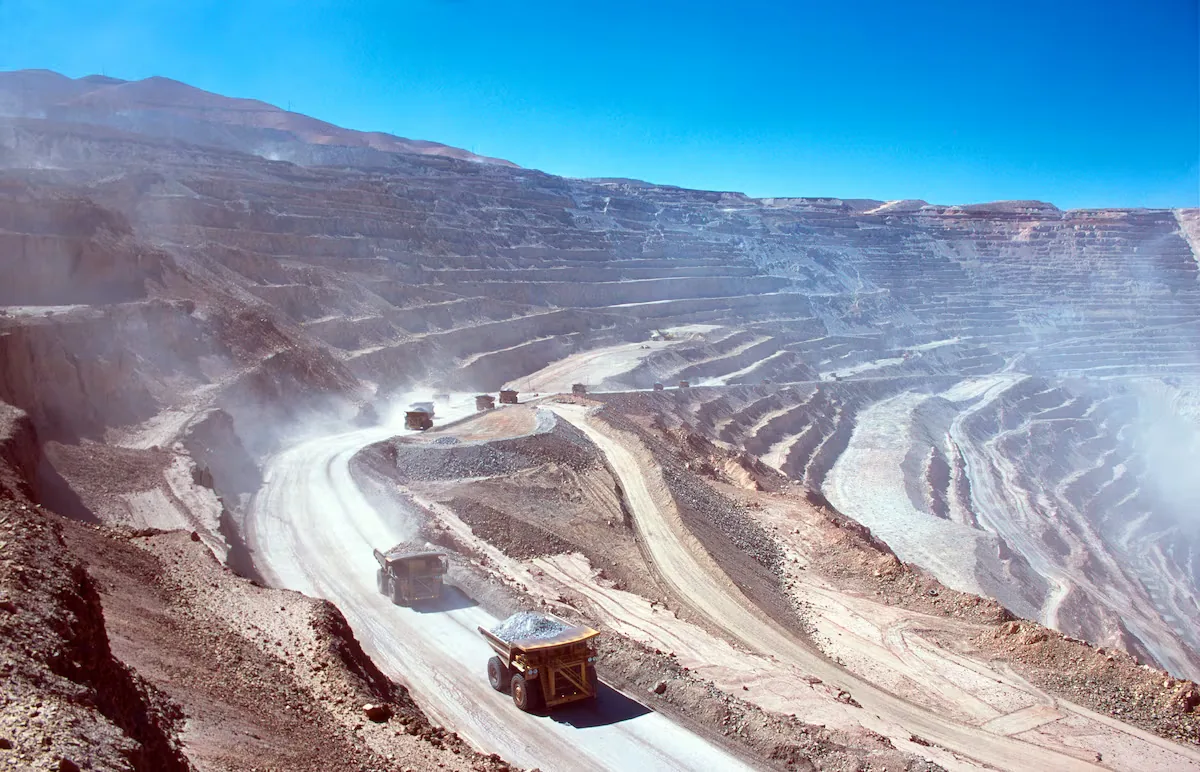
The Chilean economy has rebounded after five consecutive months of declines. The Central Bank of Chile released the Monthly Economic Activity Index (Imacec) this Monday, confirming a 2.4% annual growth in activity compared to the same period last year. The figure, which is at the high end of market expectations, is a relief because it prevents the country from entering a technical recession, which occurs when the economy records negative numbers for two consecutive quarters (six months). The increase has been directly associated with mining activity, which has left behind almost half a year of contraction to register a rise.
Although this increase is a positive sign, it does not erase the poor records from the first part of the year. According to preliminary calculations, Chile’s Gross Domestic Product (GDP) would have declined by 0.2% during the first half of 2026. June’s figures would leave the second quarter with a 0.1% increase. Another factor complicating the country’s financial situation is the labor crisis, with unemployment exceeding 9% in recent quarters.
In detail, the seasonally adjusted series—excluding calendar-related variations—economic activity increased by 0.6% compared to the previous month, and 1.4% over 12 months. The report highlights that the month recorded one more business day than June 2025. The non-mining Imacec, which excludes this activity, showed an annual increase of 1.4%, while seasonally adjusted terms grew 0.1% compared to the previous month and 0.4% over 12 months.
Goods production showed a 3.9% annual growth. The Central Bank indicated that this result was driven by the performance of mining, which rose by 9.8%. A key role in this increase was played by the improvement in copper production. The rest of the goods increased by 1.0%, while the industry experienced a 0.7% decline, mainly explained by lower production of fishery products.
Trade grew by 5.4% annually. All its components recorded positive results, with a notable rise in wholesale trade, driven by sales of machinery and equipment. In retail trade, meanwhile, sales have reactivated in specialized clothing stores, grocery stores, and through online sales platforms. Meanwhile, the automotive trade recorded an increase in vehicle sales and maintenance services.
In services, a 1.7% annual increase has been confirmed, a result explained by the performance of personal services, particularly health and education. To a lesser extent, business services have also contributed to the group’s growth.
The government of José Antonio Kast has celebrated this sign of economic reactivation. The Minister of Economy and Mining, Daniel Mas, said that the country’s situation is still fragile but highlighted the measures taken by the current administration to change the outlook. “We inherited a stagnant economy, but with management and greater certainty, we are beginning to reverse that trend. This June figure is the first step on a long path; being a facilitating and supportive state for SMEs, mining and tourism, and the fishing and aquaculture sectors is key,” Mas said.
The Executive has stated that economic reactivation and the creation of new jobs are among its priorities. To this end, it has placed all its bets on the National Reconstruction Law, also known as the mega reform, which is practically approved by the National Congress, with the only pending debate concerning compensation to municipalities for the exemption from paying contributions for the elderly. The last barrier for the project to come into effect is the review by the Constitutional Court (TC), which has received opposition requests against the initiative.
Read more Minors before a judge: the far right pushes for tougher juvenile justice