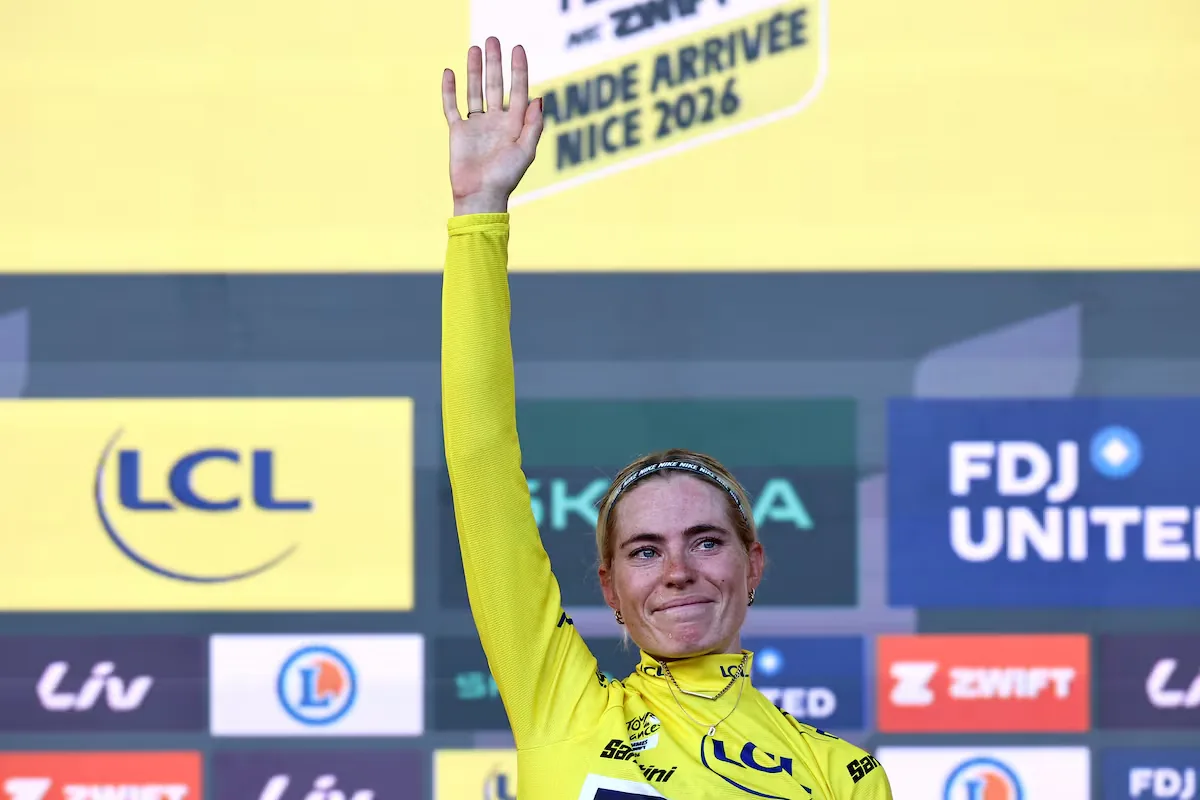
The isolated “allez Pauline!” cheers echoing from the roadside ditches fade away lonely, without an echo, among the vineyards lining the curves of the climb to Marsannay, 1,800m at 7% in the heart of Burgundy and its châteaux of grand crus, on the Dijon road. A beauty to enjoy, a torture for someone like Pauline Ferrand Prévot, the owner of the French people’s heart, who pedals back and forth, wearing bib number one, an ungraceful irony; the huge helmet crooked like a defeat, like her mood, silent, fragile, and sad at the finish line, which the 2025 winner crosses 34th, 2m 13s behind the first, the Swiss machine Marlen Reusser, the happiest woman in the world, who, eight months after planning it, has successfully completed Operation Mustard that she launched with her team, Movistar, at Christmas: we will win the time trial and I will wear yellow, like the moutarde ground with a stone mill, she explains, while looking at the yellow sleeves of her leader’s jersey.
And the immense joy of the cyclist who, physiologists say, if she were a man would not be inferior to Pogacar or Evenepoel in time trials, and if they were women they would not beat her, because to her watts, VO2max, and power she adds a willpower capacity of a cloistered nun, renunciation and strength, surely not greater than Paula Blasi’s, who responds with a magnificent time trial—the first she has contested in a WorldTour level race—to the announcement by her director, Cherie Pridham, that she had been reinstated in the UAE hierarchy and had total freedom to contest the race and fight for the overall victory, with the same right as the other two leaders, the Italian Elisa Longo-Borghini, who only beat her by one second at the Dijon finish after 21 kilometers—“my chain came off and I had to change bikes,” explained the Piedmontese, a rider who has never had much luck in the Tour—and the Polish Dominika Wlodraczyk, whom she beat by 18s after passing the intermediate point 22s behind, thanks to an extraordinary second half, the false flat that makes the legs scream in protest, so taxed had they already been on the climb, and the gentle, curve-free descent to the finish, which, despite the heat (38 degrees), Blasi closes at 54 km/h, a low and free flight. A young girl light of spirit in the start tent, after passing the chest control organized by the UCI, warned that some riders might place padding in their bras to gain aerodynamic advantage, who before heading to the ramp hits her thighs to activate herself, and contrasts her energy with the heaviness of the others, who turn the mindfulness of pre-race concentration into a kind of spiritual exercises and laments. Although she started more cautiously than expected, she reached the numbers she hoped for and showed her personality.
Wlodraczyk directly blamed the sun for her poor finish, and described with such precision and imagery the heat stroke that flattened her: “I did what I could. I have nothing to reproach myself for. I gave everything I could. I wanted to go all out in the first part. And 800 meters from the top of the climb, I simply felt like I hit a wall. My hands started shaking a lot. I had the sensation that someone was stabbing needles into my body. And then, well, it’s hard to keep going; on the descent I also did what I could, honestly I don’t remember the last time I let myself go like that…”
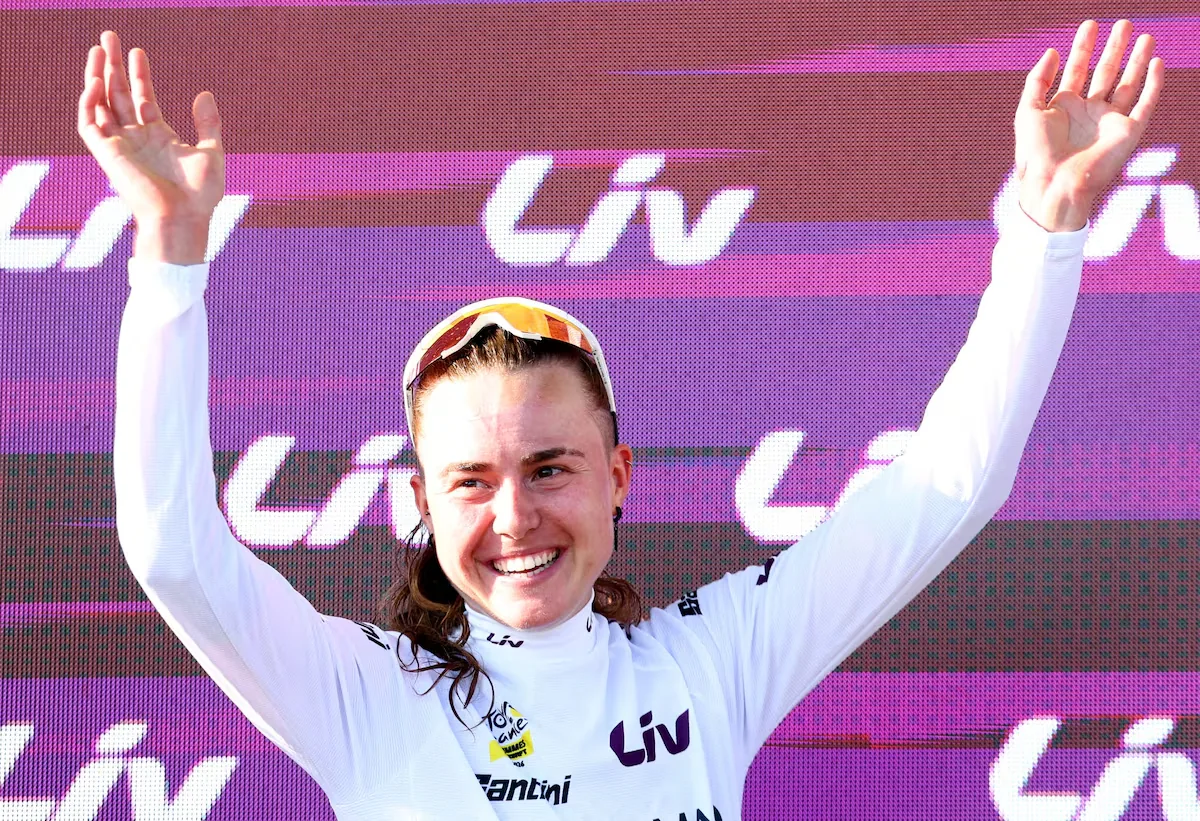
Blasi, 23 years old, 10 years younger on average than all those she fights head-to-head with in her first Tour, lost 1m 9s to the unbeatable Swiss, world time trial champion and recent winner of her country’s Tour, but against the Dutch Demi Vollering, the queen of women’s cycling this decade, she only conceded 47s, and was better than Niewiadoma (winner of the 2024 Tour) and Anna van der Breggen. Her white best young rider jersey shines and dazzles. The great star of Spanish cycling, men and women mixed, has defeated the opposition of the director, whom she has convinced. “The road will decide who is the UAE leader. I keep repeating it,” says Cherie Pridham, acknowledging that the time trial has already given a first indication before the Beaujolais stage on Wednesday and Mont Ventoux on Friday. “The girls know their roles. We have already had in-depth conversations before. Of course, we cannot overlook Paula’s emergence as a world-class cyclist. She keeps learning very fast, and being aware of that, I have to recognize that she always comes to talk about how she can improve and what she can do better; so, for her, it’s almost a learning process, but she has Elisa Longo-Borghini, you know, a natural leader and a proven champion who guides her. It has been a very rapid learning curve.”