Every time Bad Bunny performed EoO live, from his album DeBÍ TiRAR MáS FOToS (2024), on his recently concluded European tour, the music stopped before the bridge. Thousands of people were left expectant and a robotic sound burst out, a voice saying “Pe“, but it cuts off. ”Pe… Pe… Pe…“, repeated faster and faster while the word that is not fully pronounced appeared on the screen: PERREO. After a few seconds of tension, finally, the audio played completely. A woman demanding: ”Look, damn it, don’t take away my perreo,” with a Puerto Rican accent. That voice is now at the center of a $16 million lawsuit (14 million euros) against the singer.
The one who pronounces it is Tainaly Serrano Rivera. She sued Benito Antonio Ocasio Martínez, Bad Bunny’s real name, in January, alleging lack of consent for the use of her voice in two songs: Solo de mí, from the album X 100pre (2018), where the full phrase is heard at the end of the song, andEoO, in which it appears around the first minute, although the word “perreo” is not fully heard. The recording was used “without compensation, without attributing her legal recognition or rights for the songs, promotions, albums, concerts worldwide and social and music platforms, television and radio, among other things,” according to the document filed in a Puerto Rico court.
She is not the first to sue Bad Bunny for something similar, as he is also in a legal battle with his ex-girlfriend, Carliz de la Cruz, over a recording in which she says: “Bad Bunny, baby,” which the singer used at the start of his career when they were a couple. For example, in Diles, one of his early hits from January 2016, the audio appears in the first seconds. In this case, De la Cruz complains that it was also used in two songs without her consent after their relationship ended: in the single Pa’ Ti, released in December 2016, and the song Dos mil 16, from the album Un Verano Sin Ti (2022). For this, she claims no less than $40 million (35 million euros).
“Carliz called us to review some contracts that had been sent to her from the Puerto Rican label Rimas Entertainment and Bad Bunny to transfer the rights over her image,” explains Joanna Bocanegra Ocasio, one of the lawyers handling both cases. “What happened is that practically immediately, two days later, the song with her voice was already published without any written agreement having been reached.”
According to the , consent must be given in writing and for a determined period, explains José Marxuach Fagot, another of the lawyers defending Tainaly and Carliz in their lawsuits. And if one wants to claim misuse, the court has determined that the time limit is not related to the date of publication of the work, but to the knowledge of the affected person, that is, the date on which they learn that their image, in this case their voice, has been used without permission. From that moment, they have one year to sue.
In Carliz’s case, Bad Bunny’s defense argues that including her voice in a song does not equate to using her image. According to them, a song is an artistic work (although it generates income) and therefore they argue that image law should not apply. However, the Supreme Court of Puerto Rico accepted the lawsuit because it understands that the specific recording of the voice could have protection and determined in July that there is enough evidence to continue investigating, although limiting the case only to the song Dos mil 16, since at the time of filing the lawsuit the deadline to claim for the song Pa’ Ti had already expired. Both cases are awaiting the first steps to determine who is right.
Meanwhile, the lawyers for these women believe there is much ignorance about image rights in the music industry, and that some take advantage of that. “For example, the fact that consent was given at a certain time does not mean that consent is perpetual,” clarifies Bocanegra. “That voice cannot be used permanently, unless there is a transfer contract that states so.” And that did not happen in either case.
That ambiguity of not specifying in writing what the recordings made by so-called “vocalists” — women who record short phrases, sometimes melodic, in reggaeton — will be used for has been a common practice since the genre’s birth. “There are many young people who have fallen into that move. They were sold a dream, that they were going to be big. And who profited? Not me,” says Irenis Cruz, who was known in the early 2000s for singing several hits alongside DJ Joe in the Fatal Fantassy album series. She claims there is a Bad Bunny song where you can hear her voice saying “¡Ay!” and other monosyllables in a sexy tone, recorded 20 years ago without having signed a contract allowing it: “They use my voice, of course they do. But at this point in my life, I don’t care.” She likes that her grandchildren hear her voice when they go out partying, and although she acknowledges she was never paid what she deserved, she stays away from the legal route after several negative experiences.
“Give me more gasoline”
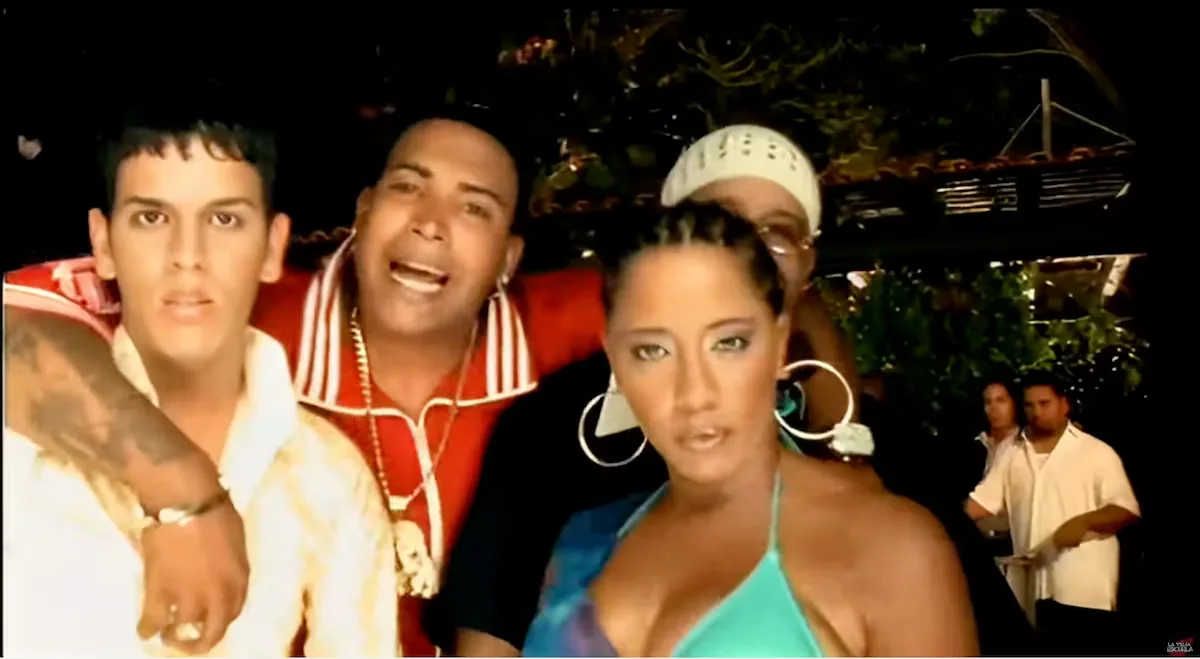
To avoid similar situations, other artists have been careful to sign before recording: “I have always been a soloist, since this was underground,” recalls Glorimar Montalvo Castro, better known as Glory, who recorded with Daddy Yankee, Don Omar, or Héctor y Tito in songs like Gasolina, Dale Don Dale or Baila Morena. She is the voice of phrases like “give me more gasoline,” “come on, daddy, I’m loose like a shoelace” or “come on, dark-skinned, we went afuegote,” among others.
“We were very few women at the beginning. It’s a genre highly dominated by men. And they used to say to me: ‘Here comes this one with her papers,’ when they saw me with my documents to sign. Sometimes those comments also intimidate, they even intend to intimidate you.” But she clarifies: “I’m not saying that’s what happened in the case of other colleagues because I don’t know. It would be very interesting to have a meeting and hear those experiences, because when I record I say: ‘We’re friends and all, but this is business.’” Glory has maintained her career until today, and although she is not as famous as her peers, she is very recognized in the industry. This year she has released an EP with five new songs.
It is also important to remember that these situations do not only happen in reggaeton songs. Lawsuits regarding rights and copyright are common in the United States, a country that governs a substantial part of Puerto Rico’s legal system. Any genre where there is a power imbalance between famous artists and those trying to make their way is susceptible to these conflicts. “Newcomers might think they have a great opportunity and don’t get legal advice,” adds lawyer Bocanegra.
She and Marxuach also don’t believe it only happens to women, but they do admit that since the lawsuits against Bad Bunny became public, they have had to fight against a narrative in public opinion: “Some think that their motivations as women are different, in Carliz’s particular case for being an ex-girlfriend. They don’t believe they really want to vindicate their rights. From our perspective, Bad Bunny may be the most famous artist in the world, but our focus has always been not to attack that aspect of the case. If they used the image, the girls’ voices, without written consent, they have the right to sue.”