










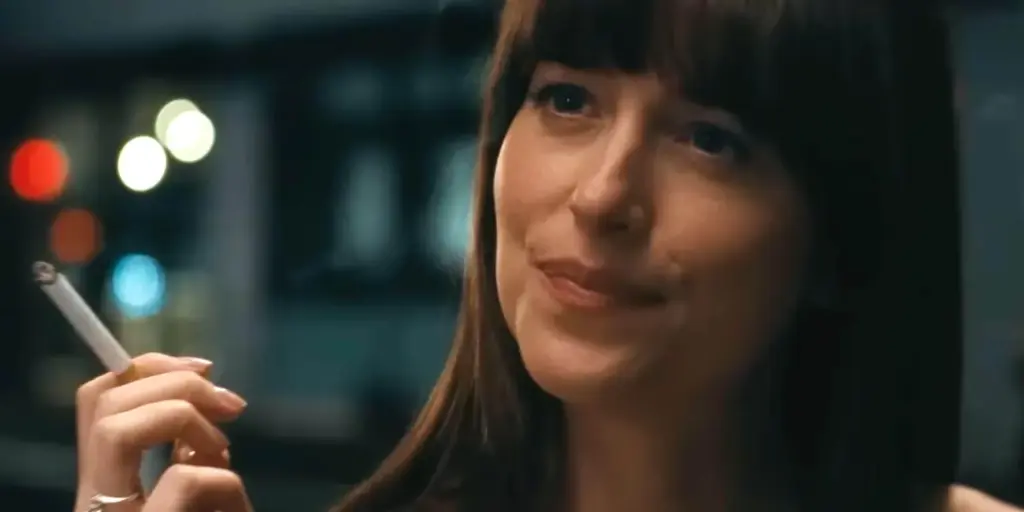
The pack of cigarettes that Charli XCX gave to Rosalía for her birthday, Dakota Johnson’s puffs in Materialists, Sabrina Carpenter with a cigarette in hand, the cigarette centerpieces at Dua Lipa’s wedding, or Jeremy Allen White smoking in The Bear are just some examples of tobacco’s return to pop culture. Nicotine seemed like the legal vice that had gone out of fashion, but now it even walks the runways like in London, where Lily Allen modeled with a cigarette in hand for the 16Arlington x Antony Price brand.
For decades, tobacco disappeared from mainstream culture in all its forms. Except for classic cinema, its presence in audiovisual fiction was scarce and generally marked as a reprehensible vice. Especially in American productions aimed at a young audience. For example, in Beverly Hills, 90210 (1990), Brenda starts smoking after a trip to Europe (where, according to the writers, everyone smokes) and as a consequence suffers from cancer. The same happens to Sandy’s mother in The O.C. (2003), who has advanced lung cancer but still holds a cigarette in her hand.
In general, tobacco only appeared when it had historical logic or to reinforce the characters’ personalities. See the series Mad Men (2007), set in an American advertising agency in the 1960s where smoke almost forms clouds: at that time, it was unusual not to be a smoker and, in fact, they have to face tobacco advertising regulations when they have a well-known brand from the sector as a client. They find a way to circumvent the rules while, of course, taking puffs.
However, the tide has turned. A recent report by Truth Initiative revealed that in 2024, 51% of the 152 highest-grossing films in the United States contained images of smokers, an increase from 41% in 2023. Studios outside the Motion Picture Association (MPA) were responsible for most tobacco portrayals, with companies like Amazon, A24, and other independent distributors: they released 69 films with smoking scenes, compared to eight films from MPA member studios such as Lionsgate, NBCUniversal, and Paramount. Among the ‘tobacco’ films are the Bob Dylan biopic A Complete Unknown and Saturday Night, based on the story of the television show Saturday Night Live.
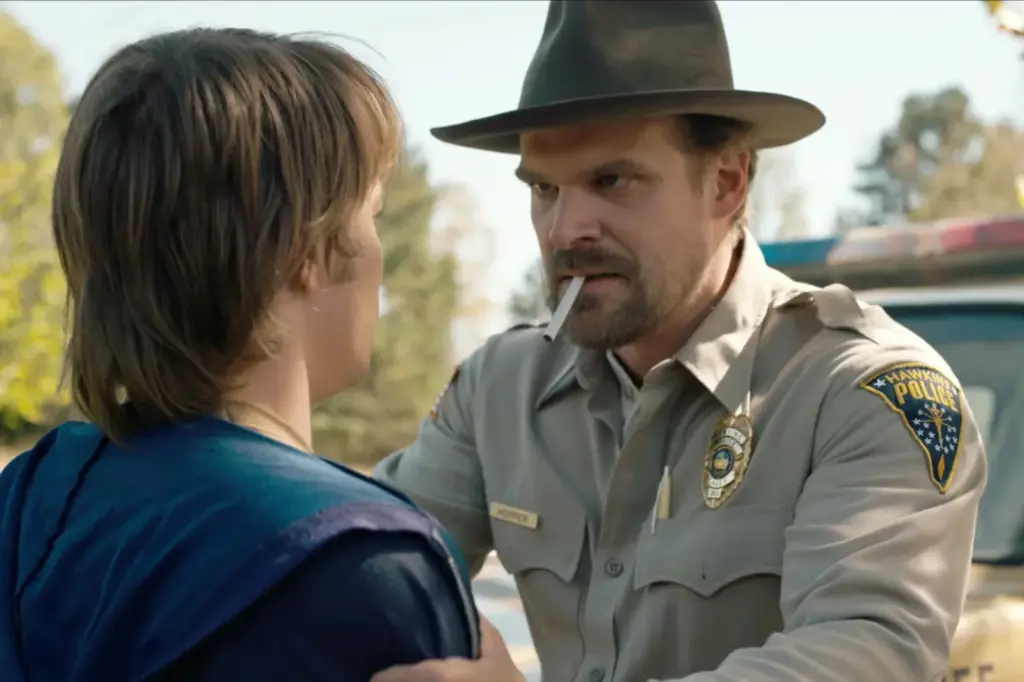
“There has been clear evidence for many years that tobacco appearances in movies or series now occur more in attractive, ‘bad boy’ characters and especially in unrealistic proportions, sometimes reaching 70% of the characters,” says Antoni Baena, professor of Health Sciences Studies at the Open University of Catalonia (UOC). He points out the particularly controversial case of Stranger Things in 2019, after which Netflix declared its intention to avoid cigarettes in its productions. “Since direct tobacco advertising and related products were banned, the tobacco industry has further boosted its presence on the internet with influencers and in series,” the specialist adds.
But the United States is not the only territory where this phenomenon occurs. Although the self-regulation of Spanish producers regarding the presence of nicotine in their creations is not as strict, an increase can also be perceived. See, for example, the series Se tiene que morir mucha gente (2026), based on Victoria Martín’s novel. In it, along with other legal drugs like alcohol or anxiolytics, nicotine is presented as an escape route for the anxiety suffered by the protagonists. They share pitis at bar doors, smoke in the bathtub, and hide in rooms to take a few puffs. Likewise, there are many cigarettes in La casa en llamas (2024) and in El Centro (2005), the fiction based on the National Intelligence Center (CNI), among other titles.
From the complaint against Rosalía to government measures
Precisely, on July 21, the Council of Ministers approved a new tobacco bill, which expands smoke-free spaces, includes sanctions for underage consumers of both cigarettes and vapes, and addresses the presence of nicotine in media, social networks, and audiovisual productions. “In media and audiovisual content, programs, videos, or images in which presenters, collaborators, or guests appear smoking, consuming, or showing tobacco products, devices for their consumption, or related products, or mention or show, directly or indirectly, brands, trade names, logos, or other identifying signs associated with these products, may not be broadcast,” specifies the text.
These measures (still to be approved) come a few months after the complaint that the platform Nofumadores.org filed against Rosalía and Esty Quesada, known as Soy una pringada, for smoking on the podcast Special People Club hosted by the latter. According to the complainants, the accused violated two points of the current regulations: smoking cigarettes in an enclosed indoor space considered a workplace and having presenters and collaborators of media show tobacco brands directly or indirectly or smoke. They also broke the General Audiovisual Communication Law that prohibits the promotion, commercial communication, and display of tobacco products on social networks and audiovisual content including streaming services. In response, the video was removed and republished days later but with the tobacco pixelated.
“The whole Healthy Clean Girl Smoothie thing is dead. Now we’re back to the 2010s with Kate Moss smoking,” says Helena Exquis, pop culture analyst and creator of fanzines like Orfidal or What Ever Happened To You Little Zombie?. For her, tobacco is much more present in the public appearances of celebrities and the perception of cigarettes as something ‘cool’ is more common among the younger ones. “I think the younger ‘Gen Z’ have been, at least in the Anglo-Saxon market, a generation that grew up with a lot of health restrictions,” she maintains and points out that they are the ones “romanticizing the era of Cobra Snake, etc. See the song Girls by The Dare.”
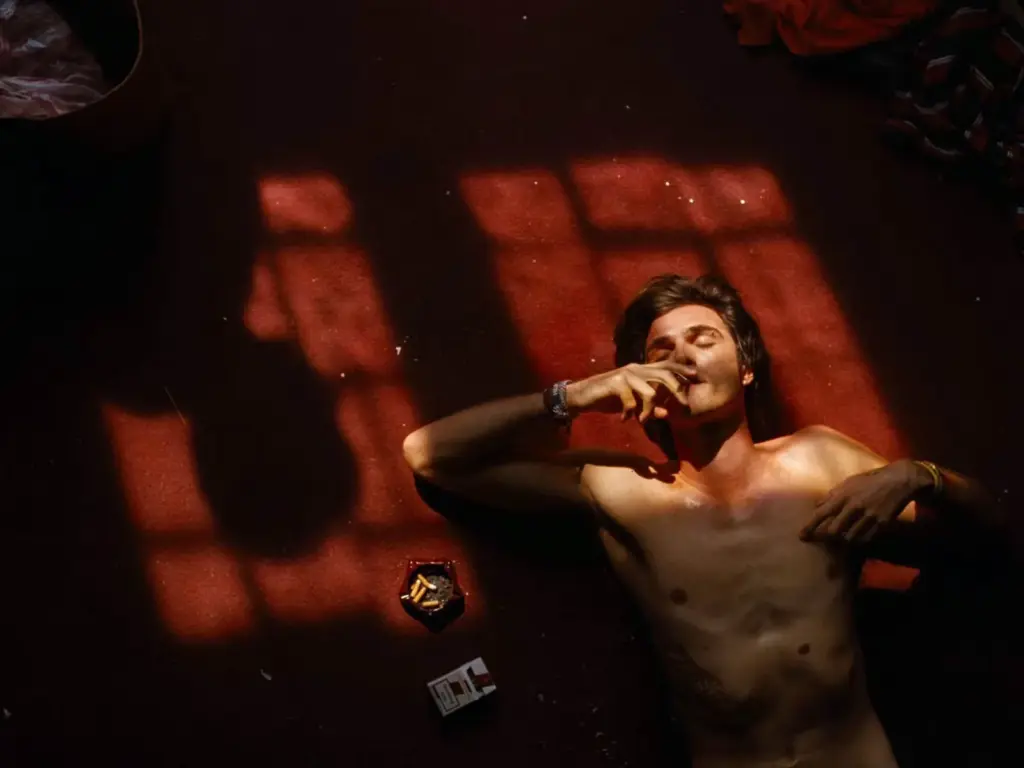
According to her assessment, this display of affection for nicotine by celebrities can be considered covert promotion. Antoni Baena shares the same opinion, whether referring to celebrities or audiovisual productions: “It is clearly covert advertising because nothing appears in series without payment. And also influencers on social media.” He also points out that situations like Rosalía’s mentioned birthday also serve to advertise tobacco, although she may not have been paid for it. “She has no awareness of the impact it has on young people,” the expert accuses.
Despite everything and without these data diminishing the influence such images may have on young viewers, the ESTUDES 2025 survey conducted by the Ministry of Health shows that tobacco consumption among students is at historic lows. “27.3% have tried it at least once and only 4.3% smoke daily. Additionally, 46.4% have tried to quit in the last year,” clarifies the released text. It also reveals that “the average starting age remains at 14.1 years, and the age of daily consumption onset at 14.4 years. The most common mode combines pack and roll-your-own cigarettes, and 46.4% of smokers have tried to quit the habit in the last year.”
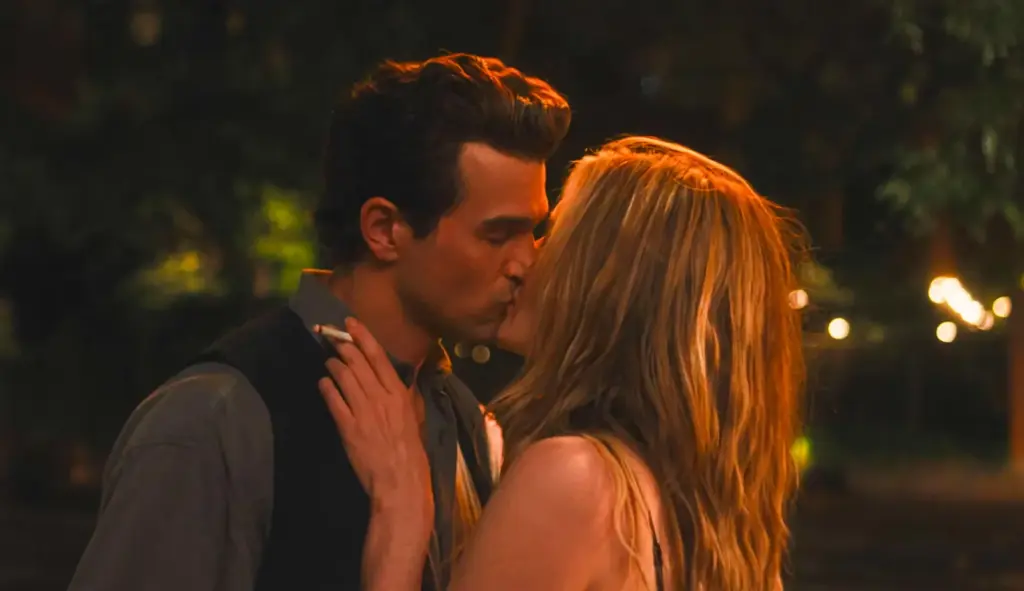
Journalist Jessica M. Goldstein wrote in The Washington Post that the efforts of major tobacco companies to increase their public presence are not yielding the expected sales results. “According to a study by the Centers for Disease Control and Prevention (CDC), cigarette consumption has substantially decreased over the past seven years. It is the social status associated with smoking, more than the act of smoking itself, that is on the rise,” she explains in her article. Additionally, the author includes statements from Robert K. Jackler, surgeon and founder of a research group at Stanford University dedicated to studying the impact of tobacco advertising, who indicates: “There are more smokers among entertainment professionals than in the general population,” which creates the perception that ‘everyone’ smokes.
However, all trends can be reversed, and the uncertainty about an unpleasant future, to put it mildly, can be a boost for budding smokers. After all, the smoking break has always been associated with a moment of calm and the cigarette as an anti-stress tool. “If smoking feeds on chaos, then maybe it is the perfect habit, new yet old, for this moment,” reflects writer Xochitl Gonzalez in The Cut magazine, “our lives may have been perfect, but does it matter if the world we live in is out of control? And if it doesn’t matter, then, I suppose, why not smoke?” If that romanticization continues to spread, it remains to be seen to what extent it ends up influencing the decisions of new generations.