









Hope arrived with thighs exposed. Two summers ago, stars like singer Harry Styles and actor Paul Mescal set out to free men’s legs by wearing the shortest possible pants. They were nicknamed shorts shorts (“short shorts”) and fashion magazines rushed to predict the end of the reign of long pants in summer. But perhaps they did so with more hope than accuracy. Because once the craze passed, men’s complex about bermuda shorts still exists and, even though the heat is now even greater, there is a garment immune to any fashion that, for comfort, laziness, or modesty, continues to dominate the men’s wardrobe all year round. Rain, snow, or scorching heat, jeans refuse to die.
Read more Romanticizing smoke: tobacco returns to movies and series with force
British journalist Chloe Mac Donnell anticipated the return of the most universal pants last June in one of her reports from Paris Men’s Fashion Week for the newspaper The Guardian, titled “Too cool? Why men keep wearing jeans even in a heatwave.” “Although brands were handing out umbrellas and cold towels to relieve the heat, the front rows were full of guests wearing jeans,” she wrote. Mac Donnell illustrated the trend with data behind some of the most coveted models: compared to the week before the first heatwave of this summer, searches for Carhartt jeans had increased by 100% and those for the Japanese brand Edwin by 200%.
The leader of this court of men who cling even more to jeans in summer is, of course, Jonathan Anderson, creative director of Dior. At the presentation of his show during one of the hottest weeks of the year, he wore his usual work uniform—Levi’s pants and Salomon sneakers—which, as he has often acknowledged, helps him live more easily and separate himself from the fanciful collections to which he devotes his life as a designer. Behind him parades an endless list of stars who, over these months, have also made jeans their particular summer uniform.
Still in mid-July, actors Tom Holland and Robert Pattinson coincided wearing different shades of jeans at the presentation of The Odyssey at Savoy Place in London. Kit Connor also bet on that balance between formal and informal at the recent red carpet of the film Heartstopper Forever, and especially Javier Bardem, talisman of the Spanish national team, who did not part from his jeans in any of his viral appearances supporting the team at stadiums across half of the United States. But the phenomenon goes far beyond celebrities.
In the countryside and the city, at work and on the street, it is almost impossible to take a walk these days without finding dozens of men of all ages who, stuffed into their jeans, endure the heat combining them with all kinds of styles. But why does this fixation persist in 2026 and not opt for cooler cuts or fabrics? For Pedro Mansilla, sociologist, fashion critic, and author of Sociologies of Fashion (Catarata, 2025), the reasons behind this decision are divided into two groups. “In fashion, there is a rule that always operates, especially for men, and that is that we constantly play with one rational element and one irrational one.”
All in blue
“From a rational point of view, they are perfect. They have a very easy wash and, if you have a minimum of taste, it’s easy to distinguish which ones suit you well. Also, they allow you the pleasure of constantly wearing new ones; you can have 30, because one for one thing and another for another, and if you get tired of them you can discard them because they are very cheap,” he admits. In fact, last week Mansilla bought his latest jeans at Humana: a model from the brand Jopp! in a worn pine green color that he adds to a collection that already approaches a hundred pairs of jeans and that, of course, he also wears in summer.
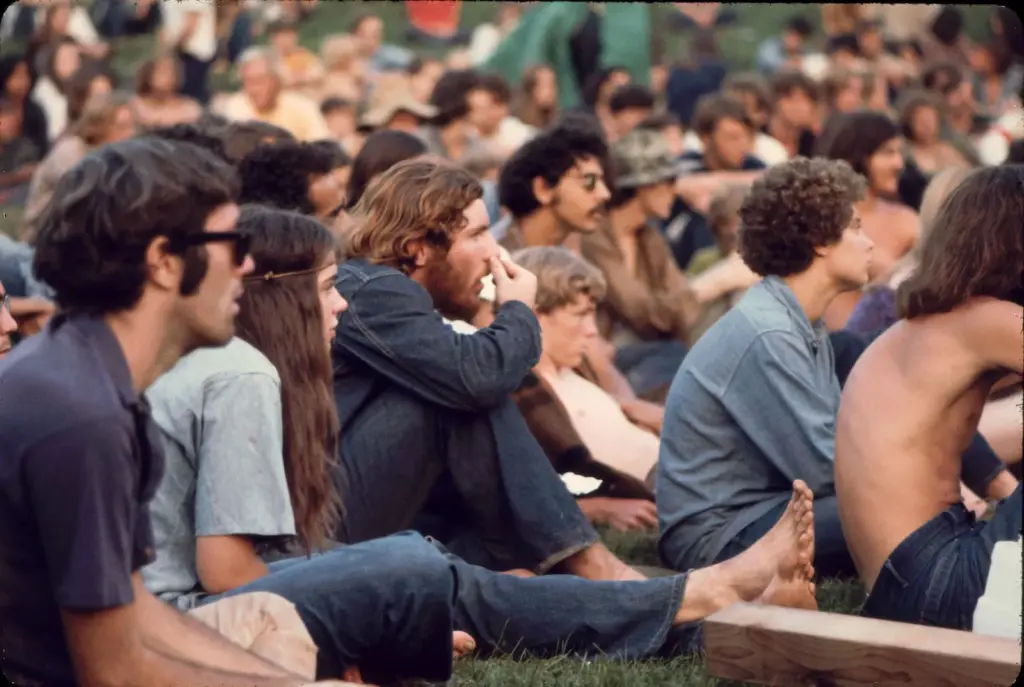
“They are extremely comfortable for going out on the street. You shower, put them on quickly, and you can go out however you want: with any shoe, sandal, sock, or even barefoot. They go well with everything and can be worn dirty, torn, painted, and scratched. Any other pants require a ritual and a formality of thinking about what to match them with and do not tolerate stains as well,” he adds. Although several generations separate him from Mansilla, fashion content creator Juan Arribas is also a firm supporter of jeans for similar reasons.
“I admit I am one of those who wear long jeans in summer, regardless of how hot it is. I like them because they prevent your legs from rubbing and sweating more than necessary and, by not having the skin so exposed to the sun, I feel like I don’t get as hot. Also, I love how they look with flip-flops and I am one of those who take very seriously the rule that if you wear something short on the bottom, you cannot wear something short on the top. That’s why, if I want to wear a short-sleeved shirt, I opt for long pants,” he defends.
“A pair of jeans is the perfect garment. If you want to dress more urban, you can combine them with sneakers and an oversize t-shirt or try all the combinations in the spectrum between formal and casual: with loafers and a t-shirt, with an overshirt and sneakers, with a polo shirt,” he explains. “I think the fact that they are worn so much in summer is a mix of wanting to maintain style, comply with office dress codes, and a bit of insecurity about showing legs. On the street, I see many men with bermuda shorts following Harry Styles’ legacy, but I think not everyone wants to take risks and prefer to opt for long jeans, which are more socially accepted.”
From those fears, these jeans
In insecurity is where Mansilla finds the irrational justification for the uncontestable reign of jeans: “There is a fear of looking ridiculous that prevents us from dressing cooler with shorts and that has been imprinted in male culture for centuries. In Europe, it comes from one of the victories of Protestantism. The Great Male Renunciation of the 18th century reduced men to a strict Calvinist archetype and punished them by dressing like priests.”
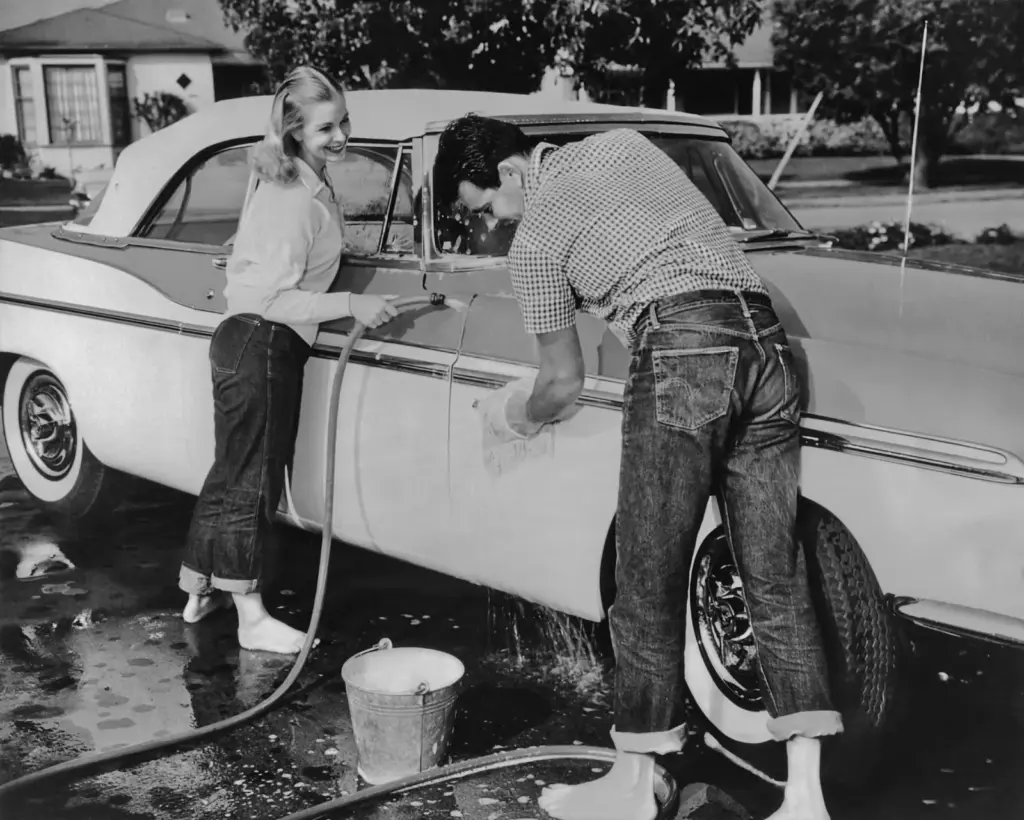
The sociologist highlights the fascination of male fashion before the 18th century with excess and stockings that marked the legs of nobles and kings. But since then, and despite conservative models like the military uniforms of the English army in India trying to show that wearing bermuda shorts was not incompatible with authority, male legs were condemned to be hidden under long pants. Hence, the appearance of jeans, designed to withstand hard work and avoid all ostentation—two principles that fit perfectly with the Protestant ideal—climbed to become the zero degree of any man’s wardrobe.
“In 200 years, jeans have climbed the entire social ladder. Both Andy Warhol and Yves Saint Laurent would have given their lives to invent jeans. They are one of the most successful garments in the history of fashion, but especially in the history of the 20th century. In fact, if we are as sentimental as we say, man should have gone to the moon in jeans,” Mansilla assures. Although the durable indigo-dyed fabric had already become popular in Genoa and in the workshops of Nimes, hence the English names jeans and denim, the birth of modern jeans dates back to 1873.
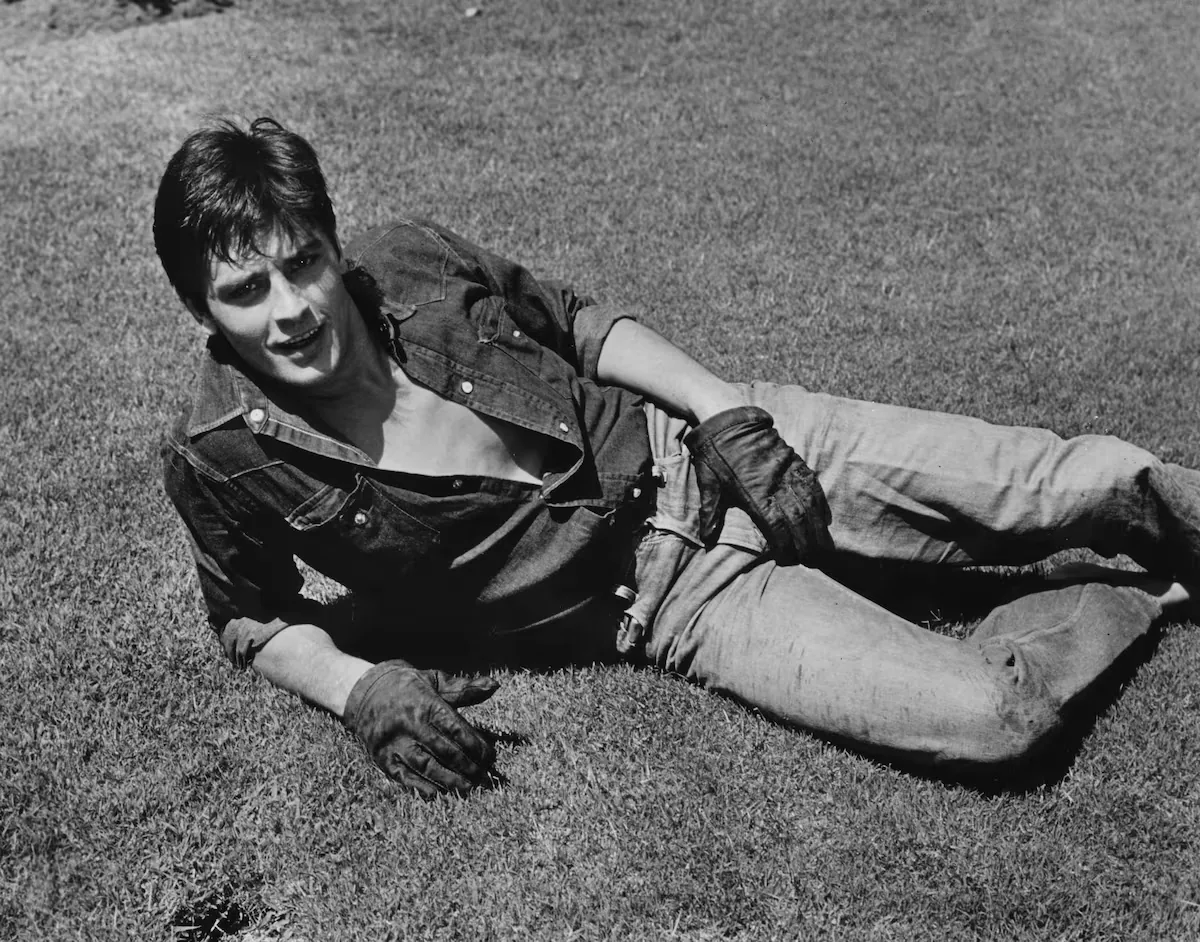
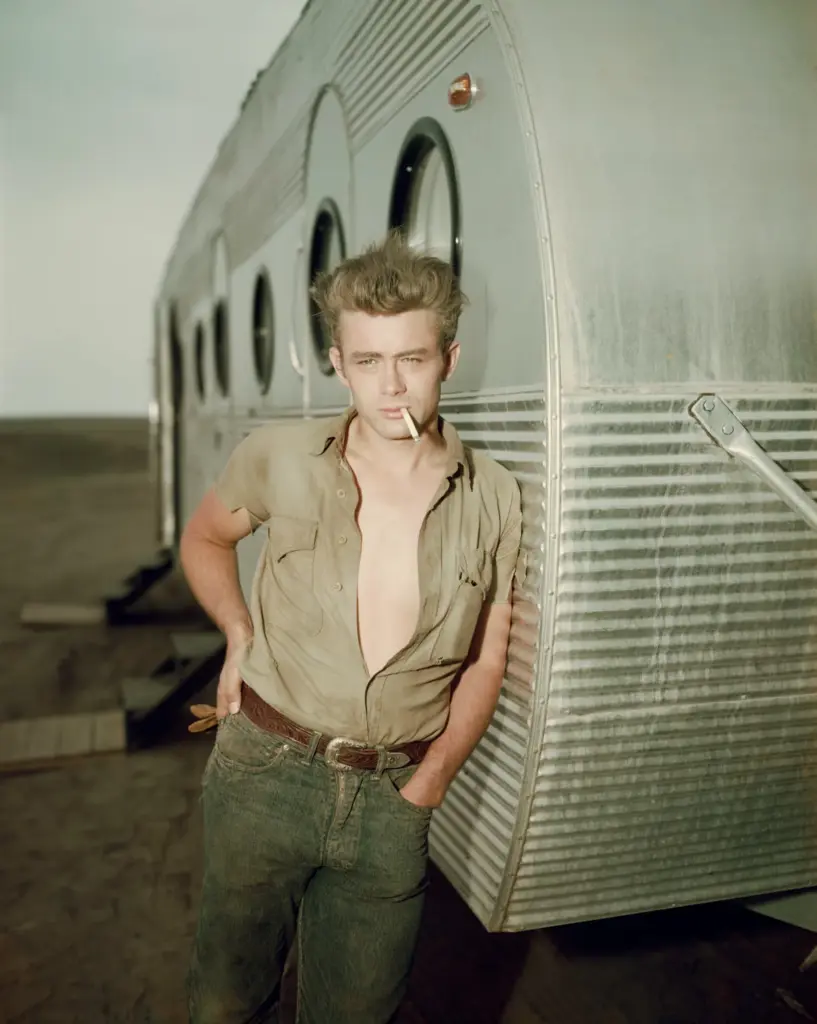
That year, a German immigrant, Levi Strauss, who had opened a store to supply Californian miners, patented a method to make pants from that fabric more resistant. He added copper rivets and they soon became a classic for all kinds of workers. Among them, of course, cowboys. But it was not until the 1950s, after World War II, that jeans began to catch on among university students seeking a new informality, and stars like Marlon Brando and James Dean stripped them of their working-class character to cover them with rebellion and elevate them to the status of myth.
Spain was quick to emulate the American way of life and, over time, jeans in turn became a turning point for domestic fashion. “Most Spanish prêt-à-porter designers of the seventies and eighties like Roberto Verino, who fought to separate themselves from the world of tailoring and dressmaking, started making jeans because it was one of the products that gave the least trouble when changing and adjusting the size. El Corte Inglés was booming selling American jeans but also Spanish ones like Francis Montesinos,” explains Mansilla. Precisely in the eighties, houses like Versace, Armani, or Calvin Klein revived the press by claiming the concept of designer jean.
But few images better portray the mythology that the garment carries than the nine days Andy Warhol spent in Madrid in 1983 invited by the gallerist Fernando Vijande. The artist arrived clad in his jeans and refused to take them off under any circumstances. According to chronicles of the time, when high society, like the March family, invited him to dinner with the strict tuxedo dress code, he decided to wear the suit over his non-negotiable jeans.
This indigo-dyed rebellion is perhaps the argument that best explains the immortality of the garment. “Jeans have always been linked to revolutionary leaders who refused to accept the formality of the suit,” defends Mansilla. “They subliminally connect us to eternal adolescence, to the Peter Pan syndrome. As long as you keep wearing jeans, you will remain young. Advertising sells it like this: jeans make you look 20, 30, or 40 years younger just by wearing them.” Because there is nothing more irrational and transversal than the fear of aging, and this phobia is not exactly one that takes summer vacations.