“It lasted about eight seconds, he thought he was killing her, the first thing he noticed was how he kicked her in the head, continuing the assault with more kicks and punches aimed at the woman’s head, he was struck by the extreme violence used and that he didn’t say any expression or insult, it was as if he were out of his mind.” This is what the officers recorded from the man’s responses who on July 28, 2019, intervened to stop Dámaso Fernández Serantes from beating his former partner, Laura Cruz Vega. He did so by sneaking in with the car when the doors opened to let another vehicle through at the Civil Guard barracks where both, officers, had lived until 2014, in Llanes, Asturias. She tried to soften the attack, “getting into the car and curling up,” sources close to the case recall. This Wednesday she could do nothing, he sneaked in through a back door and murdered her.
Read more The hands that saved the swimmers at the Ceuta border: “Getting a baby and a family out is a joy”
Dámaso “had just been informed of his expulsion from the force following the resolution of the file opened against him for gender-based violence,” several sources close to the case point out. On Wednesday morning he violated the restraining order in effect, traveled to Llanes from Zamora ―where he had been assigned―, entered through that door he knew from years ago, “forced open a colleague’s locker, stole his weapon, looked for her and shot her,” Civil Guard sources detail. The colleagues who were at the barracks at that moment tried to stop the attack.
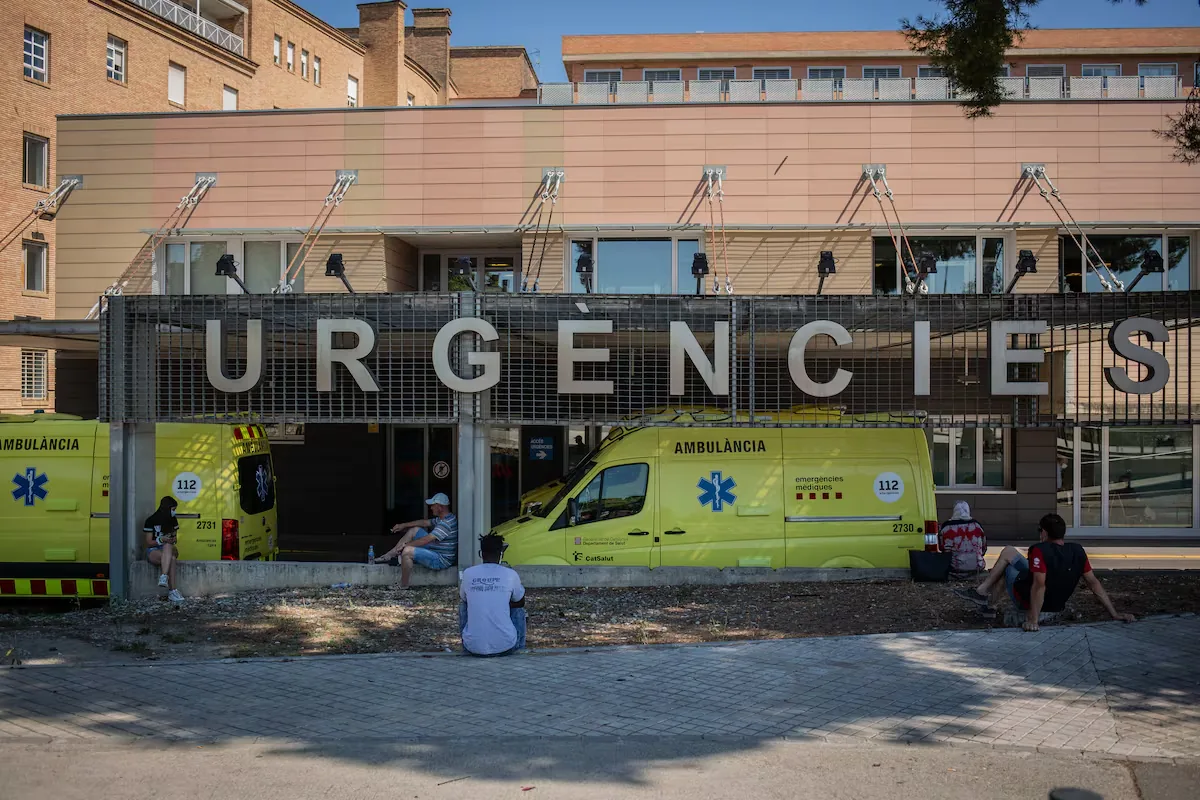
A shootout occurred. Two officers were injured, one of them, a lieutenant, seriously, although he remains stable. And he, Dámaso, ended up dying. “He died a couple of hours later in the ambulance where they were trying to stabilize him. A couple of hours after arriving to do what he had come to do. Because he went there just for that, to kill her,” says another source close to the investigation, which is still less than 48 hours old.
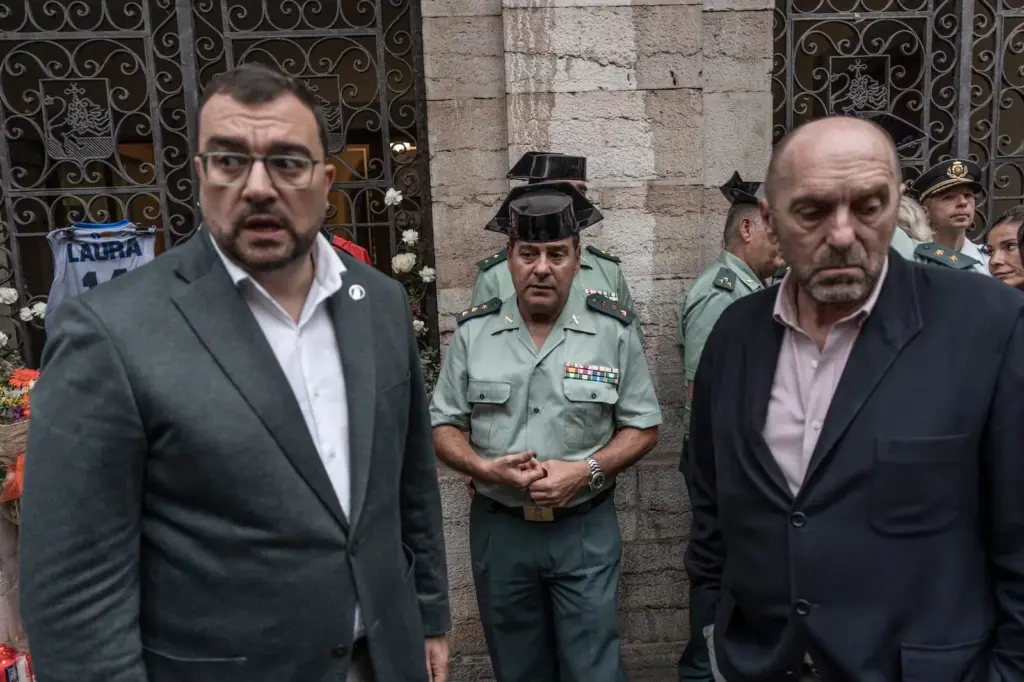
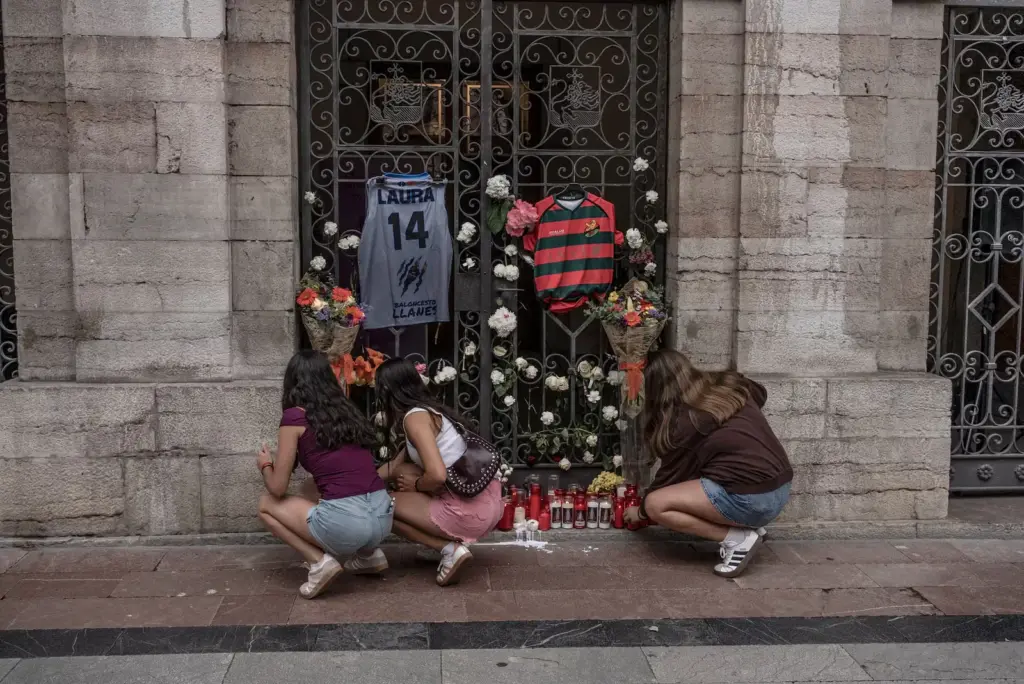
Although pieces are already falling into place. They had been included in the VioGén system for seven years, the system for monitoring victims and their aggressors. She had moved on with her life, had gotten married. The anti-abuser bracelet she once wore was no longer recorded as an active measure. But the most important and urgent thing, because of what this murder implies for them, is that the son and two daughters of the couple have been orphaned by this gender-based violence since yesterday. He is 18 years old and they, twins, 14. And they were not unaware of what was happening.
They were present at the time of that beating in front of the barracks, which several witnesses described as “brutal” and “extremely violent,” according to documentation accessed by EL PAÍS. Judicial texts say that he, their father, subjected them “to an unjustified stressful situation, ignoring the suffering the minors were enduring and expressing in cries, screams, and pleas” for him to stop.
At that moment there were four witnesses, did it happen more times? Had it happened before? Because the violence did not start that day and lasted a long time, as it always does, until the murder occurs. In Spain, around 200,000 women report abuse each year, and it is considered that only one in ten cases is reported. And there are thousands of women who survive every day, literally, men like Dámaso. His violence. Not only physical, but also psychological, emotional, economic.
And fear. That “terror, anguish, sadness, melancholy” described in one of the three sentences accumulated in this case about the “breakdown” that occurs in victims, and also the exhaustion. Laura separated from Dámaso in 2014. But several documents show the control he always tried to maintain over her through the minors, or with missed payments on a joint mortgage that caused Laura not to be able to get bank credit even to buy another home. She also thought she would not be able to request a loan to pay for her children’s studies.
He even told a bank employee where that mortgage was registered that if Laura withdrew the complaint, he would sign the agreement. On July 16, 2025, at 09:27 hours, he wrote this WhatsApp to the bank worker: “Good morning, I have thought that I will accept the conditions of the deeds if you proceed to withdraw the criminal complaint filed against me, understanding that it is beneficial for both, thank you very much and best regards.”
The complaint Dámaso referred to is the one from 2019, after that episode of violence at the barracks and which started the entire criminal process. “She was fed up,” people close to the case recall. Fed up with what she had already been dragging and then fed up with a process that lasted seven years. Between 2019 and 2025.
Four witnesses and one motive
In that trial, she and six witnesses testified. Four who were present at the time of the assault, including a civil guard, and who according to judicial documents “recounted what happened identically among themselves and as stated by the victim.” And two more officers who “although they did not witness the assault, did witness the situation generated around it.”
There were also three medical reports that analyzed the “numerous, serious injuries”: trauma on the left side of the face, an incised-contused wound ―partly a blow, partly a cut― on the inner side of the lower lip, a small tooth fracture, erythema of the right ear drum causing jaw pain, discomfort in the right scapular region, and an anxiety condition.
And long before all that, when they separated in 2014 after more than seven years of relationship, the Llanes Court of Instruction number 1 agreed on custody (for her) and visitation (eight days maximum per month for him), and he began to repeatedly report her “with the sole purpose of disturbing Laura’s peace of mind,” say judicial files.
He reported her at least 45 times between 2014 and 2019. There were days he filed two and even three complaints. All processed by the Court of Instruction No. 1 of Llanes which were “mostly dismissed [for not constituting any crime] without notification of their filing or dismissal to the woman, who learned of them through extrajudicial means” and which caused her “anguish and distress,” the documentation reads.
He reported her for different reasons, almost always related to what he claimed were breaches concerning the minors, and many times for “misuse of the vehicle” they shared. He, the judicial documentation says, knew they were not crimes and yet he kept doing it. But he never requested any modification of measures regarding the children. A commander, called to testify, summarized all those complaints with a single motive: “To mess with her.”
Acquitted of two crimes
In the last sentence for this case available to this newspaper, from the Provincial Court of Oviedo and dated July 15 last year, it reads that Dámaso’s interest was simply that, “to mess with” the accused. And in that ruling, the Court was responding to appeals filed by both the Prosecutor’s Office and the accused against the previous sentence, dated May 24, 2024, by the Criminal Court number 4 of Oviedo, where the process took place and which sentenced him for mistreatment, coercion, and a minor injury offense.
He requested to be acquitted of mistreatment; and the Prosecutor’s Office requested that he also be convicted of harassment and habitual gender violence, crimes he had also been accused of. But it did not happen. The Court did dismiss Dámaso’s appeal but did not change the conviction regarding harassment or habitual violence. And acquitted him of both.
The sentence was one year and eight months in prison; deprivation of possession and carrying of weapons for four years; prohibition to approach his ex-partner within one kilometer and to communicate with her for five years; prohibition to approach his son and daughters and to communicate with them for three years; and deprivation of parental authority for three years. Also three months of a fine, ten euros daily, and if not paid, one day in prison for every two unpaid installments; compensation for his ex-partner of 6,100 euros; 1,000 for his son; and 1,966.85 euros to the man who intervened the day of that assault.
In the Armed Institute, on the other hand, a file was opened for a very serious offense such as perpetrating this violence, and his reassignment to Zamora, where he was a drug-sniffer dog trainer.
Dámaso never went to prison because he committed to the Justice system to comply with the rest of the sentence and not to reoffend. And at the end of last year, all measures expired. So much time had passed since the process began that although the last sentence is barely a year old, for sentencing purposes the time the convicted person had the measures imposed as precautionary counts.

And when time passes, sometimes, the guard lowers, and the sense of danger can fade. But sometimes what is called a trigger appears, an element that fosters an escalation in the violent intentions and ideations of aggressors. Laura, on August 5 last year, reported Dámaso again for the coercion he had tried to exert on her with the mortgage on the apartment. And in that complaint, she recalled that the 2019 assault had occurred just two months after the sentence that condemned him to mandatory payment through judicial means of extracurricular expenses from 2014 to 2018.
After a few months, in December, she requested that those measures be reinstated: the restraining order, the protection order, the bracelet, not only for her but also for her children, but the justice system saw no risk. “The complainant indicates the existence of a risk of possible repeated offense since the restraining order has already been served, however, she does not objectively justify such risk, since from the time the previous protection order was agreed until the events of July [when he coerced her with the mortgage] no other episode is objectively recorded, neither before nor after, from which it can be deduced that a harmful action will be carried out against the physical or psychological integrity of the victim,” reads the order dated December 19, 2025.
Several people close to the case, from different fields, think that the notification of expulsion from the force could have been a new trigger. That he blamed her for that decision of the Civil Guard without assuming that the only person responsible for the violence he had perpetrated was himself. Laura did feel at risk and asked for protection. But the Justice system, with the elements it had at that time, decided to deny it.
This, along with the murder of a woman also this Wednesday in a shopping center in Murcia, where a man convicted and with a restraining order in effect murdered his ex-partner, are the two latest gender-based femicides that have occurred. And the official confirmation of the murder last July in Benahavís is awaited. When it happens, there will be 36 murdered so far this year, 1,377 since 2003. And the number of orphaned minors recorded this year due to this violence rises to 26, 536 since they have been counted, in 2013.
The phone number 016 serves victims of gender-based violence, their families, and their environment 24 hours a day, every day of the year, in 53 different languages. The number is not recorded on the phone bill, but the call must be deleted from the device. Contact can also be made via email 016-online@igualdad.gob.es and WhatsApp at 600 000 016. Minors can contact the ANAR Foundation phone 900 20 20 10. In an emergency, call 112 or the National Police (091) and Civil Guard (062) numbers. And if calling is not possible, the ALERTCOPS app can be used, which sends an alert signal to the Police with geolocation.