The minute and a half of fame of the emptied Spain
The first total solar eclipse visible on the Peninsula in more than a century will focus, for one day, on some of the most depopulated provinces, where observation conditions will be ideal. EL PAÍS travels until Sunday to six points of the totality band of emptied Spain to tell how they are preparing for August 12
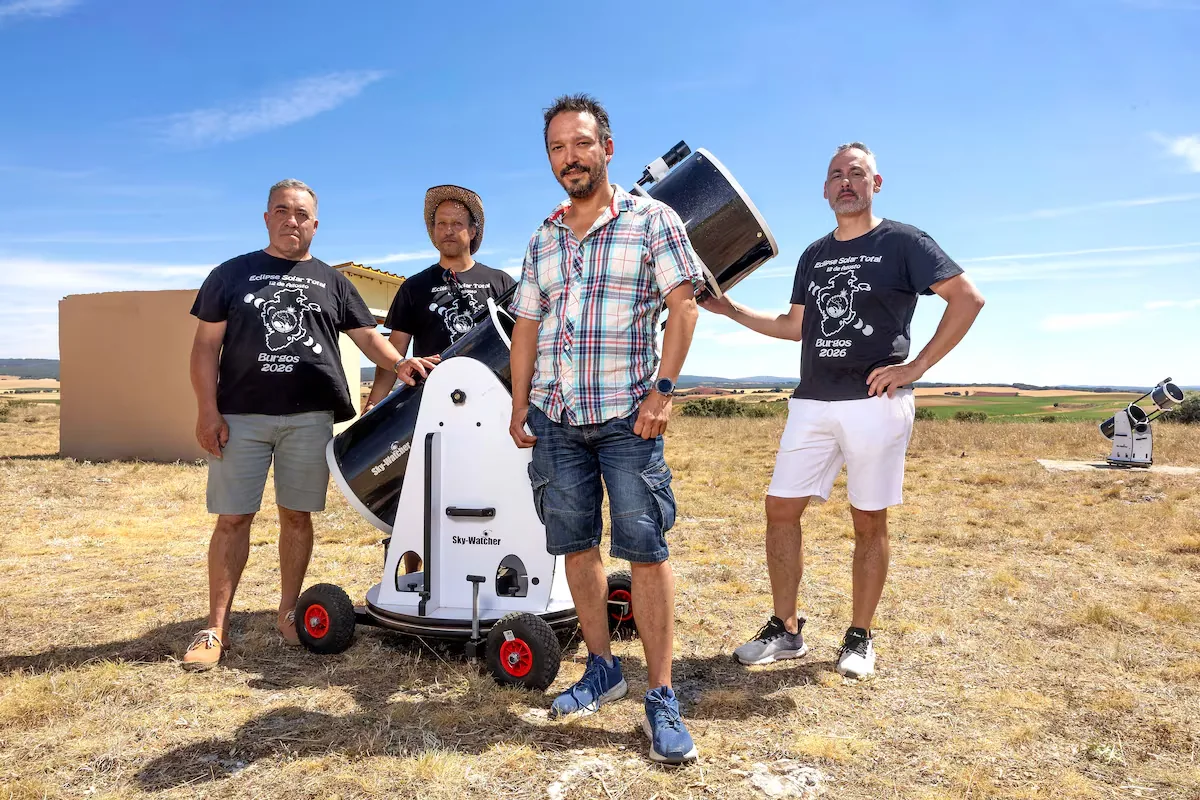
It is rare to end up in Quintanarraya if you are not looking for something specific. The village is hidden among cereal and sunflower fields, south of the province of Burgos, more than an hour by car from any city via secondary roads. It has 125 registered inhabitants, although in winter barely 80 spend the nights there. Luis Alonso (Burgos, 44 years old) arrived there for love. It is the hometown of his wife. And for three years he has also been its mayor. In a few days, this small municipality will become one of the places from which the total solar eclipse crossing Spain can be observed. For him, it will be much more than an astronomical phenomenon. It will be the moment he has been waiting for 36 years.
He was 4 years old when his father, a History teacher at a high school in Burgos, took Luis and his older brother, Javier, who was then 8, to the countryside to observe Halley’s comet. It was the winter of 1986 and that comet, which passes near Earth approximately every 76 years, could be seen in the sky. The two brothers looked up with binoculars and discovered astronomy. Four years later, in the Burgos library, they found a book that would mark their lives: Guide to the Firmament, by José Luis Comellas. Among its pages was a list of eclipses predicted for the next 200 years. One of them would occur in 2026 and would be visible from their city.
Since then, the two brothers have chased eclipses around half the world, while waiting for the one they already knew they could someday see from Burgos. They traveled to France in 1999, Turkey in 2003, the border between Russia and Mongolia in 2008, China in 2009, Chile in 2019, and the United States in 2024. This time they will not have to chase the eclipse. The eclipse will come to them.
They will receive it on the outskirts of the village, in an area fenced for 800 people and with a bar counter. “The idea is that people arrive here like at a pilgrimage,” explains the mayor. “We want it to be something calm that can be enjoyed.”
“Seeing an eclipse produces a strange feeling. Animals behave strangely. Sometimes children even start crying because the light goes out and they think it’s time to go to bed,” explains Javier Alonso (Burgos, 48 years old), who now works researching star clusters at the National Institute of Astrophysics of Italy (INAF). Seven of his colleagues will travel to Quintanarraya to watch it. A scientist from the Max Planck Institute in Germany will also attend.
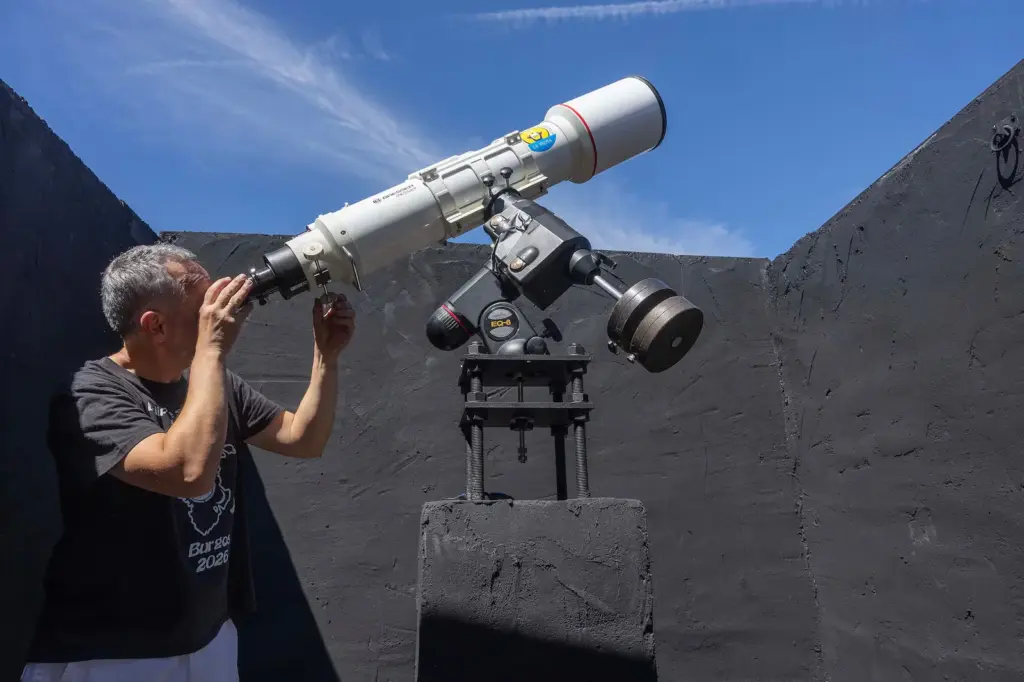
Besides governing Quintanarraya, Luis presides over the Sierra Demanda Astronomical Association, formed by eight friends who are astronomy enthusiasts. They meet at night to look for nebulae and galaxies to photograph and have built four small observatories on the outskirts of the municipality. From the outside, they look little more than agricultural sheds. But their roofs can be retracted to leave the sky uncovered and inside there are telescopes, computers, and star maps with the coordinates of the stars. One of the telescopes can even be operated with a PlayStation controller.
The association has been building these observatories with the money raised by giving talks at schools and organizing observation days. It has also managed to get the neighbors interested in looking at the sky. “Many times we come here at night and find men who have come to look at the stars,” says Luis. Leonardo Cuesta, one of the eight members of the association, sums it up like this: “We are the smallest astronomical association in Spain, but perhaps the most active.”
Read more A student kills at least six people in a shooting at a school in Thailand
But the passion for the stars in Burgos is not only concentrated in Quintanarraya. 17 kilometers from the capital, there is a hamlet surrounded by hundreds of windmills that has also made plans for the eclipse. It is called Lodoso and has 42 inhabitants. There, the neighbors remember the story their grandparents told them about when another eclipse occurred in 1905 and the hens ran madly through the streets.
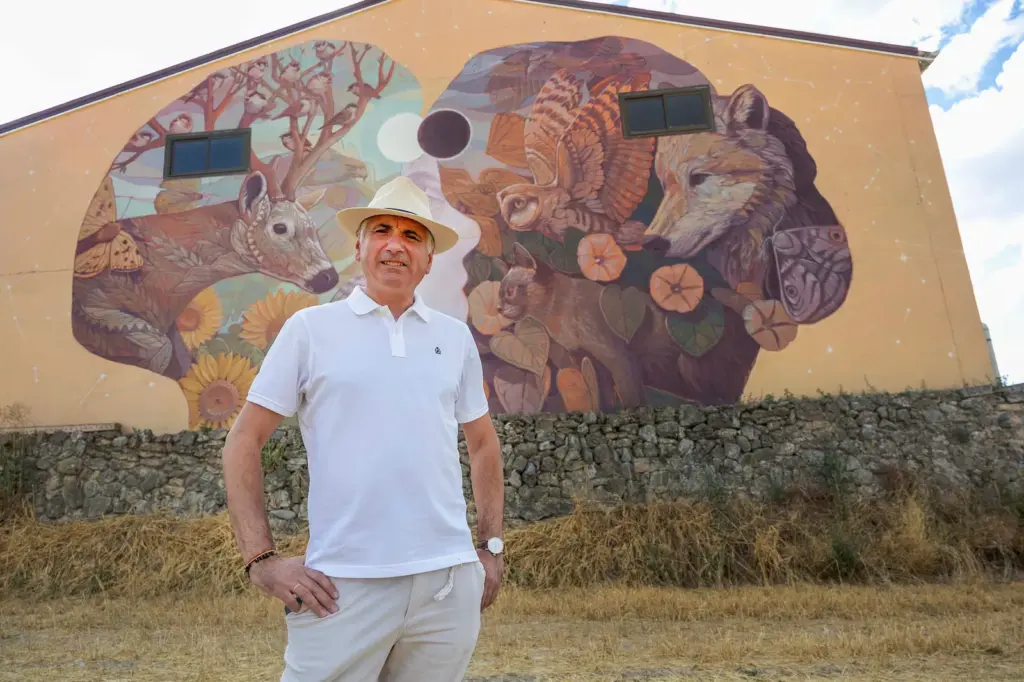
The promoter of astronomy in this other place is named Javier Alonso (from Lodoso, 68 years old). Although he has the same name and surname as the brother of the mayor of Quintanarraya, they are not related. “In this region many of us are named Alonso,” jokes Óscar Alonso (from Lodoso, 50 years old), the mayor. Such is the expectation that the phenomenon has aroused that the mayor has ordered a psychedelic mural to be painted at the entrance of the village, on a building where harvesters are stored. The painting represents the superimposed faces of two women, with the moon and the sun fused on their foreheads.
There the deployment promises to be much greater. The capacity of the party they have organized is 2,200 people, with DJ music and the performance of a medieval troubadour. At the entrance of the village bar, they have placed a sign with the origin of the tourists who have already booked a visit for that day: 83 from South Korea, 27 from Canada, 26 from France, 14 from Poland, nine from the United States, nine from Italy, four from Portugal, four from Germany, three from the United Kingdom, two from Brazil, two from Luxembourg, two from Switzerland, and two from the Netherlands.
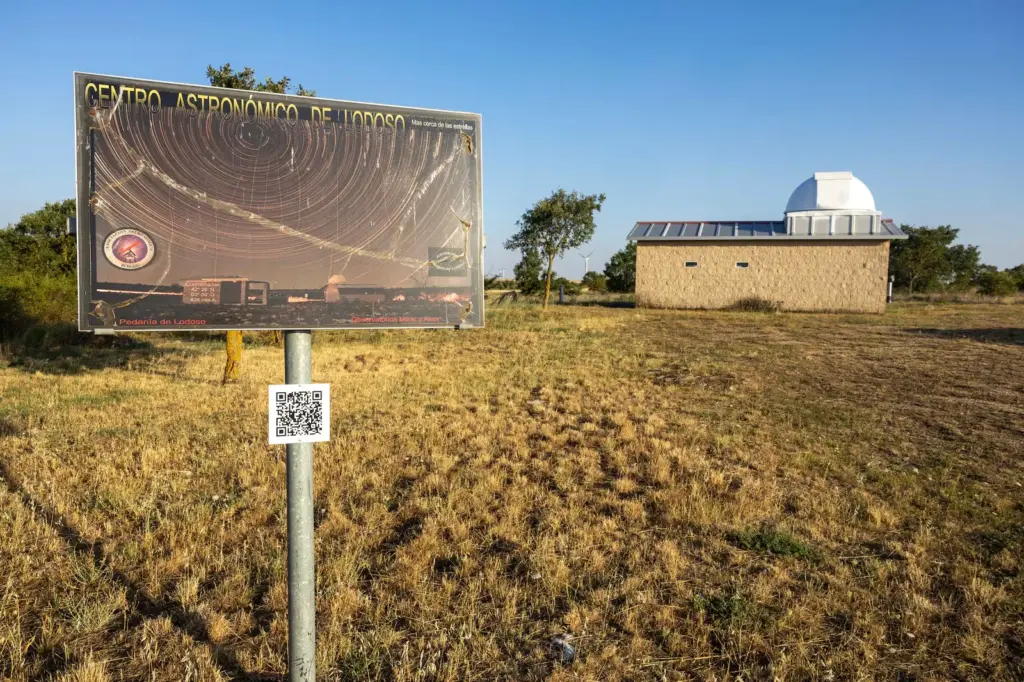
There is also an observatory in Lodoso. Unlike the four in Quintanarraya, this one has a retractable dome that moves thanks to a homemade system made with 150 golf balls that work as bearings. During the eclipse event, tickets will also be raffled to observe from there the Perseids, the meteor shower that lights up the sky every August.
The observatory was built with money from the village’s cultural association. It took three years and cost 9,000 euros. “We met one day at the bar and started talking. Whoever knew about masonry put the bricks. Whoever knew about iron took care of the dome. It was a very beautiful moment,” recalls Roberto Manjón (Lodoso, 52 years old), one of the neighbors. “I, since I don’t know anything about that, took care of the accounting,” he adds.
In a few days, the two villages will be connected by an eclipse. Both municipalities will be filled with people who will have come from far away to look at the sky. Because, as the mayor of Quintanarraya explains, a phenomenon like this is largely enjoyed because of the atmosphere and it is better to see it accompanied: “It’s like watching a football match at home or in a bar with people.”
And you, how will you experience the eclipse?
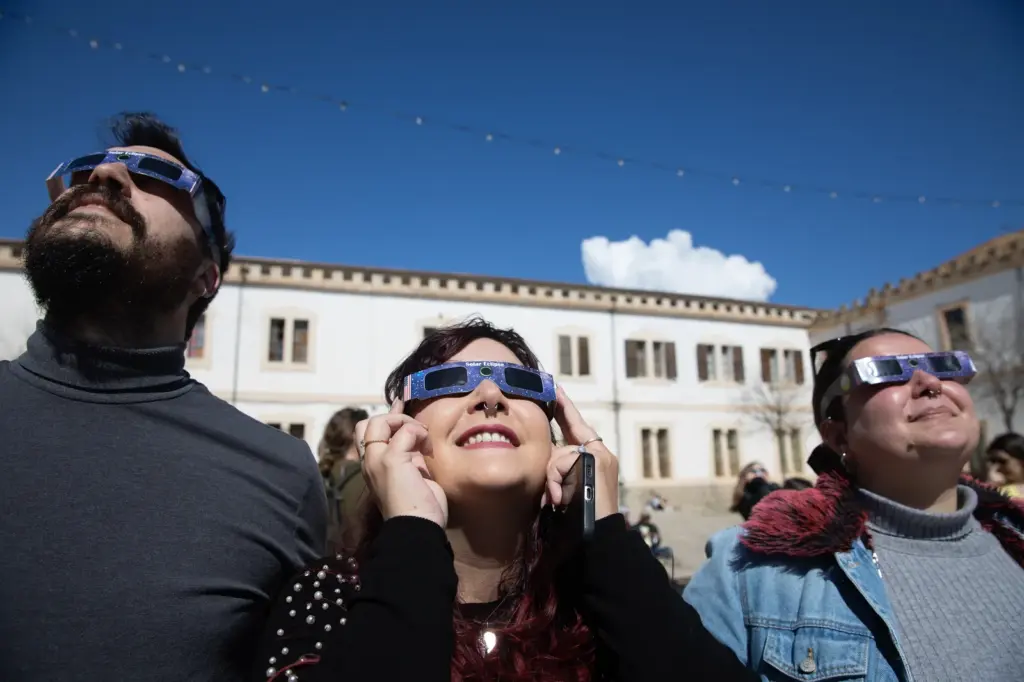
At EL PAÍS, we want to know how you, our readers, are preparing for the astronomical phenomenon on August 12. Send us at participacion@elpais.es your testimony of how you are preparing or how your town or city will receive the eclipse. You can include photos if you want. Next Monday, August 10, we will publish some of the eclipse stories from our readers.
Read more The Planifica Madrid agenda experiences a blackout since the purchase of the Chamberí penthouse