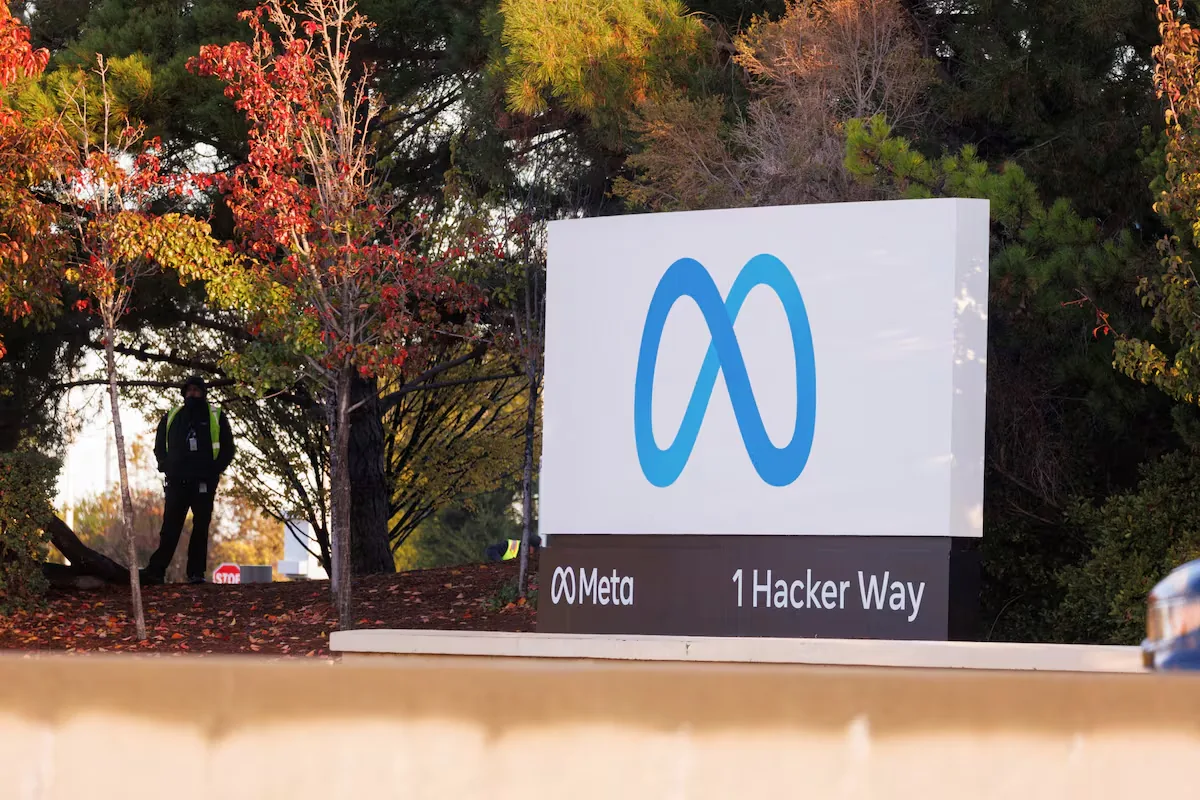
A New Mexico state court ordered Meta this Thursday to pay 567 million dollars (less than 500 million euros) to a mental health fund for teenagers and to modify the operation of its platforms for young users, holding the company responsible for harming the well-being of minors.
Read more A student kills at least six people in a shooting at a school in Thailand
Judge Bryan Biedscheid, from Santa Fe, ruled that the company had caused a “collective harm” in New Mexico, siding with the state attorney general, Raúl Torrez, a Democrat. Torrez accused the social media company of designing products to generate addiction among young people and of failing to protect minors from sexual exploitation on its platforms.
The ruling comes five months after a New Mexico jury, in an earlier phase of the case, ordered Meta to pay 375 million dollars after concluding that it had violated consumer protection laws by misrepresenting the safety of Facebook and Instagram for young users.
The case has been closely followed amid a growing wave of litigation accusing social media companies of harming minors. Although many lawsuits have been filed by children and families for alleged individual damages, states, municipalities, and school districts have also initiated legal actions to demand broad changes in the industry.
More than 40 states and over 1,300 school districts have filed public nuisance lawsuits against social media companies, seeking compensation and court orders to force changes to products and practices.
Biedscheid ordered Meta this Thursday to implement safety measures for minors, including monthly usage limits of Facebook and Instagram for teenagers, restrictions on notifications, stricter controls on contact between adults and minors, safeguards for artificial intelligence chatbots, and enhanced review of child sexual abuse reports. These measures will remain in effect for five years.
Meta announced it will appeal the decision and stated that it has been working to identify and remove harmful content from its platforms.
“We continue to trust our track record of protecting teenagers online and will keep defending ourselves against accusations that misrepresent the facts,” the company said in a statement.
Torrez said in a statement that Meta chose profits over child safety and that this ruling is the first to require a social media giant to introduce changes aimed at protecting minors.
“This is not just a ruling against a company. It is a model to follow,” Torrez declared. “Now other states and countries facing the same crisis have a roadmap they can follow.”
Reuters reported last year on internal company documents showing that Meta’s artificial intelligence chatbots could “engage in romantic or sensual conversations with a minor,” as part of a series of investigations into how the company earned advertising revenue from ads promoting scams and prohibited products.
In his ruling this Thursday, Biedscheid ordered Meta to prevent minors in New Mexico from “engaging in romantic or sexualized interactions with Meta’s artificial intelligence chatbots” and to stop adults in the state from using those chatbots to simulate or discuss sexualized interactions with minors.
Read more The Planifica Madrid agenda experiences a blackout since the purchase of the Chamberí penthouse
“Collective harm”
Biedscheid heard three weeks of testimony during the second trial related to the lawsuit, which was held without a jury. The process focused exclusively on determining whether Meta’s platforms constituted a “collective harm” under New Mexico law.
Public nuisance claims have traditionally been used against conduct that endangers public health or safety, such as blocking roads or polluting waterways. However, state governments have also invoked them in litigation related to tobacco, opioids, climate change, e-cigarettes, and more recently, artificial intelligence.
“Just as harmful pollution produced by a factory can harm the collective right to reasonably clean air, the harmful effects of Meta’s platforms on minors are not confined to those platforms but extend to the entire internet and, perhaps most worryingly, to the real world, creating a common social burden and causing harm to affected minors as well as their families, schools, hospitals, and law enforcement,” Biedscheid wrote.
Meta argued during the trial that it could not have caused a “collective harm” because it had not interfered with a “public right,” such as access to air or water. It also argued that its social media platforms are not the only ones used by the state’s youth and that the lawsuit ignored the impact of other apps.
The company also criticized the measures demanded by New Mexico, stating in its court filings that many of them were “technologically impracticable or completely impossible” and could even force it to leave the state.
Meta further claimed that New Mexico’s claims were barred by Section 230 of the Communications Decency Act, a federal law that generally protects online platforms from liability for user-generated content. Biedscheid rejected that defense, considering that the state was challenging features inherent to Meta’s platform and not trying to hold the company responsible as a publisher of third-party content.
However, the judge declined to impose some of the measures requested by New Mexico. He considered that changes to Meta’s algorithms and features like infinite scroll and autoplay could violate the company’s rights protected by the First Amendment of the U.S. Constitution, harm its competitive position, and conflict with Section 230.
The ruling comes as Meta prepares to face a trial next week in a federal court in Oakland, California, where 29 states accuse it of designing Facebook and Instagram to generate addiction among minors and of deceiving users about their safety, in a case that could expose the company to multimillion-dollar damages.
The company is also defending itself against a lawsuit filed by Tennessee in a trial that began in July.
Meta has warned investors that legal and regulatory pressure in the United States and the European Union related to the impact of social media on young people “could significantly affect our business and financial results.”