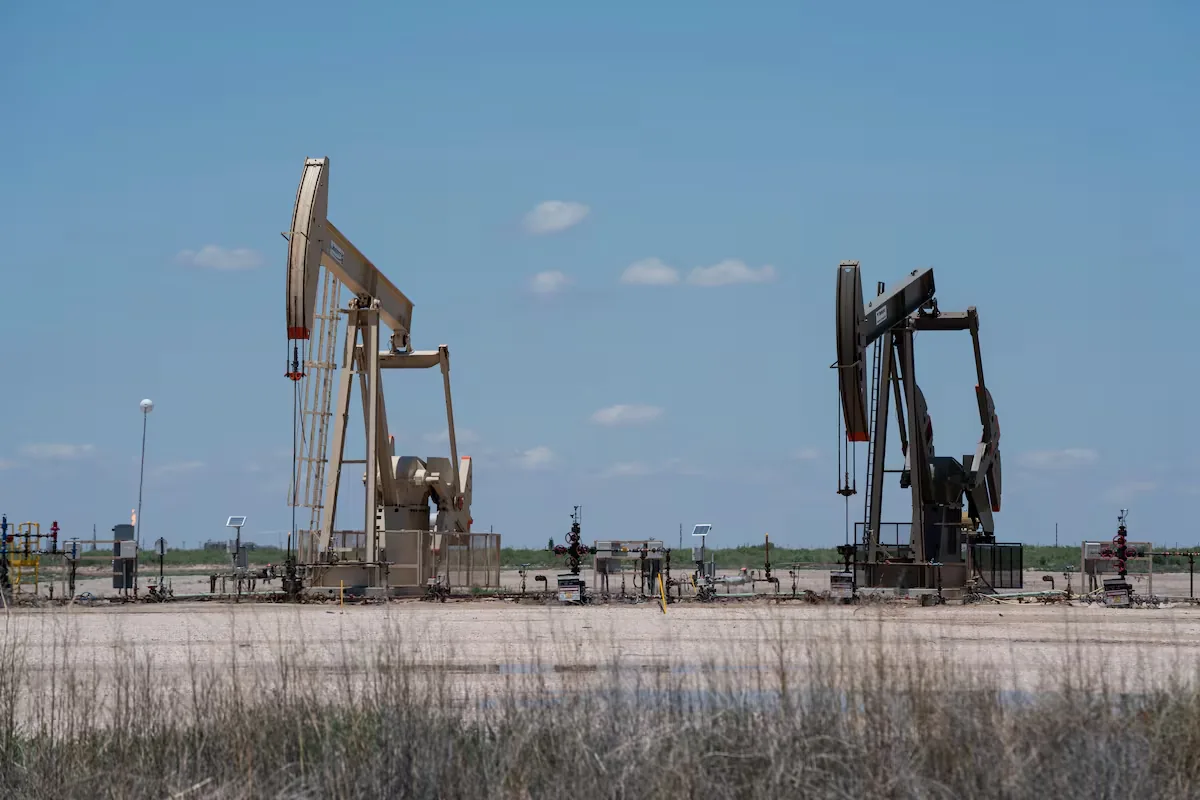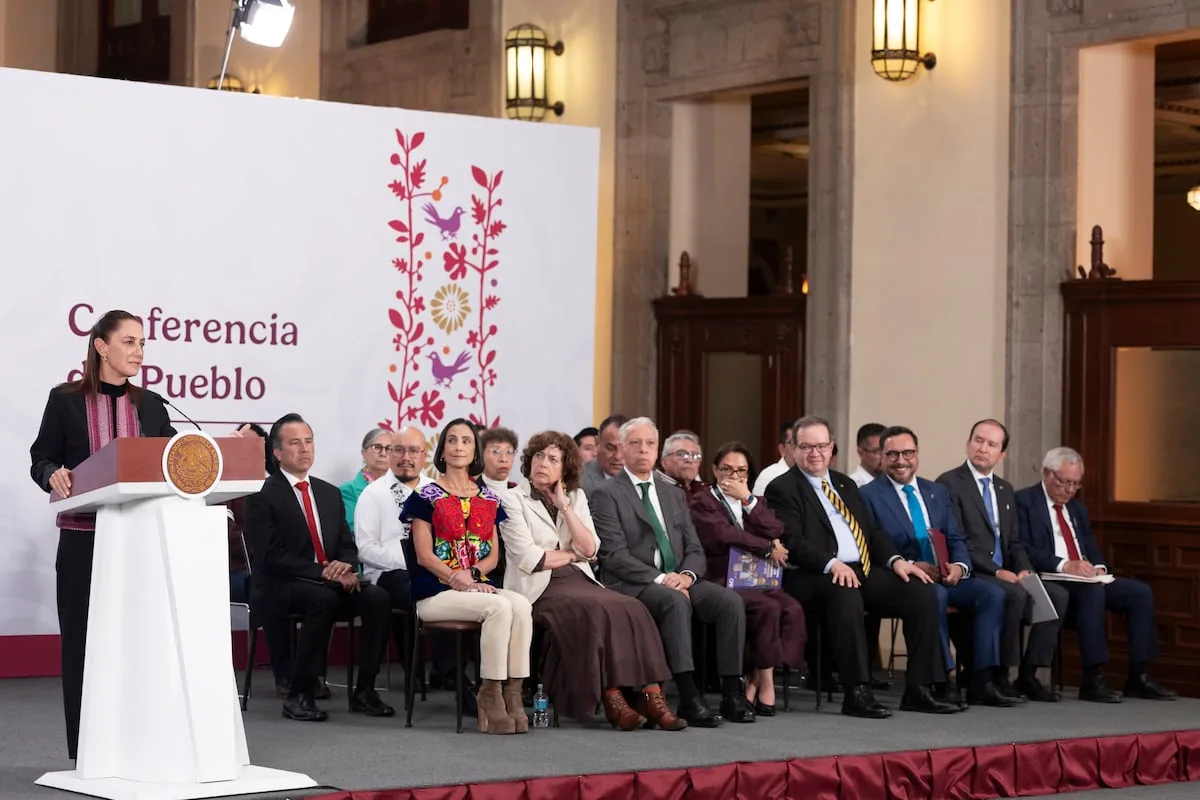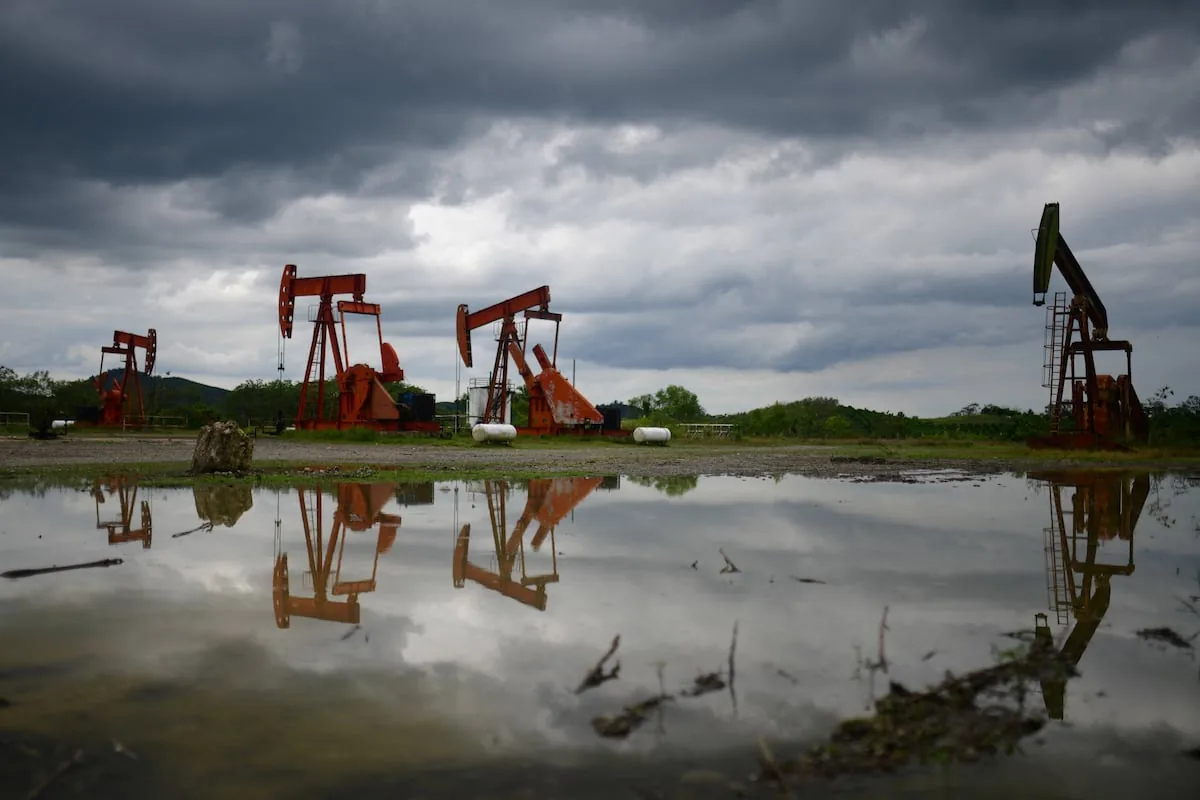
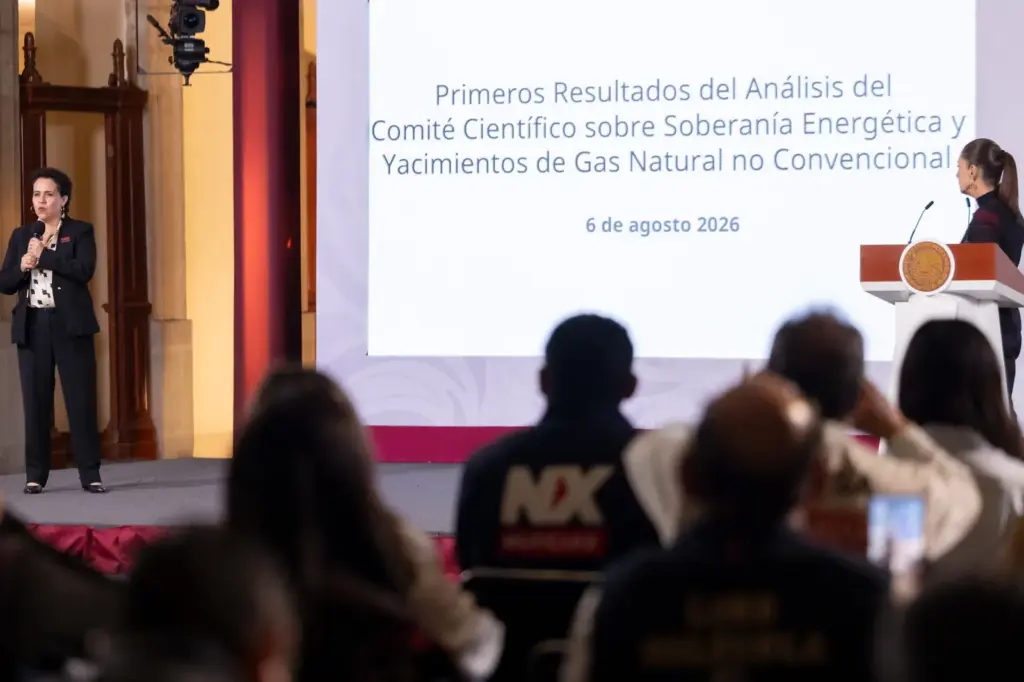
The committee of specialists that was supposed to answer the question that President Claudia Sheinbaum put on the table about whether Mexico should return to fracking has not delivered a definitive response. The report presented this Thursday at the National Palace neither rejected the exploitation of unconventional gas nor endorsed it. It turned it into a bet suspended between geological uncertainty, economic profitability, and a timeline that threatens to extend without the possibility that this Government will see the results.
Read more The deals of the week on Amazon: discounts of up to 60% on fashion, home, and technology
The first drilling undertaken by the Sheinbaum Administration will not seek gas, it will seek water. Afterwards, it must prove that gas exists in commercially exploitable volumes. Later, it must verify that extracting it is profitable. Then private capital must be convinced to invest billions of dollars. And finally, it must face public consultation and social resistance in the territories where it could potentially develop.
It is enough for one of these pieces to fail for the return of fracking, which EL PAÍS anticipated since February, to be shelved. The committee convened to explore how to make hydraulic fracturing viable ended up building a compendium of reasons explaining why that might never happen. The president announced that the first work will consist of drilling wells to determine if there is enough brackish water underground. Without that condition, the Government itself accepts that the possibility of fracking is ruled out.
That exploration will take time. Much longer than political timelines suggest. “A well is not made in two days,” says Luca Ferrari, researcher at the UNAM Geosciences Center and member of the presidential committee. His estimate is that this first phase will take at least the rest of the year and possibly extend until 2027. Only then will it be known if the first indispensable requirement to continue talking about hydraulic fracturing exists.
That timeline delays the Government’s projections, although it does not cancel them, sources close to the project say. Until a few weeks ago, the debate revolved around a political decision. Today it depends on a handful of recommendations that must be resolved, at least that is the president’s commitment, before turning to fracking. Even if brackish water appears in the Burgos and Sabina-Burros-Picachos basins, located between Nuevo León, Coahuila, and Tamaulipas, the second unknown will still remain: how much gas can be extracted and what the cost will be.
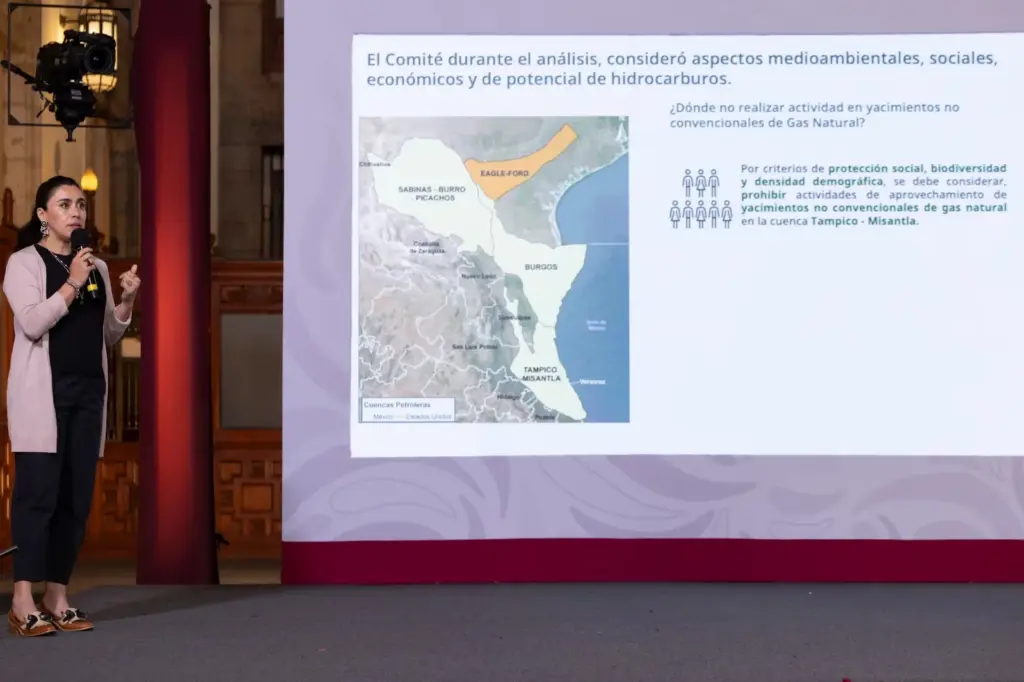
Ferrari maintains that this difference is decisive. “Prospective resources are quantities that could exist,” he explains. Drilling will reveal how much gas can actually be recovered and how much it would cost to do so. Only with that information can accurate economic scenarios be built. That is where the researcher places the main challenge of the project.
For months, the public debate focused on the environmental impact of fracking. The geologist argues that the bottleneck may end up being another: profitability. “I predict that it is not profitable,” he says, although he clarifies that this conclusion must be contrasted with the information that future explorations will provide. In his opinion, the development of unconventional gas would require investments of billions of dollars and a much broader drilling program to produce a volume that truly changes the country’s dependence on imported gas.
The question would no longer be only how much gas exists. Also how much it costs to produce it. And who would be willing to finance that bet? The Government has acknowledged that private participation will be an indispensable component if the project prospers.
EL PAÍS recently revealed that the Government began exploring mechanisms to attract investment through a trust, while Pemex faces financial limitations that make it difficult to undertake such a development alone. Ferrari considers that this discussion also cannot be separated from the technical analysis. If exploitation requires permanent subsidies or extraordinary incentives to attract capital, he says, profitability must be evaluated along with the cost the State would assume.
Read more The pharmacy secret to eliminate adult acne and restore smooth skin without irritating it
The report also altered the project’s timeline. It no longer starts with drilling platforms, it starts with hydrogeological studies. If water investigations take the rest of the year and then come geological studies, economic evaluations, financial design, and public consultations, the timeline will extend beyond the exploratory phase. Ferrari considers that, with the expected times, a significant eventual development of the project would correspond to another administration. “If you look at the forecast, you see that it would start to take off in the next six-year term,” he points out.
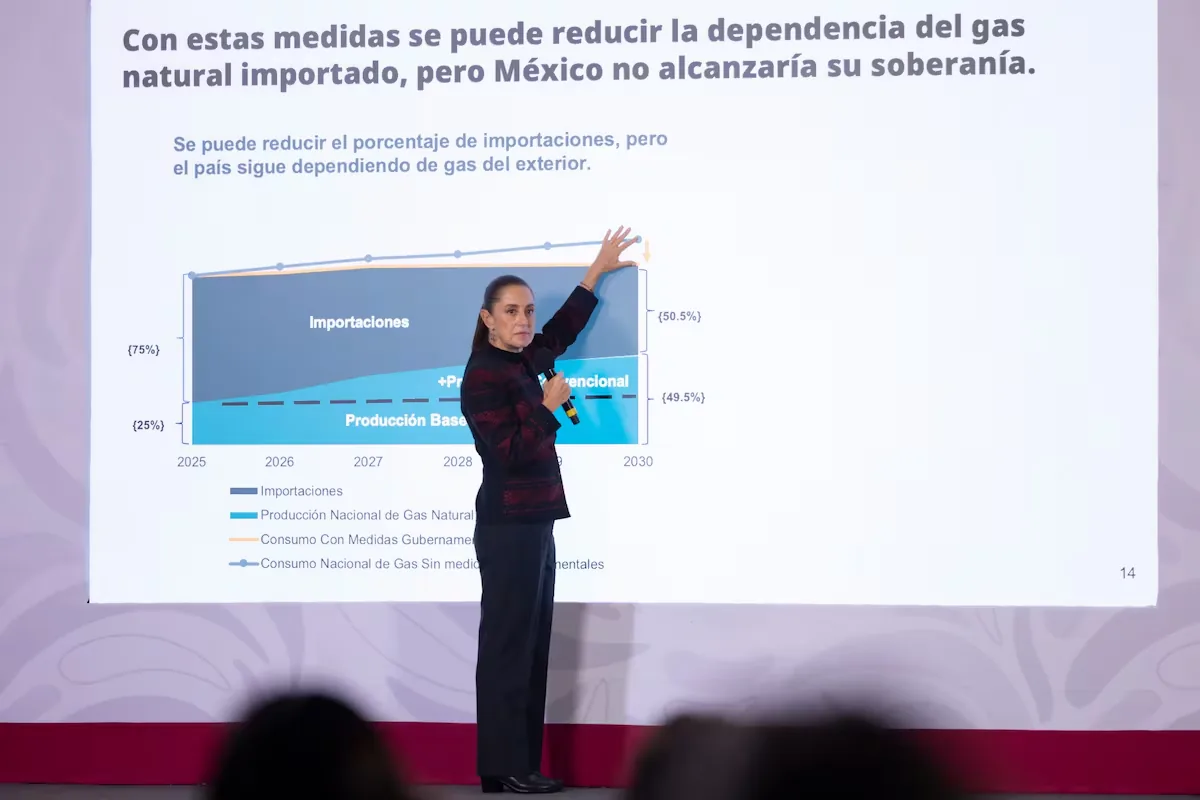
Sheinbaum has nuanced her defense of fracking, although she avoids mentioning that word at all costs and opts for the term unconventional gas. Although she maintains the argument of energy sovereignty — the need to reduce dependence on gas imported from the United States — she subordinated any decision to compliance with scientific recommendations. She said that if there is not enough brackish water “the possibility” of exploiting unconventional gas “is closed” and announced that any project must be submitted to public consultation in the communities.
The report opens the public debate
The presentation of the report has motivated reactions from environmental organizations, civil society, and academic institutions, which anticipates an incipient debate that will be uphill in the coming months. The Mexican Alliance against Fracking questioned that the group’s mandate started from analyzing how to make exploitation viable and not from discussing whether the country should definitively discard it. It also criticized that potentially affected communities, public health specialists, and human rights experts did not participate in the work.
In a statement released after the report presentation, the organizations represented by the alliance have advocated that the ban on fracking in the Tampico-Misantla basin, located between Veracruz and southern Tamaulipas, be replicated in the Burgos and Sabina-Burros-Picachos fields. They point out that the technologies mentioned to reduce water consumption and minimize environmental impacts continue to be experimental. They have recalled that the northeast of the country, where the basins are located, faces water stress conditions that should be part of any evaluation. In addition to the fact that a massive eventual development would imply high economic, environmental, and social costs.
The Ibero-American University has not lagged behind. Based on research on extractivism, it states in a publication that the discussion cannot be limited to water availability or drilling technology, but must incorporate the social, environmental, and territorial effects that this type of project has documented in different regions of the country.
In the same vein, organizations such as Civil Society Mexico raised a handful of questions in the debate, such as who will guarantee the protection of aquifers, how water consumption will be evaluated, what role communities will have in the consultation, and whether the pursuit of energy sovereignty justifies modifying a position that for years was presented as a banner of the ruling party, Morena.
Sheinbaum denied that one of her campaign promises, when she sought the presidency, was to ban fracking. The statement contrasts with the commitment she made on March 1, 2024, when she included among her 100 Government proposals the phrase: “Exploration of hydrocarbons through fracking will not be allowed,” she said. The difference now fuels criticism from the opposition and environmental organizations, who consider that the president has betrayed her voters.
None of the questions raised by the organizations were resolved this Thursday. The committee delivered a diagnosis and a methodology, not an authorization, experts say. The progress of the project, at least in discourse, was subject to a chain of scientific recommendations, economic evaluations, financial definitions, and consultation processes that will gradually delimit the Government’s room for maneuver.
Read more How to relieve plantar fasciitis pain: products that can help you