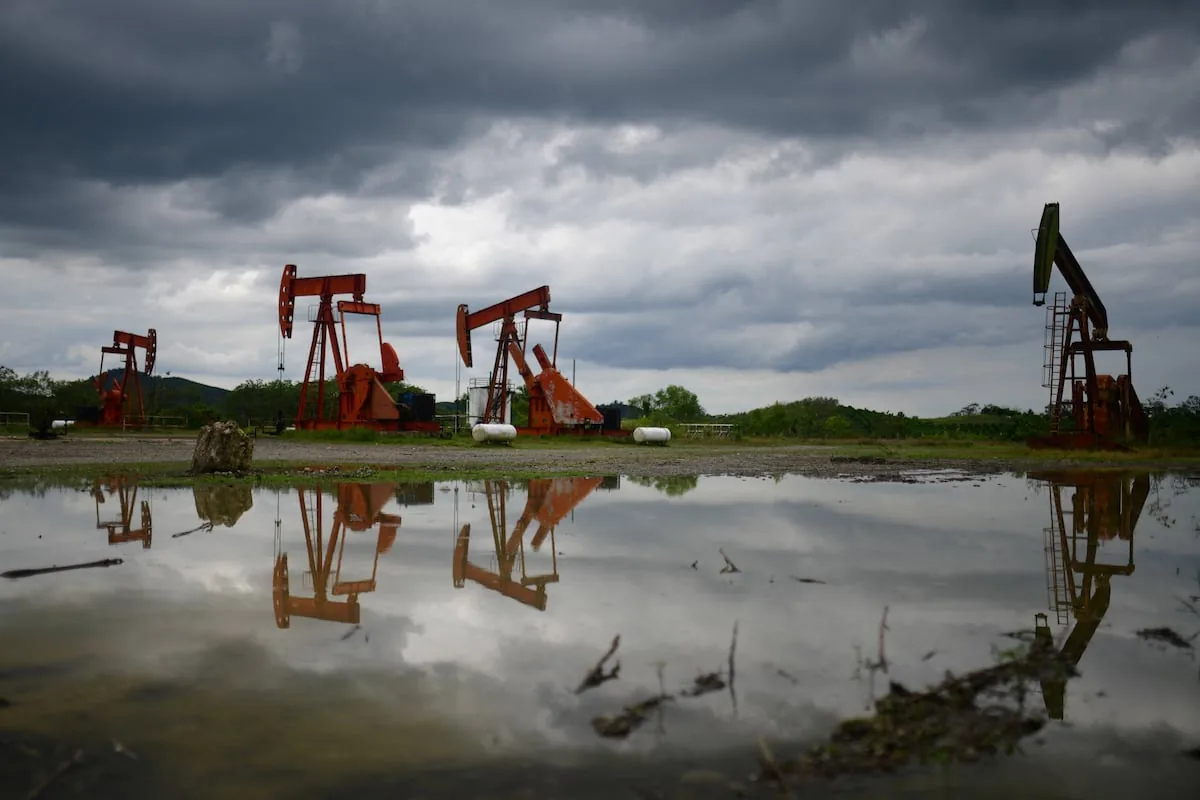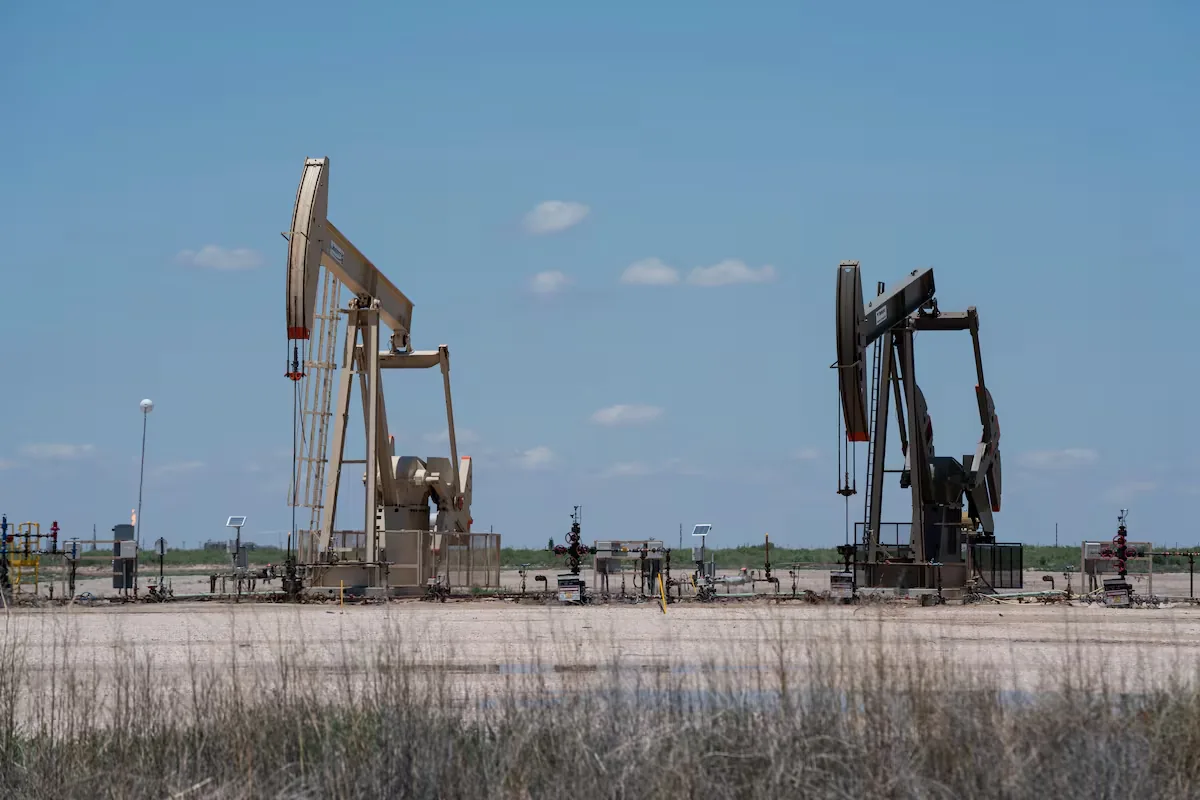
The hydrocarbon sector in Colombia is eager to start with fracking projects. The arrival of Abelardo de la Espriella to the presidency brings the promise of taking the country, for the first time, to the commercial extraction of oil and gas trapped in what the industry calls unconventional reservoirs, that is, low permeability rocks through which it is difficult for the hydrocarbon to flow. The process involves fracturing those rocks with very high pressure (with water, sand, and chemicals) to release it. This technique is hydraulic fracturing, or fracking, which in Colombia has been in a legal gray area for years, leading to it not being prohibited but also not practiced commercially.
Read more Nada de usar aviones privados
During the campaign, De la Espriella promised to do “fracking as much as possible,” with the condition of excluding the páramos and water sanctuaries, such as Santurbán. This promise already has a roadmap. According to the US consultancy Welligence Energy Analytics, Colombia has potential unconventional reservoirs in eight basins, spread between the Caribbean, the Magdalena River corridor, the northeastern border with Venezuela, and the Amazon. The one that concentrates almost all the conversation is the Middle Magdalena Valley, the country’s most traditional oil basin — there is the La Cira-Infantas field, in uninterrupted production since 1918 — and where the largest refinery, Barrancabermeja, is located. There could be up to 13 trillion cubic feet of gas and up to 7 billion barrels of oil in the most optimistic scenario. Next in size is Sinú-San Jacinto, with up to 66 trillion cubic feet of gas. Today Colombia consumes about 369,000 barrels of oil per day, and the campaign’s energy plan aims to almost double national production (from 736,000 to 1.3 million barrels per day).
The conversation is tense because it crosses a tangle of complexities: energy policy, social pulse, economic contribution, and environmental concerns. Andrés Gómez, petroleum engineer and Latin America coordinator for the Initiative for a Fossil Fuel Treaty, argues that this technique is extremely intensive in water use, and its economic returns are questionable. He also debates the urgency behind the promise: “Colombia has barely 0.1% of the world’s proven oil reserves and less than 0.05% of gas reserves, and between 2014 and 2024 the country invested more than 10 billion dollars in exploration without managing to replace even 10% of what it produced in the same period,” he says in an interview with EL PAÍS.
Despite that skepticism, the industry insists on the Middle Magdalena Valley, where there are real subsurface data thanks to contracts that the National Hydrocarbons Agency (ANH) signed with operators between 2015 and 2017, highlights geophysicist Jaime Checa. The professor at the University of the Andes, Sergio Cabrales, adds that infrastructure also plays in favor, with the rail corridor between Santa Marta and La Dorada, the river port of Barrancabermeja, the gas pipeline to Ballena, and the oil pipelines that reach Coveñas, which would facilitate logistics. A document signed by six sector associations cites ANH data showing that proven oil reserves last for 7.2 years and gas reserves for 5.9. Developing projects in that basin, estimates the Colombian Association of Petroleum Engineers, would add about 70 years of gas self-sufficiency and 16 more in oil. The decision is in the hands of the Government.
That definition will affect Ecopetrol, the country’s largest company and a fundamental source of resources for a State facing a high fiscal deficit. The majority public oil company chains three years of declining profits, amid Gustavo Petro’s decision to use it as a tool for energy transition, for which he stopped signing new hydrocarbon exploration contracts. Added to this is a corporate government affected by criminal complaints against its president, Ricardo Roa.
Read more Templanza contra los destemplados
Local and international investors closely watch the new direction of the oil company, especially now that the bet on fracking could be in the hands of someone who has never worked in the sector. De la Espriella confirmed before the industry’s main union, the Unión Sindical Obrera (USO), that the bet on unconventional reservoirs will be a “fundamental pillar” of the management of his former campaign manager and now candidate to preside over the company, Joaquín Gutiérrez. Gutiérrez is a business administrator, with a career made in the health and construction sectors.
The appointment will be decided at a shareholders’ meeting, which has not yet been convened but is planned for the end of September. “The renewal in the Board and the management team has already begun. The Government, which holds 88.5% of the shares, will propose the renewal of six of the nine members of the body,” says energy sector expert Mauricio Téllez in conversation with EL PAÍS. The arrival of engineer Jorge Mario Velásquez, former president of Grupo Argos, as a Board member has already been announced, something celebrated by those who want to boost the company’s hydrocarbon business.
Thus, everything points to a new mood disposition of the oil company. “The nomination of the president has its weight, but the decision must be made by the new board of directors,” highlights Téllez. Markets note every move, as the parallel with the previous government is hard to avoid (Roa came to Ecopetrol due to his closeness to Petro, without an oil background and after managing his campaign). If Gutiérrez presides over the oil company, he will have in his hands the country’s most advanced fracking pilot, Kalé, in Puerto Wilches. With three wells on 20 hectares, it has had an environmental license since 2022 but is suspended because the Constitutional Court demanded completing the prior consultation with the AfroWilches community. That process is still ongoing, and its outcome may be what allows De la Espriella to fulfill his promise to fracture “as much as possible.”