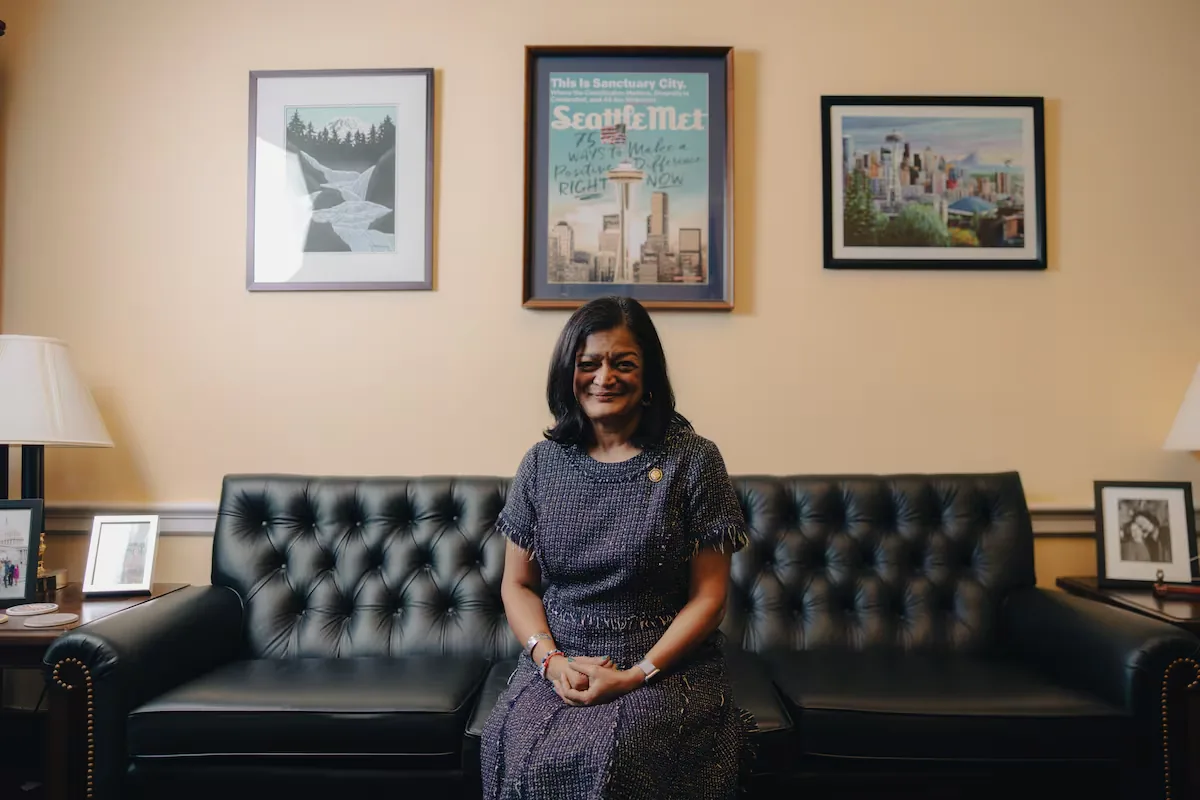
Representative Pramila Jayapal (Chennai, India, 60 years old) arrived in the United States at 16 to study and, after a career as a civil rights activist, became in 2017 the first woman of Indian descent to enter Congress. Today she is one of the most influential progressive wing Democrats in the Capitol.
Read more The Generation Z rebellion shakes the southern world
Diana favorite and one of the biggest critics in Washington of President Donald Trump, she will lead the immigration subcommittee in Congress if her party regains, as polls predict, the House of Representatives in the November elections. From that position of power, she promises to investigate responsibility for the deaths caused by Trump’s immigration police and lay the foundations for a lasting reform of a system even more broken by the xenophobic policies of the current Administration.
Starting August 21, Jayapal will lead a Democratic delegation on a trip to Montevideo to participate in the third Pan-American Congress, a meeting of progressive politicians from a continent shaken by Trump’s renewed imperialism. Previous editions were held in Bogotá, with Gustavo Petro as host, and Mexico (Claudia Sheinbaum).
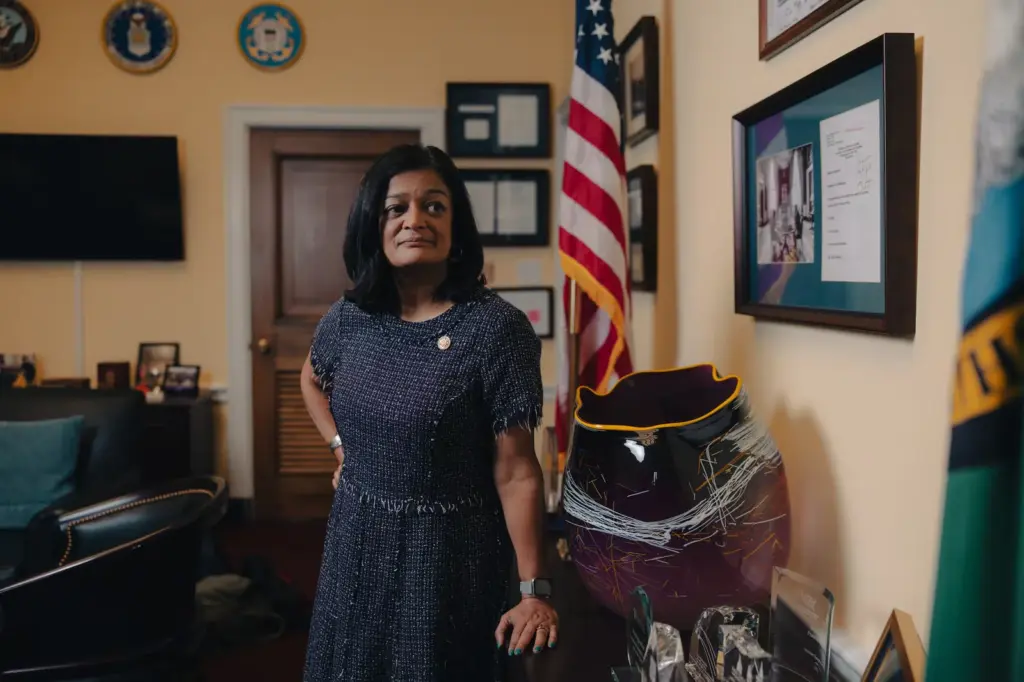
This interview was held at the end of July on the occasion of that visit. The congresswoman received EL PAIS in her Capitol office, among photos with the Dalai Lama and Joe Biden, panoramas of Seattle, the city in the State of Washington she represents in Congress, and slogans calling for taxing billionaires or universal healthcare.
Question. What do you expect from your visit to Uruguay?
Answer. It is an opportunity to hear from our Latin American counterparts what is happening on the ground. How U.S. foreign policy affects them and how we can work together to build a progressive movement and combat far-right disinformation. The United States is causing a lot of damage with the so-called Donroe Doctrine [Trump’s update of the idea of America as Washington’s backyard].
Q. Do you see anything positive in the current Administration’s foreign policy?
A. Trump believes in a unitary executive power both in the United States and in other countries, which he aspires to control. He supports leaders above the will of their peoples. I believe our foreign policy should be based on partnership, exchange, on mutual respect grounded in diplomacy.
Q. The President of the United States is concerned about foreign electoral interference in the U.S., but he openly interferes in elections throughout the Americas, from Colombia to Honduras. Without that influence… would Latin America be shifting to the right?
A. Those countries face the same pressures from the right as the rest; that is why the Pan-American Congress is so important. They are the same actors, the same strategies everywhere.
Q. Will Trump succeed in undermining voters’ trust in the U.S. electoral system?
A. I don’t think so, but it won’t be an easy task. We have to prepare to prevent all the ways this Administration might try to steal the November elections or guarantee Trump a third term, even if unconstitutional. Benjamin Franklin was asked if [the U.S.] was a monarchy or a republic, and he replied that it was a republic as long as we keep it. We are at that stage of keeping it.
Q. Are you optimistic about that task?
A. Optimistic would be overstating it. But I feel hopeful. It is perfectly possible that challenges we cannot imagine await us. I was at the Capitol on January 6 [2021, during the Trump mob assault] and we did not see it coming.
Q. You traveled to Cuba in April this year and met with its president, Miguel Díaz-Canel. You also visited the island in 2024. What changes did you observe?
A. What impacted me most was the humanitarian crisis on the ground. It was already bad in 2024, but [in April] it was terrible. Blackouts had already started when I was there two years ago, but they were not as widespread. Medicines, basic necessities, and food are lacking. The streets were almost empty. And that was just after a Russian tanker docked with a full tank of fuel. We weren’t even in the worst phase, which is now…
Q. Did you speak with opposition leaders?
A. Both times. The first time I insisted we meet with families of some political prisoners. This time we met with dissidents who had openly protested against the Government. There are many opinions on how Cuba reached its current situation. Some blame the response to the protests [of 2021], and others accuse the Government of enriching itself at the people’s expense. At the same time, I think everyone understands that the role of the United States in the embargo has been incredibly counterproductive. Inflicting collective punishment on the Cuban people to force change has not worked and will not work. That seemed to be the common denominator.
Q. And among those opinions… what is yours?
A. The U.S. Government has mishandled the crisis since the start of the embargo. We should have implemented deep diplomacy so that Cuba could connect with the rest of the world and changes would come naturally. We cannot dictate the Cuban people’s destiny. We should engage in real negotiations, something that has not happened since the Obama Administration. Biden also did not take advantage of that momentum.
Q. A recent Cuba document from the State Department says that Castroism has infiltrated the Democratic Party…
A. First, they attacked us, the progressives, and tried to turn that into a curse word. Then they called us socialists. And now we are communists. It is all part of a strategy, not only in the United States but in Latin America and the world.
Read more In search of the good life in cities: “The city is not planned with citizen well-being in mind”
Q. A group of House Democrats recently published a statement proclaiming that the party is capitalist, not communist. Is it worth having that discussion?
A. No. We are a capitalist country. You may like it or not. But falling into our opponents’ debate is not helpful. We should talk about policies. Do we deserve universal healthcare? All rich countries in the world have it. Universal daycare, education for all… The United States used to be a leader in these things; unfortunately, we have fallen far behind.
Q. Do the Democratic Socialists of America (DSA) led by New York Mayor Zohran Mamdani threaten the Democratic Party’s “big tent”?
A. No. It cannot be that everyone fits in that big tent except the DSA. We must learn to work together even if we do not share all views. Recognize the progressive base, particularly young people, working people, Black and Latino communities… We cannot focus only on a small group of mainly white voters from certain states.
Q. Do you think Gaza will become a key issue in the upcoming elections?
A. Yes, because it is not just about Gaza, but about Congressional funding and support for the Israeli government without forcing it to comply with our laws or international humanitarian law. That explains the horror we feel witnessing the genocide. And how everything happens thanks to U.S. inaction, under both Democratic and Republican administrations.
Q. Is Israel breaking the Democratic Party?
A. I think it is forcing a discussion we never had. When I arrived at the Capitol, it was not even possible to raise it, and to talk, for example, about how much money entities like [the Zionist lobbying group] AIPAC have injected to silence criticism. There is too much money in our elections.
Q. How to prevent that excessive influence?
A. I have introduced an amendment called “We the People,” which would overturn Citizens United, the Supreme Court ruling that allowed corporations to be considered as individuals with free speech rights to engage in politics…
Q. That idea of money as free speech could only happen in this country…
A. It is absolute madness. We should also pass the John Lewis Voting Rights Act, which allows public financing of elections. When I ran for Congress, I was one of only four members who refused to accept corporate money. Now we are maybe 60. That money influences how we address some of the most serious problems Americans face.
Q. If Democrats regain the House of Representatives… what should be the first thing?
A. It is an open debate. First, we should immediately reverse some of the worst things this Administration has done, try to ensure people have access to healthcare and food programs, as well as incentivize affordability. Second: accountability. We have to address responsibility for deaths at the hands of [Trump’s immigration police] ICE and Border Patrol, and for corruption by companies and the Trump Administration and members of Congress. The third priority is to lay the groundwork for when we also control the Senate and reclaim the White House. There we must undertake transformative change, allowing us to eliminate the filibuster to pass electoral reform, remove money from politics, and reform the Supreme Court. That preliminary work must be done in the next two years.
Q. Should Trump be impeached?
A. It is always a possibility. We have already done it twice, and both stalled in the Senate. First, we would have to ensure we have enough votes.
Q. You aspire to be the new chair of the immigration subcommittee. And you have focused a lot on the Trump Administration’s treatment of children… That was a central issue in his first presidency, which is not talked about as much in the second.
A. That drama continues. And I would say this time it is much worse. I am not surprised, because I read the Project 2025 document, and Stephen Miller [National Security advisor] explained very clearly there that he would not focus only on “the worst of the worst,” but would do everything in his power to end legal immigration as we know it. And that is what we are seeing. For example, he has ended refugee resettlement, except for white South Africans; asylum; processing of green card applications; TPS [temporary protected status]… He has turned immigration into a weapon, instrumentalizing migrants by portraying them as criminals. It suits them to have an enemy and pit people against each other to distract from real problems.
Q. Should Americans be concerned about soldiers’ testosterone?
A. No. It is just another attempt by Pete Hegseth, the Secretary of Eternal War, to address his insecurity about his testosterone levels. It is a dangerous proposal medically speaking, but also another attempt to introduce a worrying culture into the military.
Read more Open on Sunday, the taboo of businesses in Germany that the Government wants to break