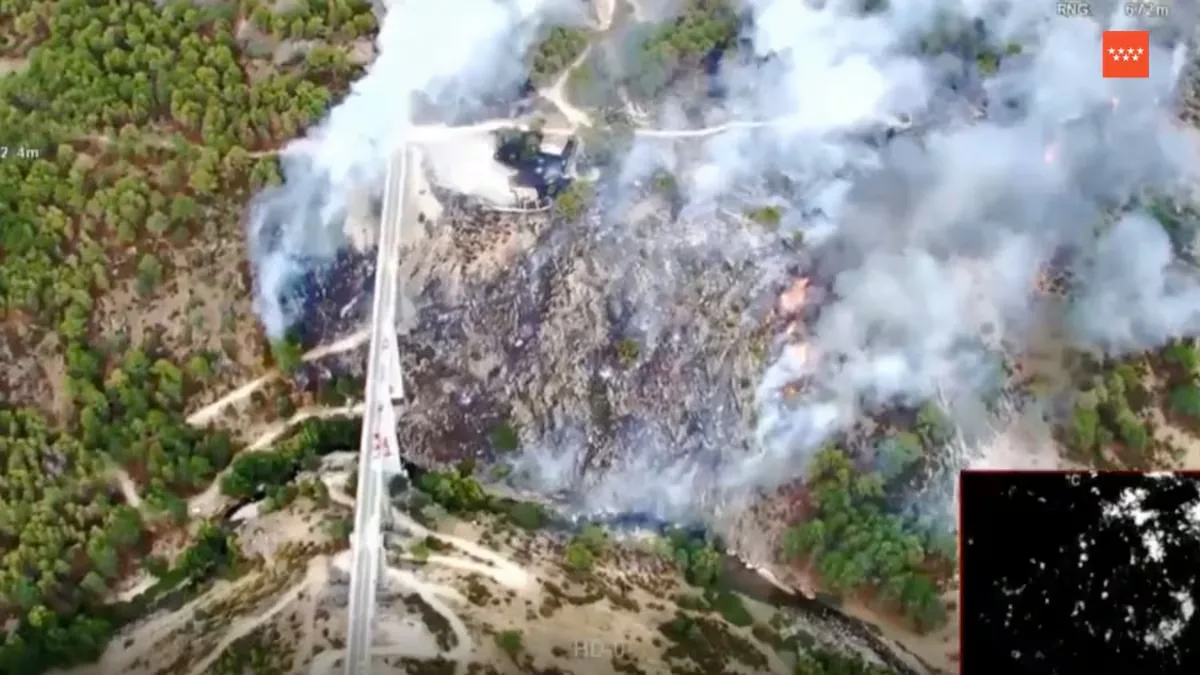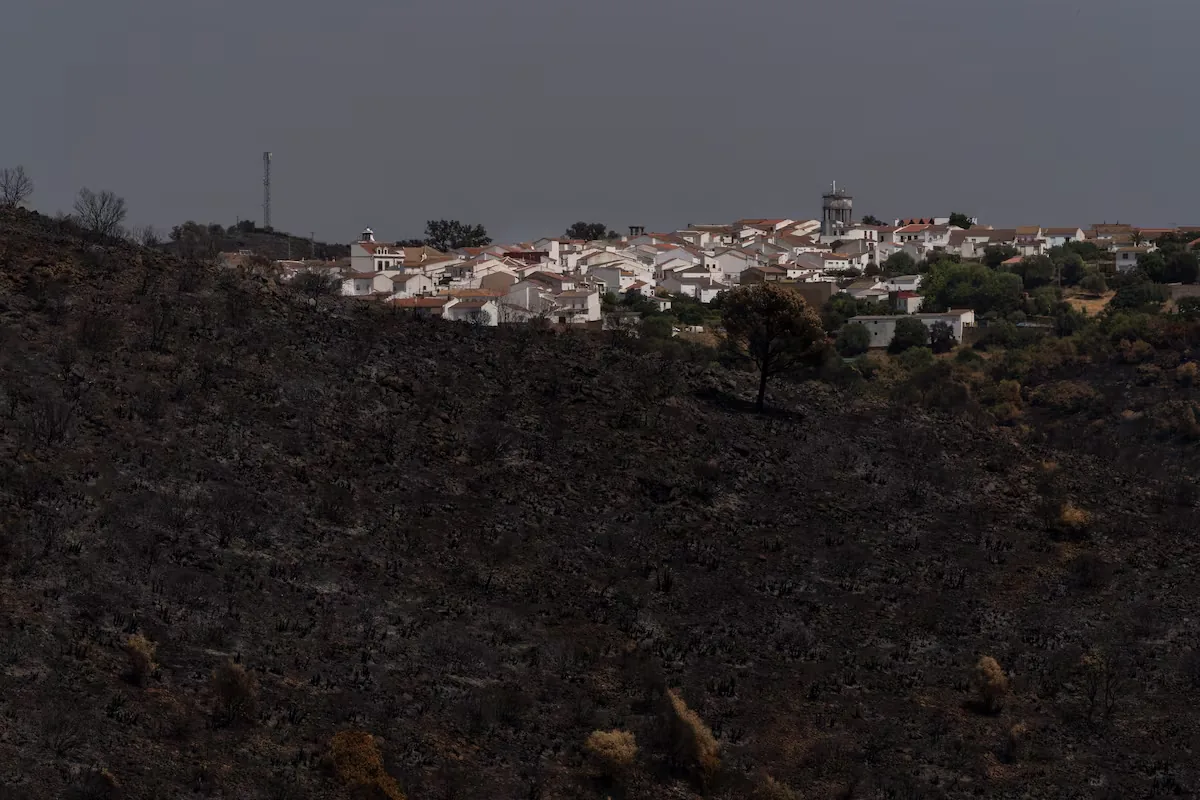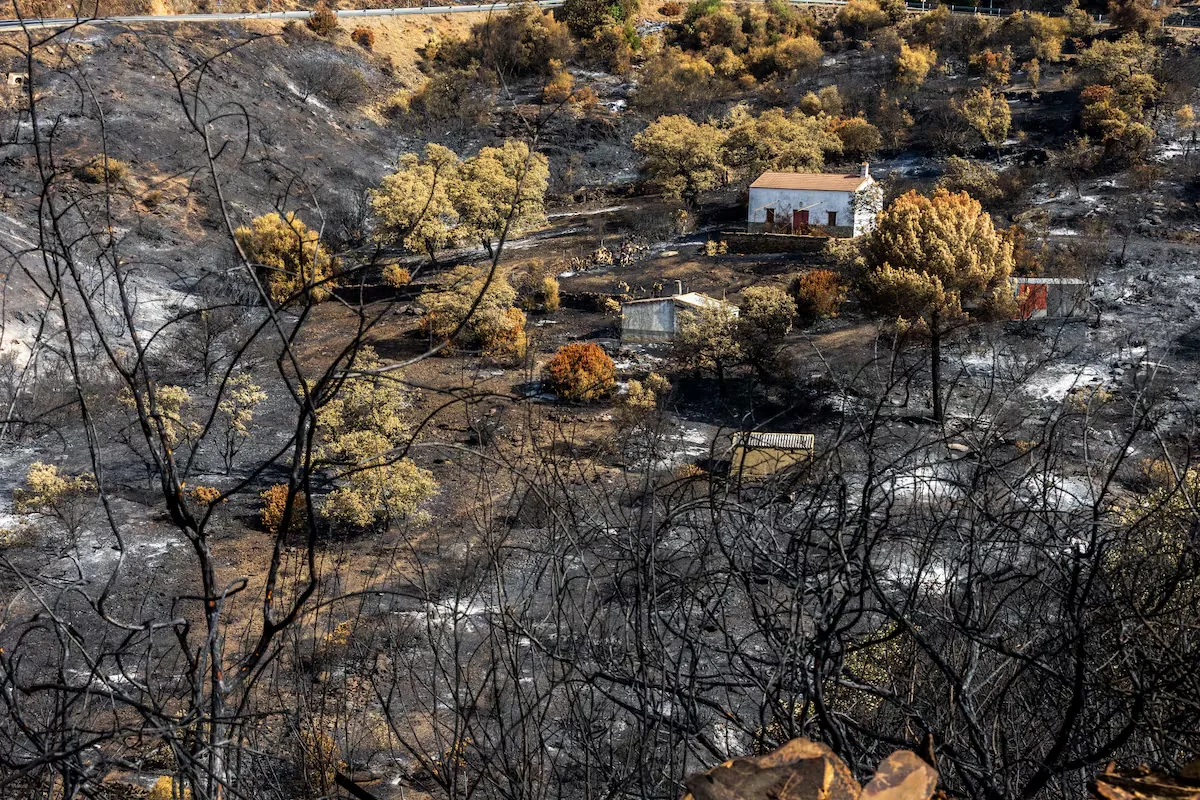
The Niebla (Huelva) forest fire has caused the evacuation of 467 people and has already covered 8,000 hectares, although not all of that area has burned, since it was declared last Thursday, according to the Andalusian Government (PP and Vox). The Civil Guard organizes occasional and supervised entries so that residents can make incursions and feed their animals, sometimes fenced in by the flames. No new evacuations were necessary during the night. Among the evacuated people, the majority, 283, are residents of Berrocal, a town that became the ground zero of one of the largest fires in Spain’s history, with 34,000 hectares devastated in 2004, 22 years ago.
Read more Bodies of the former UAGA secretary and his wife found with signs of violence in Tauste (Zaragoza)
“The night has been a little more favorable than previous days, although it remains complicated,” described the Government delegate in Andalusia, Francisco Toscano. There are currently no population centers at risk. Alongside Toscano, the third vice president of the Government, Sara Aagesen, has joined the advanced command post. In the 8,000 hectares of land affected by the flames, there are many islands that have not burned within the area, so the final calculation will have to wait for the surface determined by the satellites of the Copernicus program. The Andalusian Minister of Presidency, Health, and Emergencies, Antonio Sanz, added: “Tonight has not been easy and not all planned tasks could be carried out due to danger, especially in the northwest area, which has caused technical fire actions to cease.”
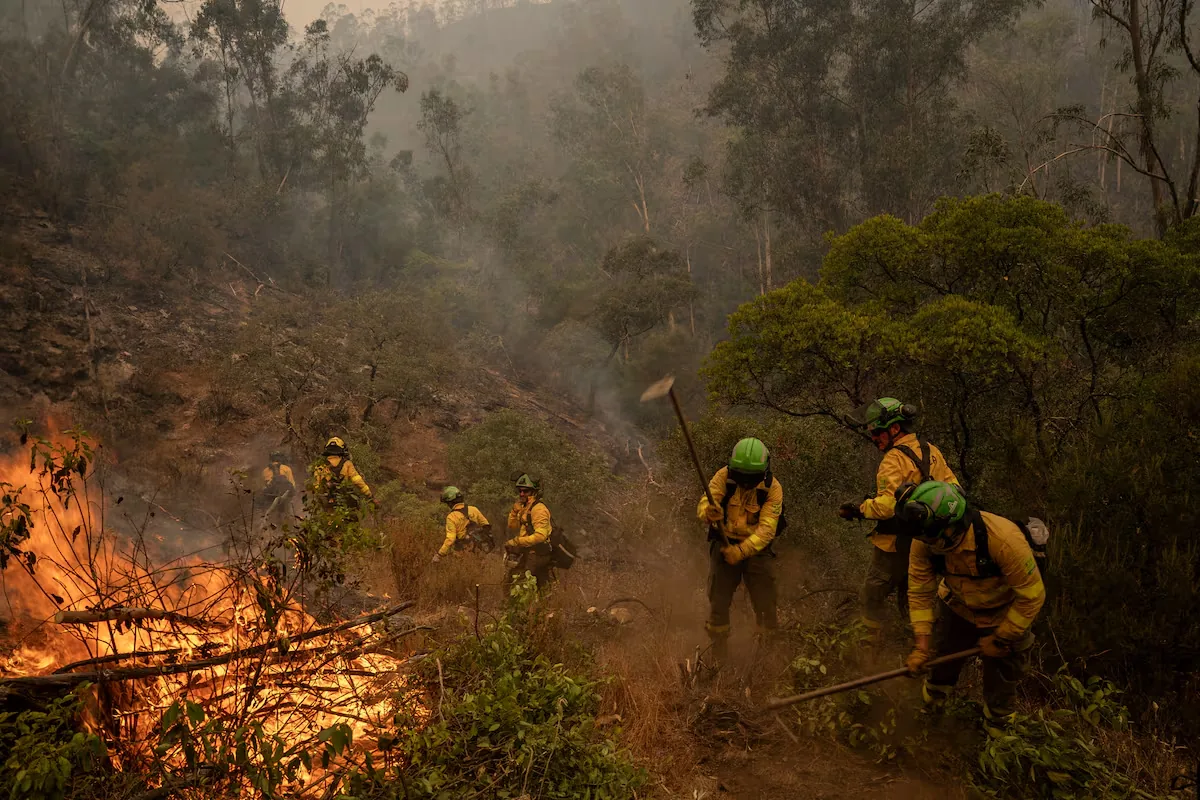
Toscano specified that “the night has been a little more favorable from a meteorological point of view,” regarding the flames affecting the surroundings of the municipality of Huelva with almost 5,000 residents. “This has allowed, on the one hand, to secure some of the work done yesterday, especially on the left and right flanks, the greenhouse, and the recycling plant area in Villarrasa. And, at the same time, to start some defense line work concerning the head of the fire,” Toscano detailed.
Aerial resources are also starting to work this morning, focusing their efforts on “attacking” that head area to allow, as much as possible, the Military Emergency Unit (UME) and also the Infoca Plan to continue making the defense line.
Toscano warned, however, that “the forecast is that the wind will shift again, which has been a constant since Thursday,” adding that humidity will be very low during the central hours of the day, which does not favor extinguishing efforts. “The forecast is mainly that the wind will come from the west; it may also turn southwest at some point, but it is a wind that can shift. We are talking about wind speeds of approximately 30 to 35 kilometers per hour during the central hours of the day. That is the forecast, but we will see in the end,” he said.
The goal is “to continue with that defense line and also to keep an eye on the east flank, which is already close to the Tinto River, to also see a bit how it behaves in that area, although initially the most important thing is that there are no population centers and it would be more forested areas that would remain burning.”
Toscano explained that experience with the wind has taught teams to adapt their strategy and, moreover, there are two elements that make the work more difficult: it is a high combustion area due to the characteristics of the vegetation and there are rocky areas with difficult access in some points. “The priority is to save human lives, that is first. Therefore, following the emergency management’s plan from yesterday afternoon, 340 residents were evacuated,” explained the central government representative. Regarding this Sunday’s day, Sanz summarized: “We remain in operational situation 2, a long day awaits us, but with more optimism than other days.”