








If you want to receive the newsletter Ola Mundial to your email you can click here.
Read more Video analysis | Sheinbaum and her European carom
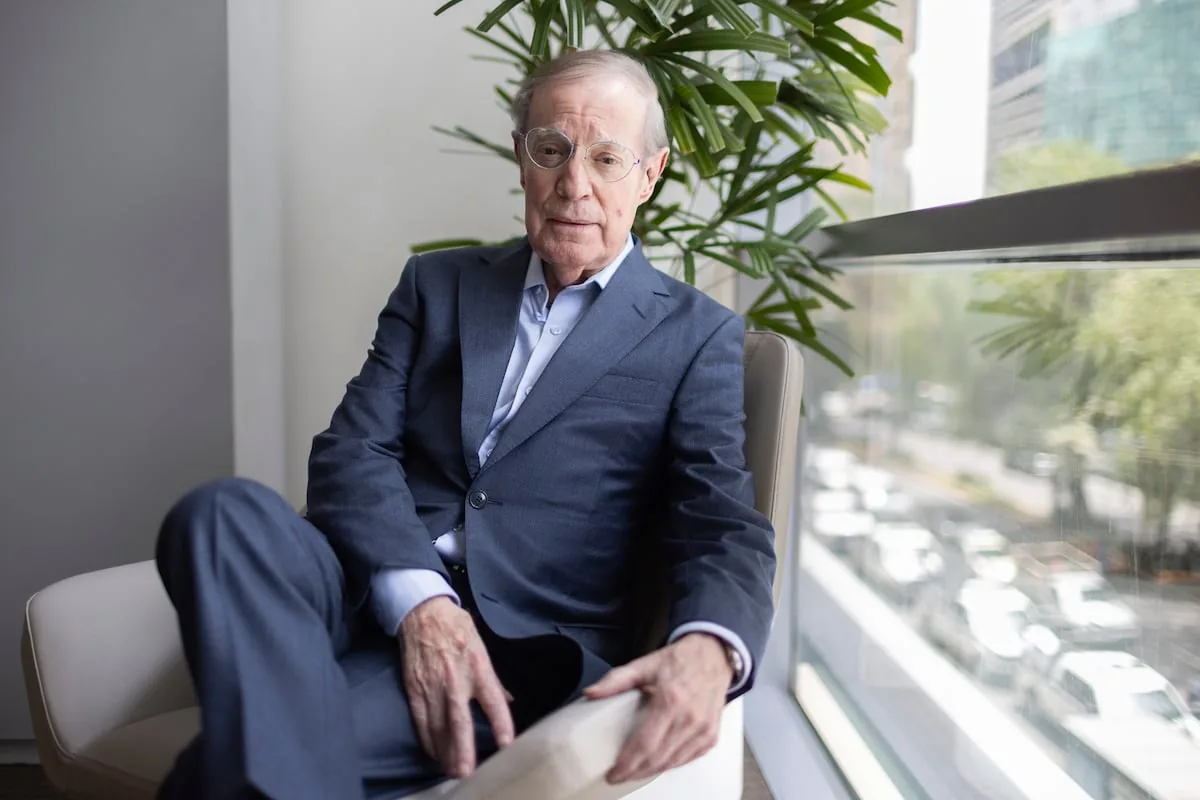
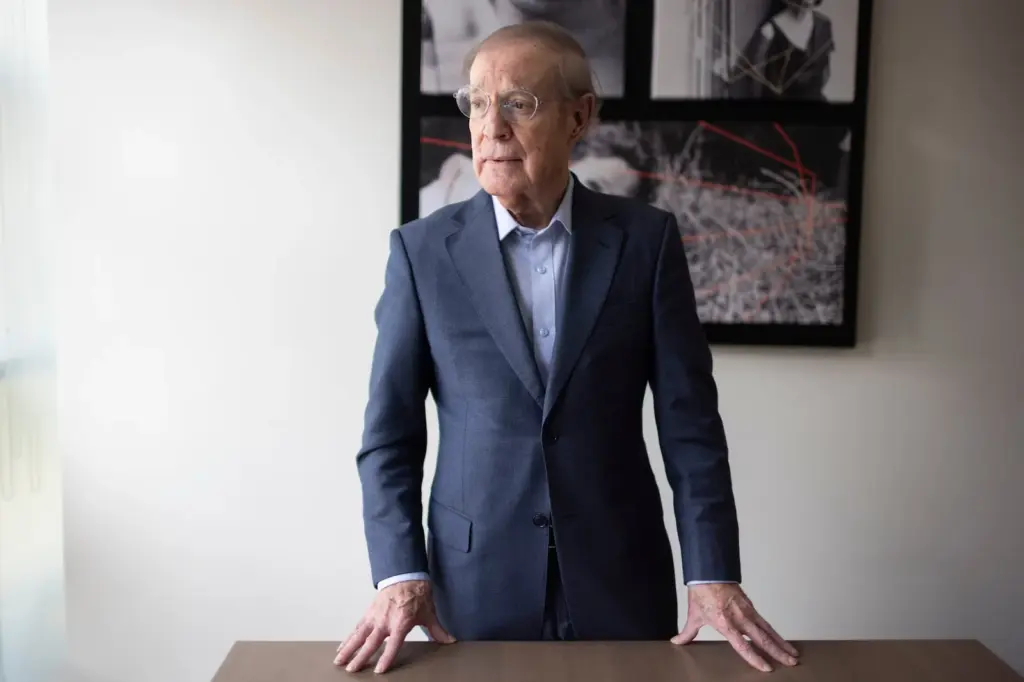
José Ramón Fernández (Puebla, 80 years old) is not controversial. He is super controversial. This is how he describes himself, having dedicated the last 54 years of his life to sports journalism and analysis panels. This week he has presented El Protagonista (Grijalbo, 2025), a compilation of anecdotes that only someone who has covered 13 Olympic Games, 12 World Cups, and narrated 3,500 football matches can tell. Fernández has met the most important Mexican athletes of recent times, has narrated alongside Pelé and César Luis Menotti, has trained new generations of journalists, and has spoken openly about the competition among the country’s main broadcasters. On his journey to the past, without reservations, he makes notes about various figures from footballers like Maradona to businessmen like Emilio Azcárraga and Carlos Slim, and athletes of all kinds. Father of anti-Americanism and controversial journalism, in an interview with EL PAÍS he reviews his legacy in late-night programs and evaluates current Mexican football and television.
Question. You recently turned 80, how do you feel at this moment in your life?
Answer. 80 years is a lifetime. I don’t know how to rest, unfortunately, and that pains me because of my children. But one gets used to working, working, and working. Right now, on ESPN, we do Fútbol Picante and I finish at midnight. But it’s part of my life. I have always worked a lot.
Q. From your school have come apprentices like Luis García or Christian Martinoli, who adopted your straightforward style. How do you define that legacy today?
A. I was always straightforward, direct. I created many problems for myself, but that was my style. When I started on television, we faced a very powerful monopoly that had four TV channels. We worked on Channel 13, which was government-owned, until the private initiative arrived with TV Azteca. Even with a small budget, we went to World Cups and Olympic Games. I remember my first interview fondly: it was in Montreal with Nadia Comaneci. We didn’t have rights. We belonged to the OTI, which is the Ibero-American Television Organization, and it was very hard for us to get in because it was managed by Televisa.
Q. What has changed today in that media battle?
A. It calmed down when Azteca managed to broadcast the national team, which was the fight. When Televisa gave up and gave 50%, everyone produces what they want. It eased a bit there. Televisa has the World Cup rights for life, despite being investigated with the famous FIFA Watergate [a bribery scheme involving FIFA officials, investigated by the U.S. Department of Justice, in which Grupo Televisa appears to have obtained rights to World Cup matches in various editions].
Q. Now that debate programs are in fashion, do you like the direction they have taken?
A. No. They copy each other, shout. We debated with respect and now some shout more than others or create strange characters to speak very well of América. We never shouted and there was education. Today the panels are everyone talking at the same time. Terrible.
Q. You said former footballers shouldn’t be sports analysts, why do you think that?
A. They can be sports analysts, but they only appear when a World Cup comes. During the rest of the time, they go looking to be coaches. They always say: “I played, you didn’t.” Yes, I agree. I was studying while they played.
Q. In your book you say you included a female reporter in the Los Protagonistas team when it wasn’t common. How has the role of women in sports journalism changed?
A. A lot. They are on debate panels, narrate matches, report. They are very well prepared. Their presence prevents you from being rude. That is, you have to be very intelligent because women have suffered a lot with gender issues. Today they have risen and compete.
Read more Luisa and Andy, a lost generation?
Q. What do you think about the case of referee Katia Itzel García?
A. There is machismo and a bit of contempt in that matter. She can make mistakes, but she is a good referee. Managing 22 men, some of them hysterical because they are losing, is not easy. Her going to the World Cup is progress and more Katias will keep coming out.
Q. You have been known for denouncing corruption inside and outside football. What do you see today in the political and sports landscape?
A. The same. I wrote a book called Mexican Football, a Dirty Game (Grijalbo, 1994). Today I would say it’s super dirty. In other countries, they buy referees. Here Televisa manipulated everything for América’s benefit. And everything remains the same. There is no independence in refereeing.
Q. What worries you about the direction of Mexican football?
A. That Televisa continues to run it. They should let go, leave it, and if they have the World Cup rights, distribute them better. Because from a monopoly it became a duopoly. They have to share it or else what happened with Netflix will happen, which started buying Copa América and more channels like that will appear.
Controversy doesn’t bring you friends, it brings you enemiesJosé Ramón Fernández, sports journalist.
Q. What notable differences do you see between the 1970, 1986, and current World Cups?
A. The ’70 one, the people awaited it with much hope. Today it’s impossible for the people, normal folks like you, me, or anyone, to attend a football match. In ’70 I was a student and could go to matches at Estadio Azteca with my father. Today that can’t be done anymore. Now streaming platforms like Netflix or HBO buy sports events and there is no free football.
Q. You mention in the book that Mexican fans and media tend to underestimate rivals. Without doing so, what is your forecast for the Mexican national team?
A. In 1978 the forecast was: “We’ll beat Tunisia easily. Who is Tunisia? Germany is world champion, but it’s an old team. And Poland, we don’t know if they play well or not.” We lost all three, badly, and finished last. Terrible. Today it’s the same with South Africa, Korea, and Czechia. Mexico will qualify, reach the round of 16, but could face England there, and they are favorites.
Q. If you had to coach the national team for a day… what would you do?
A. Arrive, greet them, and leave. [Laughter]
Q. You think Raúl Jiménez is overrated.
A. In Mexico yes, in England not so much. He has scored goals, but he’s not one of the best. When he comes to Mexico, people think with him in charge they can advance to the next stages and win. They think he is one of the best center forwards in the world and he is not.
Q. A player who is not overrated?
A. La Hormiga (Armando González). He’s only 21, starting to score goals and goals. Guadalajara has Mexican players and found a way to look for Mexican-Americans, who have helped, and several of them go to the national team.
Q. After so many years of confrontations throughout your career, have you made more friends or enemies?
A. Controversy doesn’t bring you friends, it brings you enemies, and friends are hard to find. You have to choose them and usually they are very few.
Q. You had a very public feud with David Faitelson.
A. I had a very toxic year with him because he was invited to Televisa programs and I told him: “If they invite you, just go, don’t lie.” And there was friction because he wanted the agenda Televisa managed to be handled on ESPN. He left, goodbye. We fired him. He said goodbye. They gave him a check and he said, “I’m leaving.” Nothing happens. He joined in 1989, after the cachirules issue, after several matches. Protagonistas had already existed. Did he want to leave? Goodbye. He barely didn’t end up fighting with everyone. Let him do what he wants. He knows nothing about football.
Q. What coverage marked you the most?
A. All of them. France 1998 marked me a lot because it was a very spectacular World Cup.
Q. If your career were a World Cup, what was your most complicated phase?
A. The final.
Q. Anything you would do differently?
A. I would be even more aggressive.