



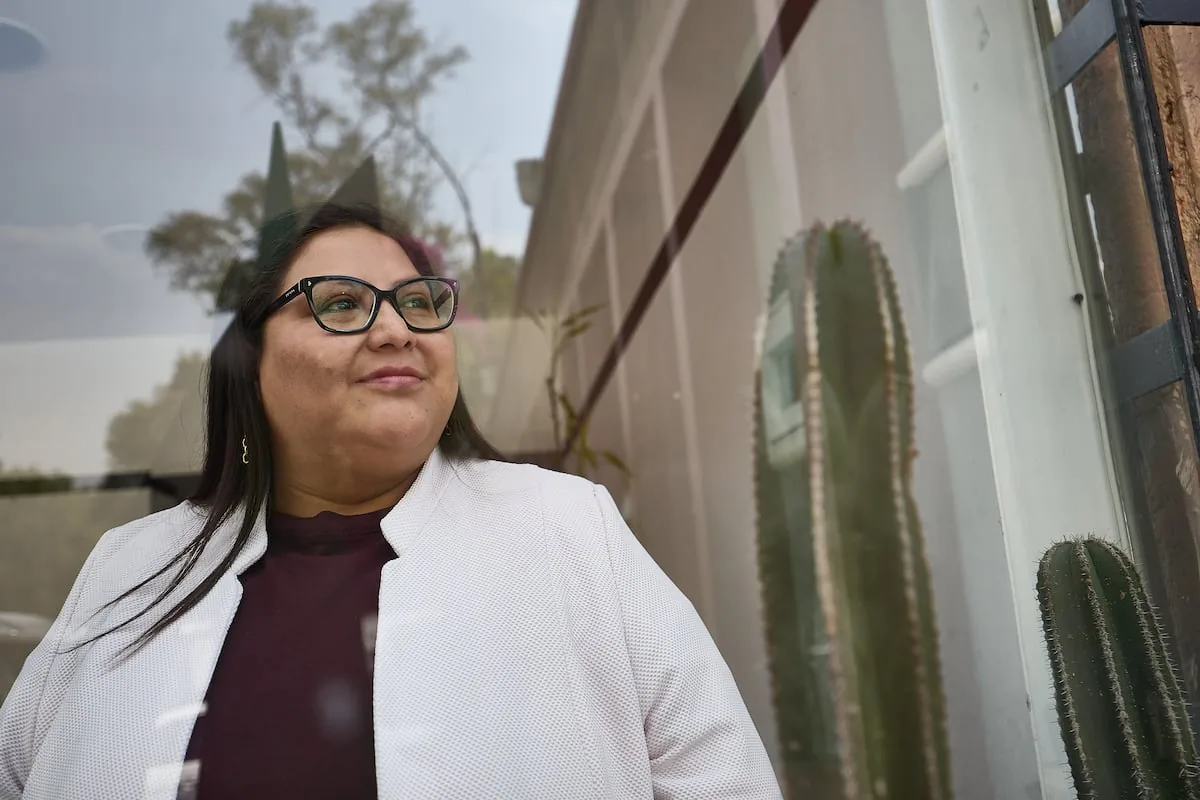
Citlalli Hernández had just graduated from the Faculty of Political and Social Sciences at UNAM, where she studied journalism, when she became a candidate for local deputy in Mexico City for Morena. It was 2015; she was 25 years old. The leftist party, founded and led by Andrés Manuel López Obrador, had only obtained its registration a year earlier, and most of its members were inexperienced in campaigning, let alone winning elections, after so many years in opposition. But she did win. Hard to believe. “Honestly, I thought I was going to lose, although we ran a campaign to win,” she confesses. She had few resources to promote the vote, but López Obrador told her not to worry, that it would be enough to visit house to house, talk to people, maybe leave some flyers. She says she spent 25,000 pesos (about 1,450 dollars) on that campaign. “Because of that experience, I am convinced that politics can be done differently, because we did it without money,” she says in an interview with EL PAÍS.
Born into a working-class family from the popular east of the capital, educated in public schools, Hernández, who is now 35 years old, ran a second campaign and became a senator. Then, through a survey, she reached the general secretariat of Morena (from 2020 to 2024), where she faced two elections in which the ruling party achieved great successes. A hardworking ant, she has built her political career from the ground up and claims more merits than other Morenistas of her generation whose surname has opened doors for them. President Claudia Sheinbaum, who had appointed her Secretary of Women, has asked her to return to the party leadership to take charge of alliances and the distribution of candidacies, ahead of the 2027 midterm election. Hernández takes the reins in an uncomfortable circumstance: the leadership is divided between Luisa María Alcalde, president, and Andrés López Beltrán, secretary of Organization, and the relationship with the PT and PVEM partners is damaged and pushed to the brink of rupture.
Question. Is the party the same as when you left it?
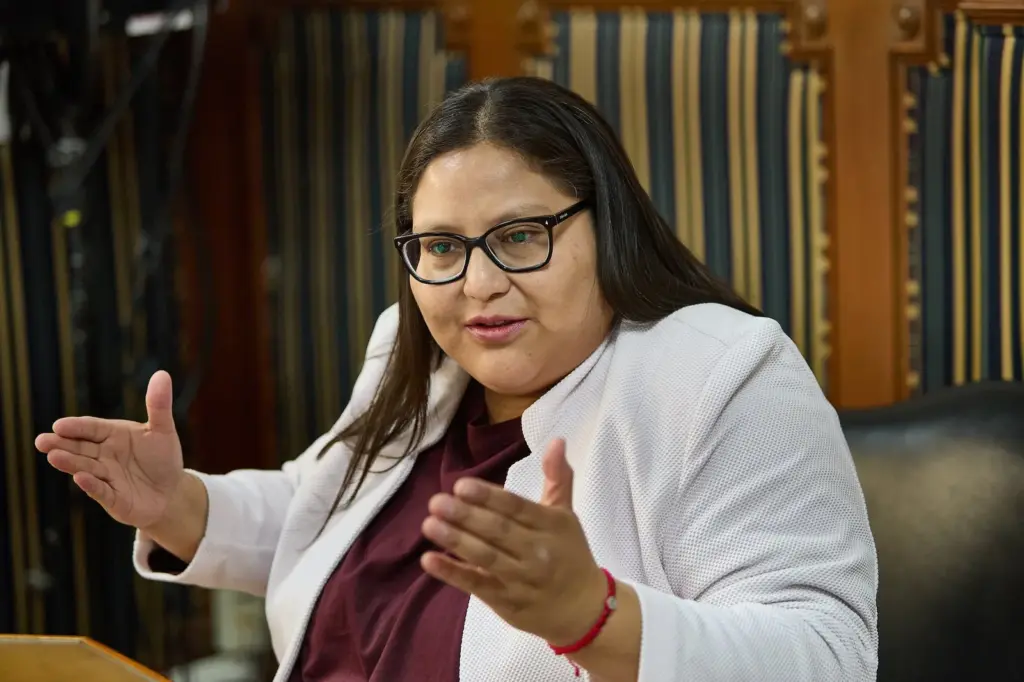
Answer. No, the party has grown a lot and that has brought several challenges, but it is natural. I was part of the foundation of Morena, which emerged with three main objectives. The first was to have a tool to participate in elections and bring López Obrador to the presidency to start an alternative project to neoliberalism. We have already achieved that. It cost us a lot of work. There were decades of other struggles to be able to conquer a leftist, popular government. And yet, that was the easiest goal. The second was to dignify politics, to move away from old vices. That goal is not immediate and becomes complicated when you do many sums to gain power. One demand from the membership is that Morena continues anchored to its roots of principles and ideals. Third, Morena was also born to make a revolution of consciousness, understanding that parties are made by people, politics has its weaknesses, its vices. It does not matter if a leader goes bad, the drivers of the change process are a conscious, informed, participative, demanding people. This is the moment when Morena must be most consistent, grateful to the people of Mexico, and guarantee that it is an ethical, honest party, without scandals, and, in cases where there are behaviors alien to what Morena upholds, to point it out very clearly.
Q. Has politics been dignified?
A. On one hand, there is President Sheinbaum. She has the support of the population, no one doubts that she is honest, that she is continuing the project, that she works tirelessly; but on the other hand, the party has to give more evidence that its path is to build a new political culture.
Q. It seems that, after López Obrador’s retirement, Morena leaders forgot his teachings.
A. Changing political culture implies changing the culture of politicians and the politicians who are already rotten in all parties. The vast majority of Morena members are not politicians. The party has visible faces, but those who make Morena and have led it to electoral success are ordinary citizens and members who have become leaders. It may be that the incongruent minority, profiles that do not believe in this way of doing politics, become more prominent, more visible, or gain more positions. However, there must be no silence; it must be very clear that behaviors alien to our principles of austerity, ethical conduct, and no corruption must be disassociated from the party. There is no political project that does not have to deal with contradictions along the way. The challenge is to keep moving forward with the trust of the people and leave behind the mistakes, the natural inconsistencies of any political exercise.
Q. There is a feeling of permissiveness. What should the party do in the face of deviations?
A. The Commission of Honesty and Justice must act ex officio and, at least, make exhortations that such behaviors do not correspond to a Morena member or leader.
Q. President Sheinbaum has made exhortations, but they are not heeded.
A. If there is no shared responsibility with the exhortations, there must be sanctions. The party has statutes; those who decide to be candidates, members, or leaders of Morena must respect the rules. And you have an internal body to ensure those rules are followed. The Commission of Honesty has the power to impose sanctions. And I am convinced it must be so, not in an authoritarian, radical, or purist logic, as we are accused, but to have order. We must be clear that a party like ours must double or triple guard its principles.
Q. Is the president worried about the party’s situation?
A. The president is dedicated to governing, to continuing the project, and fulfilling campaign commitments. I imagine she has her opinion, her concerns; surely, when things are going well in Morena, she is pleased. The task of a party is not to be a concern for a governor.
Read more Video analysis | Sheinbaum and her European carom
Q. After a decade of Morena governments, there is wear. What is at stake in 2027?
A. We have a president with a lot of popular support in a very complicated global moment and I believe the people will ratify that they want the continuity of the transformation, continue supporting this project, and continue rejecting what the PRI, PAN, or Movimiento Ciudadano represent.
Q. Morena depends on its alliances, but the relationship with allies is damaged.
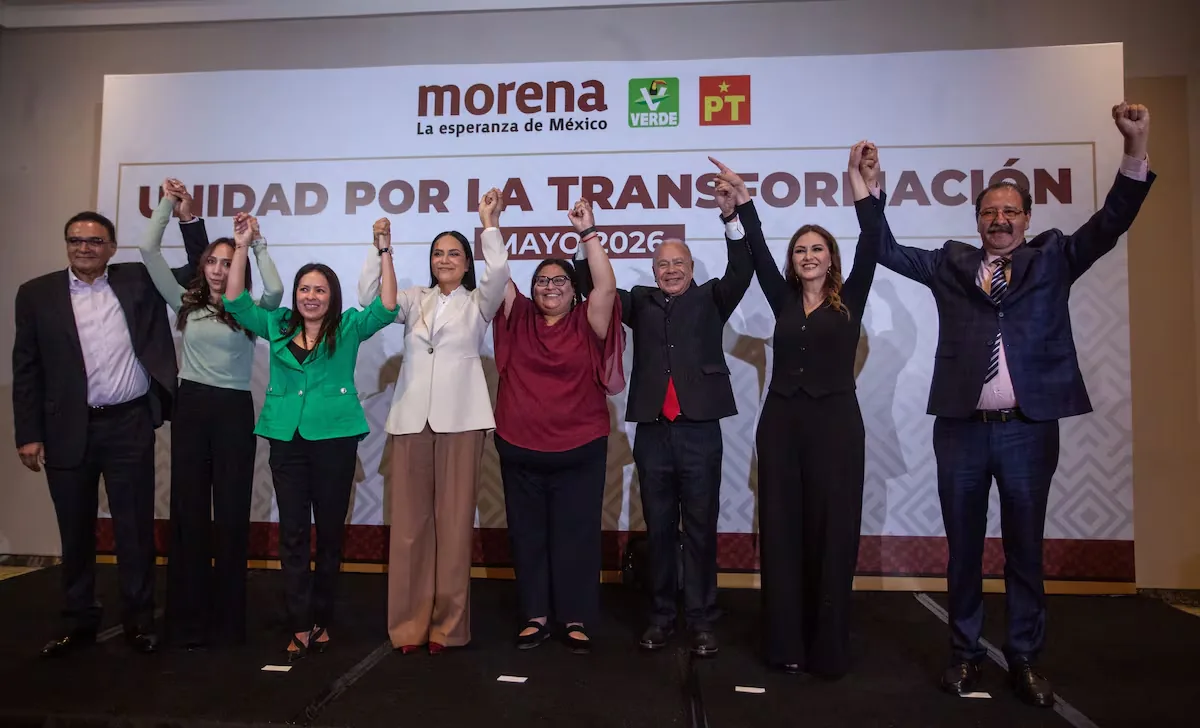
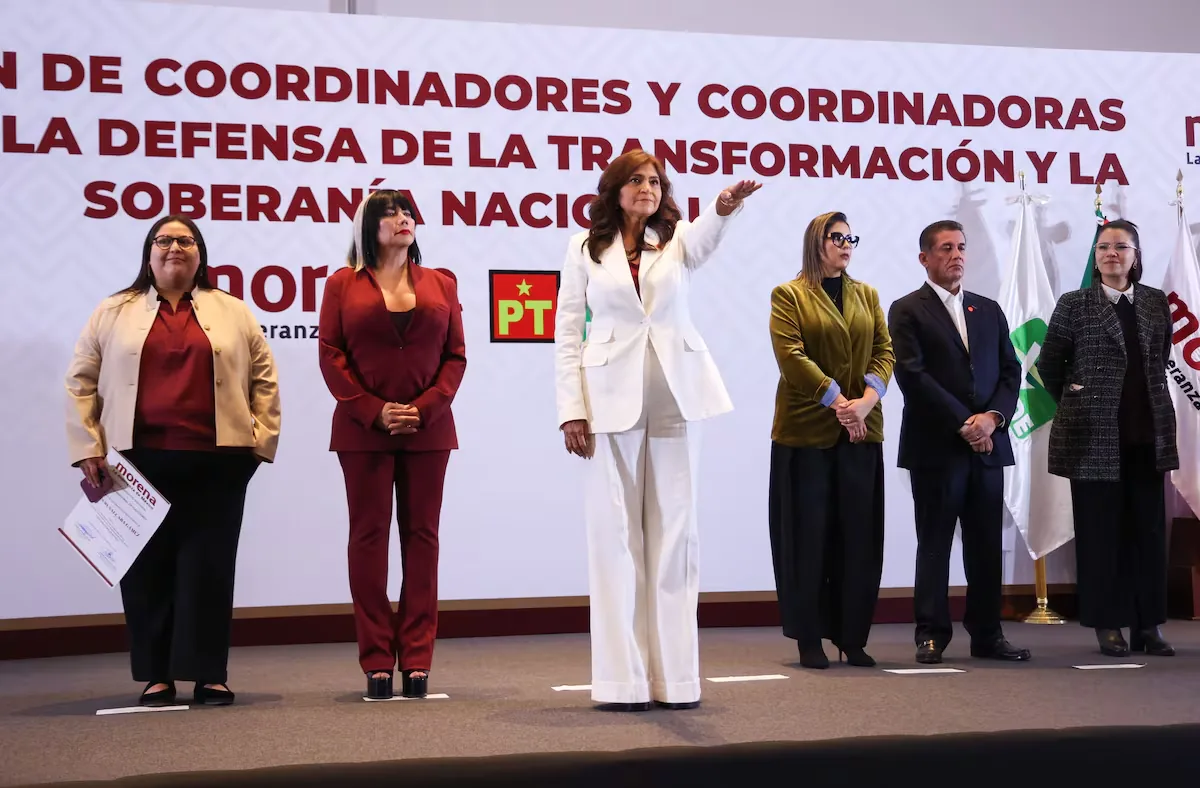
A. There must be a lot of dialogue, we must set our goals as allies for 2027 and work to win the greatest number of positions. If there are places where it is convenient to go separately, or where we do not agree, or where together we are stronger, then the negotiation tables will revolve around that. We have three origins, three statutes, and three different leaderships, and that is why dialogue and building agreements matter. If there are concerns or complaints, I am sure they will be left behind.
Q. How will the issue of nepotism in San Luis Potosí, Guerrero, and Zacatecas be handled?
A. The key to a successful electoral process in such a large party with so many aspirants is that the rules are clear, that they are respected, and that the results of internal definitions are transparent so that, even if participants do not like them, they close ranks because they are certain those rules were respected. That is what also generates complexity in the coalition. In Morena it is very clear, we do not believe in handpicking, nor in promoting the candidacy of a relative of someone currently in office. It is not against a candidate or our allies, it is respect for our rules. Morena must be very firm, and that will be a maxim in the presidency of the Election Commission that I am to lead.
Q. How to avoid ruptures?
A. It is one of my main tasks. I will start talking to everyone. Sometimes, when there is a personal ambition, the most important thing can be lost sight of: that we want to continue transforming people’s lives, not ours, not to be more famous, not to conquer positions. And when correct decisions are not made in the definition of candidacies, people who do not necessarily contribute to that goal can come to power.
Q. What will be the minimum requirement for someone to be a Morena candidate?
A. It has to be an honest person, close to the people, with deep ideals and principles, with electoral competitiveness and with the conviction that they will support the transformation project. A dishonest person, with scandals, with bad previous government performance, who only wants to use the party to gain power, will not be welcome. The fact that someone is known and has some electoral competence but has negatives in front of the public is not the best person for us. A few years ago, the survey was used to find the most competitive and gain positions. And I come so that the best decisions are made so that in 2027 we not only win but also make it clear that Morena is still a party of good, honest people.
Q. What advances and challenges do you leave the Secretariat of Women with?
A. It was not an easy decision. It has been the best work of my life, the one that has given me the most satisfaction and has sharpened my sensitivity regarding the challenge of combating violence against women. Every day we attend to victims, but it is not just about improving their access to justice, but about the need for a cultural change, a revolution of consciousness. We aspire to a country where violence against women does not exist on a daily basis.
Q. It was not easy to resign, but was it more urgent to attend to the party?
A. In the Secretariat of Women are the foundations for someone else to come and continue. At the party’s call, and I say this humbly, my experience, my dialogue with many sectors of Morena, with PT and PVEM, can contribute a lot to making 2027 a success. My commitment is to many victims who are still waiting for justice and whom we have accompanied (I think that was what made me most hesitate to accept). But I am certain that nothing will be neglected and convinced that I can help a lot in Morena.
Read more Luisa and Andy, a lost generation?