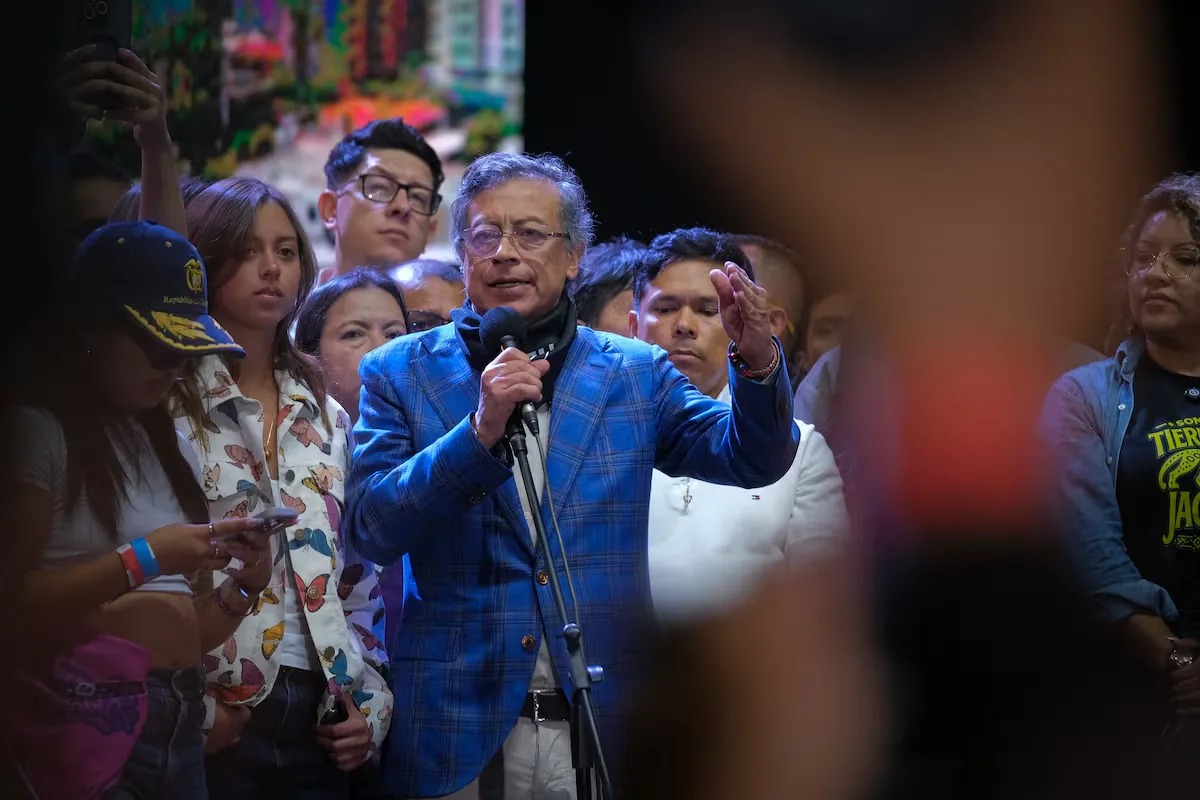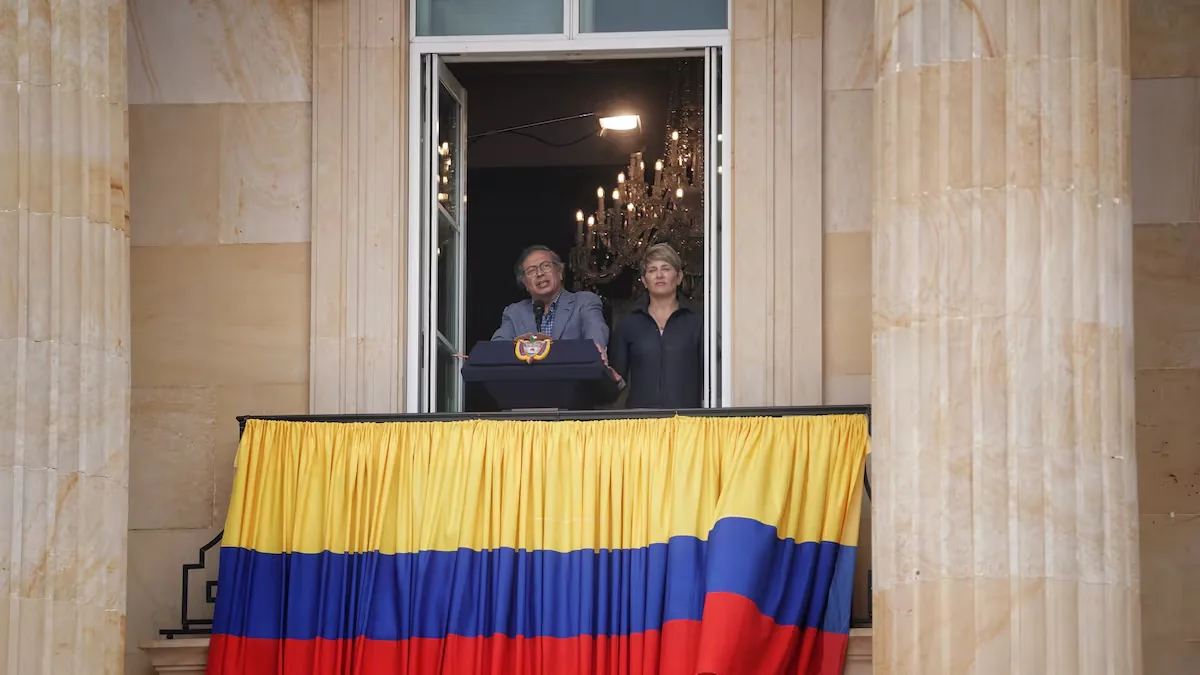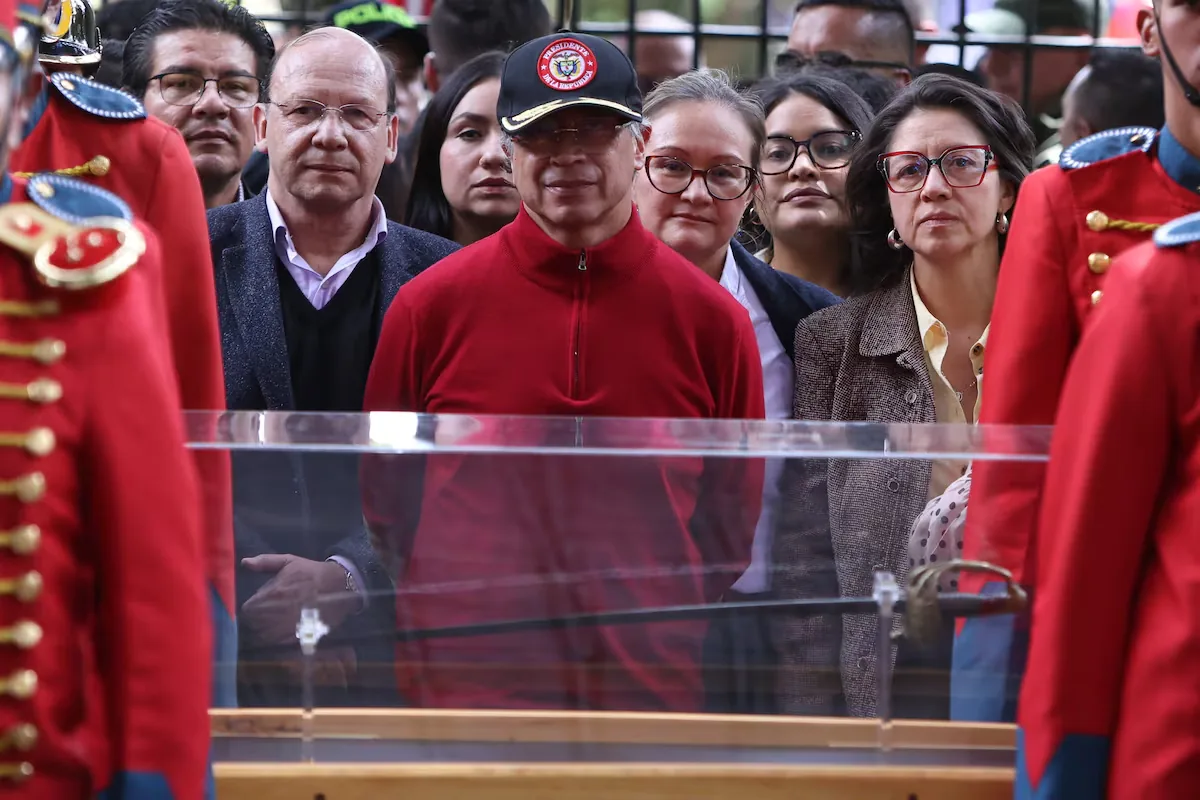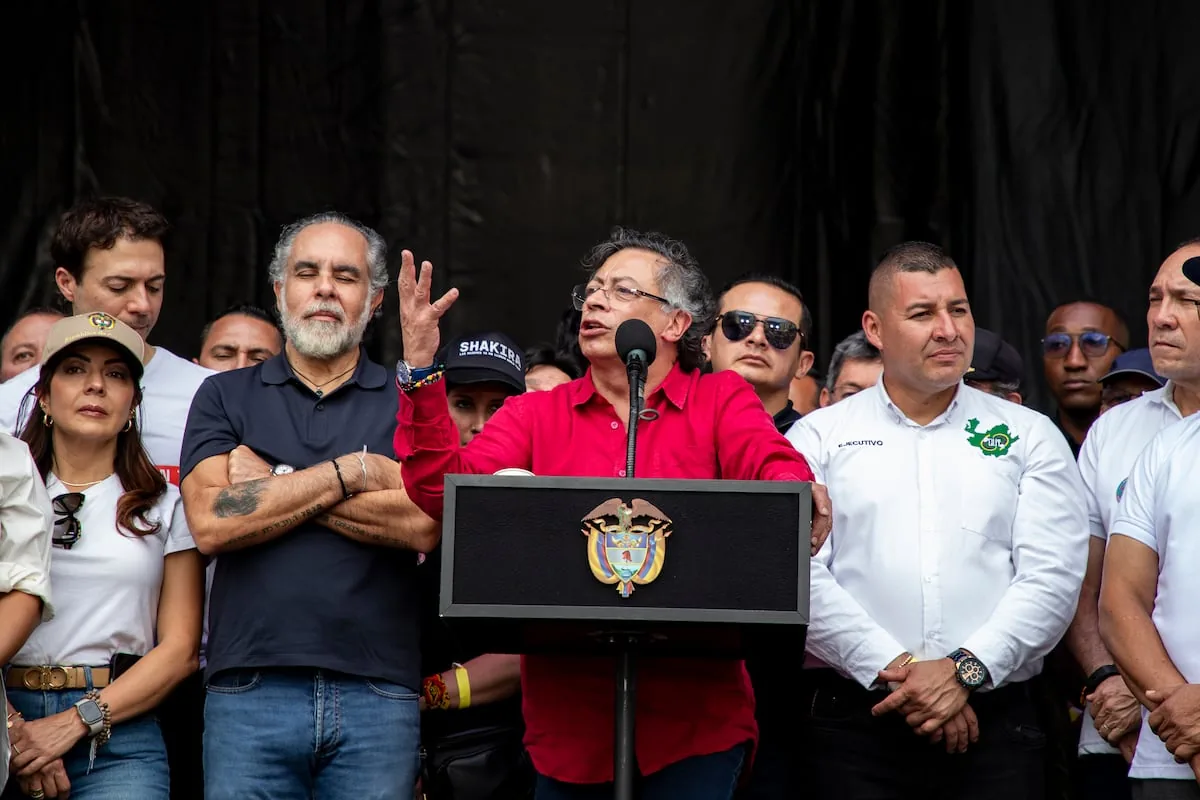








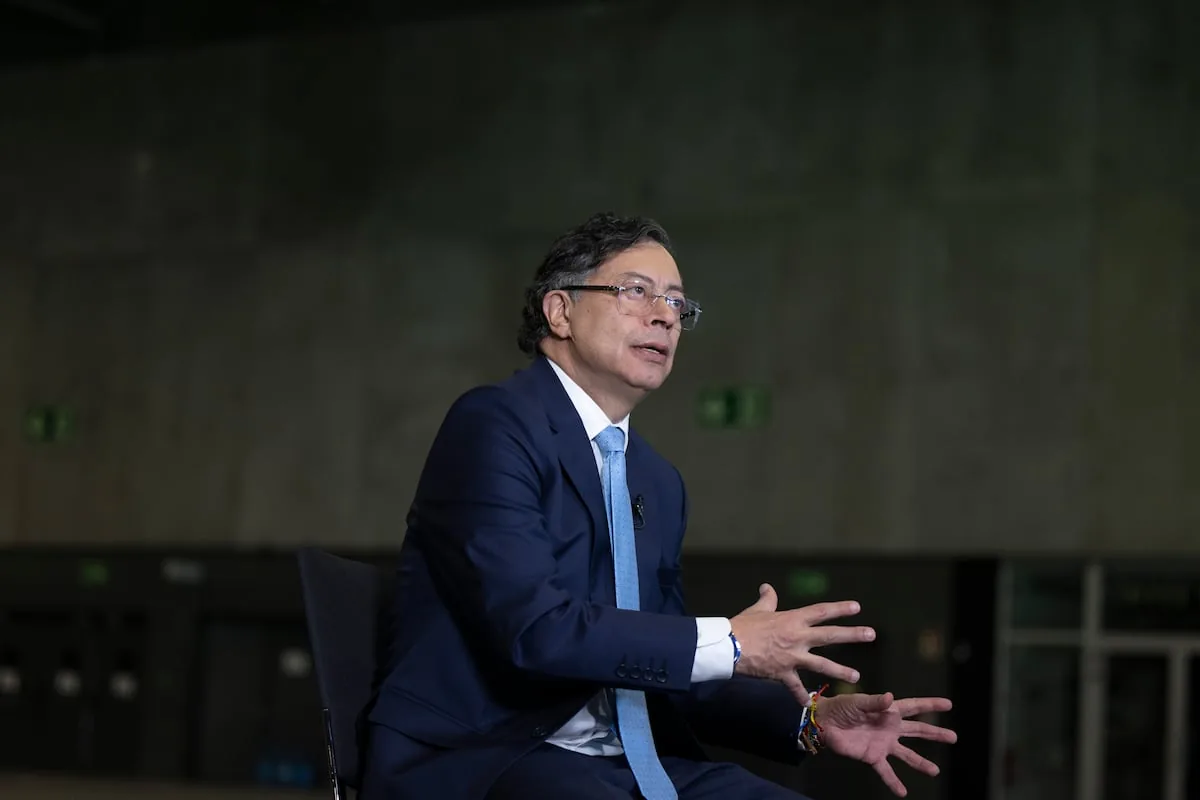
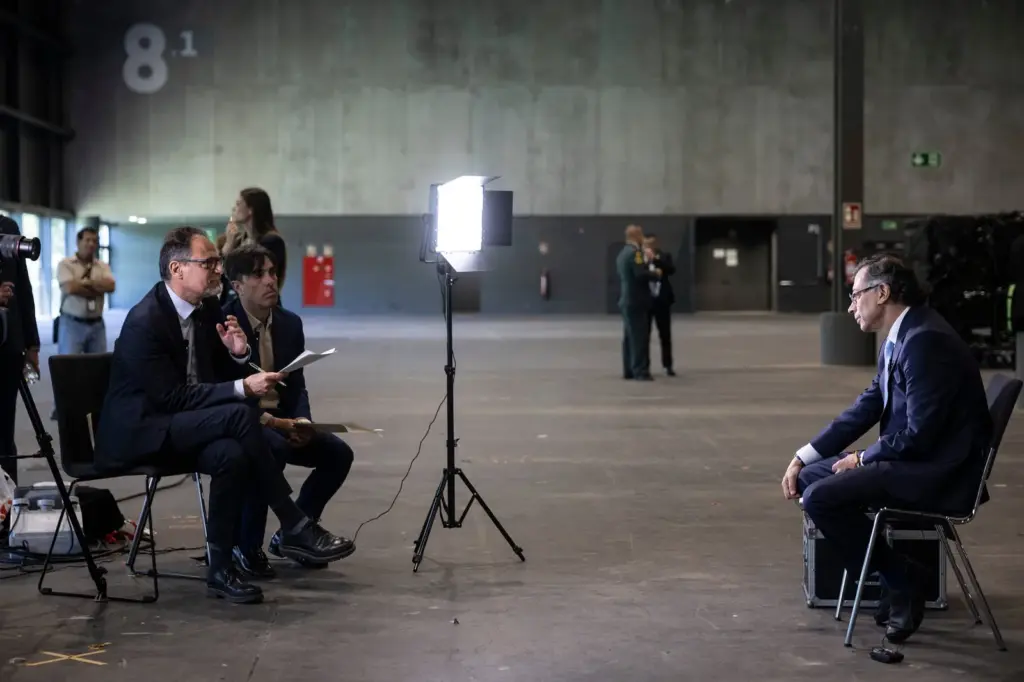
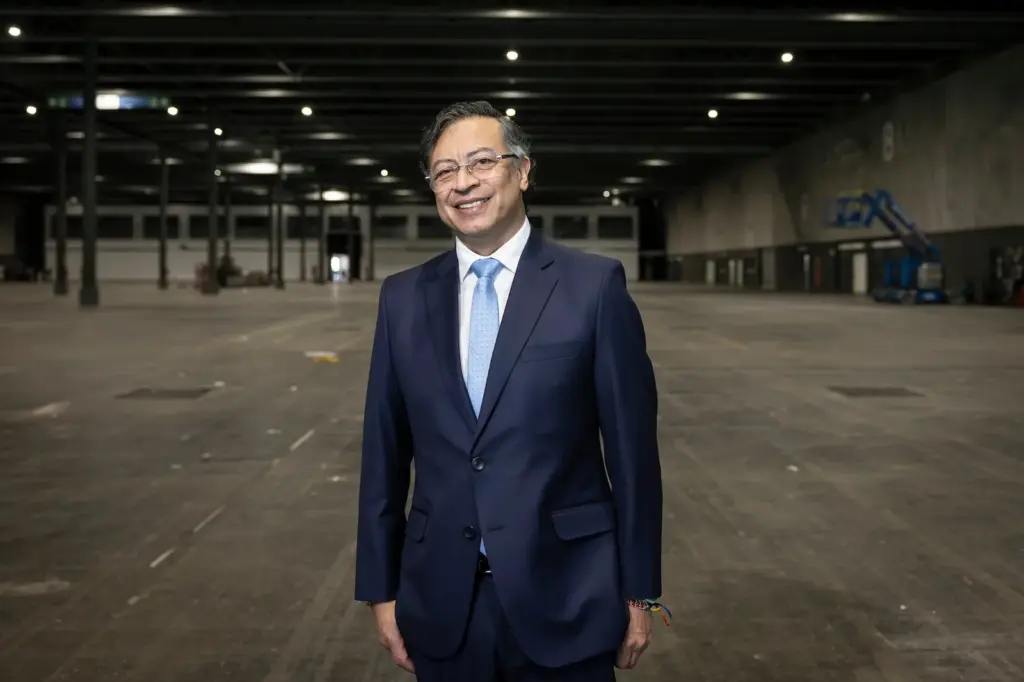
Gustavo Petro is running out of time. On August 7, he will cease to be president of Colombia. In four years, many of his promises have been left by the wayside. Sometimes due to his own mistakes, other times because of the resistance and fears of a country where the left had not governed in decades. Now, the wear and tear of power has weighed heavily on him. Sometimes he appears irritated and in a bad mood, but this morning a smiling Petro in an impeccable blue suit enters accompanied by his presidential entourage through the door of Pavilion 8 of the Fira de Barcelona. Petro participates in the IV Meeting in Defense of Democracy alongside the presidents of Spain, Brazil, and Mexico, a progressive combo with which he feels comfortable. In the interview with EL PAÍS, the Colombian president, who will turn 66 on Sunday, defends multilateralism and the fight against climate change, while he cannot help but launch barbs at the electoral system, even raising doubts about whether he will recognize the election results if he considers there are irregularities. His hopes focus on his candidate, Iván Cepeda, currently the favorite in the polls, being the next to occupy his office. He acknowledges that not achieving this would be a personal failure.
Read more Return to southern Lebanon: «We will raise a new generation that fights against Israel»
Question. The far right has been advancing worldwide. Have progressive governments failed?
Answer. It advanced, but now it has stopped. The setback is seen in public opinion in the United States or in Viktor Orbán’s electoral defeat in Hungary. And also in Latin America. The progressive victory is in Mexico, Brazil, and Colombia, which together make up the majority of the Latin American population. That idea of the far right taking power is not real.
Q. But you will admit there is greater instability. Trump’s new security doctrine endorses intervention abroad, and the United States captured Nicolás Maduro in Venezuela. Are you not afraid this will happen again?
A. These facts you describe are true. And they are the manifestation of a great conflict. But the most serious issue is the climate crisis. While missiles are being fired, climate change advances. Due to the consumption of oil and coal, we face the extinction of life, including human life.
Q. Precisely, one of the greatest enemies of the fight against climate change is Donald Trump. What is your relationship with him? Could he threaten Colombia militarily again?
A. The relationship is good. I have no intention of attacking the United States, nor does it seem that Trump intends to bother Colombia. I have spoken with him twice recently. Meeting him broke certain false bubbles about Colombia and about me. He met a different person. I also had prejudices. But I did not go to kneel or beg [Washington], rather there was a personal conversation between different forces that recognize each other as equals.
Q. How would you define Trump?
A. An Aryan gentleman, from a family of immigrants who came to the United States and prospered.
Q. And don’t you think that, with what happened in Venezuela and Cuba, we are living a neocolonialism? Is freedom not threatened?
A. There is a threat and there are presidents who govern under pressure. When I was put on the OFAC list [the Clinton list, in which the US Treasury includes people supposedly suspected of drug trafficking or money laundering], I understood that this tool in the fight against drug trafficking has become a political instrument. It is used as a mechanism of extortion against those of us who express a different policy. If you don’t do this, you don’t get off [the list] and it becomes difficult to eat, have a bank account, travel, etc. They persecute you and threaten that they can take you to the United States like Maduro. It is a system like the one the King of Spain had centuries ago. And what was the Latin American response? Rebellion. That will happen now if the United States government is not capable of rethinking its relationship with Latin America. Caracas is the first Latin American city to be bombed in its history; not even Panama was. That has created a wound that current rulers assume with fear… and they kneel. The photo of Corina is terrible… [María Corina Machado, the Venezuelan opposition leader who offered her Nobel Peace Prize to Trump].
Q. And will the United States remove you from the Clinton list?
A. I have no idea. I am preparing to live outside the capitalist system, as I was used to before.
Q. Shouldn’t the Venezuelan government call elections as soon as possible?
A. No. Our mistake was thinking that the solution was elections [those of July 28, 2024]. I discussed it with Maduro. We needed two rails: free elections and at the same time lifting sanctions. The United States did not lift them and Maduro prevented some opposition members from participating (he disqualified Machado). In the end, there were no free elections. That is why I did not recognize them, nor did Brazil. In a conversation I told Maduro: “Brother, take a risk. If you lose, power passes to the opposition.”
Q. And he didn’t do it.
A. In the Colombian left, we know what it means to be in opposition, because for 50 years it was done under bullets, persecution, with mass murders. More than 5,000 militants of the Patriotic Union [a left-wing party] were killed. Under very harsh conditions, we won, and we won peacefully. It is impossible to think of another way out in Venezuela.
Q. How long will that transition last?
A. One or two years to build mutual trust. That will allow free elections, elections without sanctions. Now there is a progressive uprising. The right path can be taken if Delcy Rodríguez calls for a great national dialogue. She moves between two or three worlds: her principles, built with Chávez; submitting to a country that has fired missiles on its territory; and opening a scenario that could mean she leaves power.
Q. In Colombia, you have criticized the electoral authority and sown doubts about the vote count. Are you not afraid that this could delegitimize the democratic process, undermining the credibility of the result if there are problems?
A. There should be no problems. And the very possibility that there might be problems proves me right. There has always been fraud in Colombia. I am not making up the word. Fraud in the sense that only the same people governed.
Q. But will you recognize the result, whatever it is?
A. Yes, but not the fraud.
Q. And in the hypothetical case that there was fraud, what would you do?
A. The Colombian justice system ordered a change at its highest instance, the Full Chamber of the Council of State, to the firm that counts the votes. The registrars, who are not elected by the government, make the contract, which is worth billions of pesos. Colombian elections are a business. And in business, presidential candidates can enter and say: “I put in money.” Where does the money come from? It doesn’t matter. That is the danger I have denounced. A judge asked me not to talk about this anymore, but I speak because it is the reality.
Q. But haven’t you failed in the fight against corruption? Some of your closest collaborators are implicated in serious cases, even one of your sons.
A. In the criticism that the Colombian press makes of the government, there are accuracies and huge lies that the justice system follows, because it is mostly in the hands of the opposition. It is what they call lawfare. Justice is where injustices are found. In some cases it is right, as in the case of the UNGRD [diversion of funds to pay bribes to congressmen]. I appointed and fired the person responsible. It is my responsibility. The press says it is the biggest theft in Colombia’s history. And that is a lie. They do it to imply that the government is corrupt in general.
Q. But do you trust the Colombian justice system or not?
A. It has won very brave battles in the past, but justice is undergoing a rightward shift; it is what is called the Robe Cartel [members of the Supreme Court who committed bribery crimes]. When there was a government that wanted to enforce the Constitution and build a social rule of law, all of justice opposed it.
Q. You promised total peace, but it has been a failure. What happened?
A. It is a failure insofar as the current violence is very regional, not national, centered in places where cocaine is produced or transported.
Q. What advice would you give your successor?
A. Not to be fooled by people who say they are centrist but are more right-wing than Álvaro Uribe. Also to try a new agreement with Uribe. I sought it and it failed because the Uribismo mentality is to impose the program they want, forgetting the one that won by the people’s vote. That arrogance prevented fundamental agreements I proposed. Uribe dedicated himself to irrational opposition, damaging many important reforms for the people, such as health, pensions, or labor. He has never understood that Colombia’s progress, even within capitalism, depends on productivity and knowledge, not on the overexploitation of people.
Q. You have four months left in government. Looking back, what was your biggest mistake?
A. Having appointed Ocampo (José Antonio, his first finance minister), Gaviria (Alejandro, of Education), and Cecilia (López, of Agriculture), whom I considered liberals and who ended up terribly betraying the program voted by the people.
Q. Are the elections a showdown between you and Uribe? Your candidate, Iván Cepeda, and Uribe’s, Paloma Valencia, lead the polls.
A. Paloma is Uribe’s candidate and expresses it loyally. She was the main opponent to the government’s social reforms. She stopped, for example, the pension reform with her magistrate friends in the Constitutional Court.
Read more Plates of lies
Q. If Cepeda loses, would it be your defeat?
A. Undoubtedly.