






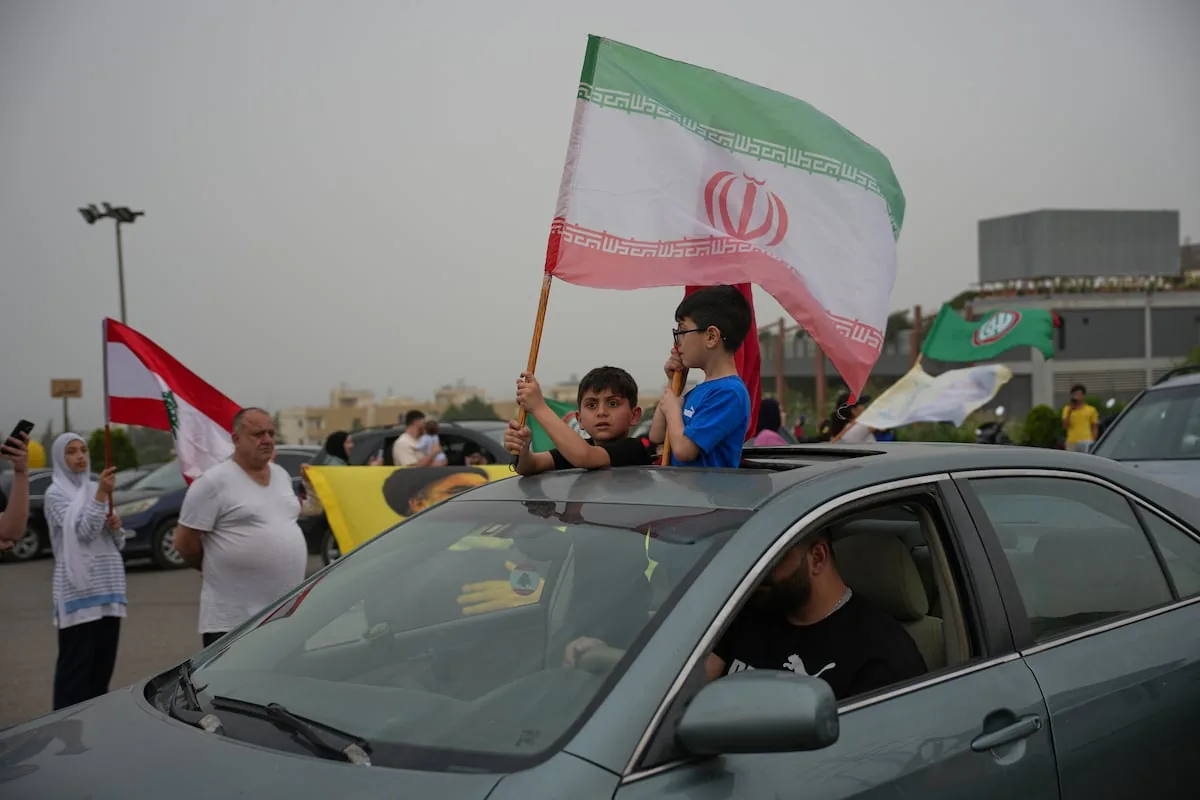
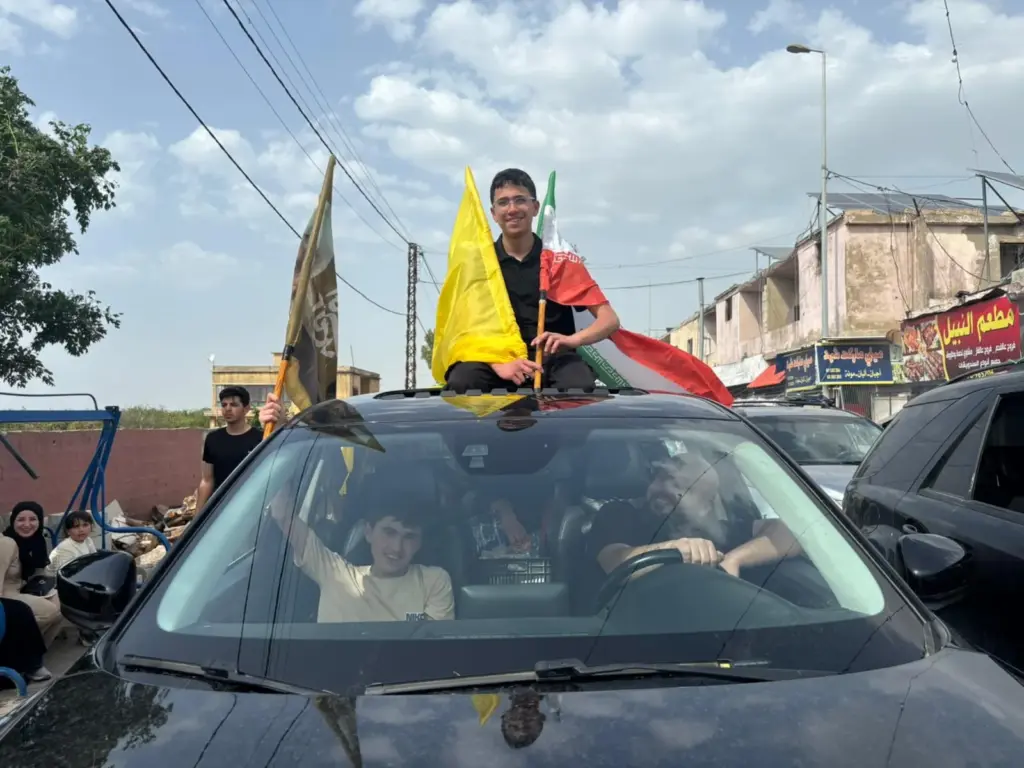
The rift between supporters of the Shiite militia Hezbollah and the Lebanese government was evident this Friday on the crowded road back that thousands of people have taken towards southern Lebanon. After 46 days of forced displacement due to the war with the Israeli army, thousands of citizens have taken advantage of the first hours of the temporary ceasefire, lasting only 10 days, to return to a devastated territory where Israel claims it will maintain attacks. While Beirut has initiated dialogue with Israel and committed to disarming Hezbollah, the border population, mostly close to the pro-Iranian movement, returns to the south amid praises for their fighters. “Our young people have fought Israel to the death,” proudly proclaims Randa Manna, 61, from atop the vehicle. “And we will raise a new generation that fights against Israel,” she says alongside her grandson, both making the victory sign with their fingers.
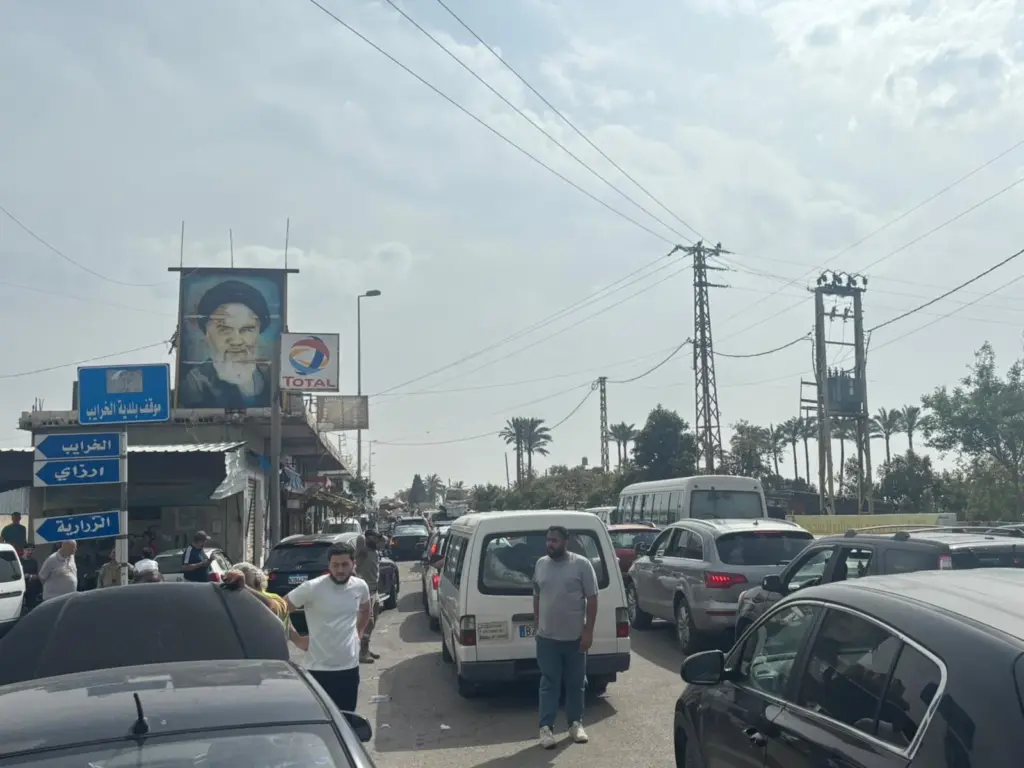
Manna is part of the crowd that this Friday has rushed towards the secondary road passing through Qasmiyeh. Hours before the ceasefire, Israel bombed in that municipality the only bridge over the Litani River that had not yet been completely rendered unusable, in an action that southern residents see as something meant to cause them pain. When the truce came into effect at midnight from Thursday to Friday, the crossing was rebuilt at dawn by piling earth over the water, forcing returnees to cross a bottleneck that caused endless queues. And it is in one of these that Manna speaks to EL PAÍS.
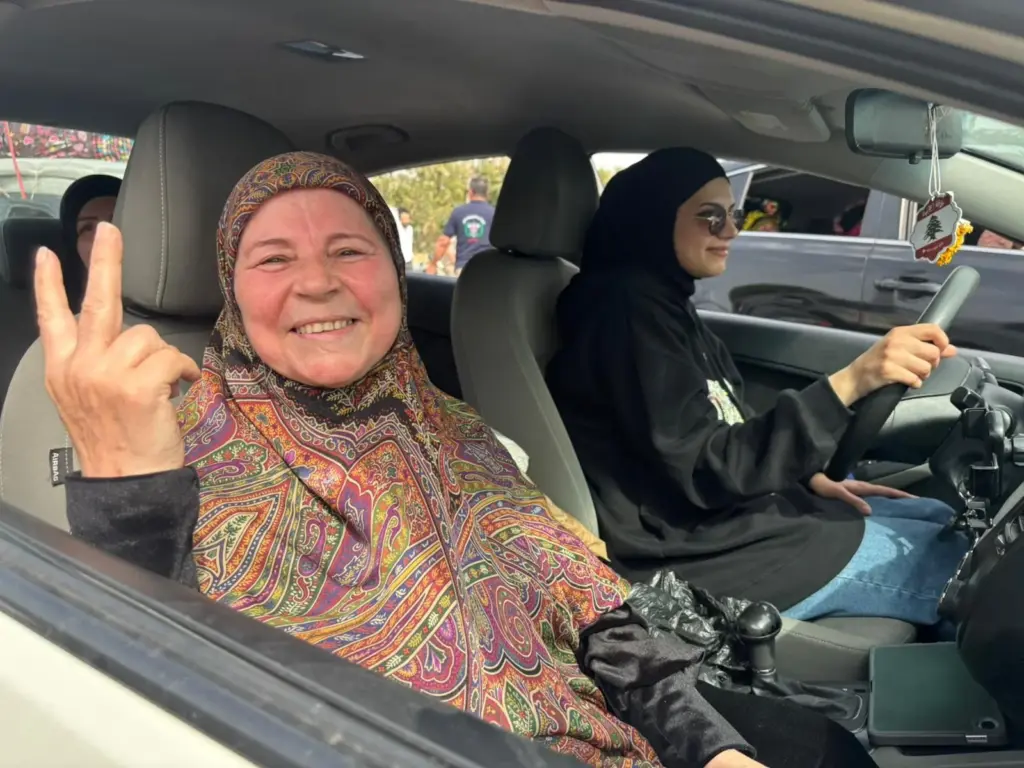
“We hadn’t gone very far because we needed to breathe the southern air,” says the woman, elated that the day to return to her native Bourj Rahal, near the millenary city of Tyre, has arrived. The flags of Hezbollah, Amal — the other major Shiite formation in Lebanon — and Iran, an ally of both, fly above the caravan, which advances slowly to the rhythm of songs that exalt resistance, the essential and hostile concept towards Western and Israeli presence in the region that underpins the alliance between Tehran and its regional allies, including Hezbollah; the self-styled Axis of Resistance.
While the joy of return fades in some families who discover their homes have been buried underground by indiscriminate Israeli bombings, Manna does not care what fate brings as long as it is in Bourj Rahal: “We are prepared to set up tents and stay in our village.”
On Thursday, the Donald Trump Administration announced a temporary truce in the open war in which Israeli soldiers and Lebanese militiamen have clashed with unequal strength, in a conflict in which Israel has killed 2,200 people in Lebanon and displaced 1.2 million, that is, a fifth of the national population. The latest escalation began on March 2. That day, Hezbollah fired at Israel for the first time after 15 months of a previous ceasefire, agreed in 2024, which Israel violated daily, causing 400 deaths with its bombings and during which it continued occupying Lebanese territory.
Although tensions escalated in October 2023, when Hezbollah attacked Israel in supposed solidarity with Gaza, the conflict between the two dates back to the militia’s birth. In 1982, Iranian authorities exported their Islamic revolution and found fertile ground among the resentment of the Shiite population of southern Lebanon, then and until 2000 occupied by the Israeli army, a period that affected almost every family with grievances and humiliations.
Since then, Tehran has provided funds and weapons to Hezbollah, which acts as a de facto authority — offering protection and social services — in majority Shiite territories, such as southern Lebanon. There, streets are lined with images of Iran’s supreme leaders and the sheikhs and fighters who have shaped the Lebanese formation.
On the way south, one can see the headquarters of the media outlet Al Mayadeen, bombed by Israel for its proximity to Hezbollah, and dozens of people celebrating in the middle of the highway the survival of an Al Amana service station, a fuel distributor repeatedly attacked for its affiliation with the Shiite group. The destruction of an industrial park with dozens of cranes is also visible, in an attack that the local population understood as an impediment to the reconstruction of the south.
Lebanese President Joseph Aoun and Prime Minister Nawaf Salam, both independents elected in 2025 after Hezbollah’s loss of influence due to the Israeli offensive, have taken unprecedented steps in Lebanon’s history. They present them as necessary to break the cycle of violence, but the community around Hezbollah feels them as a threat.
Read more Plates of lies
This April they have started talks with Israeli authorities, a step they link to the arrival of the truce. Last August they decreed the disarmament of the Shiite formation, the only one that retained weapons at the end of the civil war in 1990, with Beirut’s permission, to defend Lebanon against Israeli occupation.
The decision, which has supporters among other social and religious communities, seeks the state monopoly on weapons and to secure Lebanon through a role of neutrality in a conflictive region. But this idea worries southern residents, who see the Lebanese army as incapable of defending them against Israel. Jokes about their soldiers even circulate in the caravan, claiming that, unlike Hezbollah, they withdrew from the south before the Israeli arrival and now return along with the civilian population.
Although the new truce is for now worse for Hezbollah than that of 2024, since it allows Israel to remain in a 10-kilometer border strip, many of those returning on the first day see it as a victory. Images like that of Beaufort Castle, where the Israeli flag was withdrawn, boost morale during the journey to a territory that the Israeli offensive has often left without basic services, water networks, electricity, or commercial flow, and where 100,000 people have remained under bombardment, according to the UN.
Pain beneath the surface
The joy of returning to the south hides beneath the surface the pain caused by an Israeli offensive that has caused civilian casualties until the last minute before the ceasefire, as in the case of Tyre, with the bombing of successive residential buildings. At Sarafand, a group of young people encourage the vehicles. One of them, Mohamed, still cannot explain what happened the previous day, when an Israeli manned aircraft bombed his grandfather, Mohammed Harbi, a 93-year-old farmer, while he was riding his three-wheeled motorcycle.
“We are exhausted after so many weeks of war,” says Fadi, who approaches the Qasmiyeh bridge with his family. His little daughter waves a Hezbollah flag. “We are from Qana, the village of the martyrs,” he says referring to the 1996 massacre, when Israel killed about a hundred people who were taking refuge in a UN peace mission base. “But our exhaustion does not come close to the effort of those fighting against Israel,” he admits sadly.
Behind, six women from the same family share a vehicle, from which Hezbollah, Amal, and Iran flags emerge on both sides. Zahara, a 25-year-old teacher from Bourj Rahal, thanks the sacrifice of the Lebanese militiamen, whom she sees as enablers of her return. She says her family and two others have been living in the same home since they had to flee, in a municipality near the Litani River.
From there, they heard Israeli bombings and Hezbollah projectile launches around them. “We felt strong with every missile against occupied Palestine [Israel]. We felt the wind with every rocket fired by the resistance,” she says with teary eyes and her little niece on her lap. Despite lamenting the existence of border municipalities to which Israeli occupation prevents return, Zahara assures that “the youth’s fight against Israel makes us hold our heads high.” “The world can be sure that, as long as resistance exists, which I hope is forever, we will not allow them to keep even a single inch of Lebanese land,” she concludes.
Read more The fine print of the PP and Vox agreement in Extremadura