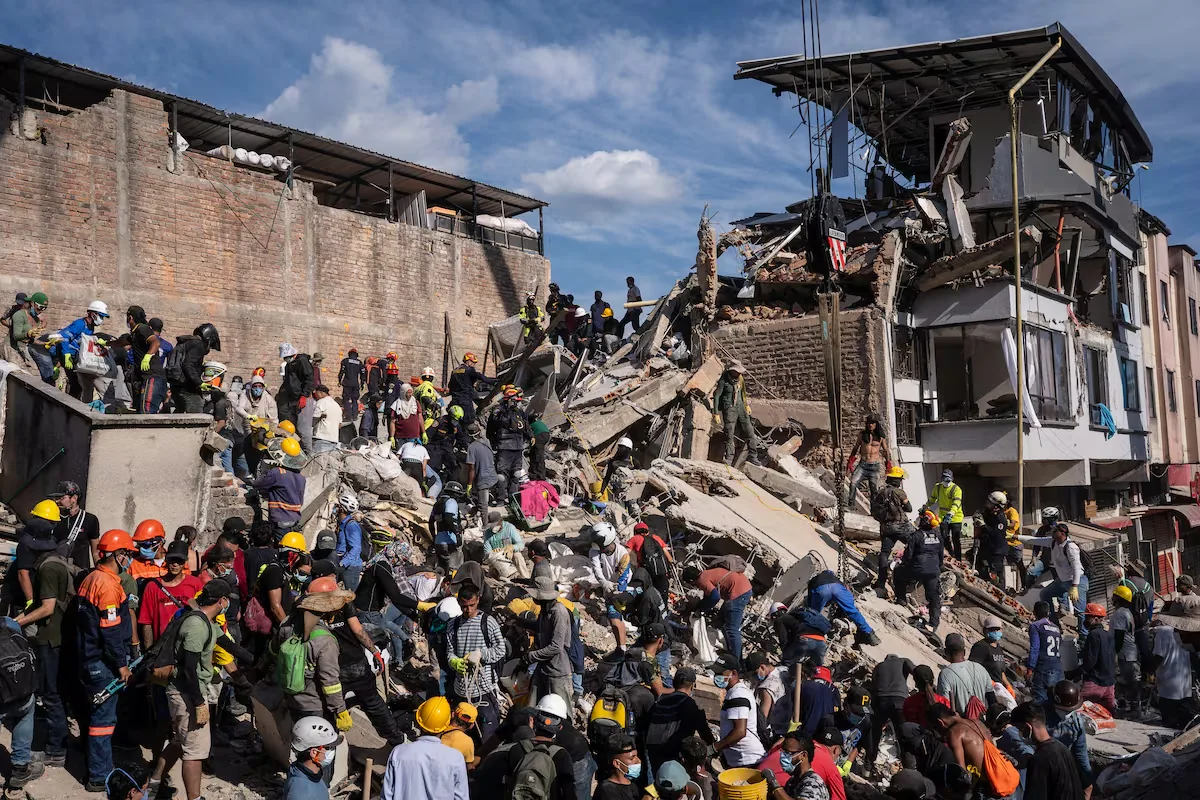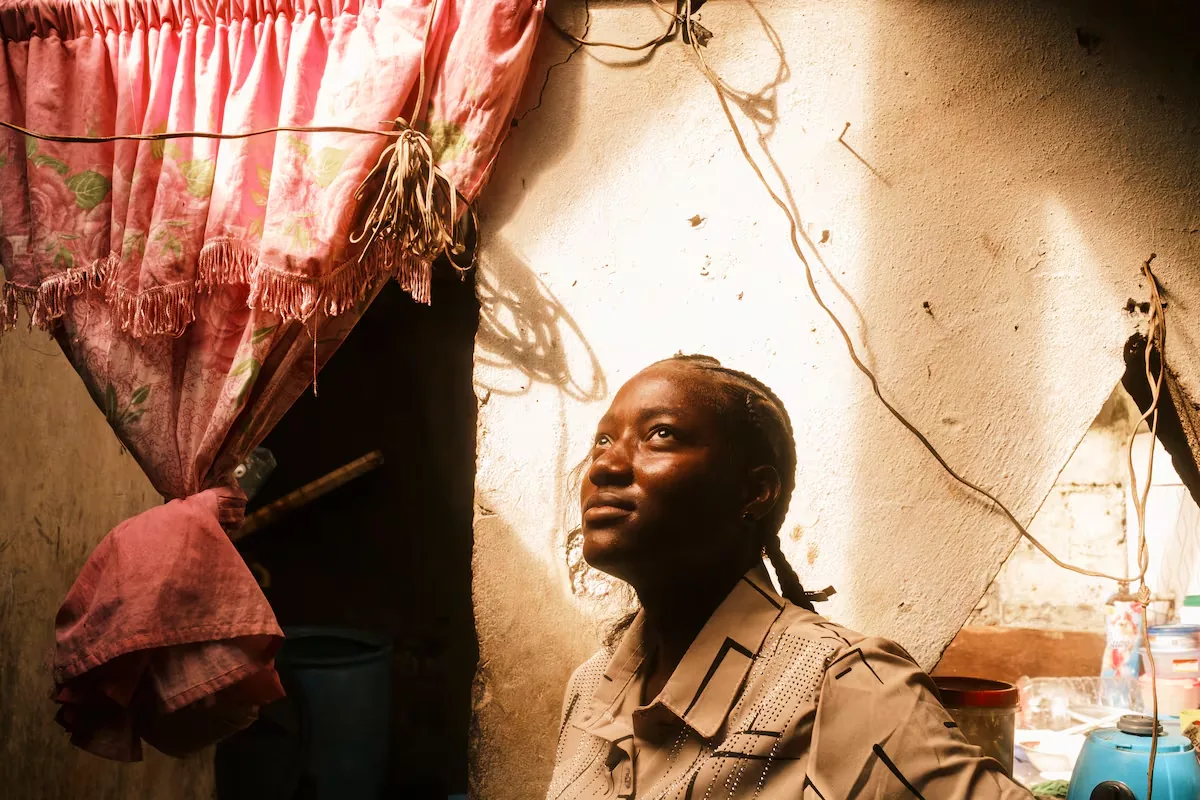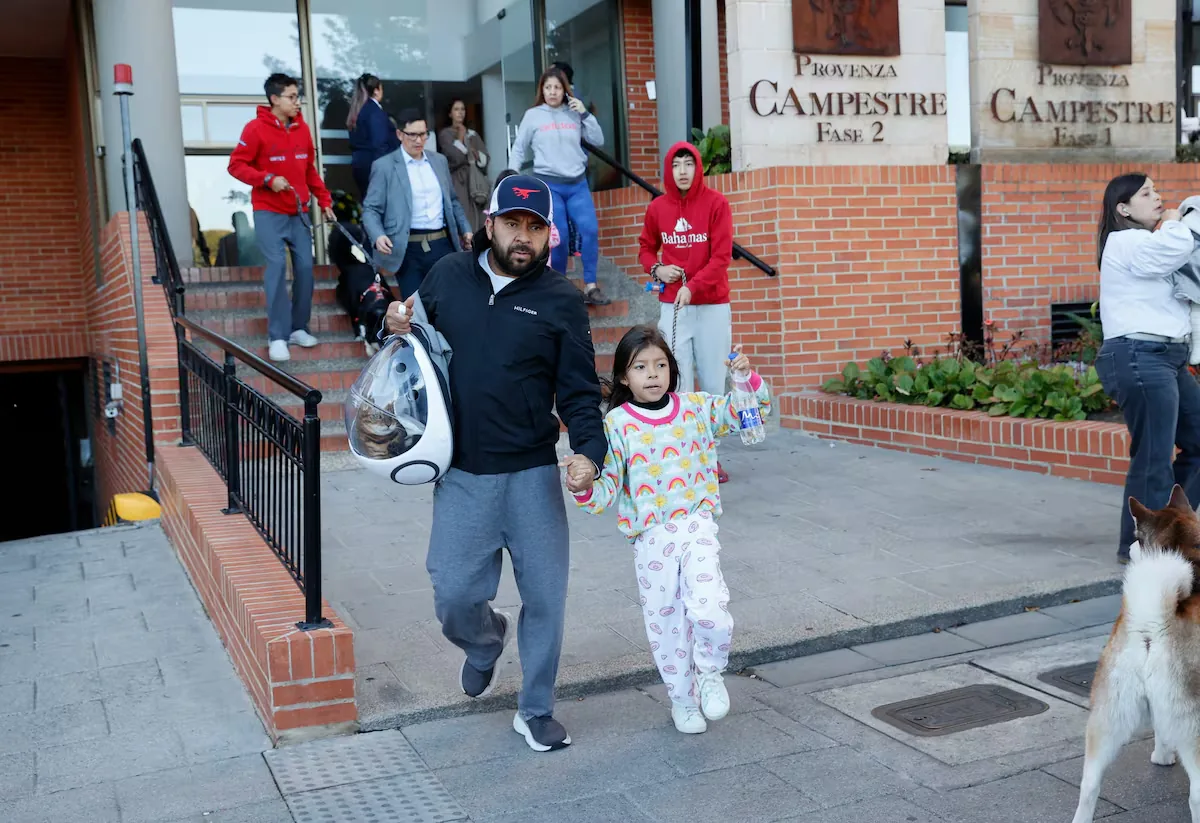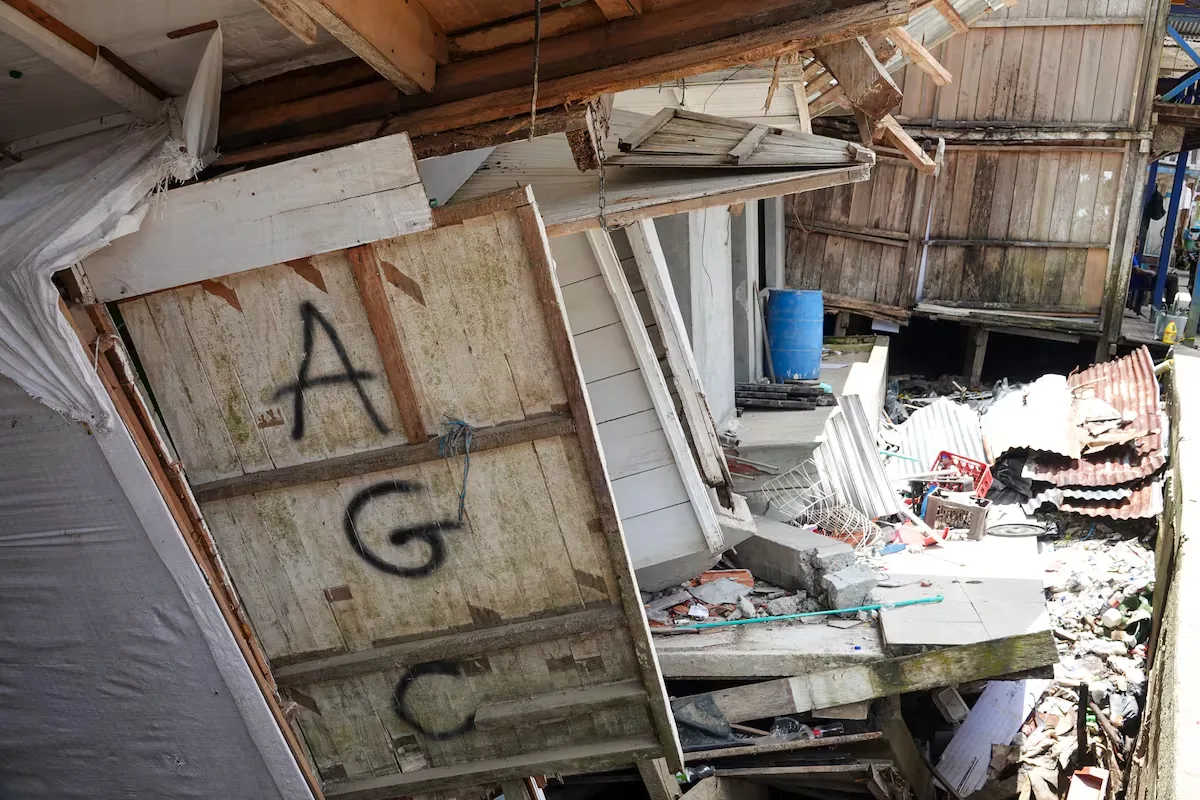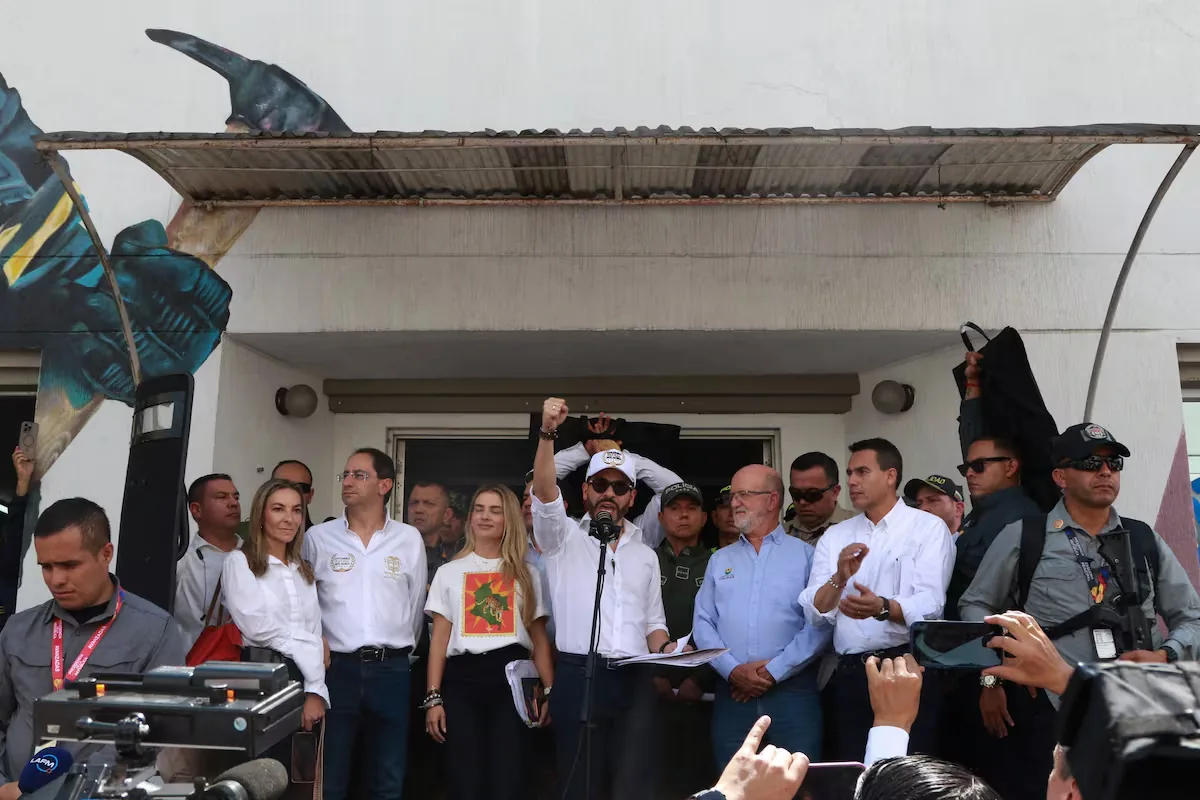
After the magnitude 7.4 earthquake that shook Colombia this Monday and has left more than 200 people dead, a debate has erupted in the country over the decision of Abelardo de la Espriella’s Government to accept international aid in the form of supplies or logistical support, but not rescue teams. The harshest revelation of this reality came from one of the president’s most notable international allies, the Salvadoran Nayib Bukele, on Tuesday afternoon. The opposition points to De la Espriella for not accepting support that could help save lives. His defenders, on the other hand, recall that the Government has indeed requested help. In the middle of this debate is Javier Pava, the acting director of the National Unit for Disaster Risk Management (UNGRD), one of the most trusted men of former president Gustavo Petro.
On Tuesday after the earthquake, Javier Pava sent an official letter to the Foreign Ministry claiming that the support of rescue teams was not necessary, as Colombia has sufficient capabilities. This is demonstrated by the document sent by the official to De la Espriella’s foreign minister, Omar Bula Escobar. “Based on the evaluation carried out so far and the available national capacities, the National Unit for Disaster Risk Management, through the Search and Rescue Program, considers that, at this stage of the emergency, it is not necessary to request or activate the deployment of international search and rescue teams (USAR),” reads the text digitally signed by Pava this Tuesday, August 11 at 13:45.
Pava explains by phone to EL PAÍS that, before writing the letter, the foreign minister informed him of four countries interested in sending rescuers: El Salvador, Peru, Israel, and the United States. “In Colombia, we have a huge capacity of rescue teams, we have 23 USAR groups (Urban Search and Rescue), so I carefully looked at what they offered us,” he says. “In the case of El Salvador, they were not certified teams, they had no experience in this type of situation. I also told the foreign minister that those from Peru are not certified either,” he adds. His rejection of Israel and the United States was different. “I said ‘ugh, it seems complicated,’ because they have a political strategy,” says the director, who comes from the left. “Of course, it is good to have help from whoever it is, regardless of where it comes from, but you have to see what we need most and what we already have covered. Things may change in the coming days, but at that moment, we had the capacity covered in rescuers.”
He says he made a decision. “Between Israel and the United States, I prefer the United States. But not the rescuers, because we have a good team here. I thought it was better for them to send their disaster coordination experts, who have very good technology to organize satellite information in real time,” he adds.
It was from there that the Foreign Ministry took the next step: requesting support from multilateral entities and different countries in what Pava asked for, who hours earlier had announced he would leave his position that same night. In fact, in a later document, the head of the entity attending the disaster makes it explicit that three field hospitals and several thousand food, kitchen, and household kits are required, including pet food.
Pava says the foreign minister initially did not want to receive support from Mexico, which has a left-wing government. “The Mexican topos seem to have come without authorization, and now they have to formalize their entry to operate,” he says about the rescuers already present in Colombia. The political disagreements were very evident in the 48 hours he was in charge of the UNGRD direction of a government with an ideology opposite to his, and when the incoming director had not been appointed nor was there a handover with him. “They distrusted me, and I distrusted them,” says the now former director. “In meetings, I was a fly in the ointment, because they understand that I am from Petro’s very close circle of friends, not a second-level official.” Despite this, Pava remains the acting manager of the Adaptation Fund, another sector entity for which there is still no replacement from the new Executive.
Read more Leo Messi says goodbye to his father with a moving letter: «I don’t know how to go on»
The letter with Pava’s recommendations about the rescuers shows one of the fundamental steps when requesting international aid in an emergency. The rules require that this aid focus on needs that Colombia cannot address autonomously. In an emergency of this magnitude, these can be multiple: besides rescue teams, machinery, logistical capacities, medical supplies, power plants, or water purification plants may be required, among many others. In the document, Pava made it clear that the rescue teams —USAR, in international jargon— that Colombia has would be sufficient to address the damage known at that time.
This clarification about what the country needs occurred under very particular circumstances. De la Espriella was sworn in on Friday, and at 7:34 a.m. on Monday, when the earthquake shook Colombia, he had barely positioned his cabinet and a handful of frontline officials. The rest of the State still had officials appointed by his predecessor and political nemesis, Gustavo Petro, or was temporarily occupied by lower-ranking officials, following the resignations of members of the left-wing government team.
The process of international aid is complex. And the Government’s response was typical of a team that is still settling in. That led to statements not only from Bukele but also from other figures such as Jens Laerke, spokesperson for the United Nations Office for the Coordination of Humanitarian Affairs, or the Chinese ambassador to Colombia, Zhu Jingyang, who asked the Colombian Government for a clear, forceful, and organized response regarding their offers of help.
This Wednesday, when the initial nervousness and excitement have subsided a bit, Colombia has seen the arrival of some international rescuers. First, groups of volunteers who, independently, have come to the country to help in rescue operations — like the Topos from Mexico — in the same way neighbors and citizens of all kinds have done in Pereira, Cali, and other affected places. Then, on Wednesday morning and after Pava’s announced resignation and his replacement by David Tamayo, the Foreign Ministry welcomed a team of 22 experts sent by the United States. It had already been 51 hours since the tragedy.
Read more The price of gasoline is approaching its yearly high during the mid-August exodus operation