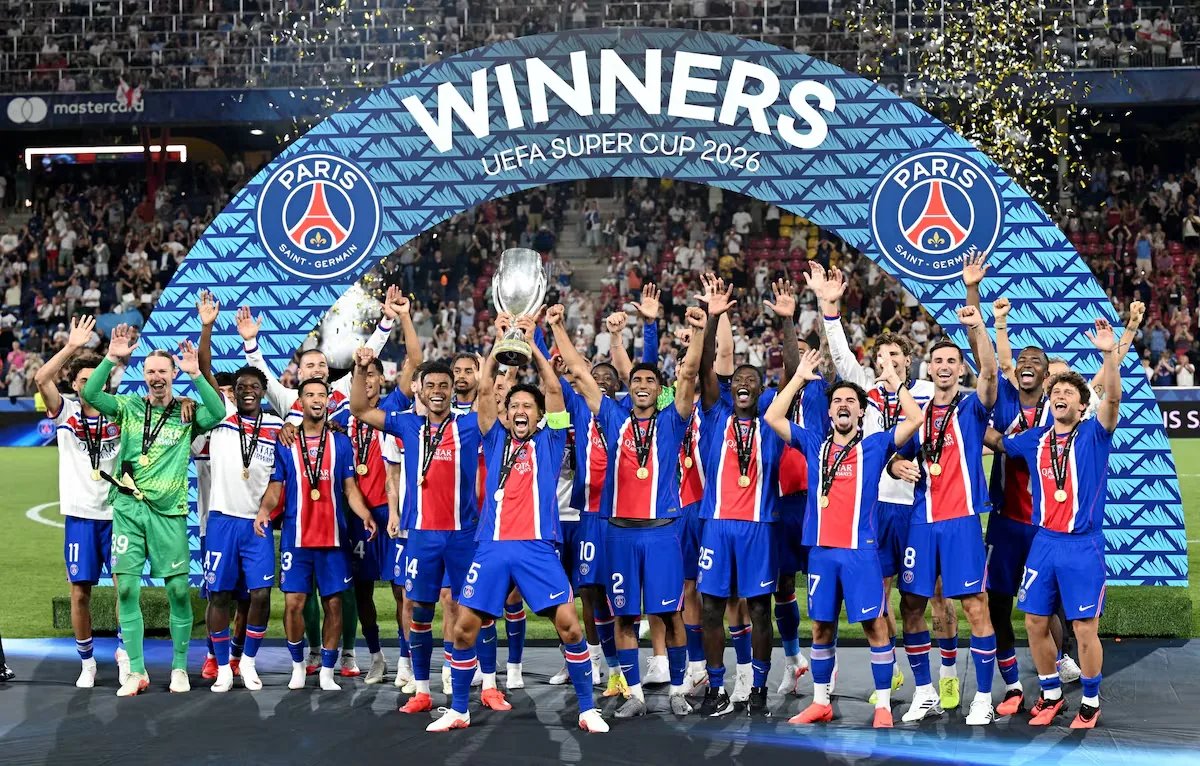
Opponents pass one by one and some are content with just tickling them, many are overcome without a peep, all leave empty-handed. No one can beat PSG, which neither loses its appetite nor its accuracy, nor any title. Nothing now seems like a hyperbole around Luis Enrique’s team, capable of stringing together two Champions Leagues, one Intercontinental Cup, and now two more European Super Cups — matching the record held by Madrid and Milan — after dismantling Emery’s Aston Villa, a rival who proudly and bravely defended their status as Europa League champions. But, like all, they fell to the Parisian siren song and its enchantment with the ball at their feet, now a hegemonic team.


The final announced a duel between Spanish coaches, also a clash of styles. Because Luis Enrique’s PSG is described by possession, with patience in build-up but fire in finishing; because Emery’s Aston Villa relies on brave defensive work to launch counterattacks. And both stuck to their script, their playbook, which has led them to repeatedly crown themselves in Europe. A logic that did not contradict the axiom that the big fish eats the little fish.
Thus, Villa worked hard to protect themselves inside, with forwards pressing the center-backs so the opponent would not grow from the inside lanes. Keeping Vitinha away from the ball is always a good idea. But PSG has so much football and skill that they found the cracks with circulation to autograph from the start a soliloquy of possession against an opponent who cornered themselves with very narrow lines and, led by the goalkeeper, football reduced to a few tiles. And PSG did not get their way, tangled in the final meters. Now a loose pass from Hakimi, now a feeble shot from Vitinha.
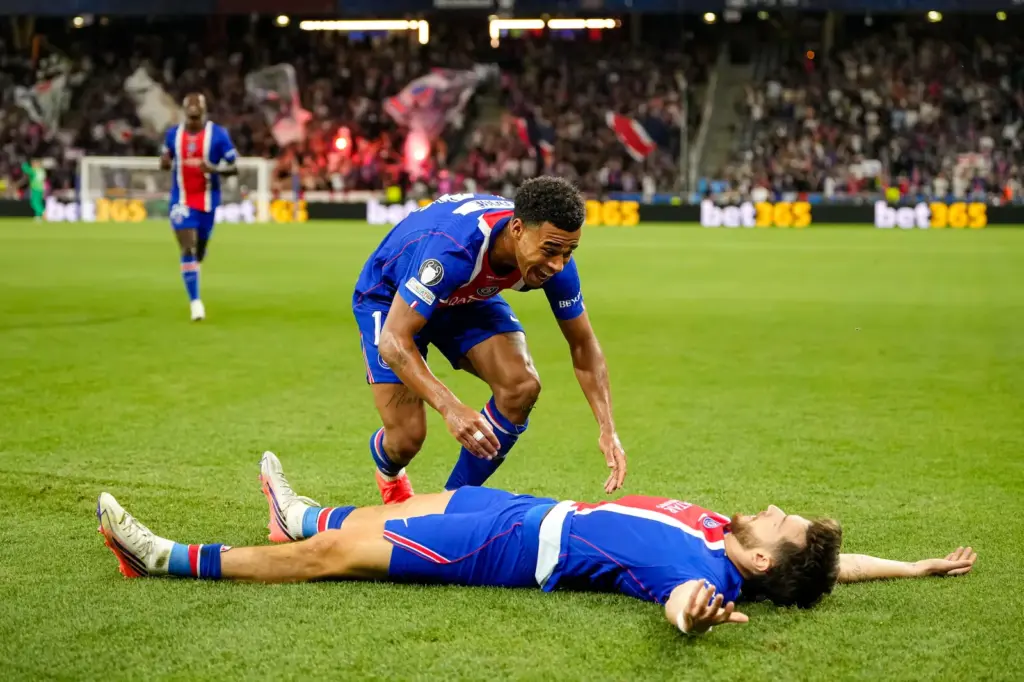
But at that time the legs were still allies of PSG, who applied pressure after losing the ball with cunning and efficiency, managing to dismantle the rival with a steal and a pass from Vitinha, with a cut and a shot from Kvaratskhelia, the biggest star who missed the World Cup, one of the most decisive footballers on the planet, one who again lodged the ball in the net with force.
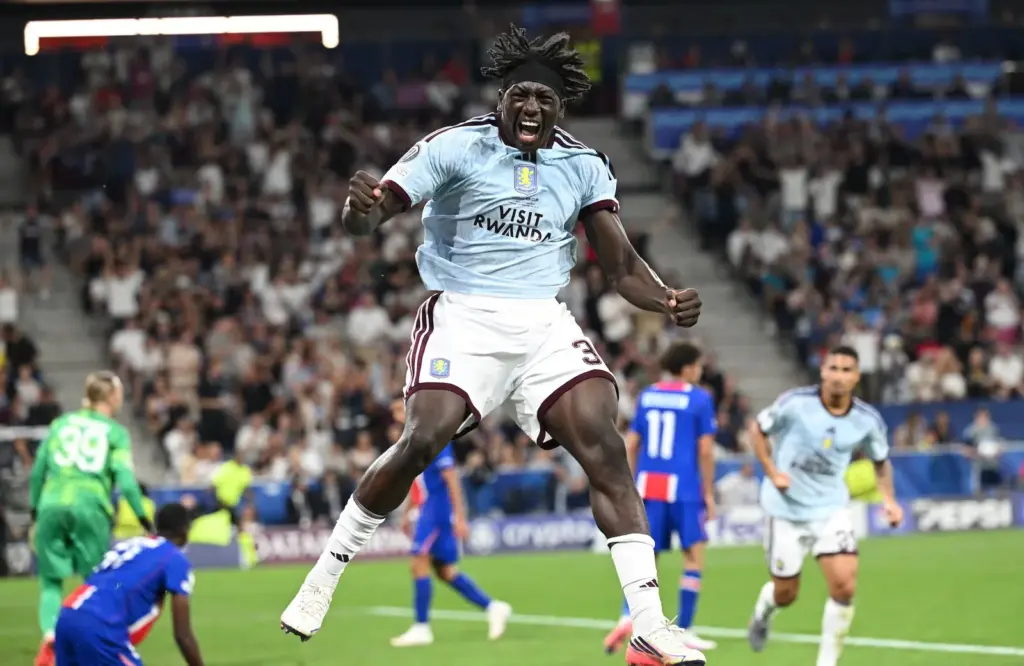
Aston Villa was not unsettled, more physically intact, because a steal was enough to activate the attack mechanism, so typical of Emery, who sets up in the opponent’s area after many meters and few passes, greyhound runs to clear the rival. Like that shot from Kamara from the edge of the area that almost found the goal; like that cross shot from Madjo from a McGinn center. He was not the only young striker, the youngest (17 years and 212 days) to start in a European final.
Read more A trick by Brahim gives Madrid the victory at the Teresa Herrera
Supported by a Madjo as young as he is huge on the pitch, Villa launched counterattacks and even managed to hold the ball in the opponent’s half after a back pass from the striker. There was no recipe for Madjo’s explosion, all pride and physique — he resembles Lukaku — all hunger. And he rang the post with a low shot; and persisted with another header that was more of a crown shot; and hit the jackpot after beating his marker to a lateral cross, with an inside-foot shot to beat the rival.
After the teams returned to the pitch after halftime, PSG brought on Dembélé and regained control of the ball, dominating the space. But not the time because Villa approached the opponent’s area with a worrying sense of danger. Until Doué made a diagonal run to face the goalkeeper alone, to settle the ball on his left foot and finish with flair and elegance to the far post.
Villa did not give up or lower their heads, now with pressure and advanced lines, a testament to Emery’s notebook and a success for the spectacle, more gaps and chances, a back-and-forth duel, without pause or script, fueled by substitutions. To a shot from Dembélé responded a cross that Abraham almost connected with; to a shot from Doué came a try from Gomes. But no one celebrated another goal, to Villa’s dismay and PSG’s delight, who once again imposed their law in Europe.