





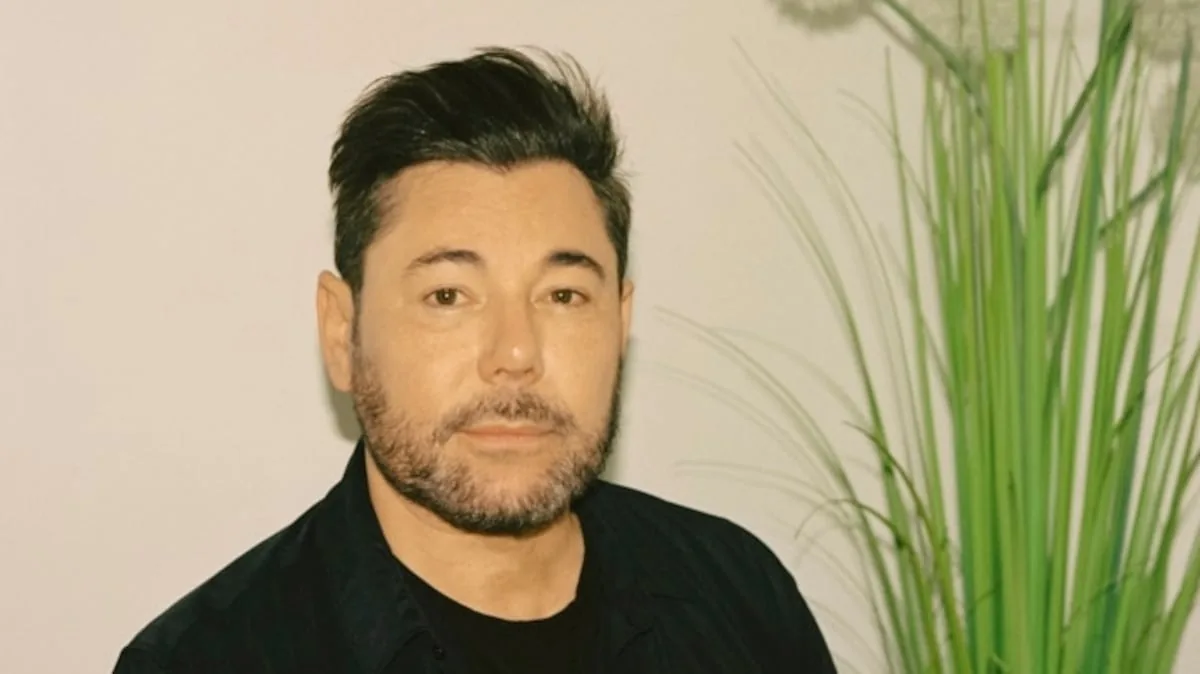
Miguel Poveda (Barcelona, 53 years old) assures that the story of his obsession with Federico García Lorca is full of coincidences. It was by chance that he found the key for the cover of the first album he dedicated to him – a book opened exactly to the page where the drawings that inspired him were – and also by chance he came across the house in Granada where the poet’s early adolescence had taken place, which today has been transformed into the Federico Cultural House in Granada.
But his latest discovery has not only personal relevance but also philological significance: as announced on April 16 on RTVE, the singer has found unpublished verses by Lorca on the back of a handwritten poem he acquired at auction. “It all started when the manuscript of La raíz amarga arrived, a poem by Federico that had been circulating for years in auctions and sales from different antique dealers,” Poveda responds in writing days after this interview, which took place in person before the announcement of the discovery. “Finally, upon purchasing it, I found that behind it there was a pencil-written text and with Pepa Merlo, an expert and PhD on Federico García Lorca, we realized it was an unpublished poem.”
The last coincidence is that all this happens to him on the eve of premiering his most recent project, which is neither an album nor a show, but a film. It is titled Enlorquecido: solo el misterio nos hace vivir, premieres on April 23 in cinemas, and is something like a travel diary. In it, the singer visits the places where Federico García Lorca lived and delves into the reasons for his obsession with the Granadian poet. Although, more than obsession, he prefers to speak of “shaking.”
“I need to know more about him, because his sense of justice, equality, his human values, everything I have read about him draws a profile that seduces me a lot. I want to know more about him because those values have made me a better person”
Poveda says his first approach to Lorca was almost shy. He knew the album of popular songs by Carmen Linares, the lyrics of Camarón, and little else. Shortly after emerging as a singer, Umberto Eco invited him to sing at the University of Bologna and asked that the recital be based on poetic texts. “I was just out of the shell, I was 20 years old, I had just won the Unión, I had never read poetry,” he recalls. That was a first encounter. But the decisive one came as a surprise. “A Venezuelan friend, a playwright, gave me the book Sonetos del amor oscuro for my birthday. I read ‘I am afraid of losing the wonder of your statue eyes’ and I felt very identified. At that time I had a partner who was passing through Barcelona and, after finishing her studies, was returning to Venezuela. It was a relationship with an expiration date and that poem made me cry. I thought I wanted to sing that, what was happening to me.” Little by little, he says, Lorca seeped into his life, “a small, continuous drip.” There came a time when he thought Lorca deserved his own project. “To immerse myself in all the guts.”
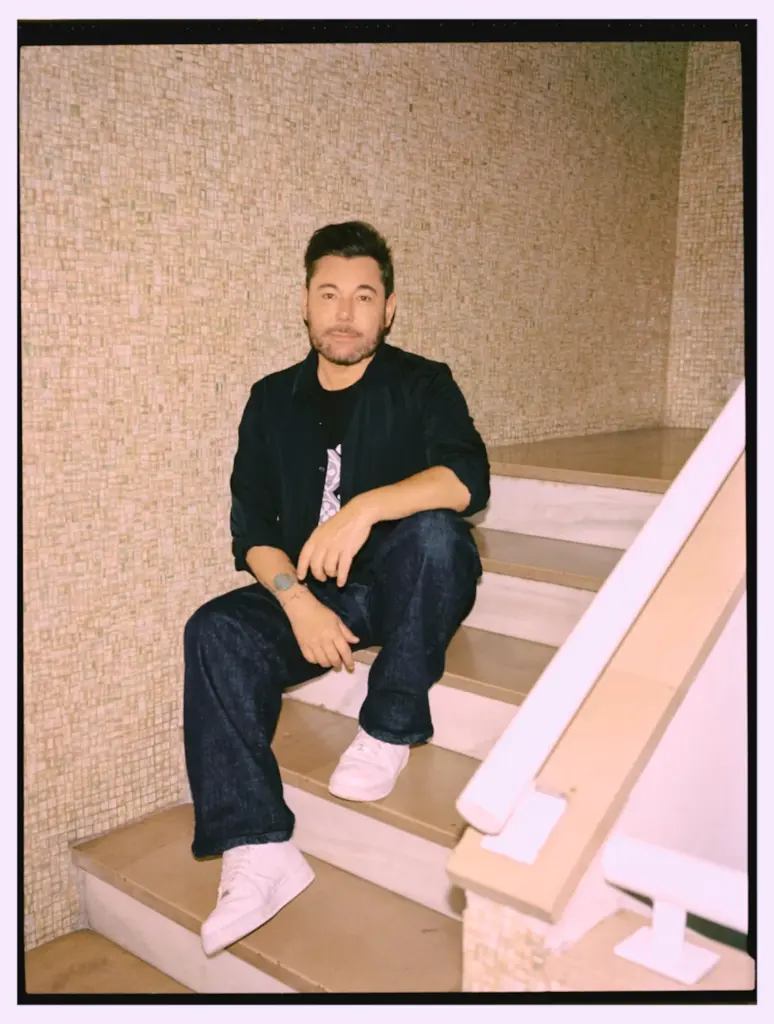
This film arose during the pandemic, when the singer began reviewing videos he had recorded with his phone during the international tour of Enlorquecido, the first album he dedicated to the work of the Granadian poet, which declined his most surreal and tormented facet, that of Poeta en Nueva York and the last sonnets. The album was a success and, shortly after, Poveda undertook another project with an almost minimalist spirit: recording the Poema del cante jondo with guitarist Jesús Guerrero. The documentary, which gathers images from this entire process as well as footage specially shot for the occasion – including trips to Buenos Aires and Montevideo – features a script by playwright Alberto Conejero and narration by Juan Echanove at some points, although the main voice is that of the singer himself.
“My idea was to tell the world about my journey to the heart of the poet, which is not only his work but the man, the human being,” he reflects. Therefore, despite the discovery of these unpublished verses, he assures that his intention is different: to approach Lorca’s life “with love and curiosity.” Even after finishing the documentary. “Very magical situations continue to happen with things that are unexpected for me, because my search with Federico has more to do with knowing and understanding that heart whose beat was taken away one night in August 1936, when he was only 38 years old and had a world in his hands full of art and ideas to show the world.”
“Okay, very well, you have killed Federico for being homosexual, you have wanted to silence him, but for me it has to serve so that this does not happen again. I do not use Federico’s murder as a weapon, many politicians have done that”
The first time he sang Lorca’s verses he barely knew his story. Today he is almost a scholar. What surprises me a lot is that, although he lived only 38 years, because he was murdered very young, he had time to live many things. There is an infinite world in Federico that you never finish learning. He covered a lot. He was a very restless man, a great traveler. I read a lot and keep learning things about him. But I do not consider myself a scholar.
Has dedicating two albums and a film appeased your curiosity? When I recorded Enlorquecido I set up a lorquian altar in my office with his books, with things that had been given to me. And then I made an album to celebrate my 30 years in music and my mind was on other things. I remember that I worked in that office and saw his photos and asked for forgiveness. I said “I am with you, hand in hand, I will come back. I am not here, but I am. Wait for me.” And suddenly, after a while, I told myself I should make the album of the poem of cante jondo. As a flamenco singer I had to go to that work. And there the flame of obsession started again. In the end, it is always an obsession. I spend all day reading things about Federico. Now I am reading a book I had already read many years ago, by Carlos Morla-Lanch. It is a diary that tells many anecdotes about Federico. The more you see his human side, the more you love him.
In the documentary, when he visits Columbia University where Lorca studied, he explains the need to find the trace of the real man, to avoid mythifying him. Of course, he is a real man. I want to humanize him and make him a little more tangible through the testimonies of his friends, because he is a man who holds a lot of mystery. It is not known where he is buried, his body did not appear, there are no traces of his voice either, despite having done many radio interviews in Cuba, Buenos Aires, and here in Madrid. Also, during more than forty years of dictatorship, he was silenced, hidden, forbidden. He was brutally murdered, erased from the map, literally. And that was not talked about. Nor was it taught in schools.
And what have you found when looking for that real and tangible figure? I need to know more about him, because his sense of justice, equality, his human values, everything I have read about him draws a profile that seduces me a lot. I want to know more about him because those values have made me a better person. It is like a little lamp that one always wants to have in front. He was ahead of his time in his defense of women, his defense of the disadvantaged, his defense also of theater. He was a man economically comfortable, and he saw theater in relation to the people. When he was already a successful author he continued going to the villages to bring Calderón’s work. He must have had charisma, besides a halo of mystery. And we all need that. I think any sensitive person needs that kind of character as support. His life is like a hug to this world that comes with a wave of horrible senselessness. Suddenly, Federico is a wall to hold on to. He saves us. He is a symbol against hatred.
For several generations of artists, Lorca has been a model of conduct and social involvement. He transformed me. As I get older and delve into his way of thinking, I understand my profession as something that goes beyond enjoying a gift that the universe has given you, cultivating it a little and using it to make a living. My work can also be transformative for society. So I need to take that message and make what I do not only serve to boast, although I never do it from that place, no matter how easy and tempting it is. I would like my gift to serve not only to get a pat on the back and be told “how well you sing,” but for something good to happen to the person in front. Because this society seems more and more dangerous and hostile to me. And, having a son, I want the world to be different. When it seems your head is going to explode from the things happening in the world, artists like Federico are a refuge.
“Seeing Federico’s culture in front of the Spanish Theater is something that comforts me. It humanizes the character, brings him a flower, says thank you. He is someone who is no longer before us, but also has no grave”
There is much debate about how Lorca lived his homosexuality, but the truth is that over the years he has become a tutelary figure for the LGBT community. A refuge, as you say. First, because one of the reasons for his murder is that he was homosexual. And I think that message of hatred is not answered with hatred. Okay, very well, you have killed Federico for being homosexual, you have wanted to silence him, but for me it has to serve so that this does not happen again. I do not use Federico’s murder as a weapon, many politicians have done that. I do not use it to hate the person in front, but so that it does not happen again, to transform people’s mentality. It is an example of how far hatred can go. And there were thousands like his case. We need a reference, but not to use it as a quarrel, but as a life choice, as a reference.
There is a scene where he visits Lorca’s father’s grave to bring flowers. And one has the feeling that he goes to that grave because he cannot go to Federico’s. Of course, and the same happens when I visit the graves of his family or friends, who have had a burial. It is not so much religious as having a place to bring a flower.
Why is the gesture of bringing flowers still important? Because it is a sign of gratitude, people need to humanize. That is also why sculptures, right? For example, seeing Federico’s culture in front of the Spanish Theater is something that comforts me. It humanizes the character, brings him a flower, says thank you. He is someone who is no longer before us, but also has no grave. We do not have his remains. That is why I will thank his mother, for the education she gave him, his sisters, his father too, because being a man of his time he supported his son’s career a lot. I also thank Rafael Rodríguez Rapún, his love, maybe not for the good life he gave him, but for what he inspired. I think this question can be very well answered by people who lost their relatives in the war and have spent their lives looking for their loved ones. It is a chapter that is not finished closing.
That was one of the controversies. His own family said it was not necessary to know where he was. That discourse could be understood before, when none of the people who were brutally murdered between Víznar and Alfacar had been found. Searching for Federico, who was a symbol, was searching for one among many. I understood that discourse at the time. Nowadays no, because many more bodies have been raised, hundreds or thousands of bodies. Many remain to be identified, but many families have been able to bury their relatives. So now, why not keep searching? Now it is possible.
Would you like his remains to be found? Everything in life is stages, and now I no longer live so obsessed with finding Federico’s body. Now I am more focused on all the light of Federico in life, on that young adolescent Federico, who is the most unknown, the one who begins to awaken to literature, to music, that enthusiastic young man who comes to Madrid from the Vega of Granada, and begins to discover things. That is the Federico who obsesses me now. But when I think about his death, the truth is that I would like to bring him a flower to the place where his remains are.
And do you have hope that this will happen? I would like to. I don’t know if I call it hope or not, but it is a projection I make. It is a dream I have not abandoned.
Read more How the Left Lost the Pulse (and How to Regain It)