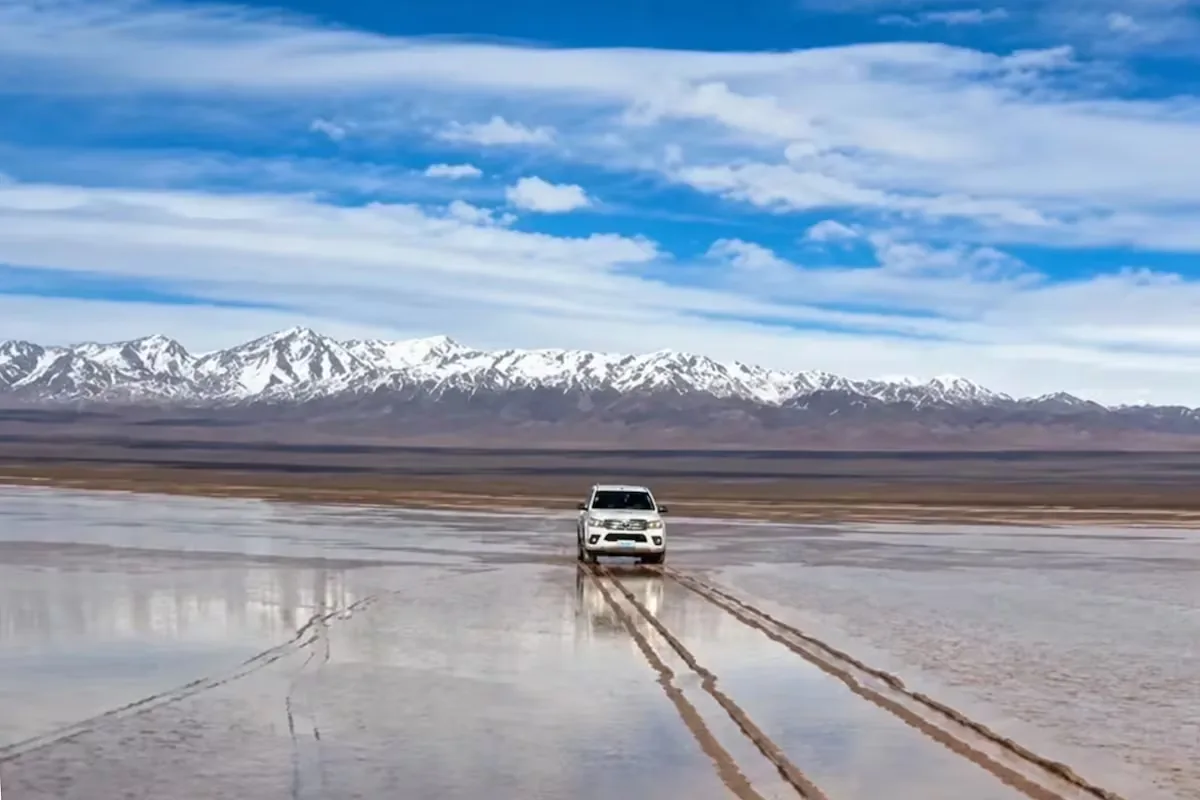
A white pickup truck and the deep tracks it left behind stand out in the middle of the Pampa del Leoncito plain, a protected area in northern Argentina at 1,500 meters above sea level. This vast white plain, which occupies the place where thousands of years ago there was a lagoon that dried up, is in the news due to the damage caused by a driver who violated the prohibition of driving through this natural area.
On Saturday night, the doctor Agustín Añó, 46 years old, traveled about one and a half kilometers before getting stuck. He tried to reverse, used a ladder to try to get the pickup out of the mud, and unable to continue, he took down the motorcycle he was carrying in the bed and left on it, leaving a new mark. The mayor of Calingasta, Sebastián Carbajal, denounces that the damage caused to the place will take about a century to disappear and asks the Justice to impose an exemplary sanction. Añó argues that it was night and he did not see the signs prohibiting passage.
View this post on Instagram
Carbajal went to the place where the abandoned vehicle remains to show the destruction caused to this natural heritage of the province of San Juan, which thousands of tourists visit every year. “Look at the furrow, the damage it caused,” he says in a video posted on his social networks while walking the path made by Añó to reach the pickup. These images contrast with the pristine landscape seen around, with the snow-capped Andes mountains in the background. At night, its beauty is even more overwhelming: the complete darkness of the place makes it one of the best places in the world to see stars.
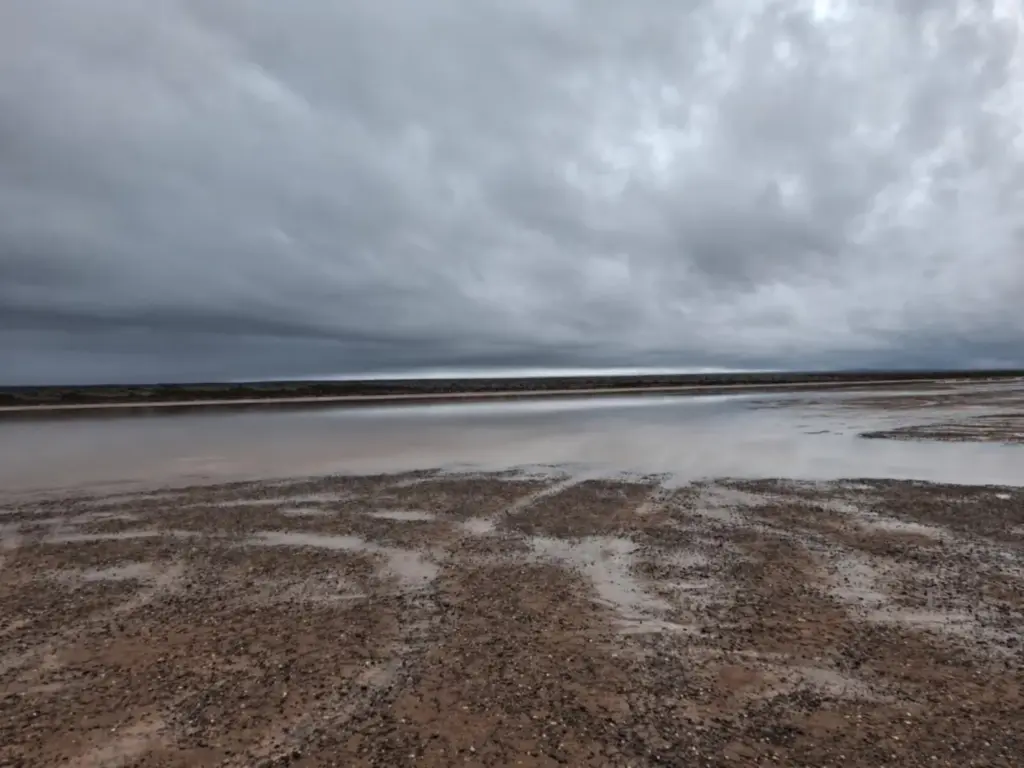
The justice has ordered to keep the vehicle in place, without trying to remove it until the water level drops, to prevent worsening the situation. Access to Pampa del Leoncito, also known as Barreal Blanco, will remain restricted until the end of the month due to the incident and the rainfall, which makes this unique ecosystem especially vulnerable.
The director of Cultural Heritage of San Juan, Gladys González, highlighted the seriousness of the events and the outrage caused among the local population. “What happened in Pampa del Leoncito this weekend is very regrettable,” González emphasized this Wednesday before the media. The provincial director agreed with Carbajal in assessing that the damage will last for decades as it is much worse than that caused by other vehicles that have previously violated the rules, such as ATVs. During Añó’s unsuccessful maneuver to get the vehicle out, the wheels made a hole up to 25 centimeters deep.
Read more Argentine parties begin to take positions ahead of the 2027 electoral race
The justice of the peace in charge of the case, Andrés Troche, reported that Añó voluntarily appeared to give his version of the facts. “He claimed he had an unforeseen event due to nightfall and the water. But it is not hard to notice and he is also familiar with the area. He crossed it around 8 p.m. on Saturday,” explained the judge.
One thousand dollar fine
The provincial legislation provides for an economic sanction of up to 1.5 million pesos (about one thousand dollars) for the damage caused, a penalty that the mayor of Calingasta considers insufficient. “For now, the justice of the peace of the Calingasta department is handling it, but it is possible that the complaint will be referred to criminal justice due to the seriousness of the situation. The idea is to try to make that happen and also to submit a bill to the Chamber of Deputies for the protection of this heritage,” said Carbajal. “What I hope is that it will be an exemplary sanction, because it is the only way for people to control themselves, because we have not been able to do it,” he lamented. It is the most serious incident in recent years, but not the only one. At least on three other occasions, damage caused by violating the protected area rules has been recorded.
Skies without light pollution
Pampa del Leoncito is a plain 12 kilometers long by about five wide and is located at the lowest point of the Calingasta valley. The scarce rainfall that falls in the area concentrates there until heat and dry wind evaporate it and leave a layer of clay sediments. What today looks like a white desert was a large lagoon about 10,000 years ago.
Since 2002 it has been part of El Leoncito National Park, the first in Argentina with the official mission of protecting the sky. Its more than 300 clear nights a year favored the installation of two internationally relevant centers for observing celestial bodies: the El Leoncito Astronomical Complex (CASLEO) and the Carlos Ulrico Cesco Astronomical Station.