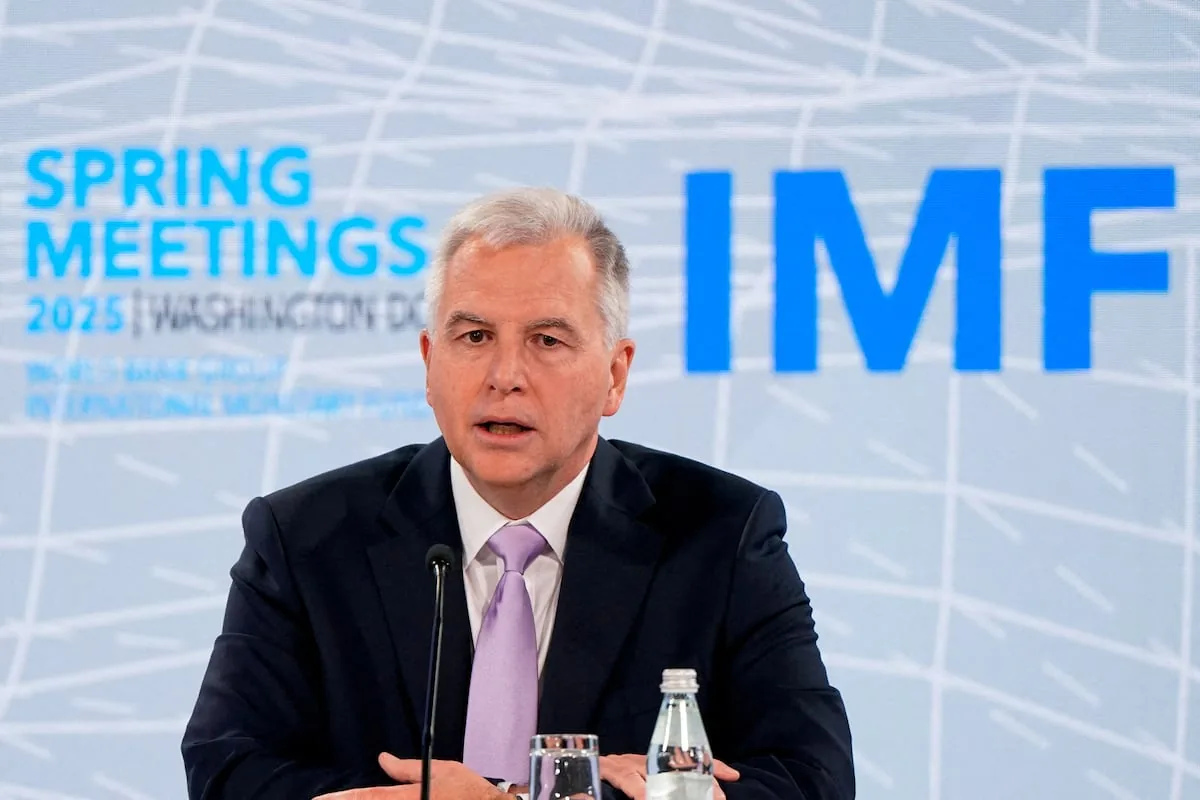









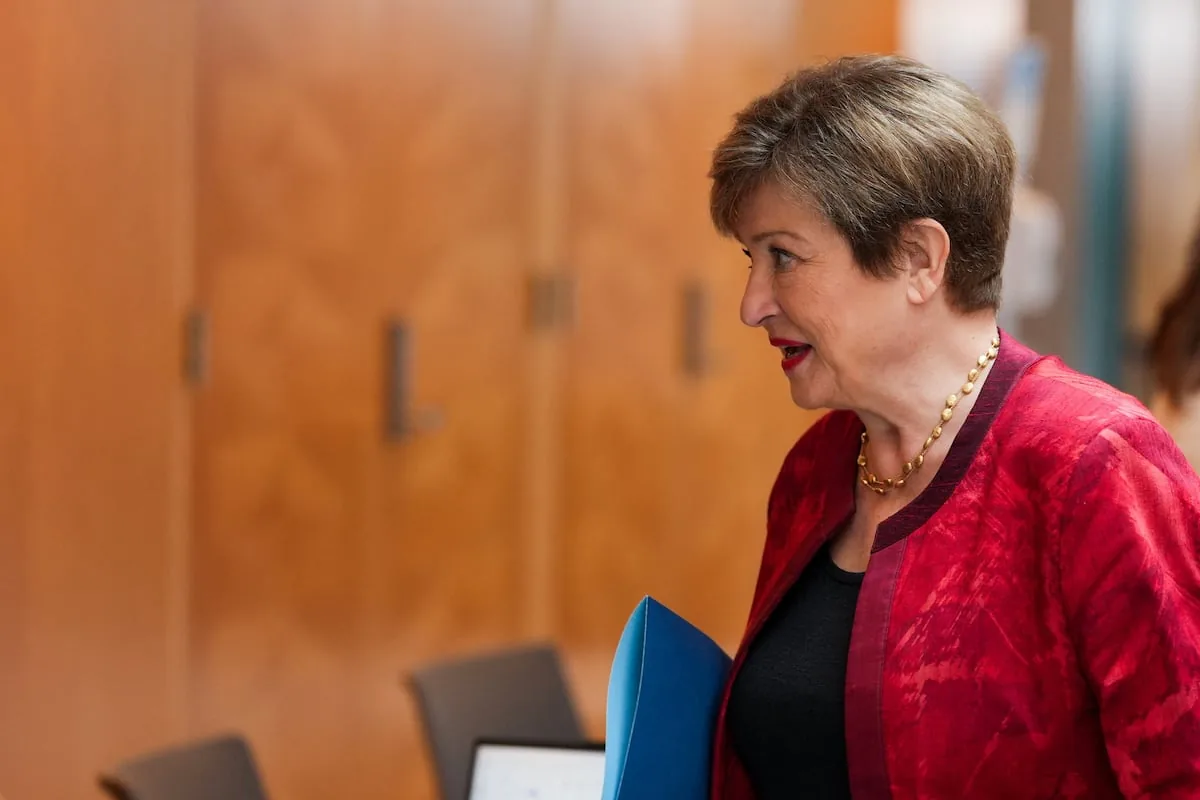
“We observe with great concern the impact of interruptions in the supply of oil and gas in the Middle East, as they have widespread repercussions on all economies,” stated the Managing Director of the International Monetary Fund, Kristalina Georgieva, during the press conference held this Wednesday within the framework of the IMF spring assembly along with the World Bank. Georgieva has urged countries to prepare for difficulties in obtaining oil and natural gas, and the consequent price escalation. Therefore, she has called on governments to take measures to reduce energy demand. “They must take them now; do not wait four weeks,” she emphasized. “Because,” warned the Bulgarian economist in one of those messages that leave a bad feeling, “if the conflict persists and all prices remain high for a prolonged period, we must prepare for difficult times.”
Read more United States changes its envoys in Caracas just 100 days after the intervention
The European Commission has taken note. It is finalizing a package of measures to face the emerging energy crisis. Among the proposals being prepared is to implement at least one mandatory telework day per week, close public buildings whenever possible, and reduce public transport prices.
The world has been experiencing a succession of disruptions since the outbreak of the COVID-19 pandemic six years ago. It was followed by the war in Ukraine, with an energy crisis and its subsequent inflationary spiral. Last year, Donald Trump destabilized the world with tariffs. The war in Iran is the latest phenomenon threatening to tear apart the seams of the global economy. Countries have faced these blows with support programs for businesses and households. They learned during the Great Recession that austerity is not the best medicine to face them. Over the last decade, they have accumulated a lot of debt, which must be paid. And the IMF warns, in a report also released this Wednesday, that the war in the Middle East threatens to shoot that global indebtedness to levels unknown since World War II, with special emphasis on the United States and China.
The current conflict constitutes a great challenge. The eighth week of turmoil is about to begin, amid a weak ceasefire. The United States, which initiated the bombings on Tehran, is in a hurry to end the war but demands the reopening of the Strait of Hormuz, the strategic passage through which one-fifth of the world’s oil and liquefied natural gas transit, as well as other essential chemicals for the agri-food and pharmaceutical sectors.
Oil and other commodity prices have soared and dragged fuels along, while beginning to spread to food products. Tension in the Gulf is fueling an unprecedented inflationary spiral, according to IMF reports.
“We recognize that the magnitude of such impact, both on growth and inflation, will depend on the duration of these supply interruptions and the scale of the damage suffered by energy infrastructure in the Gulf,” Georgieva pointed out in her appearance, anticipating that the consequences of the war will be more noticeable in April. She explains that the tankers that set sail before February 28 have already reached their destinations, but there are no new deliveries on the way.
The Bulgarian economist cited Europe’s adaptation to a new energy model with more renewables as an example, after learning the lesson firsthand following the war in Ukraine, when energy prices soared.
“We know that new energy sources will emerge and new supply routes will be established. The problem is that it will take time: a year, maybe a year and a half. Meanwhile, what countries have at their disposal are appropriate policies that will reduce the magnitude of this imbalance. And, once again, I believe it is an excellent time to implement those good policies everywhere,” she insisted.
The highest since World War II
But the Fund’s economists are concerned about the long-term consequences. They warn that “global gross public debt rose to nearly 94% of GDP in 2025 and, if current trajectories continue, will reach 100% by 2029: a level previously only reached after the end of World War II.”
The situation is not expected to improve because many countries have approved relief measures to face the price escalation. “Even in those countries where debt dynamics have improved, public debt levels remain, in many cases, above the peaks reached during the COVID-19 crisis,” notes Rodrigo Valdés, director of the IMF’s Fiscal Affairs Department. “Higher interest rates and greater market sensitivity to fiscal news suggest that the room to accommodate fiscal consolidation trajectories is shrinking,” he specifies.
The organization created after World War II to provide financial support to countries in difficulty is concerned that expenses associated with population aging, such as pensions or healthcare spending; investments needed to face the energy and technological transition, as well as growing defense spending, not only leave no room to reduce debt but end up increasing it.
Read more Dutch and Catalan students forced to kneel and threatened with possible firearm in the Netherlands
The Washington-based institution is holding its spring assembly this week, where it presents its analyses on the course of the global economy. In the Fiscal Monitor, the report reviewing countries’ budgetary policies, it warns about the evolution of public debt in recent years.
The Fund’s economists are concerned because the fiscal gap has disappeared, the budget margin to reduce debt due to growth in structural expenses for social benefits (for example, pensions) or tax cuts in some large economies.
The Fund cites the United States and China as examples, whose size fuels concern. “The United States records a general government deficit between 7% and 8% of GDP, despite operating near full capacity and without a debt consolidation plan in sight; furthermore, its gross debt is projected to reach 142% of GDP by 2031,” it warns. And it sends a clear, unambiguous message: “For the United States, the reality is unavoidable: stabilizing the country’s debt trajectory will require measures both on revenues and expenditures, including spending on major social benefit programs.”
In a country with extreme aversion to tax increases, with meager public spending and rising political polarization, finding solutions to correct these fiscal imbalances seems difficult.
The other example is China. “China’s short-term fiscal expansion, aimed at supporting domestic demand in a context of deflationary pressures, has widened the country’s overall deficit to nearly 8% of GDP; likewise, the persistence of high deficits is expected to push its debt toward 127% of GDP by 2031,” the IMF emphasizes.
In Europe, the Fund notes, several EU countries have activated escape clauses from community deficit rules to face defense spending commitments. NATO members committed last summer to increase military spending from 2% to 5% of GDP.
“Among the poorest countries in the world, interest payments have reached historic highs relative to revenues, while declining aid flows are generating financing gaps that some countries have been unable to cover,” it warns.
The task is not easy, but the world is choking on debt and no one, except institutions like the IMF, seems willing to face it. “Internal instability further aggravates fiscal pressures: within countries, social unrest has increased across all income strata, and spikes in such unrest are associated with lower growth and higher primary deficits,” officials warn.
Therefore, it advises countries to launch support measures for the price increases caused by the war, ensuring these aids are temporary, targeted, and well-designed so they do not become permanent and do not represent another structural increase in public spending.