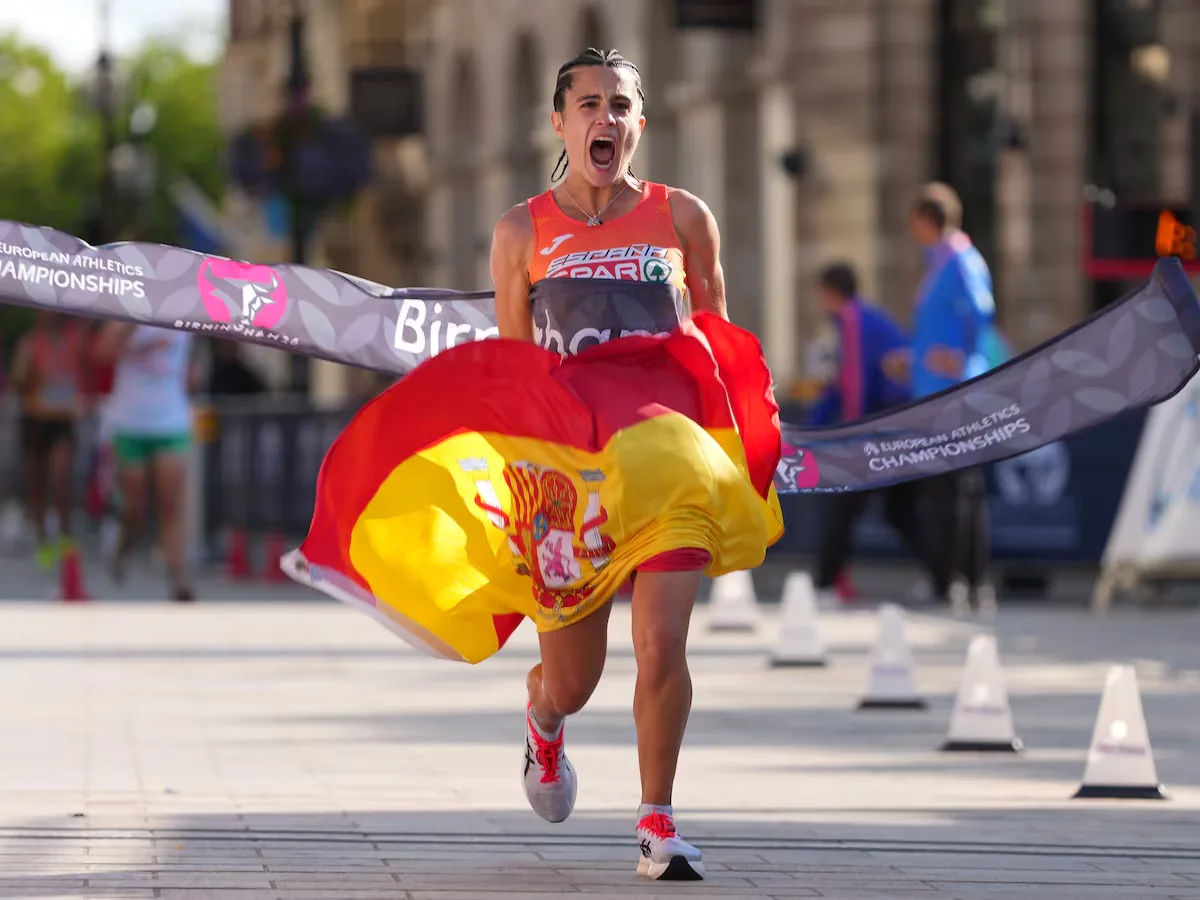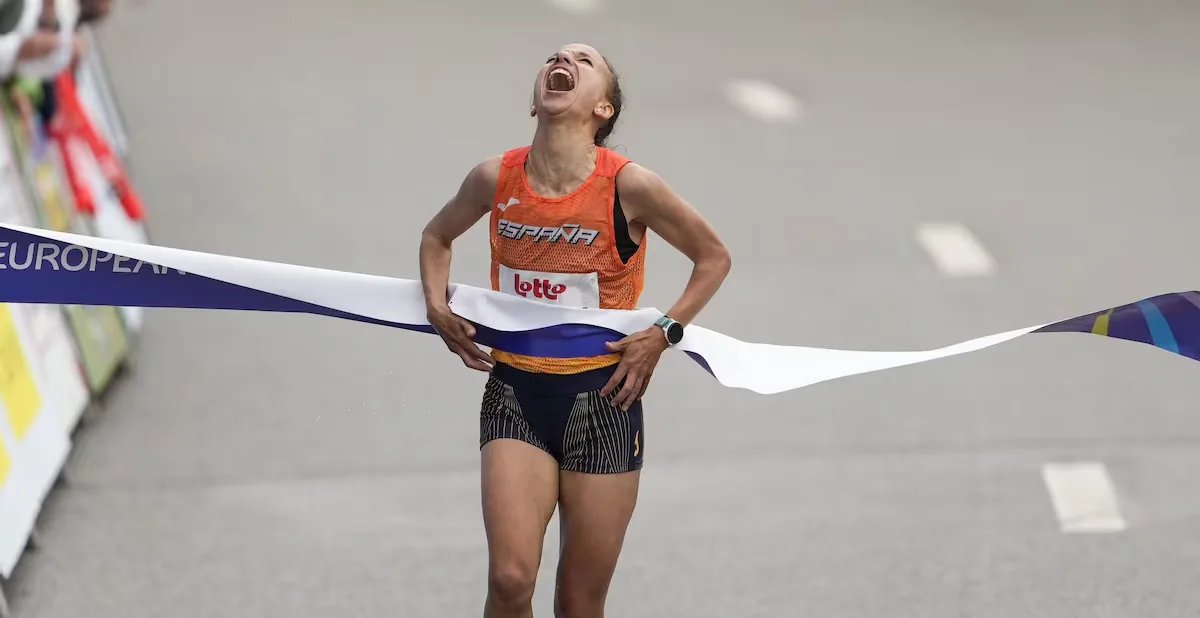
In front of the Leandro hotel, where the Spanish team is staying in Birmingham, buses, trams, and marathon runners pass by who can’t find another straight stretch to do a progressive run. So they take off and, as soon as the vehicle passes, they start running along Broad Street. It’s not the ideal place, but sometimes the marathon runner has to adapt. Ester Navarrete had it worse. The runner from Vigo was hit this Saturday by an urban bicycle that knocked her to the ground, with her forearms forward. An unnecessary scare before facing one of the toughest marathons of their lives: 42.195 kilometers with almost 500 meters of elevation gain. At least the heat wave has passed, and at half past seven, when the women start, and at 8:10, the men’s time (local time), the temperature will be around 14 degrees.
Read more The atomization of households: why the reduction in family size has negative economic effects
“The course is terrifying,” says Juan del Campo. “It’s tougher than the Olympic marathon in Paris,” recalls the coach about that race in which Eliud Kipchoge practically wrote his epitaph as a high-level competitive marathoner. The elevation will test the leg muscles, the patience not to rush, the difficulty of maintaining a steady pace like the ones they usually have in commercial marathons, which, in turn, will become a temptation for anyone who falters. “I think there will be many dropouts, and those who finish, let’s see how they do it and how they recover to run in Berlin (September 27), Chicago (October 11), or Valencia (December 6).”
The runners will have to complete eight laps of a five-kilometer circuit around the cathedral. About 56 meters of elevation gain in each lap. “It will be very important to shorten the stride and keep it close to the ground because there is no flat section. They will come out in wheelchairs. But that also makes it the marathon of opportunity. Only on a course like this will the Spaniards be able to compete with rivals with times of 2h 4m,” the coach from La Solana points out.
The main options for Spain lie in the team classification. “It will be a survival race,” warns Antonio Serrano, another of the coaches, who gets frustrated seeing Fernando Carro leave the hotel with a coffee in hand before doing the progressives and then darting among the trams with headphones on while listening to Valeria Castro. “We have never had such a tough course,” warns Catalan Meritxell Soler. “Whoever breaks, will break big.”
They have all trained on hills and routes with ups and downs, equally painful due to their impact on the muscles. “I did the preparation in the Dehesa de Doña María, with very tough training, in a lot of heat. I remember a 2×7,000m with very little recovery,” recalls Sevillian Carolina Robles. Like Carlos Mayo, lean and calm the day before the race, determined to become a notable marathoner, who has pushed himself between Sierra Nevada, Navacerrada, and Jaca, and who seems to arrive like never before. “But I warm up quickly, and here I have decided to be much more conservative.”
Read more ONCE Summer Extra 2026: draw of August 15
Spain will present four women with times close to 2h 24m such as Soler, Robles, Navarrete, or Fatima Ouhaddou, the champion in the marathon at the European Road Championship held last year. Only one rival, the Finnish record holder Alisia Vanio (2h 20m 39s), fifth in the Tokyo World Championships, has a clearly superior time to the rest. Ibrahim Chakir, Jorge González, Carlos Mayo, Fernando Carro, Jorge Blanco, and Ilias Fifa will also fight for the team podium.
Germany, with Amanal Petros, the world runner-up a year ago in Tokyo, and Samuel Fitwi, and Israel, with Maru Teferi, silver at the Budapest World Championships and the Munich European Championships, and Gashau Ayale, bronze in Munich.
On Friday, 32 years passed since one of the great images of Spanish athletics, the embrace on the ground of the Helsinki stadium between Martín Fiz, Diego García, and Alberto Juzdado, winners of the three medals in the marathon at the 1994 European Championships. The marathon, the long distance, is nothing like it was three decades later. Man has already run it in under two hours, and equipment and science have advanced a lot. Now it is harder, but the team needs one last push in the medal table, and the marathon, a terrifying marathon, can be an opportunity.
Read more Atlético de Madrid signs Cuti Romero