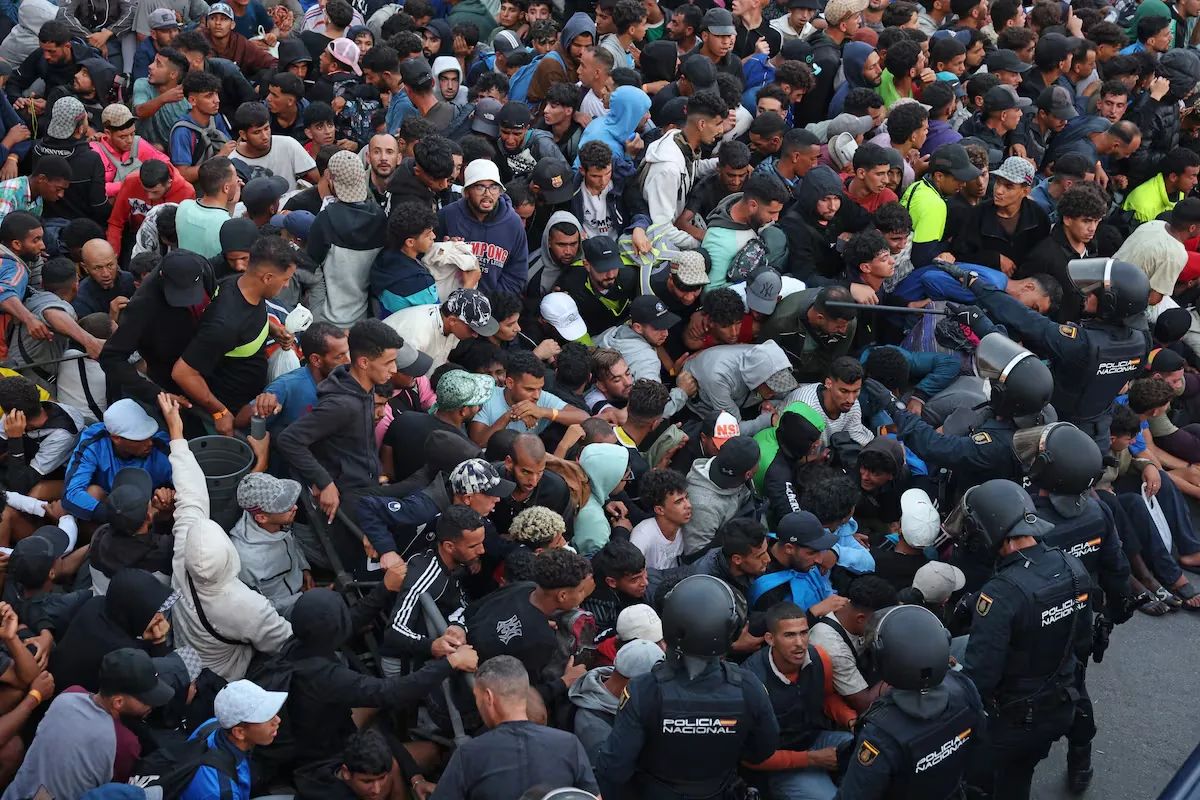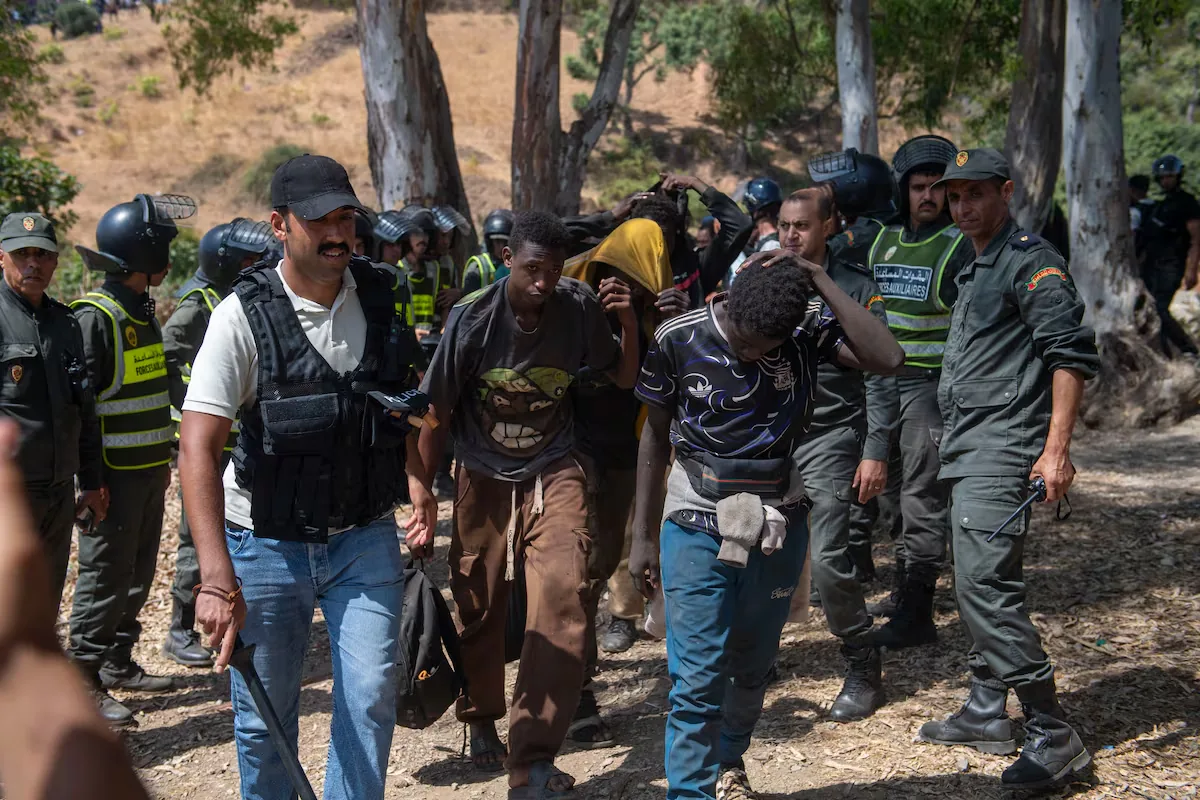
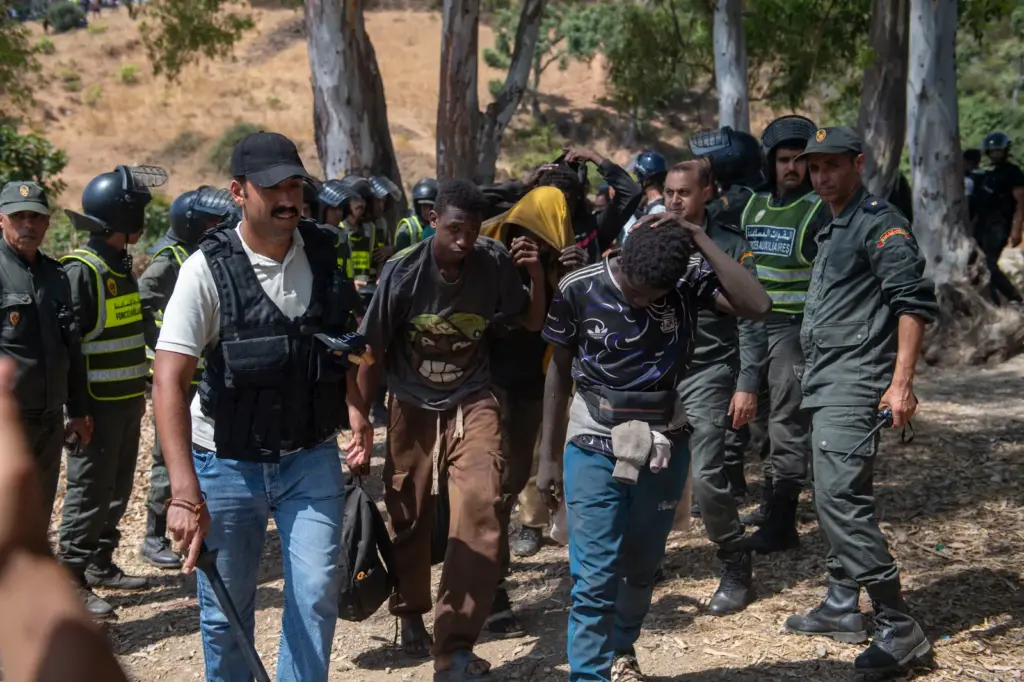
The Government has assured this Saturday that it is “in contact” with Rabat to “seek a solution” following the expulsion of Spanish journalists from Castillejos (Morocco). In a statement, RTVE has denounced that the decision “constitutes a serious obstacle to freedom of the press.” Moroccan security forces have intercepted hundreds of immigrants, mostly sub-Saharan, who were trying to reach the border of Ceuta, and have detained nearly 300 people for attempting to cross irregularly, according to security sources reported to the Moroccan digital newspaper Hespress. The police charged against the migrants and cornered them in Castillejos, about three kilometers from the border, to then forcibly remove them by bus. Attempts to cross into Ceuta have occurred around six in the morning, and at this time there is a strong operation deployed near the border crossing with many more security forces than in previous days, stationed at all nearby points and marking a security perimeter.
Read more Two women die and two minors are injured after a flood in Manzanedo de Valdueza (León)
EL PAÍS offers the latest on the migration crisis for free. If you want to support our journalism, subscribe.

Migration crisis
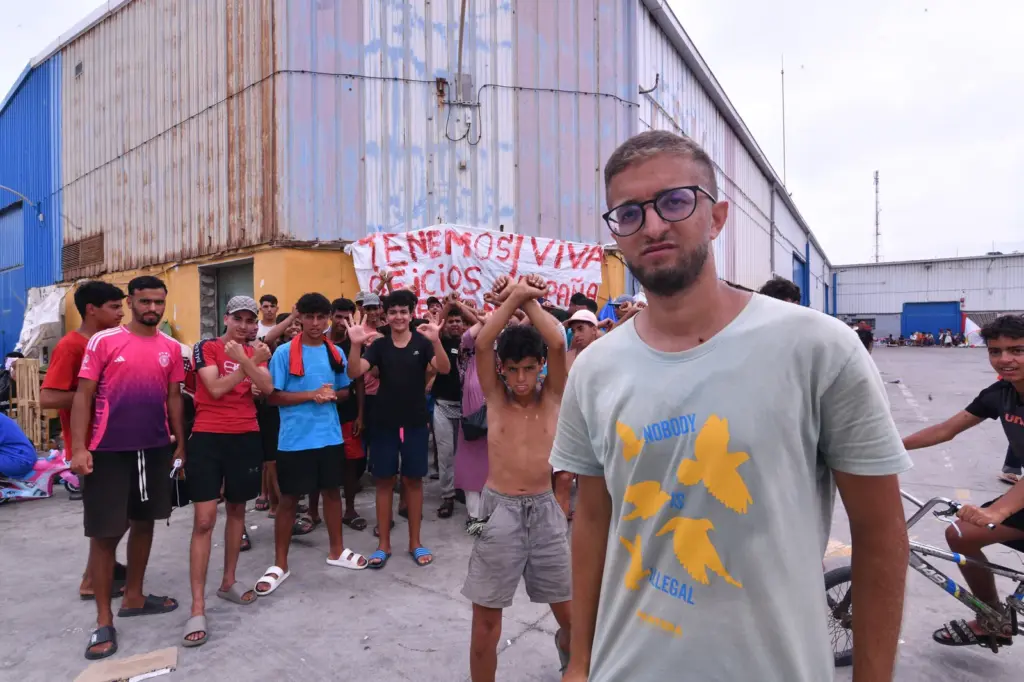
Mohamed’s diary after 15 days struggling in Ceuta, looking for food and a place to sleep
Mohamed is 26 years old and was born in Castillejos, the Moroccan city that looks daily towards Ceuta. On July 30, he swam into the autonomous city. Since then, he has been surviving in an extreme situation for two weeks: sleeping on the street, without a safe place to shelter, and depending on the help of the NGO Luna Blanca to eat once a day.
Read the full information here.
Mónica García visits Ceuta today to address the health situation after the migration crisis
The Minister of Health, Mónica García, will visit the autonomous city of Ceuta this Sunday to learn “firsthand” about the health situation after the migration crisis and hold various institutional meetings and with representatives from the health and social sectors.
According to the Ministry, García will first meet with the Government delegate in Ceuta, Miguel Ángel Pérez, and with the director of the National Institute of Health Management (INGESA), Isabel Muñoz. Later, at 12:30 p.m., she will hold a meeting with the president of Ceuta, Juan Jesús Vivas, and afterwards, she will hold a press conference at the Government Delegation headquarters.
Additionally, the minister will visit the Otero Health Center and the University Hospital of Ceuta, where she will meet with the Staff Board and representatives of the Medical Association. Later, she will meet with representatives of social organizations.
The Spanish Confederation of Medical Unions (CESM) had already requested García’s presence in the autonomous city so that the Ministry would intervene “directly and urgently” in the “critical” situation that, according to professionals, the public health system of Ceuta is experiencing due to extraordinary healthcare pressure.
It is also planned that the Minister of Inclusion, Social Security, and Migration, Elma Saiz, will visit Ceuta on Monday, August 17, to discuss with Juan Jesús Vivas the humanitarian situation after the massive and irregular entry of migrants recorded on July 30 and 31. (Efe)
MIGRATION CRISIS
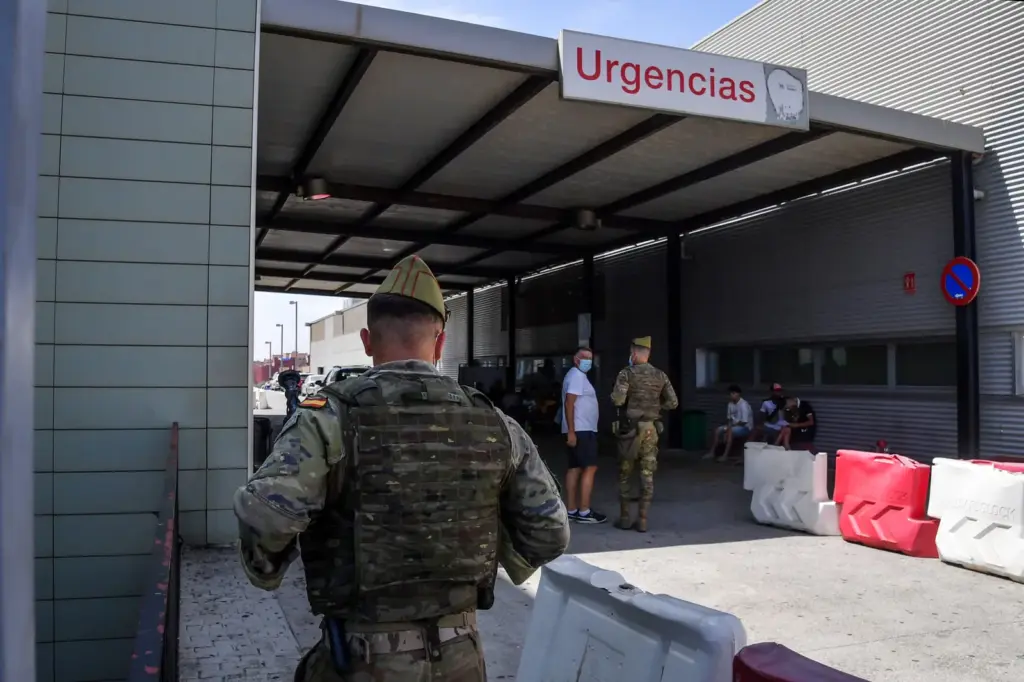
Ceuta at the limit: crowded emergency rooms, overwhelmed residents, and siren noises
In Ceuta, known as the city of four cultures, today a thousand cities fit into one. In the El Príncipe neighborhood, at noon this Friday, dozens of migrant girls and young women are transferred to a newly renovated industrial warehouse to shelter them after reporting the threat of sexual violence. At the same time and a few kilometers away, in the El Tarajal industrial area, many unaccompanied minors sleep on the floor amid the stench of excrement and urine. On a nearby hillside, on the morning of this Saturday, three legionnaires run with batons in hand after three teenagers, and one begs them in Arabic to stay away from the houses. Shortly after, on El Trampolín beach, the mainly sub-Saharan settlement has turned into a village where tasks are self-organized and they kill their tedious wait with wrestling tournaments. The emergency room of the only hospital is overwhelmed by the influx of migrants, with some isolated cases of tuberculosis and scabies recorded, but mainly due to injuries from fights or falls. And the psychosis floods the minds and phones of Ceuta’s residents due to reports of increased crime, while patrol sirens do not stop.
Read the full information here.
MIGRATION CRISIS
Morocco displays its maximum strength as guardian of the Ceuta border
Morocco has displayed this Saturday the utmost political and security strength as the ultimate guardian of the Ceuta border. In an unequivocal demonstration of who exercises total control over the last outpost of the European Union in Africa, the authorities in Rabat have sealed the external border with an unprecedented police deployment to thwart the passage of hundreds of sub-Saharan migrants and some dozens of Maghrebis. They had been summoned through social networks to repeat the avalanche that on July 30 and 31 overwhelmed the territory of the Spanish autonomous city with up to 80,000 migrants in the face of Moroccan agents’ passivity.
Read the full information here.
Good morning. Here begins the live narration of the situation in Ceuta, where a new attempt of massive entry by migrants on the other side of the border with Morocco is feared. Yesterday, Moroccan police thwarted the attempt of several hundred sub-Saharan migrants.
Read more Sevilla comes back with a penalty against a very weak Rayo