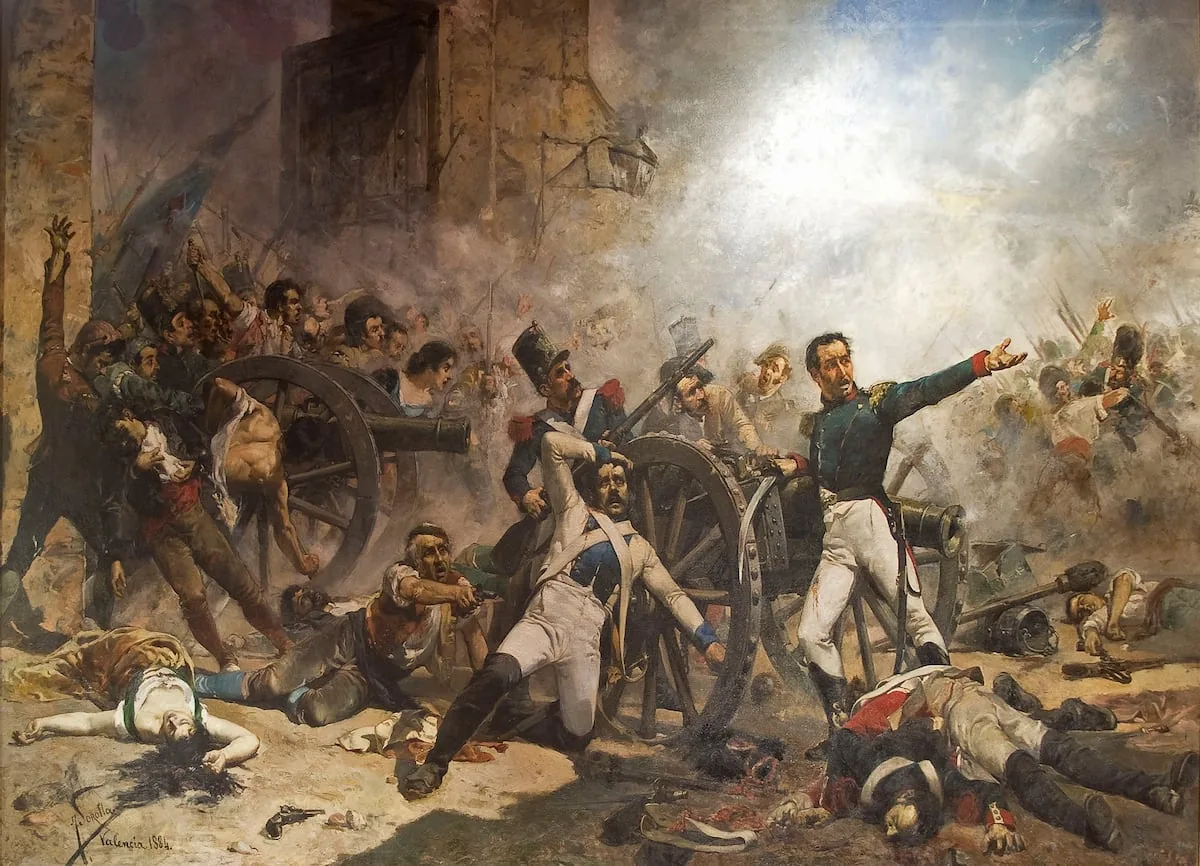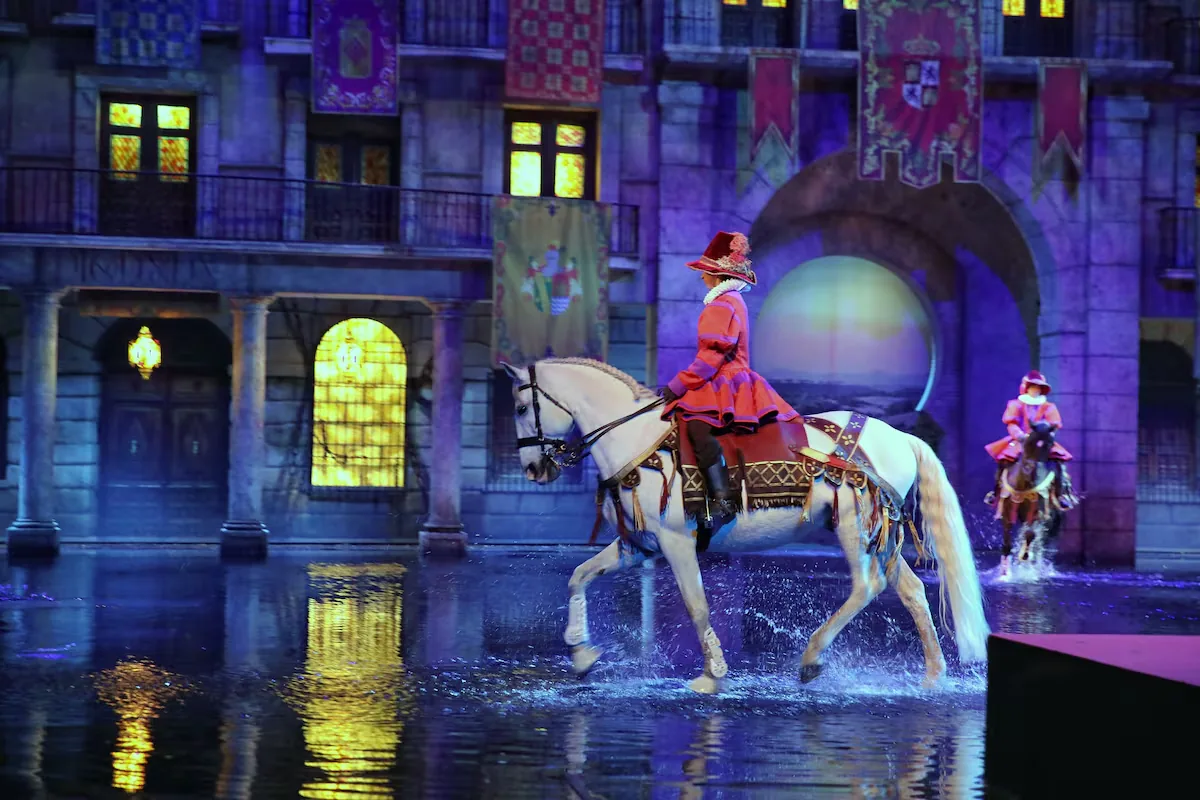
“People were already falling in love with Toledo before the park,” says Almudena Cencerrado, a tour guide with decades of professional experience. She is not the only person from Toledo to express herself in these terms. Since 2019, when Puy du Fou opened its doors ten minutes from the city, in Toledo people talk about the “before” and “after” of the park.
In 2025, the show that recreates the history of Spain welcomed 1.72 million spectators and billed 70 million euros. The international group — the first Puy du Fou opened in France in 1989 and there is a project to open another park in the United Kingdom in 2029 — expects to approach two million tickets sold this season at its Spanish location. The new offer has boosted overnight stays, while tourist accommodations multiply in the area. Meanwhile, nearly 900,000 visitors tour the Toledo cathedral each year, the most visited monument in the city. Barely half. The numbers send a message. Is Puy du Fou changing the way Toledo is visited? Can a theme park overshadow the shine of a World Heritage city?
“Puy du Fou gives us more than it takes away,” values Anastasio Gómez, economist of the Archdiocese of Toledo. The institution welcomes the arrival of the French company, despite the fact that the seven monuments it opens to the public with the popular tourist wristband have not grown in visitors. The Primate Cathedral — which this year commemorates its eight centuries of life with an exhibition — maintains the usual attendance, without any increase, with an average of 3,000 daily visits. “The numbers from 2019, before the pandemic and without Puy du Fou, have not returned,” Gómez acknowledges. The impact has come from another side. “We have very good people on staff and Puy du Fou, which needs many employees [currently has 1,300 in Spain], can recruit them,” reveals the economic manager. Something that has forced them to offer new incentives to workers and reduce the workload. They have also had to strengthen digital marketing to seek more international travelers on the internet, initially less interested in a show about the history of Spain.
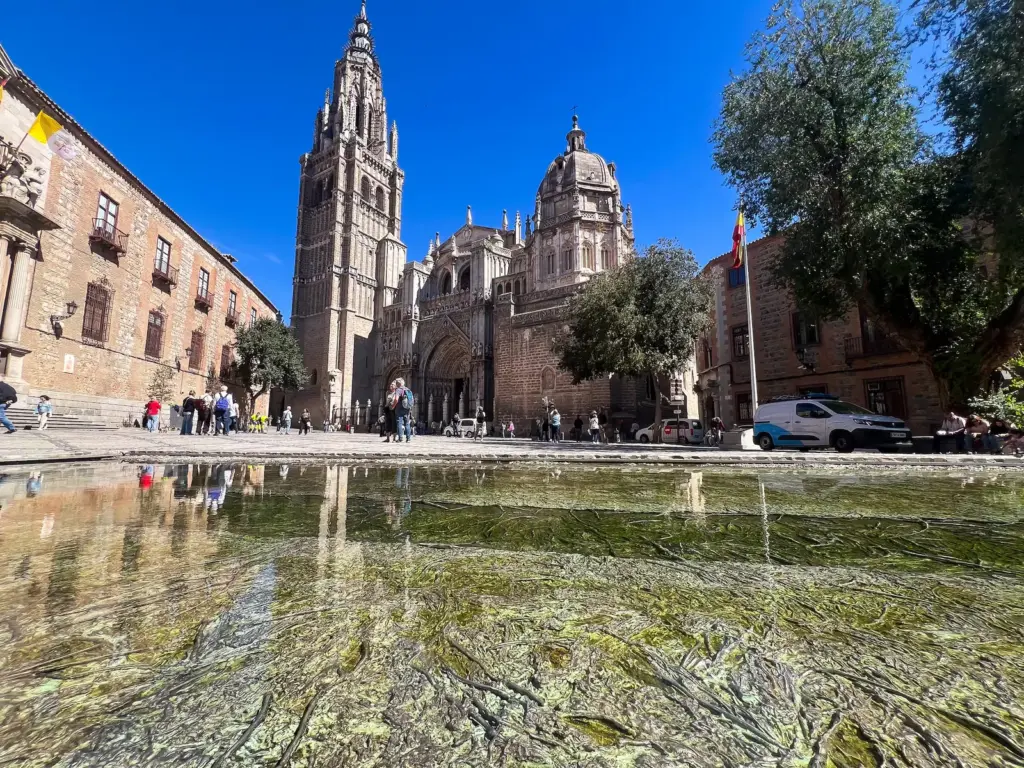
The one who best capitalizes on the city’s pull is the show itself. “Puy du Fou could hardly be understood without considering the territory in which it is located,” says Olivier Strebelle, CEO of the park. “Toledo has been the setting for some of the most relevant episodes in the history of Spain,” he justifies. For Strebelle, the comparison of visitor numbers only speaks of “Toledo’s extraordinary ability to attract people interested in its history and heritage.” The CEO argues that both spaces complement each other. “Puy du Fou adds visitors to Toledo,” he maintains, and attributes an economic impact in the area that he estimates at 287 million euros in 2025 alone. Does the company have any responsibility in preserving the historical treasure beyond the park itself? “Yes, although it is important to understand our role; we are not an academic institution nor do we intend to assume the function of those who research or conserve heritage,” the executive responds.
“I prefer that two million people go to Puy du Fou rather than to the cathedral without understanding anything.” Ana Moreno Garrido, professor of Contemporary History at UNED, points to the great debate that emerges: how heritage should contribute to telling the story of cities like Toledo in the 21st century. In her opinion, not all places are for all audiences. “No matter how much we explain a cathedral to a child, they will never understand it,” she exemplifies. “At most, they will receive an impact,” she clarifies. The teacher refers to the difficulties experienced by both young people and many older people when touring heritage spaces. Faced with this reality, she advocates a type of accessibility that goes beyond installing ramps or elevators in buildings. “Cognitive accessibility is little talked about,” she states. It is an area in which cultural institutions such as museums especially strive today, through education and outreach programs.
But what can heritage offer that is impossible to find in a historical recreation? “We have the originals,” Anastasio Gómez responds decisively, guaranteeing “a slow visit” to its monuments, instead of shows. Almudena Cencerrado, art historian and tour guide, sums it up differently: “Entering the cathedral is an embrace of beauty.” In her view, the artistic, cultural, and historical richness of a city like Toledo “is above” any theme park. For his part, Daniel Gómez Aragonés, a Toledo-based disseminator and writer, resorts to a literary comparison: “Puy du Fou would be something like the historical novel, which works very well among the general public, while Toledo’s heritage would be the essay, which can be a bit denser.” None of them thinks that one model excludes the other. “Puy du Fou has to be another gateway,” Gómez Aragonés assures. “Toledo must continue to be Toledo,” Cencerrado warns.
Read more Two women die and two minors are injured after a flood in Manzanedo de Valdueza (León)
The historical novel and the park itself are well known to writer José Ángel Mañas. “The show cancels out meaning,” he states. “It is so brutal that you cannot think of either Lope de Vega or the Invincible Armada,” details the author of titles such as ¡Fernán González! The man who forged Castile (La esfera de los libros, 2022). Although among the main controversies, spectacularity is not included, but the narrative used by Puy du Fou, fiercely criticized in France after the opening of the first park in 1989. “The problem lies in the rewriting, falsification, and instrumentalization of the past,” summarizes French historian Mathilde Larrère, who leads a critical movement against the park in the neighboring country. “Puy du Fou does not simplify, but hides, transforms, invents, and lies knowingly,” she argues. For Mañas, a graduate in Contemporary History, the French production “is more reactionary, the propaganda and political discourse are more noticeable because Philippe de Villiers, its promoter, is ultraconservative and very monarchist.” In contrast, the one in Toledo “is less harsh, more folkloric,” he compares. “For example, the negative parts of colonization, which were brutal, are not highlighted,” opines the writer, who would also remove some “unnecessary” references, such as “Moors” or “frogs.”
While the complex breaks records in numbers, Toledo faces an uncomfortable question. “I think the city lacks the rhythm to understand that there is a park like this,” says Anastasio Gómez. “Although it receives thousands of visitors every day, it is still a small city,” he reflects. From there arises, in his opinion, the big question: does it want to grow at the same pace as the park? The economist of the archdiocese has a clear answer: “Toledo does not want more people and we do need them.” Gómez refers to the cost of maintaining its buildings — they estimate that opening the cathedral costs about 16,000 euros daily — and the budget they allocate to charitable activity, which is funded through tourism. Faced with the imperative to guarantee ticket sales, one of the main shortcomings they observe is the limitation of hotel places, but the solution — he clarifies — does not correspond to them: “The archdiocese is not going to dedicate itself to building hotels.”
And what if the debate were not Puy du Fou but Toledo itself? “Theme parks are a déjà vu, we have been like this for a hundred years,” analyzes professor Ana Moreno Garrido, who has thoroughly researched the evolution of tourism in Spain before the Civil War. “The great international exhibitions, which began in the mid-19th century, were very massive shows, designed for maximum distraction,” the historian explains. She thinks of thematic venues like the Poble Espanyol in Barcelona, which recreated buildings, squares, and streets characteristic of the whole country for the 1929 International Exhibition. “At the same time, the effects that tourism was having on heritage, beaches, or natural environments were already being noticed,” she adds. A little later — in the sixties and seventies — it was the amusement parks, like those in Madrid, Zaragoza, or Montjuïc, that took over. “I do not see any paradigm shift in Toledo,” she concludes.
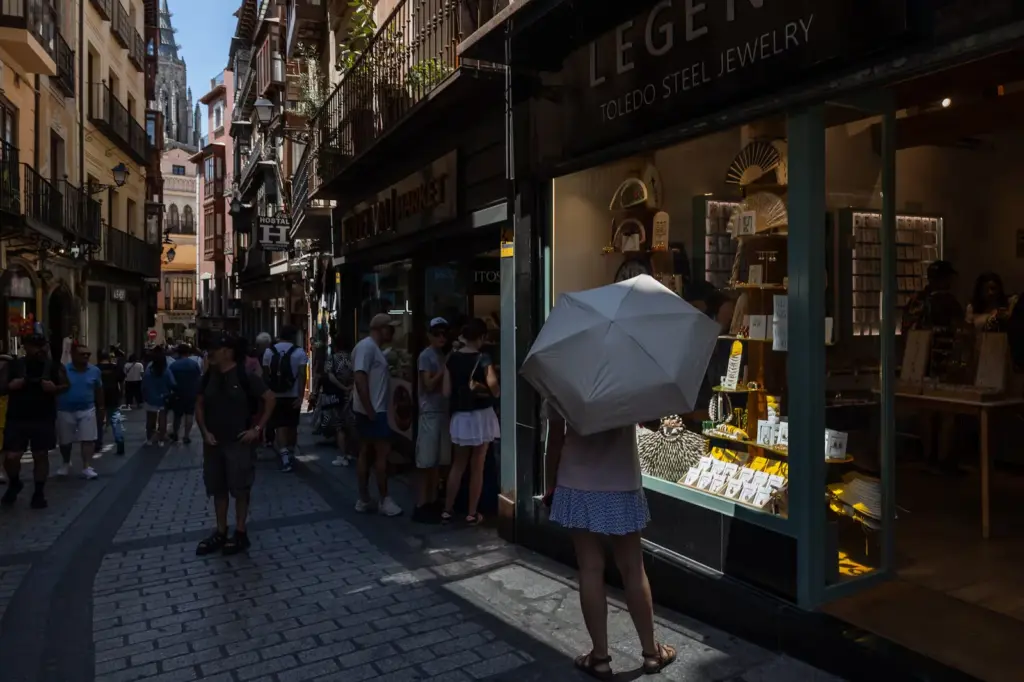
Nothing suggests that the progression of Puy du Fou will stop. But the Castilian capital — declared a World Heritage Site by UNESCO in 1986 — preserves in its streets what no show can aspire to offer: the places where history really happened. The opportunity no longer consists of competing with a park, but in deciding how it wants to tell that past. “Toledo must believe it a little more, insist, as Lope de Vega said, that it is the heart of Spain,” says Daniel Gómez Aragonés, with his eyes on the future. Ana Moreno goes a step further: “Theme parks are not the enemy of heritage.” The real challenge, she adds, is to preserve the authenticity of those spaces. “As long as a monument retains its original function, tourism should not be imposed on it.”