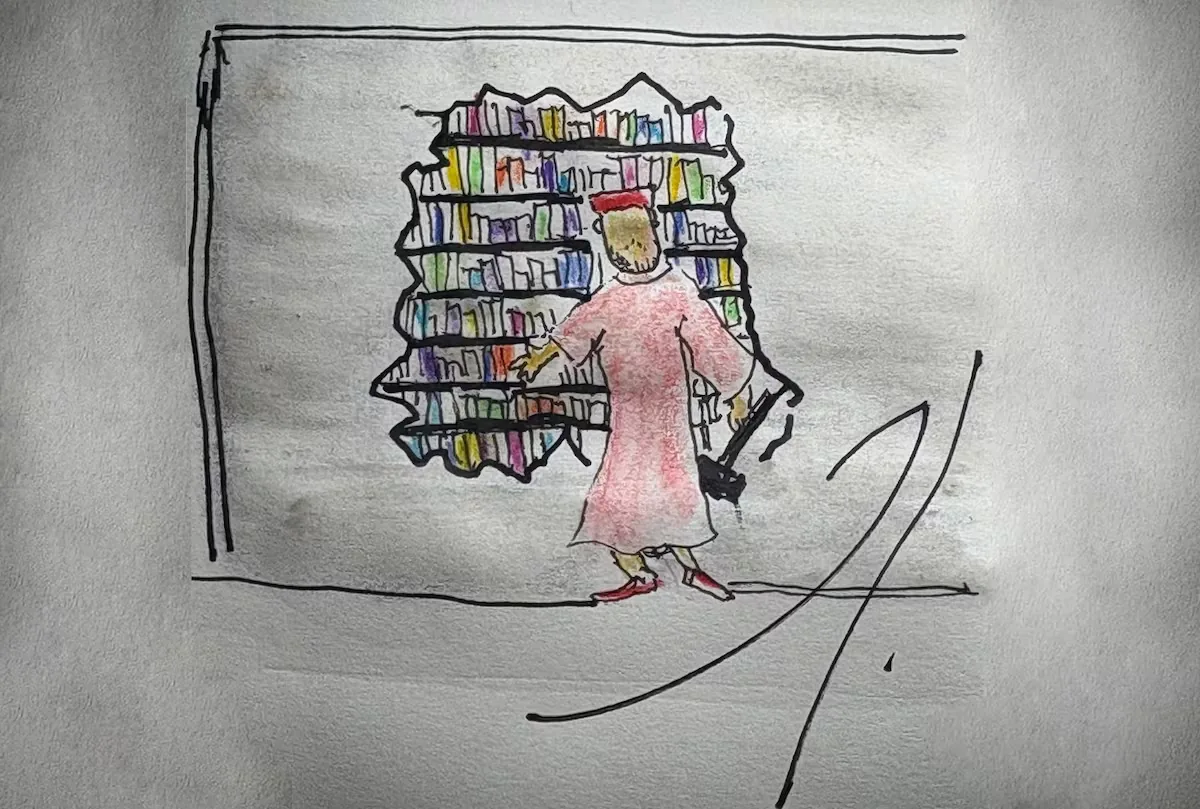
On a wall of the exhibition at the Residencia de Estudiantes in Madrid dedicated to the archive of Federico García Lorca, there is a list in which the Granada writer noted the works of a future that never came. It includes The Taste of Blood – Drama of Desire, The Fear of the Sea – Drama of the Cantabrian Coast, and The Black Ball, crossed out and retitled as The Dark Stone – Epentic Drama, a term invented by Lorca to (not) say homosexual.
On that small paper is the embryo of The Black Ball, the second film by Javier Ambrossi and Javier Calvo, written together with playwright Alberto Conejero. His play, The Dark Stone, published in 2013, inspires its central story: Sebastián, a soldier of the rebel side, guards during his final days a republican prisoner, the engineer and footballer Rafael Rodríguez Rapún. Secretary of La Barraca, the university theater company directed by Lorca, he was one of the poet’s last loves.
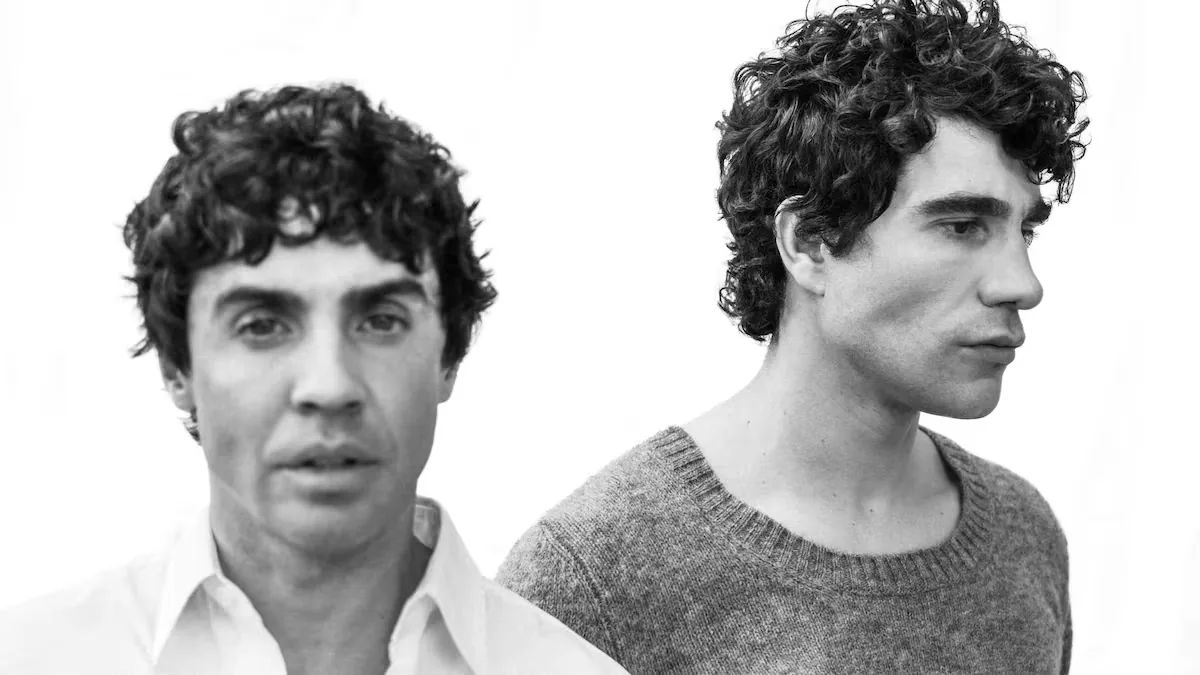
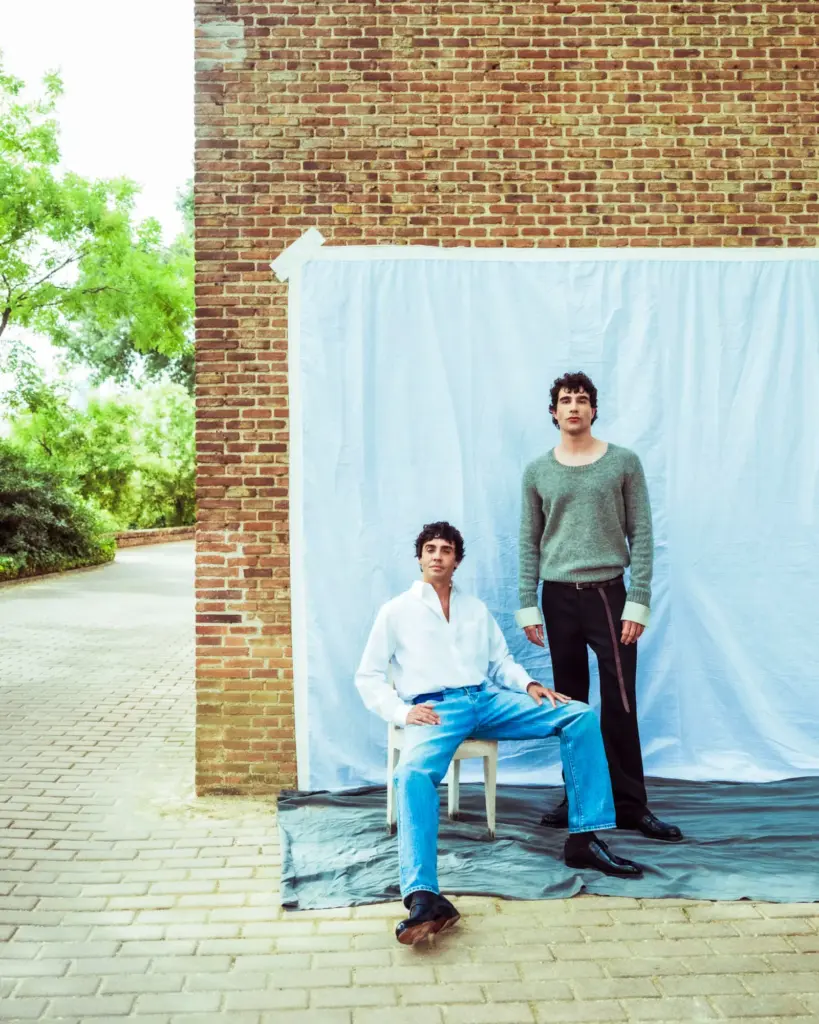
Among the scent of pines and herbs of the Colina de los Chopos, Los Javis arrive on a merciless summer afternoon in the old Madrid oasis of the Generation of ’27, each on their own. The first time they were here was in 2021, to receive the Rainbow Award from the Ministry of Equality for their series Veneno. They come by motorcycle and taxi from a cinema on the outskirts, where they reviewed the quality of the film’s projection, which premieres on September 25 after passing through the Toronto and San Sebastián festivals.
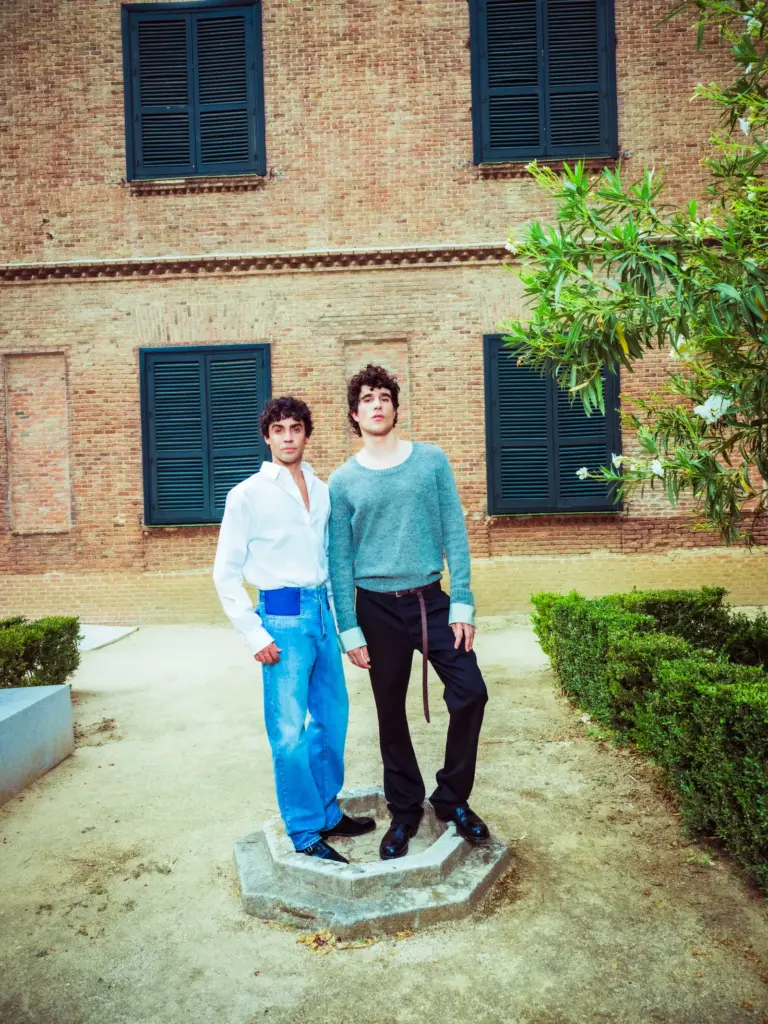
During a long conversation, Ambrossi and Calvo will demonstrate their Lorca passion, their pride when they detect some condescension in the popular and television realm, and their unprejudiced ambition. The former couple, who burst onto the audiovisual scene a decade ago with the sharp trash entertainment Paquita Salas until reaching the maturity of La Mesías (2023), a heartbreaking series about religion, motherhood, and abuse, have turned their second feature film, after La llamada (2017) — based on their own musical about faith — into one of the global phenomena of the last Cannes Festival. There they achieved, ex aequo with Paweł Pawlikowski (Fatherland), the award for best direction — like Luis Buñuel in 1951 for Los olvidados and Pedro Almodóvar in 1999 for All About My Mother — and there began the betting of an industry whose enthusiasm places them at the forefront of the upcoming Oscars.
The Black Ball is a bet on spectacle cinema that, in search of its own epic, drinks from auteur cinema and its opposite. Neither critical division nor the pressure to suddenly step onto the international stage (during the French festival the film was sold to 50 countries) makes them lose focus on their next projects (“a new film in Spanish and English that we will shoot here and abroad,” they reveal) or on the “purpose” that drove The Black Ball. “That purpose has already been fulfilled,” they assure. “This is a big film that takes you through many genres. It is a story of love and war that does not want to preach to anyone.” “And when our minds wander thinking about awards or what others say, we return to that first purpose. We did not make this film to be liked, nor to win recognition or money. We made it because we felt it was important to tell what it tells and not to forget the legacy we have been given.”
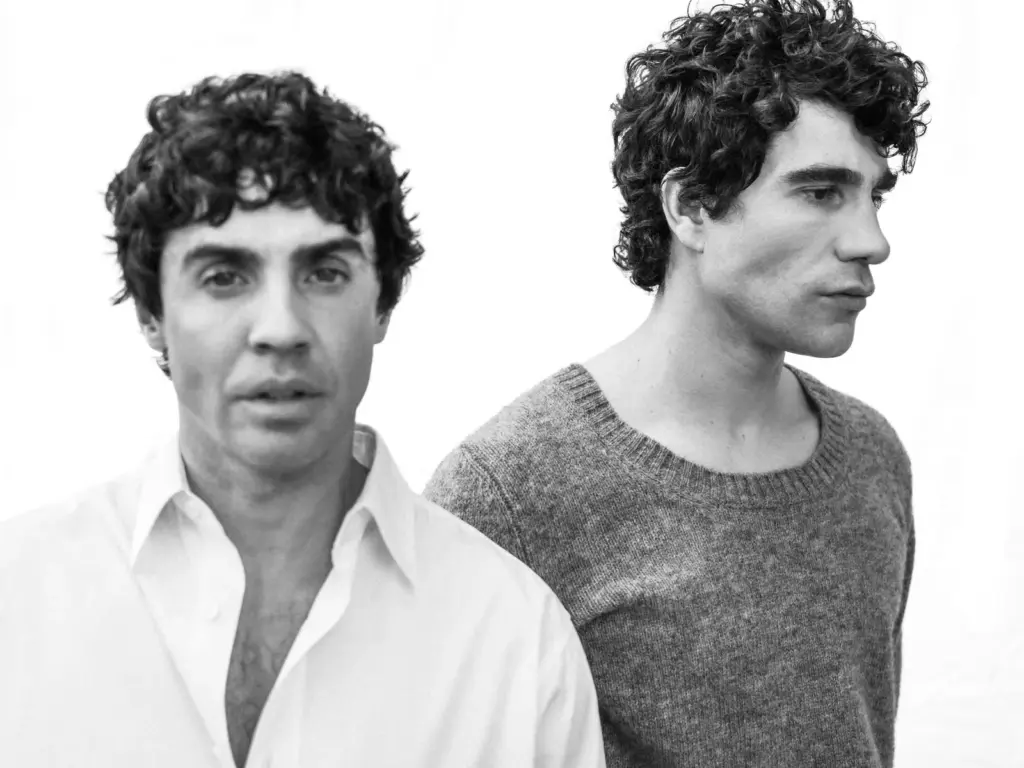
Since when has Lorca been in your head?
Javier Ambrossi. All my life. But I think it was here when we visualized him, in Madrid, in his room, and we began to draw him as a real person who existed. In my case, Federico accompanied me a lot at the beginning of my career as an actor because I studied at La Barraca, the school of Alicia Hermida and Jaime Losada. The school made small tours through high schools and small towns emulating Lorca’s company, working a lot with his texts, and in fact the first play I studied as an actor was The Butterfly’s Curse.
And you must have studied him at school too, right?
Javier Calvo. Yes, but no one explained to me what his figure meant. Or it didn’t reach me.
J. A. At school they did explain it to me, but even at La Barraca I never realized how important he was and much less related it to my sexual identity.
And when did you see his universe as a possibility for fiction?
J. C. When we decided to adapt The Dark Stone, Alberto Conejero showed us a photograph that caught our attention, the farewell at the fair recreated in the film. It made us imagine what his life was like.
J. A. It is the last time Lorca and Rapún saw each other. They are surrounded by other intellectual men of the time and Lorca touches his forehead. It is an image with a very special emotion.
How has Lorca’s family responded to the project?
J. A. They have been very generous, they have facilitated everything. They read the script and also came to the shoot. But the magical moment was at the foundation, in Granada, when Laura García Lorca took out four pages of The Black Ball from a safe.
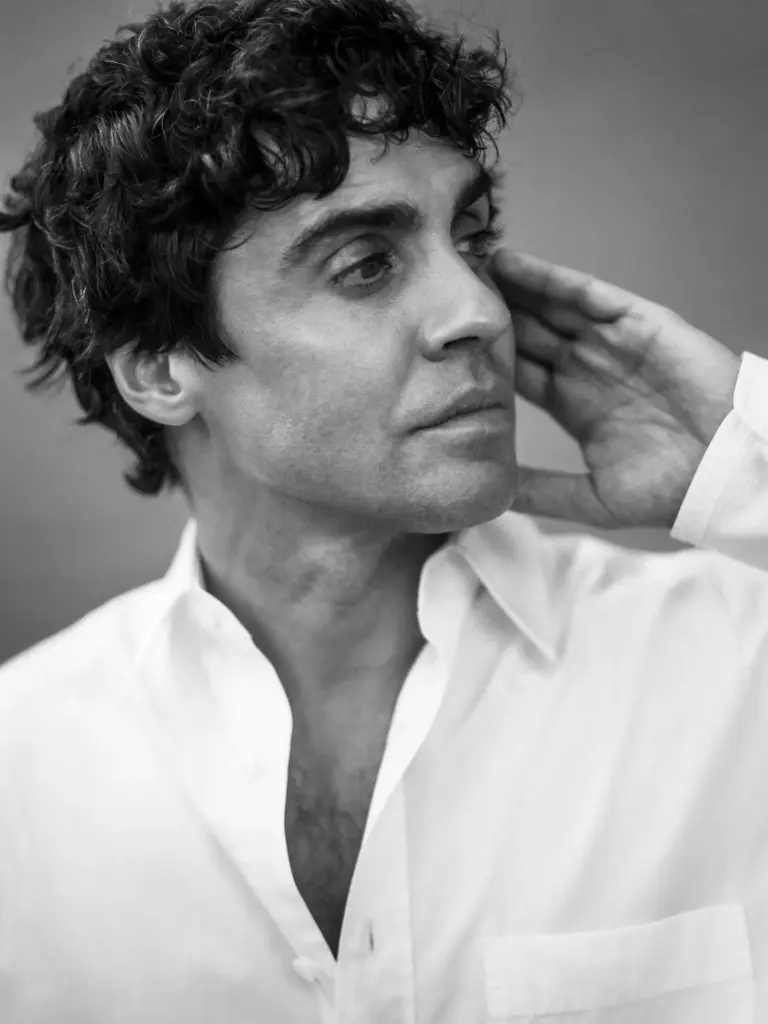
There is no record of Lorca’s voice and, although his appearance is brief, you decided to embody him on screen. What doubts did giving him voice and body raise?
J. A. For a moment we thought it was a good idea to make a film about Lorca without Lorca. But then we saw Alberto Cortés [Lorca in the film] and when we shot his sequence with Miguel Bernardeau [Rapún] we didn’t hesitate. Alberto’s way of speaking, who is an actor and performer, convinced us…
J. C. He had to have the soul of a poet. He couldn’t be an actor playing a role, we were looking for something else. And he also had to be queer. We had read his book Siempre vengo de noche and started researching him…
J. A. The book is beautiful and although he doesn’t look like him at all — Alberto is very tall — at the same time he does… because it’s not about looking alike, it’s about being. And Alberto brought us to Federico, maybe because of his vitality.
In the film, Glenn Close’s character, a Hispanist specialist in Lorca, says that Spaniards don’t know what to do with our heritage. I understand that in the context of the film she refers to the queer heritage. What has happened to that heritage according to you?
J. C. It’s not just the queer heritage, it’s everything, the tradition, the pain, the shame, what we went through two generations ago. Glenn Close’s character also says that historically, out of modesty, families have destroyed many compromising correspondences. We haven’t sat down at the table to talk about what we’ve lived, what we are, or what we have. There is something unresolved.
J. A. I, for example, have judged my grandparents a lot for being so backward. And now I feel sorry because I would have liked to sit with them and talk. I studied at an Opus school and the only way to validate yourself before those who rejected you was to nullify them. And that distance, with my schoolmates, with part of my family, reflects something that doesn’t work in our society.
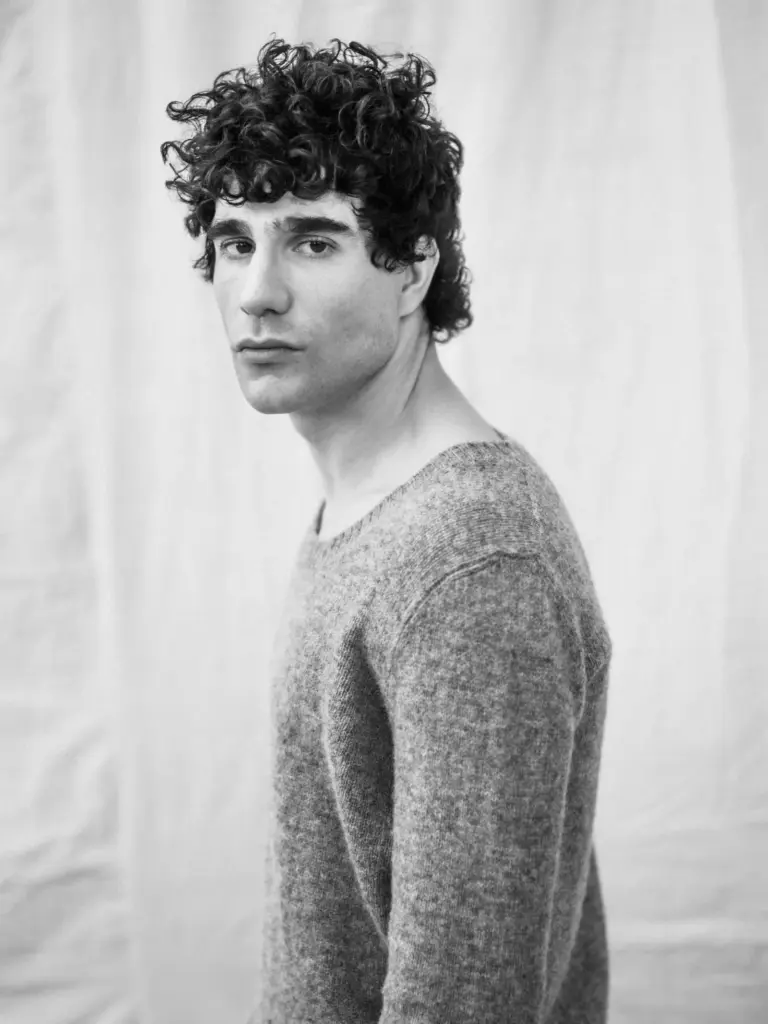
But going back to what Glenn Close’s character says, the main obstacle in this country to trace that heritage is 40 years of Francoism, with its law of dangerousness and other repressions. Does your cinema look to the past in search of that interrupted lineage?
J. C. Yes, because we are heirs and executors of a legacy that we have to care for and learn to manage.
J. A. And to honor it with our life and our joy. It’s just that not long ago, very recently, we were in another place. Since Veneno we wanted to explore what has happened in this country, but in this film we take it to the family level, to the relationship of the character played by Carlos González with his mother [Lola Dueñas]. They represent our inability to agree.
You have documented a lot but at the same time allow historical licenses. I return to Glenn Close’s character, who says that as a historian she is less interested in facts than in characters…
J. C. We are more interested in the depth and complexity of people. Facts are cold.
J. A. You have to start from the premise that the film is an uchronia. Lorca could not finish writing The Black Ball, he wrote four pages and was murdered. The work does not exist. Everything is almost. What if he had finished it? What if Rafael had met someone and instead of dying on the battlefield had died a little later, murdered? What if he asks that guy he met to save that work? What if that work reaches the present?
J. C. You can also play with history, especially when there is a very deep work on Lorca with Alberto [Conejero]. A profound study. We put the actors and those playing soldiers in history class. But I remember [laughs] that at one point during the shoot, in the middle of a battle, you shouted: “I’m not doing this for a museum, I’m doing it for the heart!”.
J. A. It’s true. There is a lot of documentation work alongside experts and historians. But as a viewer, I don’t want Wikipedia, I want a point of view on those facts.
Among those licenses is the character of Penélope Cruz, a vedette who acts for the rebel side but seems taken from the artistic circles of the Republic or Weimar Germany. It is a key moment that introduces the musical genre into the film. Is it true that at some point Rosalía was also considered?
J. C. We have had conversations with Rosalía, but for other projects.
J. A. Penélope’s sequence has to do with Madrid in the first decade of the 20th century. It comes from the world of Álvaro Retana, an openly gay writer of that time swept away by everything that came after.
J. C. My dream is to make a musical about the cuplé in early 20th century free Madrid. We have read everything. It is a fascinating era. Madrid was a party because Spain did not enter the Great War. In that Madrid there was a gang of incredible women, like La Fornarina, who worked as a prostitute from a very young age until she became famous for appearing naked in a play when she was actually not naked: her body was covered with a skin-colored mesh. But it was a revolution. She became very famous and was a good friend of Álvaro Retana. Later she married a rich man who took her around Europe. She performed in Germany, in France. She mingled with politicians, wanted to be seen as an intellectual…, but the cuplé was seen as something very low and she carried a venereal disease from her time as a prostitute. A disease that ended up killing her in her thirties.
J. A. All these women are fascinating, it was a time when there were shows of cross-dressing. Álvaro Retana wrote about his friend Egmont de Bries, the transvestite mentioned by Penélope in the film. The sequence comes from all this. It is a mini-film within the film. When she appears, we poured all this material into her character.
J. C. Retana’s books can be found around, in old bookstores, they are very homosexual, very irreverent and provocative. His generation resonates a lot in the present because they believed they were very free…, but they all ended up dead, imprisoned or disappeared.
Both in Germany and Spain, it is Nazism and National Catholicism that sweep away freedom. The film avoids ideological debate, but most LGTBI+ rights have advanced thanks to the left.
J. A. Social advances of the community in Spain have been made thanks to the left and against the right. There is no discussion about that. But we do not try to lean anything. That we bring it to our field, to sexual and gender identity, does not mean the film lacks political and ideological value. That I point out one thing does not mean I ignore everything around it. The Republic is represented by Rafael’s character.
J. C. To understand history you have to be able to feel it again with the heart.
J. A. Veneno was a lesson for us. It was an approach to our trans past that did not lecture anyone. And for that reason, people of all ideologies, ages, and social classes understood that pain.
Will this film bring the Civil War closer to an audience uninterested in the past?
Read more The holes in the large firefighting machinery in Spain: «We even have problems just to eat»
J. C. We are satisfied if people leave the cinema saying that we can never kill each other again, neither here nor anywhere else. If someone understands that, my work is done.
There are American trans people and even some recognized gay filmmakers settling in Madrid because of what is happening in their country. Are you worried that the same wave will reach Spain?
J. A. How could we not be worried if we are studying the Civil War, Lorca’s universe, and 1920s Madrid? Our interest and commitment are to understand the past to understand today.
J. C. What is said at the end of the film, in the middle of the victory parade, is very clear: “Look, they still stalk us!”.
J. A. In that verse of Lorca everything is said. This film is antifascist and antiwar, but above all it is humanist.
In the film there is a homoerotic idealization of the soldier figure that refers to Beau Travail, by Claire Denis. Is it an attempt to reconfigure the aesthetics associated with the Civil War?
J. C. There is also influence from The Blaze music videos or two of my favorite war films: Apocalypse Now and Come and See. We don’t work thinking about what might interest a young audience. We just try things we like and follow the thread…, and for us it was interesting to show how straight men can play sexually among themselves and how those who don’t have access to that experience it. Like in football locker rooms. Those nudities in the middle of war were something that caught our attention. And seeing Sebastián [the character played by musician Guitarricadelafuente] confronted with that interested us. Claire Denis is a reference for how she portrays masculinity.
J. A. The portrait of the private soldier and Sebastián has a lot to do with the experience of having gone to an all-boys school until 18. Those images help us understand what Sebastián feels, how he feels outside his desire.
J. C. Deep down we ask ourselves all the time, about our own relationship. After all, this film is about a love story.
J. A. In that sense it has been cathartic because we had never written the story of a gay man.
So you start researching a love story and then separate…
J. C. Of course, we learned that the important thing is to live. But going back to what you said about the private soldier… We worked a lot on how those soldiers should act, that they were not mere extras, that they did not fake a relationship, but that relationship was there. We worked it very similarly to what we did with the girls in La Mesías, rehearsal and play dynamics, so they know each other so well that they stop being characters.
J. A. It was not about making them look mean just because they were soldiers. All this was important because the greatest act of terror in the film is committed by them.
How does your creative duality work?
J. C. I think I am in the small, the earthly, and he is a more intuitive and emotional guide, like those who look for water in the desert. I throw things at him and he gives them structure. On set, he worries more about the mood of others than I do. He is more attentive to the magic of the moment.
J. A. He focuses a lot on details, the song, the rhythm, the editing cut, the shot. But we write together and at the same time. We also plan and are with the team at the same time. If the other is not there, we feel orphaned.
But now that you are separated, isn’t it very complicated?
J. A. It is quite the opposite. We have improved because before we were clouding our entire personal life with work and there was no space for growth. And now, when we go to work, we work and that’s it. We separated in the middle of the shoot and it was difficult. Even today it is still difficult because I thought we would be together forever. But when you realize you can’t continue, opening the door is the best thing that can happen to you. We are no longer a couple, but we are family. Everything has improved and I love him much more from a healthier place.
J. C. Now each one enriches himself on his own and we can move forward. There is more admiration and less competition.
J. A. We are more relaxed, we see the good things and tell each other because you no longer feel hooked to anything.
Lola Dueñas’ character in The Black Ball somehow connects with La Mesías and toxic motherhood. What do you think about mothers? I have a gay friend who says there is no innocent mother…
J. A. Our mothers are wonderful, a ten in everything. My problems have been more with my father, but in the past. Now we get along very well, I adore him, but that impossibility to talk is deeply ingrained in me.
J. C. My mother is a midwife, a natural caregiver. My father, a policeman… I have it all. But I also think there are more heterosexual men fighting with their mothers than homosexuals. But in fiction it came out like this… The character played by Carlos [González] had to have a mother, or a father, in conflict with his childhood.
J. A. And we liked a mother more because we prefer an actress for that complex role. Surely it has to do with the films we like, Pedro’s [Almodóvar]…
J. C. And Bergman’s, Cassavetes’… A Woman Under the Influence, this type of woman that fascinates us so much.
There is much talk about the resurgence of Catholicism among young people and it is a topic you have treated very differently in La llamada and La Mesías. How do you see this religious upsurge?
J. A. We have told it from very different places because we ourselves have evolved. In La llamada it was a special and fun context, more camp, until we realized the dangers this can have when it goes to the extreme. I had a very religious education, any dogma seems very dangerous to me.
J. C. I don’t quite understand what is happening and I am curious. Within the idea that everyone should believe what they want, of course. I see it all a bit like the new age era.
J. A. But leaning towards Catholicism, because what is happening is not Pachamama, it is Sunday mass… I have it so internalized that it can’t bore me more. He is more spiritual than I am.
J. C. I have my beliefs, I believe in mystery, but as something open. Creation responds to something almost sacred. But you shouldn’t turn mystery into confinement.
Why have you left the 35-millimeter film format as it is, with rounded corners? Is it a way to emphasize that it is cinema, a fetishistic nod?
J. A. There is something deep and important in the film: the survival of objects. This film talks about a manuscript, about how the physical passes from generation to generation. And the film is also an object in itself that can be touched.
There is a tribute in the film, in an after, to Almodóvar…
J. A. There is not one, but several tributes to Almodóvar. When Albert Pla tells Guitarrica’s character to talk to Rafael, to “talk to him, tell him,” it is a literal dialogue from Talk to Her.
J. C. And there is another shot copied from The Flower of My Secret…, but I like people to discover it for themselves.
You consider him your master, but while his style is increasingly austere and abstract, you bet on excess and baroque.
J. C. Earlier I mentioned one of my favorite films, Apocalypse Now, and I wonder why no one calls it baroque and yes enormous. Why? Because it was made by a guy…
J. A. I accept baroque as a virtue, not as criticism… The excess of the film is much emphasized, as if making a big film that mixes times and genres, that seeks spectacle and is ambitious because it wants to reach many places and many viewers, were negative… Why do we have to settle for a small LGTBI+ film? This is a film starring three gay men, played by three gay men and directed by two gay men who show that you can have a big budget to make gay period and war cinema. I don’t think it is excessive. I think it has what it needs to reach the emotion it seeks.
Read more At least 12 dead as a Polish tourist bus overturns on a highway in Hungary